
Pierre Salinger (1925–2004)
Author of Above Paris
About the Author
Image credit: U.S. Senate Historical Office
Works by Pierre Salinger
Associated Works
Jackie Onassis: In A Class of Her Own [1996 TV episode] — Contributor — 4 copies
John F. Kerry. Objectif Maison-Blanche. Voyage au coeur de la campagne présidentielle (2004) — Preface, some editions — 1 copy
Tagged
Common Knowledge
- Canonical name
- Salinger, Pierre
- Birthdate
- 1925-06-14
- Date of death
- 2004-10-16
- Gender
- male
- Education
- University of San Francisco
- Occupations
- U.S. Senator (California, 1964, Democrat)
journalist - Organizations
- United States Navy
San Francisco Chronicle
Collier's
L'Express
ABC
A&E - Relationships
- Kennedy, John F.
- Nationality
- USA
- Places of residence
- San Francisco, California, USA (birthplace)
Washington, D.C., USA
Paris, France
Le Thor, France - Burial location
- Arlington National Cemetery, Arlington, Virginia, USA
- Associated Place (for map)
- USA
Members
Reviews
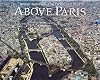
One of a series by Robert Cameron in which, long before the invention of Google Earth and the transfer of satellite imagery from secret defence to public use, he took a helicopter aloft and produced high quality photographs of cities and other locations from the air.
This edition dates from 1984 and shows us Paris and its environs in that year. There is a short and informative introduction from Pierre Salinger who describes how he worked contacts in the conservative French bureaucracy to get show more permission for Cameron to take the shots.
The result is excellent with very short historical introductions to each photograph although perhaps the non-Parisian could have done with a map to show the locations of each photograph in relation to each other - but this is a quibble.
It's not my City though I have visited it more than once, usually on business, and, of course, the photographs have to be biaised towards the 'sights' in order to be an attractive publishing opportunity but I recommend the book for its accidental insights into French culture.
There is ample evidence of the weight of history on France. Above all, that its revolution was built on the foundations of the alliance of Church and State - the 'sights' are a complex of churches, palaces (converted to modern use) and republican attempts to seize the space defined by these.
One also reflects on the French commitment to try and 'trump' the past and pay it homage at the same time with the commitment to modern architecture for public buildings - we British seem to do such things rarely and look for utility first and aesthetics second.
The strength and distinctiveness of French elite culture centred on Paris (France is not Paris) comes across in these photographs of public space - great footprints of power surounded by a sea of ordinary residence and business. The artists get Montmartre, Pere Lachaise and a village or two.
The final section is largely of the surviving great palaces and the traces of abbeys that did not survive. There is an irony that the country of revolutions seems to be more culturally coherent than the United Kingdom where multiplicities and ambiguities have created a capital city of villages. show less
This edition dates from 1984 and shows us Paris and its environs in that year. There is a short and informative introduction from Pierre Salinger who describes how he worked contacts in the conservative French bureaucracy to get show more permission for Cameron to take the shots.
The result is excellent with very short historical introductions to each photograph although perhaps the non-Parisian could have done with a map to show the locations of each photograph in relation to each other - but this is a quibble.
It's not my City though I have visited it more than once, usually on business, and, of course, the photographs have to be biaised towards the 'sights' in order to be an attractive publishing opportunity but I recommend the book for its accidental insights into French culture.
There is ample evidence of the weight of history on France. Above all, that its revolution was built on the foundations of the alliance of Church and State - the 'sights' are a complex of churches, palaces (converted to modern use) and republican attempts to seize the space defined by these.
One also reflects on the French commitment to try and 'trump' the past and pay it homage at the same time with the commitment to modern architecture for public buildings - we British seem to do such things rarely and look for utility first and aesthetics second.
The strength and distinctiveness of French elite culture centred on Paris (France is not Paris) comes across in these photographs of public space - great footprints of power surounded by a sea of ordinary residence and business. The artists get Montmartre, Pere Lachaise and a village or two.
The final section is largely of the surviving great palaces and the traces of abbeys that did not survive. There is an irony that the country of revolutions seems to be more culturally coherent than the United Kingdom where multiplicities and ambiguities have created a capital city of villages. show less

This book is a first person account of Mr. Salinger’s experience on the personal staff of President John F. Kennedy serving as his Press Secretary from inauguration day through his assassination. He also served his successor, Lyndon B. Johnson until the early 1964 when he decided to run for the Senate in California.
Salinger makes no secret of his unabashed admiration, loyalty and devotion to the Kennedy family, particularly Robert and John. If you are looking for a tell-all type book or show more one that is critical of them, then this is not the book for you. He also expresses no disdain or disappointment with LBJ.
He does provide a first person account of the cold war events and diplomacy of the Kennedy presidency including the Bay of Pigs, Berlin Crisis and Cuban Missile Crisis, and his importance in the communication between the President and Soviet Premier Krushchev.
A primary concern of Salinger and a theme he comes back to repeatedly is finding the balance between the need for secrecy and covert activity on the part of an administration and the demands of the free press for full disclosure in less than a declared, hot war with an enemy that does not face the same problem. Having experience as both an investigative reporter and as Press Secretary, he is able to see both sides of the argument and stresses the need to develop a workable solution.
It is fascinating to read how he and his team responded to the new medium of television, the adjustments he made as Press Secretary and how it changed the relationship between the President and the news reporters, American citizens and the world.
I found it well worth the time spent reading it and would recommend it to anyone interested in this time in history, JFK or in the topic of national security vs. the right of the press to know . show less
Salinger makes no secret of his unabashed admiration, loyalty and devotion to the Kennedy family, particularly Robert and John. If you are looking for a tell-all type book or show more one that is critical of them, then this is not the book for you. He also expresses no disdain or disappointment with LBJ.
He does provide a first person account of the cold war events and diplomacy of the Kennedy presidency including the Bay of Pigs, Berlin Crisis and Cuban Missile Crisis, and his importance in the communication between the President and Soviet Premier Krushchev.
A primary concern of Salinger and a theme he comes back to repeatedly is finding the balance between the need for secrecy and covert activity on the part of an administration and the demands of the free press for full disclosure in less than a declared, hot war with an enemy that does not face the same problem. Having experience as both an investigative reporter and as Press Secretary, he is able to see both sides of the argument and stresses the need to develop a workable solution.
It is fascinating to read how he and his team responded to the new medium of television, the adjustments he made as Press Secretary and how it changed the relationship between the President and the news reporters, American citizens and the world.
I found it well worth the time spent reading it and would recommend it to anyone interested in this time in history, JFK or in the topic of national security vs. the right of the press to know . show less
This book alternates between tedious and fascinating. I listened to it as audio book so who took each route became a little confusing without a map to follow along.
What a beautiful book, picturing lovely Paris in the 1980s. I noticed that the captions on p. 99 were in French, perhaps a mistake in the printing or collating process.
Awards


You May Also Like


Associated Authors
Statistics
- Works
- 18
- Also by
- 5
- Members
- 853
- Popularity
- #30,000
- Rating
- 3.3
- Reviews
- 7
- ISBNs
- 61
- Languages
- 6