

Richard Breitman
Author of Official Secrets: What the Nazis Planned, What the British and Americans Knew
About the Author
Series
Works by Richard Breitman
Official Secrets: What the Nazis Planned, What the British and Americans Knew (1998) — Author — 226 copies, 1 review
Tagged
Common Knowledge
- Legal name
- Breitman, Richard
- Other names
- ברייטנן, ריצʹרד
- Birthdate
- 1947-03-27
- Gender
- male
- Education
- Harvard University
- Organizations
- American University, Washington DC (Lecturer, 19 75, Professeur, Histoire contemporaine, 19 85 | 20 11))
- Nationality
- USA
- Associated Place (for map)
- USA
Members
Reviews
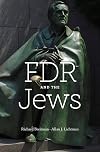
I just finished the book. This is a minor edit of my previous review. Richard Breitman seeks, in this book, to dull the edge of writing over the last 50 or so years that challenged and criticized FDR's efforts during the 1930's and 1940's on behalf of the Jews. Early writing cast him as a hero. Indeed Jews, early on, were extremely admiring of FDR. Aside from a few scattered advisory or court picks, no President had previously involved a large number of Jews in his administration. Grant, I show more understand, may be an exception but I digress.
Starting with Morse's 1967 book While Six Million Died the literature has become sharply more critical. This book seeks to argue that, worried about American anti-Semitism FDR was limited to tweaking the administrative system to allow in about 20,000 more Jews per year. Maybe I can be convinced otherwise, but I believe this assertion is inane. If you believe this book, Cordell Hull, the anti-Semitic Secretary of State had more power over the issue than did FDR, the President. FDR was enormously popular and he could have used his powers of moral suasion and "bully pulpit" for better results, if indeed he wanted them. The book also explains why he signed three "Neutrality Acts" under compulsion. Remember, his party had the majority in both houses of Congress and I'm sure he could have found one-third of the members of one house to sustain a veto. Or pressured to ensure that the bill never reached his desk.
The book divides Roosevelt into four phases on his handling of Jewish issues during his Presidency, roughly but not exactly corresponding to his terms in office. He was, according to the book, apathetic during Periods 1 and 3, and more dynamic on the issue in Periods 2 and 4. The distinctions, frankly, are a stretch. The final period was more or less forced by the growing revelations of the horrors of the Holocaust. Still, he shrank from bombing the camps and the rail lines leading to them. The book does not give enough weight to worries that dealing with surviving displaced persons was going to be a major challenge. He does not give enough weight to his waffling on the creation of what is now known as the State of Israel.
I think the book overdoes the apologia for FDR, who I consider to be virtually an enabler of the Holocaust. Sadly, so was Churchill. show less
Starting with Morse's 1967 book While Six Million Died the literature has become sharply more critical. This book seeks to argue that, worried about American anti-Semitism FDR was limited to tweaking the administrative system to allow in about 20,000 more Jews per year. Maybe I can be convinced otherwise, but I believe this assertion is inane. If you believe this book, Cordell Hull, the anti-Semitic Secretary of State had more power over the issue than did FDR, the President. FDR was enormously popular and he could have used his powers of moral suasion and "bully pulpit" for better results, if indeed he wanted them. The book also explains why he signed three "Neutrality Acts" under compulsion. Remember, his party had the majority in both houses of Congress and I'm sure he could have found one-third of the members of one house to sustain a veto. Or pressured to ensure that the bill never reached his desk.
The book divides Roosevelt into four phases on his handling of Jewish issues during his Presidency, roughly but not exactly corresponding to his terms in office. He was, according to the book, apathetic during Periods 1 and 3, and more dynamic on the issue in Periods 2 and 4. The distinctions, frankly, are a stretch. The final period was more or less forced by the growing revelations of the horrors of the Holocaust. Still, he shrank from bombing the camps and the rail lines leading to them. The book does not give enough weight to worries that dealing with surviving displaced persons was going to be a major challenge. He does not give enough weight to his waffling on the creation of what is now known as the State of Israel.
I think the book overdoes the apologia for FDR, who I consider to be virtually an enabler of the Holocaust. Sadly, so was Churchill. show less
History and historical judgment are never at rest especially if the subject matter is how FDR handled Hitler's Holocaust and the time and events leading up to it.. Bretman and Lichtman in this well footnoted and comprehensive work suggest that FDR was better than most considering the restraints that political reality, the never disappearing antisemitism, the War, the fights between Jewish leaders. and a recalcitrant State Department put on him. Will this put to rest the still present agony show more over the unholy crime against these millions of innocents. No, but it is a needed start.
Quotes: (page 257) “From December 1942 until January 1944 Roosevelt very gradually shifted away from the position that only military victory could save the victims of Nazi terror. His hopes for a quick end of the war dashed, FDR began to listen to friends and critics who wanted him, in effect, to break with Britain on Jewish issues. He came to realize that at least some Jews could be rescued during the war. It took him too long, but he did learn from the clash of views among agencies and subordinates. Morgenthau and his subordinates, as well as the unheralded Cox, did the President and the Jews of Europe a great service, in the process of converting the third Roosevelt into the fourth. Morgenthau moved into the vacancy created by Welle's ouster: he would handle most Jewish issues and, if necessary, take them to FDR. Whether the fourth Roosevelt could subtract enough from State and the War Department to rescue as many Jews as possible remained an open question.”
(pages 300-301) “State Department officials either missed or dismissed the signs of a new Soviet policy on Palestine. In pre-Yalta memorandum that broadly reflected department views, Secretary Stettinius urged the president not to make any decisions about Palestine without Soviet approval. Otherwise the Soviets could gain influence in the Middle East by 'championing the cause of the Arabs at the expense of the United States.' He recommended that the president use the Yalta conference to win agreement from Great Britain and the Soviet Union on a Palestine policy that considered the interests of both Arabs and Jews and avoided uncritical support for the Zionist position. The secretary optimistically hoped that moderate Jews and Arabs would step forward to reach an equitable settlement, although he gave no hint of its terms.”
(page 315) “FDR was neither hero of the Jews nor a bystander to Nazi persecution and then annihilation of Jews. No simple or monolithic characterization of this complex president fits the historical record. FDR could not fully meet all competing priorities as he led the nation through the worst economic depression and most challenging foreign war. He had to make difficult and painful trade-offs, and he adopted over time to shifting circumstances. His compromises might seem flawed in the light of what later generations have learned about the depth and significance of the Holocaust, a term that first came into widespread use many years after FDR's death. Still, Roosevelt reacted more decisively to Nazi crimes against Jews than did any other world leader at the time.” show less
Quotes: (page 257) “From December 1942 until January 1944 Roosevelt very gradually shifted away from the position that only military victory could save the victims of Nazi terror. His hopes for a quick end of the war dashed, FDR began to listen to friends and critics who wanted him, in effect, to break with Britain on Jewish issues. He came to realize that at least some Jews could be rescued during the war. It took him too long, but he did learn from the clash of views among agencies and subordinates. Morgenthau and his subordinates, as well as the unheralded Cox, did the President and the Jews of Europe a great service, in the process of converting the third Roosevelt into the fourth. Morgenthau moved into the vacancy created by Welle's ouster: he would handle most Jewish issues and, if necessary, take them to FDR. Whether the fourth Roosevelt could subtract enough from State and the War Department to rescue as many Jews as possible remained an open question.”
(pages 300-301) “State Department officials either missed or dismissed the signs of a new Soviet policy on Palestine. In pre-Yalta memorandum that broadly reflected department views, Secretary Stettinius urged the president not to make any decisions about Palestine without Soviet approval. Otherwise the Soviets could gain influence in the Middle East by 'championing the cause of the Arabs at the expense of the United States.' He recommended that the president use the Yalta conference to win agreement from Great Britain and the Soviet Union on a Palestine policy that considered the interests of both Arabs and Jews and avoided uncritical support for the Zionist position. The secretary optimistically hoped that moderate Jews and Arabs would step forward to reach an equitable settlement, although he gave no hint of its terms.”
(page 315) “FDR was neither hero of the Jews nor a bystander to Nazi persecution and then annihilation of Jews. No simple or monolithic characterization of this complex president fits the historical record. FDR could not fully meet all competing priorities as he led the nation through the worst economic depression and most challenging foreign war. He had to make difficult and painful trade-offs, and he adopted over time to shifting circumstances. His compromises might seem flawed in the light of what later generations have learned about the depth and significance of the Holocaust, a term that first came into widespread use many years after FDR's death. Still, Roosevelt reacted more decisively to Nazi crimes against Jews than did any other world leader at the time.” show less
This book has changed my opinion of Franklin Delano Roosevelt’s behavior toward the beleaguered Jews of Europe. Like most American Jews, I was a strong supporter of FDR but I faulted him on what I thought was his lack of concern and action to save Jews from the Holocaust. This sentence taken from the book’s summary portrays my new assessment of the issues. “FDR was neither a hero of the Jews nor a bystander to the persecution, and then the annihilation of the Jews…… he simply show more cannot be characterized.”
The authors see four stages of Roosevelt’s career. The first was his election in 1932 and his preoccupation with the challenge of the great depression. He paid little attention to the rise of Hitler and German politics. After his landslide victory in the 1936 election, the second stage FDR became more forceful in support of Jewish refugees. However, he had to deal with a multitude of Jewish organizations. There was the American Jewish Congress, the American Jewish Committee, each with different philosophies. Then there was the Zionist Organization of America, the World Jewish Congress, the Jewish Agency, the World Zionist Organization and more than a dozen government and public committees and councils. He was faced with constant pulling and tugging and obstructionism from the leaders of the in the State Dept., Cordell Hull and Breckenridge Long, whose anti-semitism was only thinly disguised. Roosevelt was constantly in fear of giving credence to the claim that he was a tool of the Jews and believed that any public support for relief of the refugees would inflame an already ant-semitic U.S. populace. At that time, his major effort was to repeal the neutrality act which prohibited assistance to any country involved in international hostilities. He foresaw the coming war and the need to help Britain.
During the third stage he became active in the support for immigration to Palestine and the creation of a Jewish state there. He openly split with Britain over the “white paper”, which abrogated the “Balfour Declaration”, which Britain promised a Jewish state in Palestine. FDR pressured Churchill, unsuccessfully, to open the gates of Palestine to Jewish refugees. Here in the U.S. there was strong resistance to relaxation of immigration quotas, reflecting the predominance of anti-semitism. The book explains the situation of the voyage of the St. Louis, where this ship, carrying 937 refugees was forced to return to Europe after Cuba refused to honor visas previously granted. No other port in the Atlantic or Caribbean would accept the passengers. Secretary Hull refused them saying that they could not legally enter the U.S. without jumping ahead of other Jews on the waiting list.
The authors point out that FDR had no remedies for the Nazi killings other than the threat of retribution. It was easier for the Nazis to kill Jews than for any outside power to stop them. There were no troops in Europe until 1944 and most of the killing had already taken place. Rescuing was always subordinate to winning the war. Roosevelt’s efforts to send relief to suffering Europeans were blocked by Churchill for years. He insisted on an economic blockade to weaken Germany. Faced with all the limitations and obstructionism, FDR believed that the end of the war was the only solution for the remaining Jews.
By 1944, there was pressure in the U.S. to bomb Auschwitz and Sobibor and much criticism of Roosevelt for not taking action. The authors say that he had no role in that decision but that if he had, he would have not defied military advice. Churchill wrote a memo supporting such action but did nothing about it. For him, Arab oil and preserving the British Empire caused him to oppose any plan to rescue Jews and create a Jewish state.
The fourth stage Roosevelt dealt with ending the war and post war planning. He set up the war refugee board over the objections from state and war depts. And 200,000 Jews were saved in spite of under-funding of the board.
Even the most powerful and persuasive presidents are constrained by public and congressional opinion and the views of allied powers. Humanitarian intervention during an all-out war for the survival of western civilization was difficult and risky. FDR was revered by most Jews who were not blind to his limitations or the constraints under which he operated.
This book is worth reading.
- Leonard show less
The authors see four stages of Roosevelt’s career. The first was his election in 1932 and his preoccupation with the challenge of the great depression. He paid little attention to the rise of Hitler and German politics. After his landslide victory in the 1936 election, the second stage FDR became more forceful in support of Jewish refugees. However, he had to deal with a multitude of Jewish organizations. There was the American Jewish Congress, the American Jewish Committee, each with different philosophies. Then there was the Zionist Organization of America, the World Jewish Congress, the Jewish Agency, the World Zionist Organization and more than a dozen government and public committees and councils. He was faced with constant pulling and tugging and obstructionism from the leaders of the in the State Dept., Cordell Hull and Breckenridge Long, whose anti-semitism was only thinly disguised. Roosevelt was constantly in fear of giving credence to the claim that he was a tool of the Jews and believed that any public support for relief of the refugees would inflame an already ant-semitic U.S. populace. At that time, his major effort was to repeal the neutrality act which prohibited assistance to any country involved in international hostilities. He foresaw the coming war and the need to help Britain.
During the third stage he became active in the support for immigration to Palestine and the creation of a Jewish state there. He openly split with Britain over the “white paper”, which abrogated the “Balfour Declaration”, which Britain promised a Jewish state in Palestine. FDR pressured Churchill, unsuccessfully, to open the gates of Palestine to Jewish refugees. Here in the U.S. there was strong resistance to relaxation of immigration quotas, reflecting the predominance of anti-semitism. The book explains the situation of the voyage of the St. Louis, where this ship, carrying 937 refugees was forced to return to Europe after Cuba refused to honor visas previously granted. No other port in the Atlantic or Caribbean would accept the passengers. Secretary Hull refused them saying that they could not legally enter the U.S. without jumping ahead of other Jews on the waiting list.
The authors point out that FDR had no remedies for the Nazi killings other than the threat of retribution. It was easier for the Nazis to kill Jews than for any outside power to stop them. There were no troops in Europe until 1944 and most of the killing had already taken place. Rescuing was always subordinate to winning the war. Roosevelt’s efforts to send relief to suffering Europeans were blocked by Churchill for years. He insisted on an economic blockade to weaken Germany. Faced with all the limitations and obstructionism, FDR believed that the end of the war was the only solution for the remaining Jews.
By 1944, there was pressure in the U.S. to bomb Auschwitz and Sobibor and much criticism of Roosevelt for not taking action. The authors say that he had no role in that decision but that if he had, he would have not defied military advice. Churchill wrote a memo supporting such action but did nothing about it. For him, Arab oil and preserving the British Empire caused him to oppose any plan to rescue Jews and create a Jewish state.
The fourth stage Roosevelt dealt with ending the war and post war planning. He set up the war refugee board over the objections from state and war depts. And 200,000 Jews were saved in spite of under-funding of the board.
Even the most powerful and persuasive presidents are constrained by public and congressional opinion and the views of allied powers. Humanitarian intervention during an all-out war for the survival of western civilization was difficult and risky. FDR was revered by most Jews who were not blind to his limitations or the constraints under which he operated.
This book is worth reading.
- Leonard show less
Nearly seventy-five years after World War II, a contentious debate lingers over whether Franklin Delano Roosevelt turned his back on the Jews of Hitler's Europe. Defenders claim that FDR saved millions of potential victims by defeating Nazi Germany. Others revile him as morally indifferent and indict him for keeping America's gates closed to Jewish refugees and failing to bomb Auschwitz's gas chambers.
Awards


You May Also Like


Associated Authors
Statistics
- Works
- 18
- Members
- 833
- Popularity
- #30,660
- Rating
- 3.6
- Reviews
- 10
- ISBNs
- 69
- Languages
- 5
- Favorited
- 1

