
Wilson Harris (1) (1921–2018)
Author of Palace of the Peacock
For other authors named Wilson Harris, see the disambiguation page.
About the Author
Wilson Harris was born Theodore Wilson Harris in New Amsterdam, Guyana on March 24, 1921. He passed the surveying examination in 1942 and worked as a land surveyor for almost 15 years. He joined a government surveying expedition into the Cuyuni River area in the north of Guyana. He moved to England show more in 1959. His first novel, Palace of the Peacock, was published in 1960. He wrote a total of 26 novels during his lifetime including Resurrection at Sorrow Hill, Jonestown, The Dark Jester, and The Ghost of Memory. He was knighted in 2010. He died on March 8, 2018 at the age of 96. (Bowker Author Biography) show less
Image credit: photo:doudoux
Works by Wilson Harris
Associated Works
Tagged
Common Knowledge
- Legal name
- Harris, Theodore Wilson
- Other names
- Kona Waruk
Sir Wilson Harris - Birthdate
- 1921-03-24
- Date of death
- 2018-03-08
- Gender
- male
- Education
- Queen's College, Guyana
- Occupations
- poet
novelist
short story writer
essayist
land surveyor - Awards and honors
- Knight Bachelor (2010)
Anisfield-Wolf Book Award (Lifetime Achievement, 2014) - Cause of death
- natural causes
- Nationality
- Guyana
- Birthplace
- New Amsterdam, British Guiana
- Places of residence
- Georgetown, British Guiana
London, England, UK
Chelmsford, Essex, England, UK - Place of death
- Chelmsford, Essex, England, UK
Members
Reviews
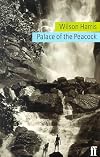
I bought this one for a class in grad school that never got around to reading it, and it's been an object of mystery on my bookshelf ever since. I can't recommend it to everybody, but it's certainly one of the most audacious first novels I've ever read.Harris tells the story of a colonial explorer lost in the depths of the Guyanan jungle with a native crew; the novel's basic plotline will remind some readers of "Heart of Darkness." His writing treads the boundary between prose and poetry; show more it's dense and difficult, by turns miraculously vibrant and overwhelmingly verbose. On a thematic level, "The Palace of the Peacock" is even bolder. The author is, I think, trying to replace the basic tropes and conventions that the European novel is on based with Amerindian images and storylines, carving out a sort of private mythology and introducing his own ideas about the relationship between time, space and character in the process. In order to accomplish this, he employs a library's worth of literary devices: doubling, the foreknowledge of death, the use of Christian and pre-Christian religious imagery, and the constant blurring of the boundaries between self and other and fantasy and reality. It's a bold vision and one that suggests a whole new perspective on the colonial and post-colonial experience, though I often felt that Harris's meticulous vocabulary and grand ideas were running far ahead of his mechanics. "Palace of the Peacock" is one of the most challenging books I've ever picked up, but, in the end, worth the strenuous reading and re-reading I had to do to get through its hundred-or-so pages. It's deeply flawed but still exciting, a unique, and uniquely difficult, reading experience. show less
Lists
Awards


You May Also Like


Associated Authors
Statistics
- Works
- 36
- Also by
- 4
- Members
- 645
- Popularity
- #39,134
- Rating
- 3.3
- Reviews
- 2
- ISBNs
- 73
- Languages
- 2
- Favorited
- 1