
Katie Daynes
Author of See Inside Your Body
About the Author
Series
Works by Katie Daynes
What Are Germs? (Usborne Lift-the-Flap Very First Questions and Answers) (2017) 415 copies, 1 review
What Are Stars? (Usborne Lift-the-Flap Very First Questions and Answers) (2018) 186 copies, 2 reviews
What Is the Moon? (Usborne Lift-the-Flap Very First Questions and Answers) (2019) 168 copies, 1 review
Why Should I Brush My Teeth? (Usborne Lift-the-Flap Very First Questions and Answers) (2020) 123 copies
Why Do Things Die? (Usborne Lift-the-Flap Very First Questions and Answers) (2020) 86 copies, 1 review
Why Do I Have to Go to Bed? (Usborne Lift-the-Flap Very First Questions and Answers) (2021) 31 copies
Where Do Animals Go in Winter? (Usborne Lift-the-Flap Very First Questions and Answers) (2022) 11 copies
Why Do I Have to Go to School? (Usborne Lift-the-Flap Very First Questions and Answers) (2023) 10 copies
Katie Dayne's 5 Books Bundle Collection Lift-the-Flap Questions and Answers About Our World (2017) 5 copies, 1 review
Cos'è la terra? 1 copy
Usborne Very First Lift-the-Flap Questions And Answers Collection 2 Books Set (What are Germs, What is Poo) (2018) 1 copy
L'Espace - Fenêtre Sur 1 copy
Reading Planet - Our World Picture Atlas - Orange: Galaxy (Rising Stars Reading Planet) (2016) 1 copy
Tutki! Pottaa 1 copy
Tutki! Kakkaa 1 copy
Id-dragun il-mitluq 1 copy
מבט מקרוב על שאלות ותשובות 1 copy
Associated Works
Tagged
Common Knowledge
- Birthdate
- 20th c. CE
- Gender
- female
- Nationality
- UK
- Associated Place (for map)
- UK
Members
Reviews
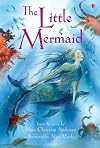
I totally thought that this was going to be a reworked version of Andersen's story, but besides leaving out the themes about the Little Mermaid wanting a soul (not a game changer from my perspective, since I'm not a fan of this kind of Christian morality) the story stayed relatively true with the Little Mermaid failing in her quest for the Prince's love and becoming seafoam. What actually gives this book a higher rating than average is that the illustrations are so beautifully done. Marks show more does a fantastic job of using watercolours to interpret the mer-people's underwater landscapes - giving it both the murkiness and indistinct visuals of a world without direct sunlight but still retaining enough of the bright colours and saturation of vibrant blues and greens to keep the images from becoming too dark. show less
Farm Animals is a non-fiction, children’s picture book with text geared toward early readers. It takes children on a journey to the farm, discussing all kinds of animals that might be found there and the reasons farmers might keep them, such as for their meat, milk, eggs, wool, etc. There are super-short chapters talking about what farms are, what feeding time might be like, and how ranches are a type of very big farm. There are also chapters on egg-laying, milking, and shearing. Then it show more discusses specific types of animals that might be kept on farms. Here, I liked that the author didn’t just stick with traditional farm animals like cows, chickens, and pigs, but also broadened her scope into other types of animals like fish, crocodiles, and ostriches, which kids might not realize are kept on farms. There’s even a chapter on very cold and very hot climates where you might see animals like reindeer or camels being farmed. At the end there’s a glossary of farm words and instructions for accessing Usborne Quicklinks to learn more.
Overall, I think this is a great book for young children to learn more about farms and the types of animals that live on them. It’s appropriate for younger pre-readers, but written in accessible language tailored just for beginning readers. One thing that impressed me enough to bump up the rating a half star is that the Usborne Quicklinks currently still exist and seem to have been kept up to date, which is almost unheard of for a book this old (published in 2002). This little book was well done and has left me interested in trying other books in the Usborne Beginners series as well as more by author Katie Daynes. show less
Overall, I think this is a great book for young children to learn more about farms and the types of animals that live on them. It’s appropriate for younger pre-readers, but written in accessible language tailored just for beginning readers. One thing that impressed me enough to bump up the rating a half star is that the Usborne Quicklinks currently still exist and seem to have been kept up to date, which is almost unheard of for a book this old (published in 2002). This little book was well done and has left me interested in trying other books in the Usborne Beginners series as well as more by author Katie Daynes. show less
First sentence: What is snow? It's what flutters down on freezing days.
Is there such a thing as too many flaps? I wouldn't have thought so before picking this one up. I never knew if the flap would reveal text--like an answer to a question--or if it would just be an illustration. Some spreads felt like they had ten or so flaps. Some had text. Some didn't. Some moved the plot forward. Some didn't. The board book format and the lift-the-flap feature seem like they'd be for a younger crowd show more (toddler, early preschool) the amount of text felt like it might not hold attention spans. This one could work depending on the presentation of the one reading it aloud. show less
Is there such a thing as too many flaps? I wouldn't have thought so before picking this one up. I never knew if the flap would reveal text--like an answer to a question--or if it would just be an illustration. Some spreads felt like they had ten or so flaps. Some had text. Some didn't. Some moved the plot forward. Some didn't. The board book format and the lift-the-flap feature seem like they'd be for a younger crowd show more (toddler, early preschool) the amount of text felt like it might not hold attention spans. This one could work depending on the presentation of the one reading it aloud. show less

Incredibly useful in a way that isn't overwhelming. Explains how the pieces move, gives simple advice (try to occupy/control the middle of the board; "knights on the rim are dim,"; how and why to castle). Diagrams of different setups on the board, and different types of games to play (pawn games, knights only, etc.), check and checkmate "puzzles."
Lists
Awards


You May Also Like


Associated Authors
Statistics
- Works
- 160
- Also by
- 2
- Members
- 15,846
- Popularity
- #1,431
- Rating
- 4.0
- Reviews
- 45
- ISBNs
- 743
- Languages
- 23
- Favorited
- 1