
Antoine Faivre (1934–2021)
Author of Eternal Hermes: From Greek God to Alchemical Magus
About the Author
Antoine Faivre, the most prominent scholar of esotericism to have appeared since Mircea Eliade, is Director of Studies at the Ecole Pratique des Hautes Etudes(Section des Sciences Religieuses, Sorbonne), University Professor of Germanic Studies at the University of Haute-Normandie, and director of show more the Cahiers de l'Hermetisme (Albin Michel). His other books in english translation include Access to western Esotericism and Theosophy, Imagination, Tradition: STudies in Western Esotericism. (Bowker Author Biography) show less
Series
Works by Antoine Faivre
Philosophie de la nature : Physique sacrée et théosophie, XVIIIe - XIXe siècle (1996) 3 copies, 1 review
O Esoterismo Livro 1 1 copy
Associated Works
The Fullness of God: Frithjof Schuon on Christianity (2004) — Introduction, some editions — 44 copies
Tagged
Common Knowledge
- Canonical name
- Faivre, Antoine
- Legal name
- Faivre, Antoine
- Birthdate
- 1934-06-05
- Date of death
- 2021-12-19
- Gender
- male
- Education
- Ecole pratique des Hautes Études (Diplôme, Sciences historiques et philologiques, 1973)
Université de Paris (Doctorat d'étét, Thèse, Lettres, Germanistique, 1969)
Université de la Sorbonne (Doctorat de 3e cycle, Germanistique, Histoire des religions, 1965)
Ecole pratique des Hautes Études (Diplôme, Sciences reigieuses, 1965)
Université de la Sorbonne (Langues et littératures allemande et anglaise, 1953l1955))
Lycée Louis le Grand, Paris (1952l1953) - Occupations
- Professeur (Histoire)
Historien (Religions ∙ Esotérisme)
Officier de Réserve (1969, 1991) - Organizations
- Ecole pratique des Hautes Études (Professeur, Sciences religieuses, 1979l1985)
Université de Haute-Normandie (Professeur, Chaire d'études germanique ,1985l1990)
Université de Bordeaux 3 (Professeur, Chaire d'études germaniques, 1972l1985)
Centre National de la recherche Scientifique (Attaché de recherches, 1965l1969)
Bibliothèque de l'Hermétisme (Directeur de collection, en 2004)
Cahiers de l'hermétisme (Directeur de collection, en 2004) (show all 8)
Grande Loge nationale française
Université de Bekerley, Californie, USA -Professeur invité, 1980, 1982, 1984, 1987) - Awards and honors
- Chevalier des palmes Académiques (1989)
Titre de Reconnaissance de la Nation (1995)
Chevalier de l'ordre National du Mérite (2009) - Nationality
- France
- Birthplace
- Reims, France
- Associated Place (for map)
- Reims, France
Members
Reviews
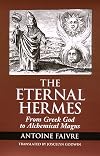
This is a useful book for the student of the history of magic in the West. Hermes begins as one of the Olympian gods, son of Zeus and Maia, god of thieves, merchants and travelers, messenger of the gods and conductor of souls. However Faivre concentrates on Hermes Trismegistus, the thrice greatest magician and guide for magicians who was credited with the authorship of various hermetic and alchemical texts. The author traces the texts attributed to this figure and the many commentaries on show more them through the ages. One strand of commentary is that made by those who wish to use the material for their own practice of magic. A different strand is that of those studying beliefs about magic as part of a history of ideas. The book contains a section of plates, all black and white, of images of the mage--most of them illustrations from books, but a few paintings. While one chapter of the book explains each in image in detail it would be more helpful to have the images printed hear their explanatory text rather than grouped together. Some of the reproductions are also hard to make out, being either greatly reduced from their original size or perhaps losing detail in the process of being transferred from one medium to another. The book contains extensive quotations from cited sources and a comprehensive list of sources both original and secondary. I would recommend this book for anyone determined to plunge into the study of the history of hermeticism. It would not be useful as a guide to actual practice. show less
Knowledge of the myths about Hermes is essential to understanding "the long path of the Western imagination, from the Middle Ages to the present." The appeal of Hermes/Mercury is not difficult to grasp, but his complexity is astonishing. He has been recognized through the ages variously as messenger of the gods, a psychopomp (i.e., conductor of souls), discoverer of the arts and sciences, inventor of the seven-stringed lyre, the master of knowledge, master of words (see Acts 14) and other show more things.
During the Middle Ages his Greco-Roman mythology became entwined with lore about a figure known as Hermes Trismegistus ("thrice-great Hermes"), a sage of ancient Alexandria who was credited with authoring many books that have been handed down under the rubric Hermetica, the most famous being the Corpus Hermeticum. This book appears to be at the very core of esoteric learning from the Renaissance forward.
The Eternal Hermes is a collection of six essays about the many and varied roles played by Hermetic lore in the course of the Middle Ages, the Renaissance, the Enlightenment, the Romantic and even the Symbolist era. The book is largely historiographical and amounts to a survey of the literature—mostly in French and German—from ancient times to the present. Once again, it is a bit of a slog getting through it all, but it is useful especially for the bibliographic essay at the end.
After the Corpus Hermeticum was discovered during the early Italian Renaissance, it was translated by Marsilio Ficino, and soon thereafter was appropriated to a large degree by scholars and adepts who were interested in alchemy, Kabbalah and other esoteric pursuits.
In the course of reading, I leaned a few things that were quite surprising. For instance, I did not know that the Greeks in the third century B.C. "saw the gods as actual human beings who were divinized after death." This deification of humans is known as "euhemerism," and it led to a belief in Hermes as a historic figure who had been deified. This helps to explain how the Greek god Hermes became conflated with a supposedly historical figure Hermes Trismegistus.
Considering the scholarly nature of this book, I will give it three stars. It is not exactly beach reading, although it is very interesting for what it is. show less
During the Middle Ages his Greco-Roman mythology became entwined with lore about a figure known as Hermes Trismegistus ("thrice-great Hermes"), a sage of ancient Alexandria who was credited with authoring many books that have been handed down under the rubric Hermetica, the most famous being the Corpus Hermeticum. This book appears to be at the very core of esoteric learning from the Renaissance forward.
The Eternal Hermes is a collection of six essays about the many and varied roles played by Hermetic lore in the course of the Middle Ages, the Renaissance, the Enlightenment, the Romantic and even the Symbolist era. The book is largely historiographical and amounts to a survey of the literature—mostly in French and German—from ancient times to the present. Once again, it is a bit of a slog getting through it all, but it is useful especially for the bibliographic essay at the end.
After the Corpus Hermeticum was discovered during the early Italian Renaissance, it was translated by Marsilio Ficino, and soon thereafter was appropriated to a large degree by scholars and adepts who were interested in alchemy, Kabbalah and other esoteric pursuits.
In the course of reading, I leaned a few things that were quite surprising. For instance, I did not know that the Greeks in the third century B.C. "saw the gods as actual human beings who were divinized after death." This deification of humans is known as "euhemerism," and it led to a belief in Hermes as a historic figure who had been deified. This helps to explain how the Greek god Hermes became conflated with a supposedly historical figure Hermes Trismegistus.
Considering the scholarly nature of this book, I will give it three stars. It is not exactly beach reading, although it is very interesting for what it is. show less
Detailed, brief, and factual, never capturing the mystery of Hermeticism: Why Hermes and why the three manifestations?
PHILOSOPHIE DE LA NATURE
La naissance de la science moderne a profondément déstabilisé l'équilibre multi-séculaire de la pensée occidentale. L'alliance fructueuse entre la réflexion grecque et la tradition chrétienne se trouvait tout à coup rompue. Certains grands esprits ont refusé d'en rester à ce constat de divorce. Ils ont tenté une oeuvre de réconciliation fondée sur la certitude que la science ne pouvait être le dernier mot de la sagesse. Ainsi est apparu ce qu'on show more appellera au XIXe siècle la Naturphilosophie.
Antoine Faivre, directeur d'études à l'EPHE et spécialiste de l'ésotérisme en Occident, a voulu donner de ce courant de pensée une image renouvelée. Convaincus que « la Nature n'est pas une déesse », selon la formule de Descartes, mais bien le « chiffre » de Dieu, les auteurs importants de cette école, Tinger, Baader, et d'autres penseurs inspirés par Boehme et Paracelse, vont se livrer a un décryptage de la présence de Dieu dans la Nature et dans l'homme, développer un système de correspondances qui influencera les philosophes, les poètes romantiques et, jusqu'à nous, Jung ou Abellio.
À travers cette étude de la physique sacrée et de la théosophie, c'est toute une face de la modernité, cachée et marginalisée par des philosophes tels Kant ou Hegel, qu'Antoine Faivre réévalue à l'heure ou émergent de nouvelles spiritualités, tandis que la rationalité connaît une crise sans précédent. show less
La naissance de la science moderne a profondément déstabilisé l'équilibre multi-séculaire de la pensée occidentale. L'alliance fructueuse entre la réflexion grecque et la tradition chrétienne se trouvait tout à coup rompue. Certains grands esprits ont refusé d'en rester à ce constat de divorce. Ils ont tenté une oeuvre de réconciliation fondée sur la certitude que la science ne pouvait être le dernier mot de la sagesse. Ainsi est apparu ce qu'on show more appellera au XIXe siècle la Naturphilosophie.
Antoine Faivre, directeur d'études à l'EPHE et spécialiste de l'ésotérisme en Occident, a voulu donner de ce courant de pensée une image renouvelée. Convaincus que « la Nature n'est pas une déesse », selon la formule de Descartes, mais bien le « chiffre » de Dieu, les auteurs importants de cette école, Tinger, Baader, et d'autres penseurs inspirés par Boehme et Paracelse, vont se livrer a un décryptage de la présence de Dieu dans la Nature et dans l'homme, développer un système de correspondances qui influencera les philosophes, les poètes romantiques et, jusqu'à nous, Jung ou Abellio.
À travers cette étude de la physique sacrée et de la théosophie, c'est toute une face de la modernité, cachée et marginalisée par des philosophes tels Kant ou Hegel, qu'Antoine Faivre réévalue à l'heure ou émergent de nouvelles spiritualités, tandis que la rationalité connaît une crise sans précédent. show less
Sep 4, 2024Spanish
You May Also Like


Associated Authors
Statistics
- Works
- 20
- Also by
- 1
- Members
- 669
- Popularity
- #37,727
- Rating
- 4.0
- Reviews
- 12
- ISBNs
- 47
- Languages
- 5
- Favorited
- 4
