
Richard Smoley
Author of Inner Christianity
About the Author
Richard Smoley is editor of Quest: Journal of the Theosophical Society and former editor of Gnosis. A Guide to the Western Inner Traditions. He has published eleven books, including Forbidden Faith: The Secret History of Gnosticism: Inner Christianity: A Guide to the Esoteric Traditions: and show more Supernatural: Writings on an Unknown History. He has spent over forty years studying the world's mystical traditions. show less
Image credit: By SeriouslyRelaxed - Own work, CC BY-SA 4.0, https://commons.wikimedia.org/w/index.php?curid=43652628
Works by Richard Smoley
Forbidden Faith: The Gnostic Legacy from the Gospels to The Da Vinci Code (2006) 212 copies, 2 reviews
Gnosis No. 21 = Holy War 4 copies
Associated Works
The Book of Symbols: Reflections on Archetypal Images (2010) — Contributor, some editions — 913 copies, 2 reviews
Tagged
Common Knowledge
- Birthdate
- 1956
- Gender
- male
- Education
- Harvard University (BA - 1978)
University of Oxford (MA - 1985) - Occupations
- editor
- Organizations
- Gnosis Magazine
- Nationality
- USA
- Places of residence
- Waterbury, Connecticut, USA (birth)
San Francisco, California, USA - Associated Place (for map)
- USA
Members
Reviews
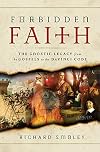
I cannot think of a better popular introduction to the gnostic turn of mind although the book is mistitled and the author admits as much. The Gnostic turn of mind is a way of seeing for many human beings whereas Gnosticism was a belief system of a particular time and place.
Gnosticism, the very particular set of beliefs, emerged out of the creative struggles for meaning in antiquity. It died out with the triumph of an authoritarian, nay, totalitarian catholicism in alliance with secular show more tyranny. This is the story of the first half of the book.
In a series of lucid chapters, Smoley looks into Gnosticism proper and its fall, including its longest survival - the forgotten Manichaeanism, the lost fourth universal religion of the old world, which lasted (strangely) through to the secret society culture of seventeenth century Fukien (China).
It is hard to believe that there is much continuity between these ancient beliefs and modern re-emergences of the Gnostic that emphasise the flawed nature of creation and looks to an occult relationship with what is behind it, what Heideggerians would call Being - only divinised.
There may be some Manichaean influence in the Cathars via the Bogomils although Smoley does not go deeply into this aspect of the case. There may be some mystical survivals of ancient thinking through many kabbalistic and Christian filters but the claim of continuity is unproven and unlikely.
What is more likely is that (to be blunt) the way some people's brains are wired up gives them a way of seeing the universe that recurs in every age. Some are so struck by it all that they construct a model to share with others, enraging the totalitarian guardians of religion.
I am persuaded that the original Jesus of the Gospel of Thomas may well have been one of these but subsequently contained and turned into a universalist power play by the likes of Paul and Augustine. But there are others - Meister Eckhart, Jacob Boehme, perhaps William Blake.
One is struck time and again by the trigger of light, a reflection off a plate or the beam from a piece of jewellery (Philip K. Dick), and by the constant references to light and darkness. One speculates that some brains are triggered into ecstatic mechanism by their reception of photons.
Ye even the direct experience of the gnostic mind cannot avoid some form of systematisation - for once experienced, it may not be easily repeated and so it becomes a belief about a past experience, truly real to the percipient but hard not only to convey but to turn into a regular practice.
The gnostic mind then tends to create elaborate systems and mythopoeic fantasies to try both to continue the experience and entrain followers or initiates, above all to persuade that the experience has some basis in fact. The kabbala may be one such system. Others just need to keep writing.
The book switches tone at the Renaissance because it is at this point that it is mostly a matter of intellectuals and individuals rediscovering the textual past or experiencing something personally rather than of some initiatory or quasi-religious tradition.
This second half of the book is no more than an intelligent commentary on a succession of disconnected gnostically-minded individuals (with varying credibility as to their credentials) that is just a more measured version of the hidden history narratives of our own counter culture.
There is a hidden and lightly worn polemic embedded in the Book. Smoley was, for many years, Editor of Gnosis . He has a mission here to re-establish gnostic experience as equally valid alongside 'religion' and scientific positivism on the basis that all three have their uses.
It is a polemic directed more at evangelical and liberal Christians than at scientists. You either accept the premises or you do not although (much as Hutton has shown for modern neo-paganism) it is clear that modern Gnosticism is only another invented reconstructionism.
My own view on all this might be called cynical existentialist quasi-gnostic. The experiences are valid because they are part of the tool kit of being human. Similarly, gnostic ways of thinking relate directly to our perceptual and cognitive 'flaws' (though in fact these served us well as a species).
On the other hand, without this necessarily resulting in any form of nihilism (quite the contrary), the idea of some occult divine hand behind the flawed materiality of evolution and materiality is delusion and, worse, wishful thinking. It is whistling in the dark.
This does not make occult gnosticism less important than science and religion but actually places all three on the same level as aspects of our own weak relationship to an ultimate reality that we can never ultimately know or understand. All three are a form of whistling in the dark.
The virtue of gnostic ways of thinking lies not in divining the divine but in challenging the claims of religio, specifically religion's propensity to push us around against our own personal natures, and as a reminder that science is useful but actually tells us nothing about ultimate things.
In this context, Smoley's polemic partially works for me - the gnostic view of the world may be no more true of the world than its rivals but it is no less true either. All are equally flawed but gnostic thinking has the virtue of reasserting individual choice and autonomy in making sense of it all.
The treatment of gnostic thinkers is a bellwether of human freedom since too much religion enslaves into conformity under special interests and too much science crushes the dreaming spirit of humanity. The dark ages may be defined by the repression of gnostic free thought.
And what of too much gnosticism? I am not sure we have ever seen that by the nature of things though there is an argument that we are in danger of coming into such an age of dreamy negativity about material reality and lack of any awareness of the need for some order in society.
Be all that as it may, the book is recommended as a general and thought-provoking introduction to the general subject. It is also well written and likely to trigger a desire to read more elsewhere. One also finds oneself soon liking the author for his essential kindness and thoughtfulness. show less
Gnosticism, the very particular set of beliefs, emerged out of the creative struggles for meaning in antiquity. It died out with the triumph of an authoritarian, nay, totalitarian catholicism in alliance with secular show more tyranny. This is the story of the first half of the book.
In a series of lucid chapters, Smoley looks into Gnosticism proper and its fall, including its longest survival - the forgotten Manichaeanism, the lost fourth universal religion of the old world, which lasted (strangely) through to the secret society culture of seventeenth century Fukien (China).
It is hard to believe that there is much continuity between these ancient beliefs and modern re-emergences of the Gnostic that emphasise the flawed nature of creation and looks to an occult relationship with what is behind it, what Heideggerians would call Being - only divinised.
There may be some Manichaean influence in the Cathars via the Bogomils although Smoley does not go deeply into this aspect of the case. There may be some mystical survivals of ancient thinking through many kabbalistic and Christian filters but the claim of continuity is unproven and unlikely.
What is more likely is that (to be blunt) the way some people's brains are wired up gives them a way of seeing the universe that recurs in every age. Some are so struck by it all that they construct a model to share with others, enraging the totalitarian guardians of religion.
I am persuaded that the original Jesus of the Gospel of Thomas may well have been one of these but subsequently contained and turned into a universalist power play by the likes of Paul and Augustine. But there are others - Meister Eckhart, Jacob Boehme, perhaps William Blake.
One is struck time and again by the trigger of light, a reflection off a plate or the beam from a piece of jewellery (Philip K. Dick), and by the constant references to light and darkness. One speculates that some brains are triggered into ecstatic mechanism by their reception of photons.
Ye even the direct experience of the gnostic mind cannot avoid some form of systematisation - for once experienced, it may not be easily repeated and so it becomes a belief about a past experience, truly real to the percipient but hard not only to convey but to turn into a regular practice.
The gnostic mind then tends to create elaborate systems and mythopoeic fantasies to try both to continue the experience and entrain followers or initiates, above all to persuade that the experience has some basis in fact. The kabbala may be one such system. Others just need to keep writing.
The book switches tone at the Renaissance because it is at this point that it is mostly a matter of intellectuals and individuals rediscovering the textual past or experiencing something personally rather than of some initiatory or quasi-religious tradition.
This second half of the book is no more than an intelligent commentary on a succession of disconnected gnostically-minded individuals (with varying credibility as to their credentials) that is just a more measured version of the hidden history narratives of our own counter culture.
There is a hidden and lightly worn polemic embedded in the Book. Smoley was, for many years, Editor of Gnosis . He has a mission here to re-establish gnostic experience as equally valid alongside 'religion' and scientific positivism on the basis that all three have their uses.
It is a polemic directed more at evangelical and liberal Christians than at scientists. You either accept the premises or you do not although (much as Hutton has shown for modern neo-paganism) it is clear that modern Gnosticism is only another invented reconstructionism.
My own view on all this might be called cynical existentialist quasi-gnostic. The experiences are valid because they are part of the tool kit of being human. Similarly, gnostic ways of thinking relate directly to our perceptual and cognitive 'flaws' (though in fact these served us well as a species).
On the other hand, without this necessarily resulting in any form of nihilism (quite the contrary), the idea of some occult divine hand behind the flawed materiality of evolution and materiality is delusion and, worse, wishful thinking. It is whistling in the dark.
This does not make occult gnosticism less important than science and religion but actually places all three on the same level as aspects of our own weak relationship to an ultimate reality that we can never ultimately know or understand. All three are a form of whistling in the dark.
The virtue of gnostic ways of thinking lies not in divining the divine but in challenging the claims of religio, specifically religion's propensity to push us around against our own personal natures, and as a reminder that science is useful but actually tells us nothing about ultimate things.
In this context, Smoley's polemic partially works for me - the gnostic view of the world may be no more true of the world than its rivals but it is no less true either. All are equally flawed but gnostic thinking has the virtue of reasserting individual choice and autonomy in making sense of it all.
The treatment of gnostic thinkers is a bellwether of human freedom since too much religion enslaves into conformity under special interests and too much science crushes the dreaming spirit of humanity. The dark ages may be defined by the repression of gnostic free thought.
And what of too much gnosticism? I am not sure we have ever seen that by the nature of things though there is an argument that we are in danger of coming into such an age of dreamy negativity about material reality and lack of any awareness of the need for some order in society.
Be all that as it may, the book is recommended as a general and thought-provoking introduction to the general subject. It is also well written and likely to trigger a desire to read more elsewhere. One also finds oneself soon liking the author for his essential kindness and thoughtfulness. show less
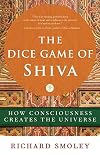
This is a casual stroll through some profound territory. Smoley never dives into the real depths. But this is a pleasant enough stroll - a good introduction for anyone not familiar with the basics of Samkhya philosophy, and a gentle spur for further reflection even for an experienced explorer.
The biggest disappointment for me was right at the end. Smoley provides a quick review of the scientific study of consciousness. He sees that as the gateway for science to find the way to love etc. I show more think he is exactly wrong about this. No doubt neuroscience and its siblings will generate fascinating results. But this direction really just amplifies the ignorance of science. Consciousness is not out there. This book repeats that message again and again, so the stumble at the end was a surprise as well as a disappointment.
If science can wake up, it will happen through philosophy of science. Science needs to look at itself, needs to understand itself as being a player in the world, rather than some separate observer/controller outside the game.
Anyway, at least Smoley brings up the relationship between science and religion. It is surely a conflict that needs to be worked through if we are to avoid total self-destruction! show less
The biggest disappointment for me was right at the end. Smoley provides a quick review of the scientific study of consciousness. He sees that as the gateway for science to find the way to love etc. I show more think he is exactly wrong about this. No doubt neuroscience and its siblings will generate fascinating results. But this direction really just amplifies the ignorance of science. Consciousness is not out there. This book repeats that message again and again, so the stumble at the end was a surprise as well as a disappointment.
If science can wake up, it will happen through philosophy of science. Science needs to look at itself, needs to understand itself as being a player in the world, rather than some separate observer/controller outside the game.
Anyway, at least Smoley brings up the relationship between science and religion. It is surely a conflict that needs to be worked through if we are to avoid total self-destruction! show less
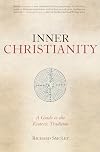
Inner Christianity is the first introduction to mystical and esoteric Christianity for the general reader. It speaks from a nonsectarian point of view, unearthing insights from the whole of the Christian tradition, orthodox and heretical, famous and obscure. The esoteric tradition has traditionally searched for meanings that would yield a deeper inner knowledge of the divine. While traditional Christianity draws a timeline from Adam's Fall to the Day of Judgment, the esoteric often sees time show more as folding in on itself, bringing every point to the here and now. While the Church fought bitterly over dogma, the esoteric borrowed freely from other traditions—Kabbalah, astrology, and alchemy—in their search for metaphors of inner truth. Rather than basing his book around exponents of esoteric doctrine, scholar Richard Smoley concentrates on the questions that are of interest to every searching Christian. How can one attain direct spiritual experience? What does "the Fall" really tell us about coming to terms with the world we live in? Can we find salvation in everyday life? How can we ascend, spiritually, through the various levels of existence? What was Christ's true message to humankind? From the Gospel of Thomas to A Course in Miracles, from the Jesus Prayer to alchemy and Tarot, from Origen to Dante to Jung, Richard Smoley sheds the light of an alternative Christianity on these issues and more. show less
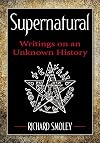
For those expecting spine tingling, eerie skin bumps producing material will be disappointed, but the erudite, well-reasoned topics in this work will reward the patient reader.
You May Also Like


Associated Authors
Statistics
- Works
- 20
- Also by
- 3
- Members
- 821
- Popularity
- #31,072
- Rating
- 4.1
- Reviews
- 10
- ISBNs
- 41
- Languages
- 3
- Favorited
- 7
