
Tobias Churton
Author of The Gnostics
About the Author
Britain's leading scholar of Western esotericism, Tobias Churton is a world authority on Gnosticism, Hermeticism, Freemasonry, and Rosicrucianism. Holding a master's degree in theology from Brasenose College, Oxford, he was appointed Honorary Fellow of Exeter University in 2005. The author of many show more books, including Gnostic Philosophy and Aleister Crowley in America, he lives in the heart of England. show less
Works by Tobias Churton
The Magus of Freemasonry: The Mysterious Life of Elias Ashmole--Scientist, Alchemist, and Founder of the Royal Society (2004) 125 copies, 2 reviews
The Invisible History of the Rosicrucians: The World's Most Mysterious Secret Society (1996) 97 copies
Aleister Crowley: The Beast in Berlin: Art, Sex, and Magick in the Weimar Republic (2014) 75 copies, 1 review
The Mysteries of John the Baptist: His Legacy in Gnosticism, Paganism, and Freemasonry (2012) 53 copies
Aleister Crowley in India: The Secret Influence of Eastern Mysticism on Magic and the Occult (2019) 31 copies
The Spiritual Meaning of the Sixties: The Magic, Myth, and Music of the Decade That Changed the World (2018) 14 copies
The Missing Family of Jesus: An Inconvenient Truth - How the Church Erased Jesus's Brothers and Sisters from History (2010) 14 copies
The Books of Enoch Revealed: The Wicked Watchers, Metatron, and the Fruits of Forbidden Knowledge (2025) 7 copies
ΓΝΩΣΤΙΚΗ ΦΙΛΟΣΟΦΙΑ 1 copy
Associated Works
The Canonbury Papers, Volume 4, Seeking the Light : Freemasonry and Initiatic Traditions (2007) — Contributor — 24 copies
The Canonbury Papers, Volume 3, Freemasonry and Religion: Many Faiths, One Brotherhood (2006) — Contributor — 20 copies
Tagged
Common Knowledge
- Canonical name
- Churton, Tobias
- Legal name
- Churton, Tobias Alex
- Birthdate
- 1960-08-04
- Gender
- male
- Education
- University of Oxford (Brasenose College)
- Occupations
- lecturer
- Organizations
- University of Exeter
Freemasonry Today (Editor)
Freemasons - Awards and honors
- University of Exeter (Honorary Fellow)
- Nationality
- England
UK - Birthplace
- Birmingham, England, UK
- Places of residence
- Birmingham, England, UK
Melbourne, Victoria, Australia
Lichfield, Staffordshire, England, UK
Oxford, Oxfordshire, England, UK
Berlin, Germany
London, England, UK (show all 7)
Lichfield, Staffordshire, England, UK - Associated Place (for map)
- England, UK
Members
Reviews

Tobias Churton's Occult Paris is an impressively wide-ranging yet detailed account of the French occult revival, treating developments in art movements, philosophy, politics, religion, and secret societies. Although the book's scope is much larger, it takes for a principal guide and perspective the memoir Les Compangnons de la Hiérophanie by Victor-Émile Michelet (1861-1938). Personalities central to the history in question include Lady Caithness, Stanislas de Guatia, Joséphin Péladan, show more Erik Satie, Gerard "Papus" Encausse, Jules Doinel, and many others.
Those interested in the history of esoteric movements will appreciate the focus on the Kabbalistic Rose-Croix (R+C+K), its competing Catholic Rose-Croix Order (R+C+C+), the Gnostic Church and its offspring, and the Martinist Order, all of which are treated as central topics with a wealth of detail not easily accessed in other English-language publications. In addition, Churton supplies a Paris-centric perspective on the Victorian Hermetic Order of the Golden Dawn, and information on the Parisian manifestations of the Antient & Primitive Rite with connections to the early Ordo Templi Orientis.
I feel a special responsibility to recommend this book to readers concerned with the early history of the Église Gnostique, for its very full accounting of the context of those developments. As regards the actual founding of the church, Churton relies chiefly on Doinel's own account transmitted by the Cathar revivalist and onetime Église Gnostique bishop Déodat Roché (1877-1978), and provides a more coherent and detailed picture than I have encountered elsewhere.
The book is amply illustrated with black-and-white figures throughout, plus a generous set of color plates. Most of the figures are portraits of key individuals, and while these usually give the dates of the subject's life, they only rarely give the date of the portrait, leaving the reader sometimes a little confused about whether they accurately represent that person at the time treated in the neighboring text.
At numerous points I found Churton's prose a little off-putting in its chattiness, but even when the text seemed digressive it had valuable knowledge to offer. I read a borrowed copy of this book, but I will seriously consider acquiring my own, because I don't doubt its value as a continuing reference in future study. show less
Those interested in the history of esoteric movements will appreciate the focus on the Kabbalistic Rose-Croix (R+C+K), its competing Catholic Rose-Croix Order (R+C+C+), the Gnostic Church and its offspring, and the Martinist Order, all of which are treated as central topics with a wealth of detail not easily accessed in other English-language publications. In addition, Churton supplies a Paris-centric perspective on the Victorian Hermetic Order of the Golden Dawn, and information on the Parisian manifestations of the Antient & Primitive Rite with connections to the early Ordo Templi Orientis.
I feel a special responsibility to recommend this book to readers concerned with the early history of the Église Gnostique, for its very full accounting of the context of those developments. As regards the actual founding of the church, Churton relies chiefly on Doinel's own account transmitted by the Cathar revivalist and onetime Église Gnostique bishop Déodat Roché (1877-1978), and provides a more coherent and detailed picture than I have encountered elsewhere.
The book is amply illustrated with black-and-white figures throughout, plus a generous set of color plates. Most of the figures are portraits of key individuals, and while these usually give the dates of the subject's life, they only rarely give the date of the portrait, leaving the reader sometimes a little confused about whether they accurately represent that person at the time treated in the neighboring text.
At numerous points I found Churton's prose a little off-putting in its chattiness, but even when the text seemed digressive it had valuable knowledge to offer. I read a borrowed copy of this book, but I will seriously consider acquiring my own, because I don't doubt its value as a continuing reference in future study. show less
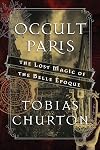
Tobias Churton makes a decent case for the cultural importance of occult thinking in the France of the Belle Epoque (1871-1914), the equivalent to the late Victorian and Edwardian period in Britain. 'Occult Paris' (though it has its narrative faults) is an excellent guide in this respect.
We should stand back and ask what was going on here at a more fundamental level. Something similar was going on in both the UK and Britain. There was some important 'occult' cultural interaction between the show more two cultures - another book perhaps. Why was this?
In both cases, an educated upper middle class and an increasingly declasse minor upper class were responding to radical modernisation and 'embourgeoisement'. In both cases, deracinated individuals clung together and sought out the 'spiritual' in response to a materially-centred culture.
The differences owe a great deal to national tradition and education. In Britain, the core drivers were the English public school, Oxbridge, a powerful literary tradition and the study of the classics. In France, it tended to be the Catholic educational tradition and the draw of Paris itself.
The British revolt against materialism amongst the petty intelligentsia was drawn to paganism and (with some continental influence) what would become Magick. The French revolt tended more to heterodox spirituality and artistic creativity - musical, painterly, poetic, symbolic and ritualistic.
Churton puts effort into exploring all these creativities but most notably the emergence of a romantic symbolism in art, music and literature. He explores the brief period of this efflorescence of resistance to the material world in the music of Debussy and Satie as much as in the painters of the period.
What he elucidates is just how interconnected individuals were. Although there were important precursors, they should be regarded as a 'generation' which would be transformed negatively by the First World War and be succeeded by the materialist anti-system world of Surrealism (via Dada).
Underpinning the art and the cultural innovation was an admittedly chaotic but still identifiable 'spiritual' world view that can reasonably be termed 'occult'. The fundamental belief here was that behind material reality lay another reality. You might think of this as a demotic Platonism.
Part of this derived from a crisis in Catholic belief much as the British equivalent could be positioned as a delayed response to the mid-century crisis created by Darwinian scientific materialist thought. In Britain the weakening of Anglicanism was less terrifying than the challenge to Rome in France.
In Britain, the political aspects of the religious crisis were mostly a matter of circulation of elites with the new materialists of the middle class ousting Tory squire and parson but in France the context was a cycle of revolutions in which traditional attitudes were being defeated more coldly and starkly.
Theosophy (which was globally influential), Rosicrucianism, Martinism, Freemasonry, Neo-Gnosticism and Neo-Catharism emerged against the Church but for 'spirituality'. The games that people play meant societies, clubs, committees and petty power struggles.
Churton is good on the nonsense of spiritual activism as organisations and 'churches' came and went, sometimes as no more than fantasies in the minds of their founders or leaders. Personal tensions were as normal here as they are in any form of cultural or indeed political activism.
Are these people important? Well, yes and no. Yes, insofar as we hold to the platitude that everyone is important in their own way and because the ferment of nonsense and sincere searching for meaning had important and profound artistic outcomes for an admittedly brief period.
On the other hand, a lot of the beliefs were nonsense. Most of the participants seemed to have lived in fantasy world of their own completely detached from reality with little serious or intelligent philosophical investigation of their own condition. They were 'passing time before death'.
Having said this, it is a story that needs to be told. Men like Peladan, Papus, De Guaita and a host of other figures are part of French and European (more indirectly Anglo-Saxon) cultural history. Symbolist art and music is better comprehended for this book.
There is one point of criticism and that is the narrative approach. Churton is strongly 'simpatico' towards these figures. Nothing wrong with that (someone needs to be) but his engagement sometimes means the narrative is disconnected so that chronology is hard to establish.
Of course, a lot of this is inevitable with so many disparate characters criss-crossing, sometimes tangentially, often squabbling, in a rather chaotic 'movement' with no central Breton to enforce discipline (much as Peladan may have tried and failed).
The book is well and sensitively illustrated and is recommended to anyone interested in European cultural history, the history of modern art, Symbolism, French literature and the history of 'Western esotericism' or perhaps even of religion itself. show less
We should stand back and ask what was going on here at a more fundamental level. Something similar was going on in both the UK and Britain. There was some important 'occult' cultural interaction between the show more two cultures - another book perhaps. Why was this?
In both cases, an educated upper middle class and an increasingly declasse minor upper class were responding to radical modernisation and 'embourgeoisement'. In both cases, deracinated individuals clung together and sought out the 'spiritual' in response to a materially-centred culture.
The differences owe a great deal to national tradition and education. In Britain, the core drivers were the English public school, Oxbridge, a powerful literary tradition and the study of the classics. In France, it tended to be the Catholic educational tradition and the draw of Paris itself.
The British revolt against materialism amongst the petty intelligentsia was drawn to paganism and (with some continental influence) what would become Magick. The French revolt tended more to heterodox spirituality and artistic creativity - musical, painterly, poetic, symbolic and ritualistic.
Churton puts effort into exploring all these creativities but most notably the emergence of a romantic symbolism in art, music and literature. He explores the brief period of this efflorescence of resistance to the material world in the music of Debussy and Satie as much as in the painters of the period.
What he elucidates is just how interconnected individuals were. Although there were important precursors, they should be regarded as a 'generation' which would be transformed negatively by the First World War and be succeeded by the materialist anti-system world of Surrealism (via Dada).
Underpinning the art and the cultural innovation was an admittedly chaotic but still identifiable 'spiritual' world view that can reasonably be termed 'occult'. The fundamental belief here was that behind material reality lay another reality. You might think of this as a demotic Platonism.
Part of this derived from a crisis in Catholic belief much as the British equivalent could be positioned as a delayed response to the mid-century crisis created by Darwinian scientific materialist thought. In Britain the weakening of Anglicanism was less terrifying than the challenge to Rome in France.
In Britain, the political aspects of the religious crisis were mostly a matter of circulation of elites with the new materialists of the middle class ousting Tory squire and parson but in France the context was a cycle of revolutions in which traditional attitudes were being defeated more coldly and starkly.
Theosophy (which was globally influential), Rosicrucianism, Martinism, Freemasonry, Neo-Gnosticism and Neo-Catharism emerged against the Church but for 'spirituality'. The games that people play meant societies, clubs, committees and petty power struggles.
Churton is good on the nonsense of spiritual activism as organisations and 'churches' came and went, sometimes as no more than fantasies in the minds of their founders or leaders. Personal tensions were as normal here as they are in any form of cultural or indeed political activism.
Are these people important? Well, yes and no. Yes, insofar as we hold to the platitude that everyone is important in their own way and because the ferment of nonsense and sincere searching for meaning had important and profound artistic outcomes for an admittedly brief period.
On the other hand, a lot of the beliefs were nonsense. Most of the participants seemed to have lived in fantasy world of their own completely detached from reality with little serious or intelligent philosophical investigation of their own condition. They were 'passing time before death'.
Having said this, it is a story that needs to be told. Men like Peladan, Papus, De Guaita and a host of other figures are part of French and European (more indirectly Anglo-Saxon) cultural history. Symbolist art and music is better comprehended for this book.
There is one point of criticism and that is the narrative approach. Churton is strongly 'simpatico' towards these figures. Nothing wrong with that (someone needs to be) but his engagement sometimes means the narrative is disconnected so that chronology is hard to establish.
Of course, a lot of this is inevitable with so many disparate characters criss-crossing, sometimes tangentially, often squabbling, in a rather chaotic 'movement' with no central Breton to enforce discipline (much as Peladan may have tried and failed).
The book is well and sensitively illustrated and is recommended to anyone interested in European cultural history, the history of modern art, Symbolism, French literature and the history of 'Western esotericism' or perhaps even of religion itself. show less
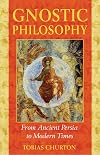
Unlike the previous reviewer, I read every word of this book. First, it is not about some slightly interesting "idea" circulating in the development of Christianity. It's about gnosis which is the full realization of being. It's about the ancient and eternal quest for the Meaning of Existence. It's the history of a philosophical search based on the illusion of separation from source that's become entangled over the long years in complex literalism. And it's made thrillingly clear to a show more careful reader because it's well understood by its own writer. This one will always have space on my bookshelves, shelves that get smaller as the years pass rather than larger. I seem to be getting very picky as I go along. show less
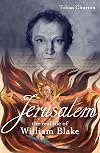
A very insightful and enjoyable look at the actual day-to-day of William Blake. Some parts were pretty tough going (the different religious factions of the time were a bit hard to get my head around), but on the whole an excellent read.
Lists
You May Also Like


Associated Authors
Statistics
- Works
- 33
- Also by
- 3
- Members
- 1,675
- Popularity
- #15,348
- Rating
- 3.6
- Reviews
- 17
- ISBNs
- 69
- Languages
- 7
- Favorited
- 1