
Stephan A. Hoeller
Author of The Gnostic Jung and the Seven Sermons to the Dead (Quest Books)
About the Author
Works by Stephan A. Hoeller
Jung and the Lost Gospels: Insights into the Dead Sea Scrolls and the Nag Hammadi Library (1989) 227 copies, 2 reviews
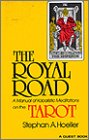
The Royal Road: A Manual of Kabalistic Meditations on the Tarot (A Quest book) (1975) 60 copies, 1 review
A Gnostic Catechism 4 copies
Carl Gustav Jung a ztracená evangelia: Záhada svitků od Mrtvého moře a z Nag Hammádí (2005) 2 copies
The Gnostic Catechism 1 copy
"Our Hermetic Heritage" 1 copy
JUNG AND THE LOST GOSPELS 1 copy
Associated Works
Tagged
Common Knowledge
- Canonical name
- Hoeller, Stephan A.
- Legal name
- Hoeller, Stephan A.
- Birthdate
- 1931-11-27
- Gender
- male
- Education
- University of Innsbruck, Austria (PhD|Philosophy)
- Occupations
- professor emeritus
neo-Gnostic bishop
author
lecturer
freemason - Organizations
- Gnostic Society of Los Angeles
Manly P. Hall Philosophical Research Society
Theosophical Society
College of Oriental Studies, Los Angeles
Ecclesia Gnostica - Nationality
- Hungary
- Birthplace
- Budapest, Hungary
- Places of residence
- Budapest, Hungary
Hollywood, California, USA - Associated Place (for map)
- Hungary
Members
Reviews
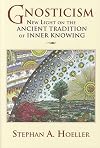
If one wishes to gather a basic understanding of Gnostic tradition, its lineage, and its relevance in contemporary thought this is as good a place to start as any. It is comprehensive enough in scope, but being an introduction it does not delve too deep into any one component of its subject. The tone of the book is its major flaw. Hoeller at times comes across as proselytizing and dogmatic, and at times seems unprofessional, at times injecting his prose with awkardly placed irony and show more colloquial talk, or referencing his own work and expertise. It is hoped that a critical reader can pass can pass over the work's shortcomings, that they neither dismiss it nor embrace it as some sort of self help tract, andd see it as a general and helpful introduction to a long and fruitful set of traditions. The appended reading list is balanced and extensive. He who has ears, let him hear. He who seeks, and continues to seek, shall find. show less
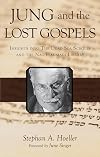
Fascinating view of Jung's symbolic interpretations applied to the Dead Sea writings.
“… it may be at least possible for us to state certain basic axioms which could serve as the principal indicators of the message of this Gnosis….
“1. …a pneumatic (spiritual, or more than personal) element is an organic part of the human psyche….
“2. …this spiritual element carries on an active dialogue with the personal element of our selfhood through the use of symbols….
“3. …the symbols proceeding from the pneumatic component of the soul reveal a path of spiritual or show more psychological development which can be traced, not only backward toward a cause in the past, but forward to a goal in the future….
“4. …prior to an arising of Gnosis (or individuation as Jung might call it) the human soul is dominated by many blind and foolish powers (projections and unconscious compulsions)….
“5. …the alienation of consciousness, along with its attendant feelings of forlornness, dread and homesickness, must be fully experienced before it can be overcome…
“6. …the goal of spiritual growth is expressed by images of completion in a whole, which the Gnostics often called the Pleroma (fullness) and/or the Anthropos, or Primal Man and which Jung called the Self. This Self, the representative of the fullness of being within an individual context, is unique for each individual and is formed by the integration of the little self, or ego, and the unconscious….
“7. …the wholeness, or Self, which is the end result of the process of spiritual growth, is characterized by all the qualities such as power, value, holiness which religious systems have always attributed to God….
“8. …the growth of the soul has as its goal a state of integrated wholeness rather than a condition of moral perfection….”
Kindle location 962-1057
“... there is an adversary or oppositional power, active in life, which seems bent on preventing or at least retarding the enlightenment of the soul, in order to hold it in some sort of captivity within a universe of darkness and illusion.” location 1009 show less
“1. …a pneumatic (spiritual, or more than personal) element is an organic part of the human psyche….
“2. …this spiritual element carries on an active dialogue with the personal element of our selfhood through the use of symbols….
“3. …the symbols proceeding from the pneumatic component of the soul reveal a path of spiritual or show more psychological development which can be traced, not only backward toward a cause in the past, but forward to a goal in the future….
“4. …prior to an arising of Gnosis (or individuation as Jung might call it) the human soul is dominated by many blind and foolish powers (projections and unconscious compulsions)….
“5. …the alienation of consciousness, along with its attendant feelings of forlornness, dread and homesickness, must be fully experienced before it can be overcome…
“6. …the goal of spiritual growth is expressed by images of completion in a whole, which the Gnostics often called the Pleroma (fullness) and/or the Anthropos, or Primal Man and which Jung called the Self. This Self, the representative of the fullness of being within an individual context, is unique for each individual and is formed by the integration of the little self, or ego, and the unconscious….
“7. …the wholeness, or Self, which is the end result of the process of spiritual growth, is characterized by all the qualities such as power, value, holiness which religious systems have always attributed to God….
“8. …the growth of the soul has as its goal a state of integrated wholeness rather than a condition of moral perfection….”
Kindle location 962-1057
“... there is an adversary or oppositional power, active in life, which seems bent on preventing or at least retarding the enlightenment of the soul, in order to hold it in some sort of captivity within a universe of darkness and illusion.” location 1009 show less
Lists
You May Also Like


Associated Authors
Statistics
- Works
- 29
- Also by
- 2
- Members
- 957
- Popularity
- #26,916
- Rating
- 4.0
- Reviews
- 8
- ISBNs
- 25
- Languages
- 6
- Favorited
- 1