
Elizabeth Kay (1) (1949–)
Author of The Divide
For other authors named Elizabeth Kay, see the disambiguation page.
Series
Works by Elizabeth Kay
Associated Works
Tagged
Common Knowledge
- Birthdate
- 1949-07-09
- Gender
- female
- Education
- Bath Spa University (MA|Creative Writing)
Nonsuch High School for Girls - Occupations
- short story writer
author - Agent
- Madeleine Milburn
- Nationality
- UK
- Birthplace
- London, England, UK
- Associated Place (for map)
- England, UK
Members
Reviews
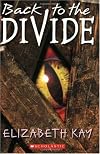
Reviewed by K. Osborn Sullivan for TeensReadToo.com
After spending the previous summer in a magical world where humans are only a legend, Felix settles in back at home for a nice, normal life with his parents. During his trip to the magical world the previous year, Felix's heart condition had been cured with magic, so he is able to finally engage in the kinds of normal activities he has always dreamed of.
But a quiet life is not in the cards for Felix. One day, he is shocked to find his enemy show more from the magical world, Snakeweed, standing on the front porch. The evil Snakeweed had managed to sneak into the human world. He did not find it to his liking, however, so he sought out Felix to give him the spell to return to his own magical world. As a means to force Felix into giving up the return spell, Snakeweed puts a spell on Felix's parents that turns them into marble statues. Felix soon realizes that he must return to the magical world and enlist his friends' help once again in order to free his parents.
BACK TO THE DIVIDE is a fine sequel for readers who enjoyed THE DIVIDE, the first book in the trilogy. I must admit, though, that I was not as entertained by it as I was by the original. Perhaps that is largely because the novelty of the magical world was wearing off. But what bothered me more was that the book seemed to focus on an awful lot of traveling. It felt like Felix and his companions moved back and forth across the magical world a dozen times during the story. I'm sure they didn't, but it felt that way at times.
Despite these complaints, I was pleased to see that the fun creatures from THE DIVIDE were back in this sequel, including giant, bird-like, math-obsessed brazzles and evil, shape-shifting sinistroms. Also, in addition to the main quest in the magical world, there was an interesting sub-plot about how the spell that turned Felix's parents to marble was threatening to destroy the entire non-magical world. This added some tension to the story. And, like its predecessor, BACK TO THE DIVIDE has a great cover that is split in the middle. It does not necessarily contribute to the story, but it is a unique feature nonetheless, that might add to the experience of the book for some readers.
Overall, for those who enjoyed their first journey across the Divide, I recommend a return trip. show less
After spending the previous summer in a magical world where humans are only a legend, Felix settles in back at home for a nice, normal life with his parents. During his trip to the magical world the previous year, Felix's heart condition had been cured with magic, so he is able to finally engage in the kinds of normal activities he has always dreamed of.
But a quiet life is not in the cards for Felix. One day, he is shocked to find his enemy show more from the magical world, Snakeweed, standing on the front porch. The evil Snakeweed had managed to sneak into the human world. He did not find it to his liking, however, so he sought out Felix to give him the spell to return to his own magical world. As a means to force Felix into giving up the return spell, Snakeweed puts a spell on Felix's parents that turns them into marble statues. Felix soon realizes that he must return to the magical world and enlist his friends' help once again in order to free his parents.
BACK TO THE DIVIDE is a fine sequel for readers who enjoyed THE DIVIDE, the first book in the trilogy. I must admit, though, that I was not as entertained by it as I was by the original. Perhaps that is largely because the novelty of the magical world was wearing off. But what bothered me more was that the book seemed to focus on an awful lot of traveling. It felt like Felix and his companions moved back and forth across the magical world a dozen times during the story. I'm sure they didn't, but it felt that way at times.
Despite these complaints, I was pleased to see that the fun creatures from THE DIVIDE were back in this sequel, including giant, bird-like, math-obsessed brazzles and evil, shape-shifting sinistroms. Also, in addition to the main quest in the magical world, there was an interesting sub-plot about how the spell that turned Felix's parents to marble was threatening to destroy the entire non-magical world. This added some tension to the story. And, like its predecessor, BACK TO THE DIVIDE has a great cover that is split in the middle. It does not necessarily contribute to the story, but it is a unique feature nonetheless, that might add to the experience of the book for some readers.
Overall, for those who enjoyed their first journey across the Divide, I recommend a return trip. show less
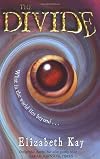
A boy with a serious heart condition goes on vacation to Costa Rica where he wants to see the continental divide. While there he passes out, as his condition causes him to do often, but when he awakens he finds himself in a different world where unicorns, elves and magic are real and humans and science are the things of myth. This was a fun book. It was well suited for the young side of the young adult spectrum. I love the idea of the world and all of the mythical creatures. It was a fun show more twist to have humans be the mythical creature. The social commentary was a little obvious but well suited for the age group it targets. It brought up issues of medical ethics, the power and responsibility of the press, and making your own destiny that would be good discussions to continue with kids that have read the book. I would recommend this to young teens or tweens that enjoy magical worlds. show less
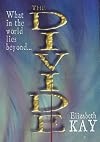
Felix has a rare, serious heart condition. He pesters his parents to take him somewhere exciting before he dies: Costa Rica. When Felix breaks away from them to explore the Continental Divide, he realises he’s pushed himself too far. But when he awakens from his faint, he is in an entirely different world. Here, mythological creatures and races exist, magic is commonplace; and conversely, no-one really believes in human beings, and everyone is in awe of Felix’s basic scientific show more instruments.
There are two main quests in this story which occupy Felix’s mind: 1) how to get home and 2) how to manage his disease while isolated from modern medicine. Although he meets and befriends a young tangle-child named Betony shortly after his arrival, she is frequently surprised by how touchy he can be about the subject of death. However it does not take her too long to decide on the advantages of accompanying Felix, in the name of an adventure she could never hope for in her native provincial Geddon.
In addition to Felix’s appearance, there is conflict shaping up in this peaceful land. A japegrin named Snakeweed has decided that the time has come to make a quick buck He is working on developing a range of medicines, but his methods are underhanded and his products often untested on the full range of species he is offering to sell them to. Betony comes from a community of herbalists, and her two older siblings find themselves initially unimpressed by Snakeweed’s presentation, then eventually determined to discredit him and his products.
The world that Felix crosses into is not named, but is similar to Felix’s (and our) own in many ways. Technological and industrial advancement is way behind ours, however, as perhaps can be expected when the inhabitants are relying on magic rather than science. Felix is surprised to find, for example, that Betony has never heard of the idea of farming, and can’t understand the point of the concept of a ‘country’. In Betony’s world, the king and queen’s main function is to dance and sing, and Felix can’t help noticing that there may be advantages to this type of system, too.
This world has its own distinctive geography and habitation patterns. Only certain areas are inhabited by brittlehorns; and the brazzles that agree to help Felix are reluctant to land in one particular city for fear of being too conspicuous this far from their usual habitat. In addition, in the city of Tiratattle, where much of the story’s action takes place, different parts of town are favoured by different dominant races. This leads to Felix and his new-found friends often having to disguise themselves, with varying degrees of effectiveness.
I found this book enjoyable because of the way it responds to traditional fantasy stereotypes: although many ‘mythological’ creatures are present in this story, the author has introduced some entirely new ‘shadow-beasts’ as well. Conversely, there are creatures from our world that have no identifiable parallel beyond the Divide, although the ‘humungally’ (elephant) is popular in the fairy tales of several of the intelligent races of Betony’s world. I highly recommend this book to all enthusiastic readers, for great ideas, a few laughs, and because it’s got such a dinky cover! show less
There are two main quests in this story which occupy Felix’s mind: 1) how to get home and 2) how to manage his disease while isolated from modern medicine. Although he meets and befriends a young tangle-child named Betony shortly after his arrival, she is frequently surprised by how touchy he can be about the subject of death. However it does not take her too long to decide on the advantages of accompanying Felix, in the name of an adventure she could never hope for in her native provincial Geddon.
In addition to Felix’s appearance, there is conflict shaping up in this peaceful land. A japegrin named Snakeweed has decided that the time has come to make a quick buck He is working on developing a range of medicines, but his methods are underhanded and his products often untested on the full range of species he is offering to sell them to. Betony comes from a community of herbalists, and her two older siblings find themselves initially unimpressed by Snakeweed’s presentation, then eventually determined to discredit him and his products.
The world that Felix crosses into is not named, but is similar to Felix’s (and our) own in many ways. Technological and industrial advancement is way behind ours, however, as perhaps can be expected when the inhabitants are relying on magic rather than science. Felix is surprised to find, for example, that Betony has never heard of the idea of farming, and can’t understand the point of the concept of a ‘country’. In Betony’s world, the king and queen’s main function is to dance and sing, and Felix can’t help noticing that there may be advantages to this type of system, too.
This world has its own distinctive geography and habitation patterns. Only certain areas are inhabited by brittlehorns; and the brazzles that agree to help Felix are reluctant to land in one particular city for fear of being too conspicuous this far from their usual habitat. In addition, in the city of Tiratattle, where much of the story’s action takes place, different parts of town are favoured by different dominant races. This leads to Felix and his new-found friends often having to disguise themselves, with varying degrees of effectiveness.
I found this book enjoyable because of the way it responds to traditional fantasy stereotypes: although many ‘mythological’ creatures are present in this story, the author has introduced some entirely new ‘shadow-beasts’ as well. Conversely, there are creatures from our world that have no identifiable parallel beyond the Divide, although the ‘humungally’ (elephant) is popular in the fairy tales of several of the intelligent races of Betony’s world. I highly recommend this book to all enthusiastic readers, for great ideas, a few laughs, and because it’s got such a dinky cover! show less

I was pleasantly surprised by this one.
hmmm what to say? It's best to let it unfold without spoilers. Let the author's skill take the lead. The scene opens with a young woman coming into a tent to question and educate a prisoner. He crossed the border into "their" territory and she is tasked with asking him questions and enlightening him regarding "their" ways.
hmmm what to say? It's best to let it unfold without spoilers. Let the author's skill take the lead. The scene opens with a young woman coming into a tent to question and educate a prisoner. He crossed the border into "their" territory and she is tasked with asking him questions and enlightening him regarding "their" ways.
Lists
Awards


You May Also Like


Associated Authors
Statistics
- Works
- 10
- Also by
- 1
- Members
- 1,898
- Popularity
- #13,568
- Rating
- 3.8
- Reviews
- 24
- ISBNs
- 88
- Languages
- 9