
Stacy Gregg
Author of The Princess and the Foal
About the Author
Stacy Gregg is the author of The Girl Who Rode the Wind and The Island of Lost Horses, which made the New Zealand Best Seller List in 2015. She will be featured at the annual Storylines Festival of New Zealand Children's Writers and Illustrators 2015. (Bowker Author Biography)
Series
Works by Stacy Gregg
Tagged
Common Knowledge
- Birthdate
- 1968-07-23
- Gender
- female
- Education
- Ngaruawahia High School
King's College, Auckland, New Zealand - Occupations
- fashion editor
children's book author - Organizations
- SPCA Horse Welfare Auxiliary (board member)
- Nationality
- New Zealand
- Birthplace
- Melbourne, Victoria, Australia
- Places of residence
- Ponsonby, Auckland, New Zealand
- Associated Place (for map)
- New Zealand
Members
Reviews
A high 3.5 stars. This review is also available on my blog, Read Till Dawn.
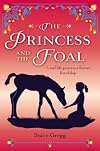
I picked this up at the library because its cover and title reminded me of The Princess and the Unicorn by Carol Hughes, which charmed me as a little girl devouring books about fairies and unicorns. I'm very glad I didn't read The Princess and the Foal when I was actually reading The Princess and the Unicorn, because I just know I would have been hugely disappointed by it; far from being a magical book about a fancy show more princess and her foal (who, you know, I kind of assumed would be able to at least talk or something), it's actually a book about a girl struggling to find her place in the world after the death of her mother. It was nothing like what I was looking for, but it was a beautiful story and I'm very glad I read it.
Haya's mother died when she was three. The book begins right before her mother's sudden death (via airplane accident) and goes until she is twelve. Haya (in both real life and the book) is an amazing equestrienne, and it was very interesting to watch her develop those skills throughout her childhood, beginning with rambling rides around the horse yard atop horses who didn't care if a toddler sat on them while they wandered around, and training until she was good enough to lead her father's stable in the King's Cup (which is a huge horse competition, apparently). You get to watch Haya and, to a certain extent, her brother Ali grow up, you get to watch her relationship with the people around her change as she assumes more responsibility as a princess, you get to watch her get into all sorts of typical little-girl mischief. My favorite example of this is when she stuck her brother in the dumbwaiter going from her room to the kitchen, because she didn't want to try it out with her favorite doll. As a big sister, I can relate with the appeal of using siblings as guinea pigs.
The biggest disappointment with this book came from looking the real facts up on Wikipedia. The real Princess Haya is still an amazing horse-woman who accomplished everything she did in the book, and her mother really did die in a lightning storm when Haya was three, but there are just some peripheral details that were left out whose discovery changes the way I look at the events in the book. For example, Haya and Ali's mother was the third out of four wives King Hussein had throughout his life (two of which he was divorced from, and the last of which he married a mere year after the death of Haya's mother). What's more, Haya had far more than just one younger brother (Ali) and one older brother (a shadowy figure mentioned only once as an explanation of why Ali would not become king): her own mother had also adopted another daughter shortly before her death, and King Hussein had nine other children between his other wives. Three of these were born during the time period covered in the book, and none of them were so much as hinted at. I can understand why Gregg chose to skate past all of these facts in order to streamline the story into a shorter, more intimate tale of family and healing from loss. However, Gregg goes a step farther than just ignoring the facts - she actually clips and twists them to fit her own picture. In the epilogue, she describes the way Haya married the shiekh of Dubai and had two children with him; what she completely neglects to mention is that this skeikh has quite a few wives, Haya is only a "junior wife," and her two children are 1/12 of the 24 kids he has fathered between his different wives.
A little less of a romantic ending, isn't it? I mean, I can see why Gregg would clip the polygamy from her epilogue if a bunch of younger kids are going to be reading it. I would almost have preferred that she left the marriage bit out of the epilogue altogether, though, because the way it is feels kind of like lying. Then again, I think I'm digging a bit too deeply into this - everyone knows that "based on a true story" means nothing more than "I'm going to steal the names and the setting and make up my own story." Gregg definitely did far more than that with The Princess and the Foal - instead of clipping pieces she liked from the true story and making up the rest, she started with the whole story and clipped away what she didn't like. And I really can't complain too much about what she threw away, because what was left was a story about family, grief, and horses strong enough that even my aversion to horse-back riding didn't keep me from enjoying it. show less
I picked this up at the library because its cover and title reminded me of The Princess and the Unicorn by Carol Hughes, which charmed me as a little girl devouring books about fairies and unicorns. I'm very glad I didn't read The Princess and the Foal when I was actually reading The Princess and the Unicorn, because I just know I would have been hugely disappointed by it; far from being a magical book about a fancy show more princess and her foal (who, you know, I kind of assumed would be able to at least talk or something), it's actually a book about a girl struggling to find her place in the world after the death of her mother. It was nothing like what I was looking for, but it was a beautiful story and I'm very glad I read it.
Haya's mother died when she was three. The book begins right before her mother's sudden death (via airplane accident) and goes until she is twelve. Haya (in both real life and the book) is an amazing equestrienne, and it was very interesting to watch her develop those skills throughout her childhood, beginning with rambling rides around the horse yard atop horses who didn't care if a toddler sat on them while they wandered around, and training until she was good enough to lead her father's stable in the King's Cup (which is a huge horse competition, apparently). You get to watch Haya and, to a certain extent, her brother Ali grow up, you get to watch her relationship with the people around her change as she assumes more responsibility as a princess, you get to watch her get into all sorts of typical little-girl mischief. My favorite example of this is when she stuck her brother in the dumbwaiter going from her room to the kitchen, because she didn't want to try it out with her favorite doll. As a big sister, I can relate with the appeal of using siblings as guinea pigs.
The biggest disappointment with this book came from looking the real facts up on Wikipedia. The real Princess Haya is still an amazing horse-woman who accomplished everything she did in the book, and her mother really did die in a lightning storm when Haya was three, but there are just some peripheral details that were left out whose discovery changes the way I look at the events in the book. For example, Haya and Ali's mother was the third out of four wives King Hussein had throughout his life (two of which he was divorced from, and the last of which he married a mere year after the death of Haya's mother). What's more, Haya had far more than just one younger brother (Ali) and one older brother (a shadowy figure mentioned only once as an explanation of why Ali would not become king): her own mother had also adopted another daughter shortly before her death, and King Hussein had nine other children between his other wives. Three of these were born during the time period covered in the book, and none of them were so much as hinted at. I can understand why Gregg chose to skate past all of these facts in order to streamline the story into a shorter, more intimate tale of family and healing from loss. However, Gregg goes a step farther than just ignoring the facts - she actually clips and twists them to fit her own picture. In the epilogue, she describes the way Haya married the shiekh of Dubai and had two children with him; what she completely neglects to mention is that this skeikh has quite a few wives, Haya is only a "junior wife," and her two children are 1/12 of the 24 kids he has fathered between his different wives.
A little less of a romantic ending, isn't it? I mean, I can see why Gregg would clip the polygamy from her epilogue if a bunch of younger kids are going to be reading it. I would almost have preferred that she left the marriage bit out of the epilogue altogether, though, because the way it is feels kind of like lying. Then again, I think I'm digging a bit too deeply into this - everyone knows that "based on a true story" means nothing more than "I'm going to steal the names and the setting and make up my own story." Gregg definitely did far more than that with The Princess and the Foal - instead of clipping pieces she liked from the true story and making up the rest, she started with the whole story and clipped away what she didn't like. And I really can't complain too much about what she threw away, because what was left was a story about family, grief, and horses strong enough that even my aversion to horse-back riding didn't keep me from enjoying it. show less
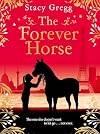
"The Forever Horse" was a fabulous novel for younger readers. It had two intertwining stories - one set in modern-day Paris and the other in 1852. Both protagonists were young females and talented artists although neither was appreciated thanks to their gender. The first chapter was a cliffhanger! The story then went back twelve months so the reader has to wait until the end before discovering the resolution.
I did find Rose and Maisie rather obnoxious at the start but both girls grew on me show more and by the end, I was cheering for them both. They each had issues and problems they were struggling with but they both loved horses and spent most of their days drawing, painting and observing them.
My favourite character, however, was Claude, the beautiful, brave horse who was seriously injured in the line of duty while working for the National Gendarmerie. He became Maisie's muse but it broke my heart when he was hurt and in so much pain.
From the start, this story was compelling and I loved that it was about art, horses and overcoming obstacles. I also discovered that Rose's character was actually based on the real French artist, Rosa Bonheur so I did some research on her and her artwork once I had finished the book.
Being both a lover of art and horses, I found "The Forever Horse" a touching and interesting read. show less
I did find Rose and Maisie rather obnoxious at the start but both girls grew on me show more and by the end, I was cheering for them both. They each had issues and problems they were struggling with but they both loved horses and spent most of their days drawing, painting and observing them.
My favourite character, however, was Claude, the beautiful, brave horse who was seriously injured in the line of duty while working for the National Gendarmerie. He became Maisie's muse but it broke my heart when he was hurt and in so much pain.
From the start, this story was compelling and I loved that it was about art, horses and overcoming obstacles. I also discovered that Rose's character was actually based on the real French artist, Rosa Bonheur so I did some research on her and her artwork once I had finished the book.
Being both a lover of art and horses, I found "The Forever Horse" a touching and interesting read. show less
This book follows the winning format of many of Stacy Gregg's other historical horse books. There are two intertwined stories separated in time but linked in some way. In The Forever Horse, the link is a diary written by a famous horse artist, Rose Bonifait and discovered by Maisie, a horse-loving young girl who has won a scholarship to attend the Parisian School des Beaux-Arts, While Maisie loves horses, she doesn't have one and has never even ridden a horse. Shortly after arriving in Paris show more to begin her scholarship, she meets a police horse called Claude and falls in love. Claude becomes her muse, the horse that she paints over and over again despite her teacher's and classmates' disdain. It isn't until tragedy strikes, that Masie paints a picture that fetches the top price in the auction of the students' work.
The first chapter ends with a cliffhanger and then we are taken back a year in time to the beginning of Maisie's story. The reader has to wait until the very end of the book to discover the resolution of the situation set up in the beginning. This technique creates a tension that keeps the reader reading. Both Maisie and Rose are well-drawn characters who each have to struggle with their own problems and issues. Chapter by chapter, the story moves between the girls. The use of different fonts signals the move between characters.
Like the other books in this series, this story has a nugget of truth at its core. The character of Rose Bonifait is based on the famous artist Rosa Bonheur and the police stables that Maisie visits can still be found on Boulevard Henri IV. However, those details won't matter to all the horse-loving girls who enjoy Stacy Gregg's books. They want beautiful horses, girls they can identify with and a thrilling story and they have all these in The Forever Horse. show less
The first chapter ends with a cliffhanger and then we are taken back a year in time to the beginning of Maisie's story. The reader has to wait until the very end of the book to discover the resolution of the situation set up in the beginning. This technique creates a tension that keeps the reader reading. Both Maisie and Rose are well-drawn characters who each have to struggle with their own problems and issues. Chapter by chapter, the story moves between the girls. The use of different fonts signals the move between characters.
Like the other books in this series, this story has a nugget of truth at its core. The character of Rose Bonifait is based on the famous artist Rosa Bonheur and the police stables that Maisie visits can still be found on Boulevard Henri IV. However, those details won't matter to all the horse-loving girls who enjoy Stacy Gregg's books. They want beautiful horses, girls they can identify with and a thrilling story and they have all these in The Forever Horse. show less
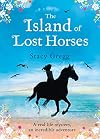
Stacy Gregg obviously has an affinity with horses and this clearly comes through in her writing. While I enjoyed this novel, I preferred "The Forever Horse" which I read earlier this year. However, I still found "The Island of the Lost Horses" an entertaining read. I enjoyed the modern story of Beatriz but it was the historical story of Felipe that I found fascinating as she was alive during the Spanish Inquisition.
Lists
Awards


You May Also Like


Associated Authors
Statistics
- Works
- 53
- Members
- 1,126
- Popularity
- #22,819
- Rating
- 4.0
- Reviews
- 15
- ISBNs
- 197
- Languages
- 5