
Scott Aniol
Author of Worship in Song: A Biblical Philosophy of Music and Worship
About the Author
Scott Aniol, PhD, is assistant professor of ministry and worship at Southwestern Baptist Theological Seminary. He is the author of several books, speaks around the country on the subjects of culture and worship, and blogs at religiousaffections.org
Image credit: Photo from https://www.scottaniol.com 2024
Works by Scott Aniol
Let the Little Children Come: Family Worship on Sunday (and the Other Six Days Too) (2021) 39 copies
Tagged
Common Knowledge
- Birthdate
- 20th Century
- Gender
- male
Members
Reviews
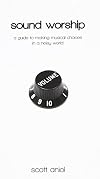
Aniol has created a compelling case for care in music all grounded in the sufficiency of Scripture and the character of God. Music is not amoral. It matters to God and has always mattered to the people of God, both OT and NT saints. Music plays an important role in worship, in communicating truth, in shaping our affections, and in expressing beauty. In worship which is a spiritual response to God's truth, music allows us to respond and to learn as we ought. In light of its great value, music show more should be carefully evaluated. Both the content and the form communicate the message. Both must be faithful to God. In order to accomplish this, one must understand that faithfulness to God involves truth, goodness, and beauty. These transcendentals are standards set by God Himself. We are not free to treat our biases as authoritative. They are marred by sin like the rest of our being. If God is the standard, then we can and should evaluate carefully. It will take work. Consequently, we should be willing to adjust our lives to accomplish this important task.
The book is exceptionally clear. It was obviously written with a mind to those with no musical understanding. The author is careful in his argument and provides clear conclusions that reinforce the key point. It is a fitting work for pastors and congregation. show less
The book is exceptionally clear. It was obviously written with a mind to those with no musical understanding. The author is careful in his argument and provides clear conclusions that reinforce the key point. It is a fitting work for pastors and congregation. show less
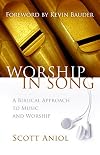
This review is not a debate with the positions presented in the book (though I could, if you saw my copy, you would see the many "debates" that I had as I was reading the book). Rather, after reading the book thoroughly and carefully, these are the answers that I would give to a friend who asked for a review.
1) The hermeneutical terminology used is novel. Two categories of interpretive methods are presented, encyclopedic (strictly literal) and encompassing (principalizing). The position of show more the author is the latter. I've never heard of this delineation before; I searched in all of my books, Bible programs, and on the internet and could not find these categories. My presumption is that it is new in this book. The reason, I believe, that the "principalizing" method was asserted is because the N.T. epistles reveal very little regarding congregational music, so in order to build a theology of music, passages of Scripture that are unrelated to N.T. church practice had to be utilized. The book makes generous application of O.T. worship to N.T. church practice. Interestingly, the encyclopedic method is similar to the regulative principal of interpretation and the encompassing method is similar to the normative principal of interpretation; aside from this topic, I'm inclined to think that the author's theological system would be more regulative.
2) The book should be subtitled "A Philosophical Approach To Music And Worship" instead of "A Biblical Approach To Music And Worship." The book has no exposition of Scripture in it. There are quite a few individual verses which are used to cover various topics, but they are more related to word studies and concepts. There are also a few places where there are invalid connections between O.T. worship and N.T. practice (such as we are the temple of God and an holy priesthood.) One of the first things that I did was to go to the index to find out how he treated 1st Corinthians 14, Ephesians 5:19, and Colossians 3:16. He didn't. He mentioned these three passages, and he quoted another author's point of view as it related to Colossians 3:16, but he didn't explain them historically, grammatically, and in context. This is why I say that it should be called a philosophical approach instead of a biblical approach; one would think that if you were developing a N.T. theology of music, that you would rely heavily on these three primary passages of Scripture that deal specifically with music in the N.T. congregation. There is topical/philosophical preaching and there is expositional preaching. If this book were preaching, it would fall in the first category.
3) Logically, this book was a challenge to read. It was laced with straw-men (CCM proponents assert...), false authorities (quoting creeds, confessions and authors instead of Scripture), assumed premises (illustrated in the title) and other logical fallacies. From the very beginning of the book, the assumption is that the purpose of music in the church is worship. While the ultimate purpose of all of life is to glorify God, the N.T. epistles do not teach that the purpose of music in the church is worship. In fact, all 3 of the previously mentioned passages of Scripture assert the usage of music for mutual edification of believers. So, the entire book is built on an assumed premise.
Conclusion: The irony is that I have a very conservative musical philosophy. I would certainly be more comfortable attending the church where this author is the music director than a church with a praise band. However, the hermeneutical approach, the absence of exposition, and the logical fallacies make this a book which turned out to be more laborious and frustrating than edifying or helpful. Finally, to use the words of Paul to Titus, "the commandments of men" turn men from the truth. When men create expectations which are not firmly rooted in Scripture, they open themselves to charges of legalism and actually will turn people away from a balanced and biblical life view. show less
1) The hermeneutical terminology used is novel. Two categories of interpretive methods are presented, encyclopedic (strictly literal) and encompassing (principalizing). The position of show more the author is the latter. I've never heard of this delineation before; I searched in all of my books, Bible programs, and on the internet and could not find these categories. My presumption is that it is new in this book. The reason, I believe, that the "principalizing" method was asserted is because the N.T. epistles reveal very little regarding congregational music, so in order to build a theology of music, passages of Scripture that are unrelated to N.T. church practice had to be utilized. The book makes generous application of O.T. worship to N.T. church practice. Interestingly, the encyclopedic method is similar to the regulative principal of interpretation and the encompassing method is similar to the normative principal of interpretation; aside from this topic, I'm inclined to think that the author's theological system would be more regulative.
2) The book should be subtitled "A Philosophical Approach To Music And Worship" instead of "A Biblical Approach To Music And Worship." The book has no exposition of Scripture in it. There are quite a few individual verses which are used to cover various topics, but they are more related to word studies and concepts. There are also a few places where there are invalid connections between O.T. worship and N.T. practice (such as we are the temple of God and an holy priesthood.) One of the first things that I did was to go to the index to find out how he treated 1st Corinthians 14, Ephesians 5:19, and Colossians 3:16. He didn't. He mentioned these three passages, and he quoted another author's point of view as it related to Colossians 3:16, but he didn't explain them historically, grammatically, and in context. This is why I say that it should be called a philosophical approach instead of a biblical approach; one would think that if you were developing a N.T. theology of music, that you would rely heavily on these three primary passages of Scripture that deal specifically with music in the N.T. congregation. There is topical/philosophical preaching and there is expositional preaching. If this book were preaching, it would fall in the first category.
3) Logically, this book was a challenge to read. It was laced with straw-men (CCM proponents assert...), false authorities (quoting creeds, confessions and authors instead of Scripture), assumed premises (illustrated in the title) and other logical fallacies. From the very beginning of the book, the assumption is that the purpose of music in the church is worship. While the ultimate purpose of all of life is to glorify God, the N.T. epistles do not teach that the purpose of music in the church is worship. In fact, all 3 of the previously mentioned passages of Scripture assert the usage of music for mutual edification of believers. So, the entire book is built on an assumed premise.
Conclusion: The irony is that I have a very conservative musical philosophy. I would certainly be more comfortable attending the church where this author is the music director than a church with a praise band. However, the hermeneutical approach, the absence of exposition, and the logical fallacies make this a book which turned out to be more laborious and frustrating than edifying or helpful. Finally, to use the words of Paul to Titus, "the commandments of men" turn men from the truth. When men create expectations which are not firmly rooted in Scripture, they open themselves to charges of legalism and actually will turn people away from a balanced and biblical life view. show less
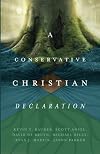
Aniol and others have written this book as a primer to the idea of conservative Christianity. They begin with God and His Word. Based upon the character of God revealed in the Bible and the will of God, also revealed in the Bible, we are able to know some things for certain and act accordingly. We seek after the whole counsel of God. We believe in the universals. We understand that right thinking and right acting must be accompanied by right loving. Worship rightly offered must acknowledge show more these truths and conform itself to the image that God has given of Himself. It must be good, true, and beautiful. Since the standards of these are God Himself, then they must be pursued. In doing this, a modern church places itself faithfully within the stream of generations of believers who have also sought this.
This is an excellent and easily understandable introduction to some very important ideas. It should be useful for both pastors and laymen. show less
This is an excellent and easily understandable introduction to some very important ideas. It should be useful for both pastors and laymen. show less
You May Also Like


Associated Authors
Statistics
- Works
- 33
- Members
- 395
- Popularity
- #61,386
- Rating
- 3.9
- Reviews
- 3
- ISBNs
- 31