
Wensley Clarkson
Author of Whatever Mother Says...: A True Story of a Mother, Madness and Murder (St. Martin's True Crime Library)
About the Author
Wensley Clarkson, a British tabloid writer, is the author of more than two dozen true-crime novels and quickie celebrity biographies. In his tell-all book, Death at Every Stop: The True Story of Alleged Gay Serial Killer Andrew Cunanan, Clarkson takes the reader into the mind of the playboy who show more murdered Italian fashion designer Gianni Versace. Some of Clarkson's other true-crime novels include Whatever Mother Says, the shocking true story of a woman who was arrested in 1993 for the torture murders of her two daughters. Doctors of Death is the chilling true tales of psychopathic physicians; and An Eye for An Eye is the story of a woman out for revenge after the murder of her daughter, which was turned into a feature film starring Sally Fields. Clarkson's unauthorized biographies include exposes on Mel Gibson, Tom Cruise, John Travolta, and Quentin Tarantino. (Bowker Author Biography) show less
Works by Wensley Clarkson
Whatever Mother Says...: A True Story of a Mother, Madness and Murder (St. Martin's True Crime Library) (1995) 106 copies, 2 reviews
Serial Killers of Mexico: Chilling Stories of Evil Buried Underneath the Narcos Drug Wars (2022) 31 copies
Sexy Beasts: The True Story of the "Diamond Geezers" and the Record-Breaking $100 Million Hatton Garden Heist (2016) 26 copies
The Railroad Killer: The Shocking True Story of Angel Maturino Resendez and His Alleged Trail of Death (St. Martin's True Crime Library) (1999) 26 copies, 1 review
Hash: The Chilling Inside Story of the Secret Underworld Behind the World's Most Lucrative Drug (2013) 12 copies
The Curse of Brink's-Mat: Twenty-five Years of Murder and Mayhem - The Inside Story of the 20th Century's Most Lucrative Armed Robbery (2012) 12 copies
Killing Goldfinger: The Secret, Bullet-Riddled Life and Death of Britain's Gangster Number One (2017) 9 copies
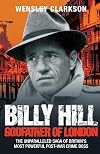
Billy Hill : Godfather of London - The Unparalleled Saga of Britain's Most Powerful Post-War Crime Boss (2008) 6 copies, 1 review
Little Survivors: Ten True Stories of People Who Have Triumphed over Lost Childhoods (2005) 4 copies, 1 review
Killing Charlie: The Bloody, Bullet-Riddled Hunt for the Most Powerful Great Train Robber of All (2004) 2 copies
Secret Narco: The Great Train Robber whose partnership with Pablo Escobar turned Britain on to cocaine (2020) 1 copy
Tagged
Common Knowledge
- Other names
- Bellini, Jon
- Birthdate
- unknown
- Gender
- male
Members
Reviews
Billy Hill: Godfather of London - The Unparalleled Saga of Britain's Most Powerful Post-War Crime Boss by Wensley Clarkson
I have rated this book a star more than it is worth for one reason - anything that helps us understand the nature of the human condition has some value. This story of one of London's major gang lords does just this - despite itself.
This book is a potboiler. It is a weakly written book for the true crime market which seems to take villains' own tales at face value, over-relies on secondary evidence, fails to maintain continuity and gives little social context or background after the early show more chapters. It even feels as if a more thoughtful first few chapters got pushed aside in the rush to meet some deadline.
Nevertheless, it is on our shelf as a basic account of the nearest thing London had for a criminal godfather between the age of the racecourse rackets of the pre-war era (which are the basis for Pinky's world in Graham Greene's Brighton Rock) and the rise of the Krays in the 1960s. The subject is Billy Hill and, indirectly, his less intelligent rival from the earlier period, Jack Spot.
Unlike America, guns were rarely used - the instrument of terror was the razor blade (or 'chiv') designed to mark a man (or woman) for life but not (or rarely) kill. The money came from the usual sources - especially from protection and illegal clubs - but the Second World War created a massive disruption in the laws of supply and demand and so immense opportunities for capital accumulation. In a sense, Billy Hill was just a businessman trying to survive under socialism. His type of calculated sociopathy (which included a sort of benefits system for imprisoned or injured associates) is found often enough wholly legitimately in business within laws that permit supply and demand to work with minimal hindrance - without the violence, of course.
Billy, who did his time as if it was just an occupational hazard, actually came out of it all rather well - if only because he had the ability to out-class Spot and then give way at the right time to the next bunch of entrepreneurs, the quasi-psychotic Krays.
But what is really interesting about this story (and best pulled out of the early chapters) is that the good society can be a bit of a noble lie. The poverty stricken milieu of migrant London (Billy was of Irish extraction) was really engaged in a permanent class war without the politics - no different from the sort of gangsterdom in any society where very intelligent and ruthless males are given no opportunity and so find their chances in ordering their own world, creating no-go areas (in effect) for a policing system that could be about containment and little else. In the end, in such disrupted systems (such as Iraq today), order can only be found by integrating these poor males with weapons into the system through buying their time in some way - in essence, full employment.
Crime and punishment in such societies becomes largely a matter of cat-and-mouse played over the heads of the respectable with, on one side, a form of criminal terrorism raising funds from the people as taxes and services and state terrorism (the sheer brutality of prison regimes must only have created a more effective esprit de corps amongst the criminal classes) seeking to deter all but the most desperate and determined. And, of course, gangsters cannot exist without the respectable buying their dodgy goods and services.
The story in this book provides an unintended argument both for social democracy (to remove the incentive for crime in the poor) and for social liberalism (to remove the market for criminals). This argument is one not glossed over with liberal romanticism but rather sees society as a form of elaborate protection racket in which the State buys off the poor to stop them becoming a problem to the 'respectable' (an alternative, of course, is to enroll them all in some foreign war or send them off to a colony).
This is much like the use of 'aid' to buy off warlordism and insurgency in the emerging world. In the end, the gangsters are deprived of the sea in which to swim by the State (or the 'international community') providing an alternative welfare state that removes the need for 'protection' and clientage and which akes the State a better patron and adjudicator of conflict than the local warlords.
Perhaps the most interesting aspect of the story is the role of the media, especially competing crime reporters whose interest in running down an exclusive to sell newspapers led to what can only be described as active complicity in the 'marketing and PR strategies' of the top gangsters who used publicity effectively to gain competitive advantage. Indeed, on the evidence of this book, the crime lords are the unsung heroes in the history of effective public relations technique. For those liberals who retain a touching faith in a free media, this account of the conduct of some crime reporters in London in the 1950s and 1960s should soon remove some illusions.
The level of 'terrorism' - state against the poorest and gangsters against society - became much reduced once the Krays and Richardsons were removed in the next generation. Both police and newspapers cleaned up their acts with the rise of investigative reporting in the 1970s and a new breed of police officer.
Prison reform and the extension of the welfare state into slum clearance in the 1960s also helped. Even today, though, positive sentiment for the gangsters remains in parts of the white working class because of the order they brought.
There are signs now that things are darkening once again as the slow degradation of social democracy (ironically under a centre-left Government) has left large segments of the population unprotected from economic crisis while the protection money paid to the masses (the benefits system) grows out of control and becomes subject itself to manipulation by organised crime.
The UK Government's solution - measures such as ID cards introduced under cover of anti-terrorism (which excuse few believe) - threatens to undermine middle class tolerance for a finely balanced system that Government might argue was for their protection from the seething chaos. It dare not tell the truth in case the electorate asks too many questions about the real extent of state authority.
Billy Hill retired to Spain. The Krays ended up with very long stretches. The next generation learnt to be more discreet and not cattle prod the authorities. Subsequent generations of gang boss are well known to the authorities yet have created massive fortunes from drugs (which Billy would not touch), smuggling, identity fraud, robbery, money-laundering and (of course) protection.
The police are now committed to 'intelligence-based policing' (accumulating evidence to take the gangsters out, Capone-style, on some major financial infringement that they can prove). And so the cat-and-mouse carries on ... with the fear that, this time around, without more authoritarian laws which place the ordinary citizen perilously close to direct oppression from the State for political reasons, the sheer scale of criminal capital accumulation makes the gangsters quite capable of mounting and sustaining extreme reprisals as they have done recently in Italy and Croatia.
This is the dilemma. Liberal economics and globalisation have permitted insurgent and criminal forces to build strength as an alternative to the State. They can only be defeated, it would seem (if liberal economics are to be preserved), through illiberal methods that threaten the citizen from future state terrorism as much as he or she is threatened from criminal terrorism now. The arguments for social democracy quietly pile up as the only alternative.
Billy Hill was a thug but an intelligent one. He would be classed as far too 'nice' to have been a gang boss in the 21st century. That, in itself, is worth thinking about. show less
This book is a potboiler. It is a weakly written book for the true crime market which seems to take villains' own tales at face value, over-relies on secondary evidence, fails to maintain continuity and gives little social context or background after the early show more chapters. It even feels as if a more thoughtful first few chapters got pushed aside in the rush to meet some deadline.
Nevertheless, it is on our shelf as a basic account of the nearest thing London had for a criminal godfather between the age of the racecourse rackets of the pre-war era (which are the basis for Pinky's world in Graham Greene's Brighton Rock) and the rise of the Krays in the 1960s. The subject is Billy Hill and, indirectly, his less intelligent rival from the earlier period, Jack Spot.
Unlike America, guns were rarely used - the instrument of terror was the razor blade (or 'chiv') designed to mark a man (or woman) for life but not (or rarely) kill. The money came from the usual sources - especially from protection and illegal clubs - but the Second World War created a massive disruption in the laws of supply and demand and so immense opportunities for capital accumulation. In a sense, Billy Hill was just a businessman trying to survive under socialism. His type of calculated sociopathy (which included a sort of benefits system for imprisoned or injured associates) is found often enough wholly legitimately in business within laws that permit supply and demand to work with minimal hindrance - without the violence, of course.
Billy, who did his time as if it was just an occupational hazard, actually came out of it all rather well - if only because he had the ability to out-class Spot and then give way at the right time to the next bunch of entrepreneurs, the quasi-psychotic Krays.
But what is really interesting about this story (and best pulled out of the early chapters) is that the good society can be a bit of a noble lie. The poverty stricken milieu of migrant London (Billy was of Irish extraction) was really engaged in a permanent class war without the politics - no different from the sort of gangsterdom in any society where very intelligent and ruthless males are given no opportunity and so find their chances in ordering their own world, creating no-go areas (in effect) for a policing system that could be about containment and little else. In the end, in such disrupted systems (such as Iraq today), order can only be found by integrating these poor males with weapons into the system through buying their time in some way - in essence, full employment.
Crime and punishment in such societies becomes largely a matter of cat-and-mouse played over the heads of the respectable with, on one side, a form of criminal terrorism raising funds from the people as taxes and services and state terrorism (the sheer brutality of prison regimes must only have created a more effective esprit de corps amongst the criminal classes) seeking to deter all but the most desperate and determined. And, of course, gangsters cannot exist without the respectable buying their dodgy goods and services.
The story in this book provides an unintended argument both for social democracy (to remove the incentive for crime in the poor) and for social liberalism (to remove the market for criminals). This argument is one not glossed over with liberal romanticism but rather sees society as a form of elaborate protection racket in which the State buys off the poor to stop them becoming a problem to the 'respectable' (an alternative, of course, is to enroll them all in some foreign war or send them off to a colony).
This is much like the use of 'aid' to buy off warlordism and insurgency in the emerging world. In the end, the gangsters are deprived of the sea in which to swim by the State (or the 'international community') providing an alternative welfare state that removes the need for 'protection' and clientage and which akes the State a better patron and adjudicator of conflict than the local warlords.
Perhaps the most interesting aspect of the story is the role of the media, especially competing crime reporters whose interest in running down an exclusive to sell newspapers led to what can only be described as active complicity in the 'marketing and PR strategies' of the top gangsters who used publicity effectively to gain competitive advantage. Indeed, on the evidence of this book, the crime lords are the unsung heroes in the history of effective public relations technique. For those liberals who retain a touching faith in a free media, this account of the conduct of some crime reporters in London in the 1950s and 1960s should soon remove some illusions.
The level of 'terrorism' - state against the poorest and gangsters against society - became much reduced once the Krays and Richardsons were removed in the next generation. Both police and newspapers cleaned up their acts with the rise of investigative reporting in the 1970s and a new breed of police officer.
Prison reform and the extension of the welfare state into slum clearance in the 1960s also helped. Even today, though, positive sentiment for the gangsters remains in parts of the white working class because of the order they brought.
There are signs now that things are darkening once again as the slow degradation of social democracy (ironically under a centre-left Government) has left large segments of the population unprotected from economic crisis while the protection money paid to the masses (the benefits system) grows out of control and becomes subject itself to manipulation by organised crime.
The UK Government's solution - measures such as ID cards introduced under cover of anti-terrorism (which excuse few believe) - threatens to undermine middle class tolerance for a finely balanced system that Government might argue was for their protection from the seething chaos. It dare not tell the truth in case the electorate asks too many questions about the real extent of state authority.
Billy Hill retired to Spain. The Krays ended up with very long stretches. The next generation learnt to be more discreet and not cattle prod the authorities. Subsequent generations of gang boss are well known to the authorities yet have created massive fortunes from drugs (which Billy would not touch), smuggling, identity fraud, robbery, money-laundering and (of course) protection.
The police are now committed to 'intelligence-based policing' (accumulating evidence to take the gangsters out, Capone-style, on some major financial infringement that they can prove). And so the cat-and-mouse carries on ... with the fear that, this time around, without more authoritarian laws which place the ordinary citizen perilously close to direct oppression from the State for political reasons, the sheer scale of criminal capital accumulation makes the gangsters quite capable of mounting and sustaining extreme reprisals as they have done recently in Italy and Croatia.
This is the dilemma. Liberal economics and globalisation have permitted insurgent and criminal forces to build strength as an alternative to the State. They can only be defeated, it would seem (if liberal economics are to be preserved), through illiberal methods that threaten the citizen from future state terrorism as much as he or she is threatened from criminal terrorism now. The arguments for social democracy quietly pile up as the only alternative.
Billy Hill was a thug but an intelligent one. He would be classed as far too 'nice' to have been a gang boss in the 21st century. That, in itself, is worth thinking about. show less

Not my usual genre, but a good read nevertheless. Jonathan Moyle was a British agent investigating international arms dealers. When his body was found in a hotel room in Chile, the British secret service were quick to spread rumours of accidental suicide. In this book, Wensley Clarkson uncovers the truth at the behest of Jonathan's devastated parents.
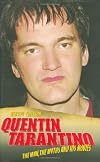
a well written and engrossing book about one of the true artists of the modern movie genre. very humourous, and sometimes controversial, for those a fan of, or wanting to learn about the man behind the camera this is great insight into the personal life of a man who can only be described as a character.
and interesting facts about how aspects of his life were translated into his movies.
only shame was the fact that photos were centered around dogs, and none on pulp fiction or kill bill.
and interesting facts about how aspects of his life were translated into his movies.
only shame was the fact that photos were centered around dogs, and none on pulp fiction or kill bill.
This book is about the life & death of Jonathan Moyle, a British citizen who lived for his country, was murdered for his country, covered up by his country and betrayed by his country.
The book covers his early life, the British Intelligence Services sabotage of his RAF career and his eventual employment by said British Intelligence Services as a freelance spy. It was this work that led to his death whilst spying on a Chilean plan to supply converted civilian helicopters to Iraq as armed show more attack helicopters in breach of numerous laws.
He was sent by Britain to find out information on such, he died trying and was then disowned & betrayed by his country after his murder.
The book is well written giving a good overview of his early life, career, circumstances and post death investigations. It is written much like Richard Preston's The Hot Zone; an easily digested narrative.
Whilst the topic is an obscure one probably not even known about by most people it is a good book, and quite an interesting set of circumstances. It also does not attempt to hide the appalling behaviour of the British Government. show less
The book covers his early life, the British Intelligence Services sabotage of his RAF career and his eventual employment by said British Intelligence Services as a freelance spy. It was this work that led to his death whilst spying on a Chilean plan to supply converted civilian helicopters to Iraq as armed show more attack helicopters in breach of numerous laws.
He was sent by Britain to find out information on such, he died trying and was then disowned & betrayed by his country after his murder.
The book is well written giving a good overview of his early life, career, circumstances and post death investigations. It is written much like Richard Preston's The Hot Zone; an easily digested narrative.
Whilst the topic is an obscure one probably not even known about by most people it is a good book, and quite an interesting set of circumstances. It also does not attempt to hide the appalling behaviour of the British Government. show less
Awards

You May Also Like


Statistics
- Works
- 97
- Members
- 1,045
- Popularity
- #24,650
- Rating
- 3.3
- Reviews
- 14
- ISBNs
- 202
- Languages
- 4