
Sofi Thanhauser
Author of Worn: A People's History of Clothing
About the Author
Image credit: Penguin Random House
Works by Sofi Thanhauser
Tagged
Common Knowledge
Members
Reviews

As humans have evolved, so has our clothing, in both material and method. Sofi Thanhauser begins with linen, the earliest fabric, followed by cotton, synthetics, and wool. And while she describes how each material is made into cloth and then garments, this book is not so much about craft as it is about the industry that arose around each material, and the effects such economic progress had on people and the environment. Linen was traditionally women’s work until large-scale manufacturing show more took it away from them. Cotton was made in the United States by enslaved people, and the cotton industry worldwide had far-reaching negative effects on climate and the land. Synthetics like rayon and nylon spawned a global economy, but one largely based on cheap labor producing low-cost material that wears out quickly. The more recent development of microfiber fabrics is having a devastating impact on our oceans. You get the idea.
In the final section, Thanhauser describes the decline of the wool industry, but offers a glimmer of hope based on fibersheds, where fiber producers, fabric makers, and dyers are able to build supply chains. Renewed interest in craft is also creating new routes to market and new ways for people to make a living. Have we learned from the “bigger is better” days of synthetics production? Probably not, but we can hope that today’s baby steps lead to sustainable change. show less
In the final section, Thanhauser describes the decline of the wool industry, but offers a glimmer of hope based on fibersheds, where fiber producers, fabric makers, and dyers are able to build supply chains. Renewed interest in craft is also creating new routes to market and new ways for people to make a living. Have we learned from the “bigger is better” days of synthetics production? Probably not, but we can hope that today’s baby steps lead to sustainable change. show less
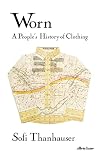
Histories of fabric and clothing are inevitably somewhat depressing, as brutal human and environmental exploitation are so integral to them. The previous two books I'd read on this topic, [b:The Golden Thread: How Fabric Changed History|43862307|The Golden Thread How Fabric Changed History|Kassia St. Clair|https://i.gr-assets.com/images/S/compressed.photo.goodreads.com/books/1564592440l/43862307._SX50_.jpg|63679455] and [b:Fashionopolis: The Price of Fast Fashion and the Future of show more Clothes|43671670|Fashionopolis The Price of Fast Fashion and the Future of Clothes|Dana Thomas|https://i.gr-assets.com/images/S/compressed.photo.goodreads.com/books/1554846636l/43671670._SY75_.jpg|67945585], managed to be somewhat hopeful due to choice of focus. [b:The Golden Thread: How Fabric Changed History|43862307|The Golden Thread How Fabric Changed History|Kassia St. Clair|https://i.gr-assets.com/images/S/compressed.photo.goodreads.com/books/1564592440l/43862307._SX50_.jpg|63679455], while ostensibly similar in structure to [b:Worn: A People's History of Clothing|56753473|Worn A People's History of Clothing|Sofi Thanhauser|https://i.gr-assets.com/images/S/compressed.photo.goodreads.com/books/1632871881l/56753473._SY75_.jpg|88699340], is more interested in material than social history. [b:Fashionopolis: The Price of Fast Fashion and the Future of Clothes|43671670|Fashionopolis The Price of Fast Fashion and the Future of Clothes|Dana Thomas|https://i.gr-assets.com/images/S/compressed.photo.goodreads.com/books/1554846636l/43671670._SY75_.jpg|67945585] meanwhile, is particularly focused on technological innovations. [b:Worn: A People's History of Clothing|56753473|Worn A People's History of Clothing|Sofi Thanhauser|https://i.gr-assets.com/images/S/compressed.photo.goodreads.com/books/1632871881l/56753473._SY75_.jpg|88699340], as the title suggests, is concerned with the social side of fabric and garment manufacture across the centuries. As cloth and garments have been so fundamental to societies, cultures, and economies throughout history, I got no sense of repetition between the three books - or indeed others I've read. There is so much to say about the history of fabric and clothing and, fortuitously, many great books on the topic.
[b:Worn: A People's History of Clothing|56753473|Worn A People's History of Clothing|Sofi Thanhauser|https://i.gr-assets.com/images/S/compressed.photo.goodreads.com/books/1632871881l/56753473._SY75_.jpg|88699340] is structured broadly chronologically and by fibres: linen, cotton, silk, synthetics, and wool. It traces the history of labour used to grow, spin, weave, and sew fibres into clothing. I had to alternate it with a novel as the current global fast fashion system is such an absolute fucking nightmare. Thanhauser writes well, striking a good balance between anecdote and broader overview. She is particularly strong on the history of unionisation and industrial disputes:
[b:Worn: A People's History of Clothing|56753473|Worn A People's History of Clothing|Sofi Thanhauser|https://i.gr-assets.com/images/S/compressed.photo.goodreads.com/books/1632871881l/56753473._SY75_.jpg|88699340] includes plenty of interesting historical details, while also laying bare the terrible social and environmental cost of cotton and viscose in particular. I hadn't realised that viscose production is so incredibly poisonous - and of course it's touted as a sustainable fabric these days! In the synthetics section, the chapter on Honduras' Export Processing Zones is particularly hard-hitting. Ending the book with wool expresses Thanhauser's hope for the future as rediscovery of traditional small-scale creativity. As a contrast to other writers, notably [a:Dana Thomas|130097|Dana Thomas|https://s.gr-assets.com/assets/nophoto/user/u_50x66-632230dc9882b4352d753eedf9396530.png], she has no faith in technology as a force for improving the clothing industry. This is entirely reasonable, given that within a globalised neoliberal economic system technology will always be used to drive down costs and exploit workers. Her view of the significance of working directly with fibres is almost mystical, yet she exhibits no illusions about capitalism:
Although facing the reality of industrial clothing manufacture is tough, [b:Worn: A People's History of Clothing|56753473|Worn A People's History of Clothing|Sofi Thanhauser|https://i.gr-assets.com/images/S/compressed.photo.goodreads.com/books/1632871881l/56753473._SY75_.jpg|88699340] is a fascinating and well-researched book that reads well with others on the past and future of garment manufacture such as [b:The Golden Thread: How Fabric Changed History|43862307|The Golden Thread How Fabric Changed History|Kassia St. Clair|https://i.gr-assets.com/images/S/compressed.photo.goodreads.com/books/1564592440l/43862307._SX50_.jpg|63679455], [b:Fashionopolis: The Price of Fast Fashion and the Future of Clothes|43671670|Fashionopolis The Price of Fast Fashion and the Future of Clothes|Dana Thomas|https://i.gr-assets.com/images/S/compressed.photo.goodreads.com/books/1554846636l/43671670._SY75_.jpg|67945585], and [b:Stitched Up: The Anti-Capitalist Book of Fashion|18690352|Stitched Up The Anti-Capitalist Book of Fashion|Tansy E. Hoskins|https://i.gr-assets.com/images/S/compressed.photo.goodreads.com/books/1393647667l/18690352._SY75_.jpg|26536148]. Cloth and clothing are very important and often-overlooked elements of daily life that deserve the close attention, historical context, and contemporary analysis these books provide. show less
[b:Worn: A People's History of Clothing|56753473|Worn A People's History of Clothing|Sofi Thanhauser|https://i.gr-assets.com/images/S/compressed.photo.goodreads.com/books/1632871881l/56753473._SY75_.jpg|88699340] is structured broadly chronologically and by fibres: linen, cotton, silk, synthetics, and wool. It traces the history of labour used to grow, spin, weave, and sew fibres into clothing. I had to alternate it with a novel as the current global fast fashion system is such an absolute fucking nightmare. Thanhauser writes well, striking a good balance between anecdote and broader overview. She is particularly strong on the history of unionisation and industrial disputes:
As the garment industries left the United States, it undid the work of industrial feminists like Clara Lemlich and Rose Schneiderman, who had the audacity to demand that intellectual satisfaction was the birthright of every sewing machine operator. This new [21st century] brand of feminism didn't care to protect sewing work as good work; rather it scoured the earth to find the cheapest new sources of exploitable, female labour.
Working class immigrants like Clara Lemlich had only managed to gain the public's sympathy in their strike of 1909-10 when they were joined by their bourgeois women sympathisers, the 'Mink Brigades'. But wealthy 'feminists' like Massenet [founder of Net-a-Porter] don't seem interested in standing shoulder-to-shoulder with working class women. Rather, they looked out over them, in their insignificant multiplicity, through glass. And if these Vietnamese workers wanted to demand the same rights that Clara Lemlich had demanded, they would have to face off against employers who were literally a world away. The IGLWU had fought hard to organise the whole East Coast; the workers here would have to organise whole continents. And even that wouldn't be enough.
[b:Worn: A People's History of Clothing|56753473|Worn A People's History of Clothing|Sofi Thanhauser|https://i.gr-assets.com/images/S/compressed.photo.goodreads.com/books/1632871881l/56753473._SY75_.jpg|88699340] includes plenty of interesting historical details, while also laying bare the terrible social and environmental cost of cotton and viscose in particular. I hadn't realised that viscose production is so incredibly poisonous - and of course it's touted as a sustainable fabric these days! In the synthetics section, the chapter on Honduras' Export Processing Zones is particularly hard-hitting. Ending the book with wool expresses Thanhauser's hope for the future as rediscovery of traditional small-scale creativity. As a contrast to other writers, notably [a:Dana Thomas|130097|Dana Thomas|https://s.gr-assets.com/assets/nophoto/user/u_50x66-632230dc9882b4352d753eedf9396530.png], she has no faith in technology as a force for improving the clothing industry. This is entirely reasonable, given that within a globalised neoliberal economic system technology will always be used to drive down costs and exploit workers. Her view of the significance of working directly with fibres is almost mystical, yet she exhibits no illusions about capitalism:
Nor is the answer as simple as a return to the handmade. [...] Good fabric requires us to rebuild entire systems of water use and conservation, distribution of wealth and resources, trade regimes, and agriculture.
Efforts to save handicrafts are important, but we must be careful that those efforts treat the disease, and not merely the symptom. The making of good fabric cannot happen in isolation: it cannot happen without good communities and good agriculture. It cannot happen in the context of brutal, extractive trade regimes.
Although facing the reality of industrial clothing manufacture is tough, [b:Worn: A People's History of Clothing|56753473|Worn A People's History of Clothing|Sofi Thanhauser|https://i.gr-assets.com/images/S/compressed.photo.goodreads.com/books/1632871881l/56753473._SY75_.jpg|88699340] is a fascinating and well-researched book that reads well with others on the past and future of garment manufacture such as [b:The Golden Thread: How Fabric Changed History|43862307|The Golden Thread How Fabric Changed History|Kassia St. Clair|https://i.gr-assets.com/images/S/compressed.photo.goodreads.com/books/1564592440l/43862307._SX50_.jpg|63679455], [b:Fashionopolis: The Price of Fast Fashion and the Future of Clothes|43671670|Fashionopolis The Price of Fast Fashion and the Future of Clothes|Dana Thomas|https://i.gr-assets.com/images/S/compressed.photo.goodreads.com/books/1554846636l/43671670._SY75_.jpg|67945585], and [b:Stitched Up: The Anti-Capitalist Book of Fashion|18690352|Stitched Up The Anti-Capitalist Book of Fashion|Tansy E. Hoskins|https://i.gr-assets.com/images/S/compressed.photo.goodreads.com/books/1393647667l/18690352._SY75_.jpg|26536148]. Cloth and clothing are very important and often-overlooked elements of daily life that deserve the close attention, historical context, and contemporary analysis these books provide. show less
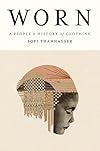
I want to give 5 stars to the chapter on wool and 3.5 to everything else. The chapter on linen I liked, because I just like hanging out with textiles and talk about old clothes; but as the first chapter, it falsely led me to believe this was going to be one of those non-fiction books that is just one well-researched fact after another. Instead, the next chapter, on cotton, was all about how terrible cotton is and has always been. That's not my type of book either, but for a different reason. show more I don't like just reading about how everything is awful, over and over. The chapter on silk was OK; but then, for synthetics, we get intensive details of various worker strikes earlier last century. I wanted to read a book about textiles, not the history of labor unions.
But then finally, WOOL! It's interesting Thanhauser ordered her chapters the way she did; one would have expected the 'primitive' materials to come first and synthetics last; but I think she put wool last because it was the most positive chapter, where small mills and handcrafters save the day after all that nasty environmental damage and class warfare.
Thanhauser by the Wool chapter has proven herself a super-intelligent, serious researcher; so it was fun to see her discover my tribe of fiber-festival-goers and handspinners. She visits Fingerlakes Woolen Mill in New York, which could stand in for my own friends at Green Mountain Spinnery in Vermont or any of hundreds of small-scale mills we all know and love. She visits with people rescuing equipment from the now-defunct American Textile History Museum of Lowell, Mass. And she goes to "Woolfest" in Cockermouth, England. I was seriously planning to go to Woolfest in 2012, before familial hard times hit. It does indeed sound akin to the High Holydays experienced on this side of the pond at the New York Sheep & Wool Festival in Rhinebeck or (shout-out) the Vermont counterpart at Tunbridge. Alas, "I had to admit it [as do I]: Woolfest was a gathering of old women." So many gray heads I counted while vending at Tunbridge. Not that there's anything wrong with that!
Fun fact: the University of Wyoming created a Wool Department in 1907 and for a time was the only university to offer a PhD in wool. Imagine being a Doctor of Wool - I love it! show less
But then finally, WOOL! It's interesting Thanhauser ordered her chapters the way she did; one would have expected the 'primitive' materials to come first and synthetics last; but I think she put wool last because it was the most positive chapter, where small mills and handcrafters save the day after all that nasty environmental damage and class warfare.
Thanhauser by the Wool chapter has proven herself a super-intelligent, serious researcher; so it was fun to see her discover my tribe of fiber-festival-goers and handspinners. She visits Fingerlakes Woolen Mill in New York, which could stand in for my own friends at Green Mountain Spinnery in Vermont or any of hundreds of small-scale mills we all know and love. She visits with people rescuing equipment from the now-defunct American Textile History Museum of Lowell, Mass. And she goes to "Woolfest" in Cockermouth, England. I was seriously planning to go to Woolfest in 2012, before familial hard times hit. It does indeed sound akin to the High Holydays experienced on this side of the pond at the New York Sheep & Wool Festival in Rhinebeck or (shout-out) the Vermont counterpart at Tunbridge. Alas, "I had to admit it [as do I]: Woolfest was a gathering of old women." So many gray heads I counted while vending at Tunbridge. Not that there's anything wrong with that!
Fun fact: the University of Wyoming created a Wool Department in 1907 and for a time was the only university to offer a PhD in wool. Imagine being a Doctor of Wool - I love it! show less
A thought -- and guilt -- provoking book. This meticulously researched book is partly a history of cloth and clothing, but much more an examination of how both affect the world today. The impact of cotton production on land, water, and people is particularly dramatic. Enormous amounts of harm have been done, and continue to be done, all along the chain from fiber, to cloth, to garments. The writer has a strong point of view -- she is vehemently anti-capitalist -- which can make some of her show more points seem overstated. But the book is chock full of interesting and important information. It will certainly affect the way I feel about buying a new piece of clothing. It may even affect my actions. show less
Lists
Awards


You May Also Like


Associated Authors
Statistics
- Works
- 1
- Members
- 327
- Popularity
- #72,481
- Rating
- 3.8
- Reviews
- 10
- ISBNs
- 9