
Kassia St Clair
Author of The Secret Lives of Color
About the Author
Works by Kassia St Clair
Tagged
Common Knowledge
- Birthdate
- c. 1980s
- Gender
- female
- Occupations
- journalist
- Nationality
- UK
- Places of residence
- London, England, UK
- Associated Place (for map)
- England, UK
Members
Reviews

St. Clair’s micro-history of fabrics patches a historical record which has often overlooked the role of textiles, perhaps because their contributions arise from predominately female labor. The examination moves from hand-working wild plants to modern man-made synthetics. Johns smoothly handles place names and worlds in multiple languages as St. Clair tours the history of fabric around the globe. With witty humour, Johns gives voice to the metaphors threading fiber arts throughout the show more English language. Our lives are enfolded with cloth, and textiles even fashion our death rituals. Johns’ lively voice propels this entertaining narrative across historical highlights to weave an accessible and thought-provoking story perfect for causal listening. Each chapter visits a different fiber, locale, or time period creating a beautiful, captivating tapestry in which Johns’ elegant tones deftly match St. Clair’s vivid prose. A perfect handsell for any fiber craft hobbyist as well as archaeology and anthropology enthusiasts.
The improved review was published in Booklist April 1, 2020 issue. show less
The improved review was published in Booklist April 1, 2020 issue. show less
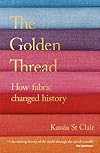
Recommended by a fellow embroiderer, I've been reading this and St Clair's "Secret Lives of Colour", both excellent for dipping into, though this one I've been reading through from start to finish. It weaves itself in and out of the history in my head: from Vikings to the Field of Cloth of Gold, up into space via mountain summits and balloons in France, and down into the murky depths of what she calls "Rayon's Dark Past". But it comes at it all from a unique angle of fabric. Reenactment show more brings textiles and their production - as well as colours for that matter - into the everyday, but otherwise, even working with cloth, it's easy to feel distantly separated from its manufacture and its human, plant and animal stories today, so this book is a joy to immerse yourself in.
She sets each scene vividly too, from the lonely Scandinavian church where the woollen sail scrap was found in the rafters to the warring skies of WWII where close-fitting nylon prevented pilot blackout, and into the cotton plantations where expert hands and knowledge created mesmerising and impressive colours and blends.
A new treasure for the reference shelves at home, this one, and a really welcome recommendation. show less
She sets each scene vividly too, from the lonely Scandinavian church where the woollen sail scrap was found in the rafters to the warring skies of WWII where close-fitting nylon prevented pilot blackout, and into the cotton plantations where expert hands and knowledge created mesmerising and impressive colours and blends.
A new treasure for the reference shelves at home, this one, and a really welcome recommendation. show less
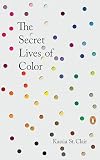
Intriguing and enjoyable look at the history and provenance of 75 colors with special attention to their role in art: it shows how much of art was dependent upon what was available at the time. This book is beautifully designed, a visual work of art itself. Only quibble is it would’ve been nice to have a brief end chapter discussing the future of the use of colors in art and/or current debates as follow ups on points raised throughout the book.
Some examples of how color interacts with our show more world:
Sensationalist literature of 19C kept between yellow covers (yellow journalism) — the Middle Ages forced ostracized groups to wear yellow vs the ‘Yellow Nineties’ as artists adopted it in repudiation of Victorian values.
Orange was the star of Monet’s ‘Impression, Sunrise’ (plus color contrast theory, leading to a new movement. The orange-red minium is the color of illuminated manuscript capitals/pilcrows leading to our word ‘miniature’. New theories on shadows (they weren’t black or grey but actually colored) and complementary color schemes (violet complements yellow) ergo the shade depicted in a painting would be soft violet. 1881 Manet “Fresh air is violet”: This was exciting to read because I have always thought the same thing. show less
Some examples of how color interacts with our show more world:
Sensationalist literature of 19C kept between yellow covers (yellow journalism) — the Middle Ages forced ostracized groups to wear yellow vs the ‘Yellow Nineties’ as artists adopted it in repudiation of Victorian values.
Orange was the star of Monet’s ‘Impression, Sunrise’ (plus color contrast theory, leading to a new movement. The orange-red minium is the color of illuminated manuscript capitals/pilcrows leading to our word ‘miniature’. New theories on shadows (they weren’t black or grey but actually colored) and complementary color schemes (violet complements yellow) ergo the shade depicted in a painting would be soft violet. 1881 Manet “Fresh air is violet”: This was exciting to read because I have always thought the same thing. show less
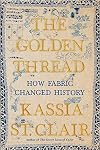
[b:The Golden Thread: How Fabric Changed History|43862307|The Golden Thread How Fabric Changed History|Kassia St. Clair|https://i.gr-assets.com/images/S/compressed.photo.goodreads.com/books/1564592440l/43862307._SX50_.jpg|63679455] is an involving history of fabrics, structured thematically around different fibres and their uses. It reads well with books about the clothing industry such as [b:Fashionopolis: The Price of Fast Fashion and the Future of Clothes|43671670|Fashionopolis The Price show more of Fast Fashion and the Future of Clothes|Dana Thomas|https://i.gr-assets.com/images/S/compressed.photo.goodreads.com/books/1554846636l/43671670._SY75_.jpg|67945585] and [b:Stitched Up: The Anti-Capitalist Book of Fashion|18690352|Stitched Up The Anti-Capitalist Book of Fashion|Tansy E. Hoskins|https://i.gr-assets.com/images/S/compressed.photo.goodreads.com/books/1393647667l/18690352._SY75_.jpg|26536148], by providing historical context for the fabrics we use. I found the content fascinating, although the chapter subheadings were a little too obtrusive.
The opening chapter covers archaeological evidence for the earliest use of fibres by humans, and indeed neanderthals. Linen is considered in the context of ancient Egypt, silk in ancient China, wool via the Vikings, cotton in America's slave plantations, and rayon in Nazi factories. This structure works really well and provides a wealth of information about the role of textiles in economies, culture, religion, and society. My favourite anecdote concerns a Chinese poem embroidered in silk in a 29 character by 29 character grid that can be read horizontally, vertically, or diagonally. It contains over three thousand different poems! This incredible work was completed by a woman named Su Hui in the fourth century.
Later chapters focus on the use of fabrics in extreme conditions: in dangerously cold climates, competitive swimming, and space exploration. These are likewise really interesting and serve to explain technological advances during the latter part of the twentieth century. I was particularly struck by the complexities of constructing space suits for the Apollo 11 mission. Although practical considerations would determine whether the astronauts survived, aesthetics played a part too. The suits would have been khaki green had it not been decided that silver and white looked more space-age.
The concluding chapter concerns a fibre that remains elusive: spider silk. Although it has impressive properties, spider silk has thus far proved impossible to produce at scale. Spiders cannot be farmed, it seems, and the efforts of start-ups to duplicate their silk via genetically engineering other species haven't been successful yet. The idea of wearing spider silk is beguiling, although the fabric I came out of the book favouring is linen. It is harder-wearing and less environmentally-damaging to produce than cotton and viscose. Overall, this is an informative, well-written, and enjoyable account of fabrics through the ages. I liked the glossary and end notes, but wish a few illustrations had also been included. show less
The opening chapter covers archaeological evidence for the earliest use of fibres by humans, and indeed neanderthals. Linen is considered in the context of ancient Egypt, silk in ancient China, wool via the Vikings, cotton in America's slave plantations, and rayon in Nazi factories. This structure works really well and provides a wealth of information about the role of textiles in economies, culture, religion, and society. My favourite anecdote concerns a Chinese poem embroidered in silk in a 29 character by 29 character grid that can be read horizontally, vertically, or diagonally. It contains over three thousand different poems! This incredible work was completed by a woman named Su Hui in the fourth century.
Later chapters focus on the use of fabrics in extreme conditions: in dangerously cold climates, competitive swimming, and space exploration. These are likewise really interesting and serve to explain technological advances during the latter part of the twentieth century. I was particularly struck by the complexities of constructing space suits for the Apollo 11 mission. Although practical considerations would determine whether the astronauts survived, aesthetics played a part too. The suits would have been khaki green had it not been decided that silver and white looked more space-age.
The concluding chapter concerns a fibre that remains elusive: spider silk. Although it has impressive properties, spider silk has thus far proved impossible to produce at scale. Spiders cannot be farmed, it seems, and the efforts of start-ups to duplicate their silk via genetically engineering other species haven't been successful yet. The idea of wearing spider silk is beguiling, although the fabric I came out of the book favouring is linen. It is harder-wearing and less environmentally-damaging to produce than cotton and viscose. Overall, this is an informative, well-written, and enjoyable account of fabrics through the ages. I liked the glossary and end notes, but wish a few illustrations had also been included. show less
Lists
Awards


You May Also Like


Associated Authors
Statistics
- Works
- 7
- Members
- 2,574
- Popularity
- #9,981
- Rating
- 4.0
- Reviews
- 55
- ISBNs
- 45
- Languages
- 7
- Favorited
- 1