
Clare Hunter
Author of Threads of Life: A History of the World Through the Eye of a Needle
About the Author
Clare Hunter has sewn since she was a child. She has been a banner maker, community textile artist, and textile curator for more than twenty years and established the community enterprise NeedleWorks in Glasgow. She was a recipient of a Creative Scotland Award in 2016. She lives near Stirling in show more Scotland. show less
Image credit: http://www.sewingmatters.co.uk/about.html
Works by Clare Hunter
Tagged
Common Knowledge
- Birthdate
- 20th century
- Gender
- female
- Nationality
- Scotland
- Places of residence
- Glasgow, Scotland
- Map Location
- UK
Members
Reviews
This book was so much more than its title suggests. Hunter examines the ways in which sewing over the centuries has been an expression of individuality, a means of saying who we are. More than that, it documents resistance from the women prisoners held by the Japanese in Changi, to the scarves of the mothers of Plaza de Mayo, each scarf with an embroidered name. Even the embroidery of Mary Stuart was a form of resistance, worked in the long years of her captivity in a foreign country, and show more employing all the symbols of her status as Queen of Scotland.
Why then do we dismiss this work? Hunter suggests it is because it is done by women, decreasing the value of the work itself. She traces the evolution of embroidery as a skilled art practised by both men and women, and the subsequent division of its making between men and women. Charles Rennie Mackintosh gets high praise for his work, but as Hunter says, his style would have been far less singular without the fine draperies and banners worked by his wife Margaret MacDonald, a woman who receives all too little recognition.
Hunter also charges Isaac Singer, designer of the sewing machine, with removing sewing from a community effort, and thus social activity, to a solitary pursuit. How? Well Singer deliberately designed his machine with gold filigree ornamentation, making it into a cherished piece of furniture. Each purchaser then worked on her own in her middle class home, leaving her community behind.
There was so much more in this book: suffragette banners, the names quilt, Dutch resistance skirts. Did you know there was a registry of foundling clothes, and another at the Old Bailey of stolen quilts. How about Judy Chicago's dinner party? Much has been written about it, but how much have you read about the table linens, each setting carefully designed and worked to reflect the life of the woman it honours?
I could go on and on, but if you're someone like me, who loves to work various needle arts in a group, getting all kinds of inspiration from others, this is a compelling read. My only criticism is the lack of photos, but these would have increased costs considerably. There is, however, a list of websites where the cited works can be viewed.
Throughout the book, Hunter speaks of her own career as a community organizer and textile curator in Scotland, and of the work she has done to keep these traditions going. David Robinson, who reviewed [Threads of Life] for Books from Scotland, admits to having his viewpoint of such work changed from a condescending dismissal of sometimes uneven community work, to a recognition of the narrative in each individual piece, and the story of community it tells. Perhaps if others could consider such work as social history too, it would go a long way to garnering more of the respect so much of this work deserves. show less
Why then do we dismiss this work? Hunter suggests it is because it is done by women, decreasing the value of the work itself. She traces the evolution of embroidery as a skilled art practised by both men and women, and the subsequent division of its making between men and women. Charles Rennie Mackintosh gets high praise for his work, but as Hunter says, his style would have been far less singular without the fine draperies and banners worked by his wife Margaret MacDonald, a woman who receives all too little recognition.
Hunter also charges Isaac Singer, designer of the sewing machine, with removing sewing from a community effort, and thus social activity, to a solitary pursuit. How? Well Singer deliberately designed his machine with gold filigree ornamentation, making it into a cherished piece of furniture. Each purchaser then worked on her own in her middle class home, leaving her community behind.
There was so much more in this book: suffragette banners, the names quilt, Dutch resistance skirts. Did you know there was a registry of foundling clothes, and another at the Old Bailey of stolen quilts. How about Judy Chicago's dinner party? Much has been written about it, but how much have you read about the table linens, each setting carefully designed and worked to reflect the life of the woman it honours?
I could go on and on, but if you're someone like me, who loves to work various needle arts in a group, getting all kinds of inspiration from others, this is a compelling read. My only criticism is the lack of photos, but these would have increased costs considerably. There is, however, a list of websites where the cited works can be viewed.
Throughout the book, Hunter speaks of her own career as a community organizer and textile curator in Scotland, and of the work she has done to keep these traditions going. David Robinson, who reviewed [Threads of Life] for Books from Scotland, admits to having his viewpoint of such work changed from a condescending dismissal of sometimes uneven community work, to a recognition of the narrative in each individual piece, and the story of community it tells. Perhaps if others could consider such work as social history too, it would go a long way to garnering more of the respect so much of this work deserves. show less
"Sewing has a visual language. It has a voice. It has been used by people to communicate something of themselves--their history, beliefs, prayers and protests."~ from Threads of Life by Claire Hunter
Twenty-eight years ago I made my first quilt and it changed my life. As I honed my skills I was inspired by historic and traditional quilts but also by art quilts.
Early on I dreamed of being able to make quilts that represented my values, interests, and views. I eagerly learned new skills, from show more hand embroidery and hand quilting to surface design, machine thread work, and fusible applique. I have been making a series of quilts on authors I love. I have created a Pride and Prejudice storybook quilt, an Apollo 11 quilt, and embroidered quilts of the First Ladies, Green Heros, and women abolitionists and Civil Rights leaders.
I was excited to be given an egalley of Claire Hunter's book Threads of Life: A History of the World Through the Eye of a Needle.
Hunter identifies themes in needlecraft including power, frailty, captivity, identity, connection, protest, loss, community, and voice. She shares a breathtaking number of stories that span history and from across the world.
Hunter begins with the history of the Bayeux Tapestry, a panel of wool embroidery showing scenes from the Battle of Hastings in 1066. Its history illustrates the ups and downs in cultural attitudes toward needlework.
It was forgotten, nearly upcycled, and used for a carnival float backdrop. Napoleon put it in a museum until it fell out of fashion and was again relegated to storage here and there. Himmler got a hold of it during WWII and publicized the artifact and saved it from destruction. Then the French Resistance took possession of the Louvre and the tapestry.
900 years later, the tapestry attracts thousands of viewers every year, a worldwide cultural icon, and inspired The Games of Thrones Tapestry.
Yet, we don't know who designed the tapestry or embroidered it, the challenges and tragedies they faced. They remain anonymous.
I was familiar with the Changi prison camp quilts created during WWII by women POWs in Japanese camps. Hunter explains how the women created images with personal and political meaning to tell loved ones they survived.
I have seen Mola reverse applique but did not know it was an invention of necessity. Spanish colonists in Panama and Columbia insisted the indigenous women cover their chests. Traditionally, the women sported tattoos with spiritual symbols which they transferred to fabric. In many cultures, cloth has a spiritual element.
Hunter also touches on Harriet Power's Bible Quilt, Gees Bend quilters, the Glasgow School of Art Department of Needlework, and Suffragists banners.
There was much that was new to me. How Ukrainian embroidery was forbidden under Soviet rule as they systematically dismantled cultural traditions. Or how the Nazis used Jewish slave labor to sew German uniforms and luxury clothing.
Hunter tells stories from history and also how needle and thread are employed today as therapy and as community engagement and to voice political and feminist statements. She tells the memorable story of guiding male prisoners in the making of curtains for a common room and how she worked with groups, Austrian Aboriginies and Gaelic women, to make banners addressing displacement and community disruption.
We also read about the history of sewing, the impact of industrialization and the rise of factory production, the home sewing machine, the shift from skilled craft to homemade decorative arts.
Art quilters and textile artists like Faith Ringgold and Judy Chicago are discussed.
Social awareness needlework included the quite well known Aids Quilt but also the little known banner The Ribbon, created to commemorate the 40th anniversary of the nuclear bombing of Hiroshima and Nagasaki. Justine Merritt organized the sewing of peace panels to be stitched together. 25,000 panels were made. 20,000 people collected on August 4, 1985, to wrap the 15-mile long Ribbon around the Pentagon, the Arlington Memorial Bridge, the Lincoln Memorial, and to the Capital and back to the Pentagon. The media and President Reagen ignored it.
Threads of Life may seem an unusual book, a niche book, but I do think it has a wide appeal that will interest many readers.
I was given access to a free egalley through NetGalley in exchange for a fair and unbiased review. show less
Twenty-eight years ago I made my first quilt and it changed my life. As I honed my skills I was inspired by historic and traditional quilts but also by art quilts.
Early on I dreamed of being able to make quilts that represented my values, interests, and views. I eagerly learned new skills, from show more hand embroidery and hand quilting to surface design, machine thread work, and fusible applique. I have been making a series of quilts on authors I love. I have created a Pride and Prejudice storybook quilt, an Apollo 11 quilt, and embroidered quilts of the First Ladies, Green Heros, and women abolitionists and Civil Rights leaders.
I was excited to be given an egalley of Claire Hunter's book Threads of Life: A History of the World Through the Eye of a Needle.
Hunter identifies themes in needlecraft including power, frailty, captivity, identity, connection, protest, loss, community, and voice. She shares a breathtaking number of stories that span history and from across the world.
Hunter begins with the history of the Bayeux Tapestry, a panel of wool embroidery showing scenes from the Battle of Hastings in 1066. Its history illustrates the ups and downs in cultural attitudes toward needlework.
It was forgotten, nearly upcycled, and used for a carnival float backdrop. Napoleon put it in a museum until it fell out of fashion and was again relegated to storage here and there. Himmler got a hold of it during WWII and publicized the artifact and saved it from destruction. Then the French Resistance took possession of the Louvre and the tapestry.
900 years later, the tapestry attracts thousands of viewers every year, a worldwide cultural icon, and inspired The Games of Thrones Tapestry.
Yet, we don't know who designed the tapestry or embroidered it, the challenges and tragedies they faced. They remain anonymous.
I was familiar with the Changi prison camp quilts created during WWII by women POWs in Japanese camps. Hunter explains how the women created images with personal and political meaning to tell loved ones they survived.
I have seen Mola reverse applique but did not know it was an invention of necessity. Spanish colonists in Panama and Columbia insisted the indigenous women cover their chests. Traditionally, the women sported tattoos with spiritual symbols which they transferred to fabric. In many cultures, cloth has a spiritual element.
Hunter also touches on Harriet Power's Bible Quilt, Gees Bend quilters, the Glasgow School of Art Department of Needlework, and Suffragists banners.
There was much that was new to me. How Ukrainian embroidery was forbidden under Soviet rule as they systematically dismantled cultural traditions. Or how the Nazis used Jewish slave labor to sew German uniforms and luxury clothing.
Hunter tells stories from history and also how needle and thread are employed today as therapy and as community engagement and to voice political and feminist statements. She tells the memorable story of guiding male prisoners in the making of curtains for a common room and how she worked with groups, Austrian Aboriginies and Gaelic women, to make banners addressing displacement and community disruption.
We also read about the history of sewing, the impact of industrialization and the rise of factory production, the home sewing machine, the shift from skilled craft to homemade decorative arts.
Art quilters and textile artists like Faith Ringgold and Judy Chicago are discussed.
Social awareness needlework included the quite well known Aids Quilt but also the little known banner The Ribbon, created to commemorate the 40th anniversary of the nuclear bombing of Hiroshima and Nagasaki. Justine Merritt organized the sewing of peace panels to be stitched together. 25,000 panels were made. 20,000 people collected on August 4, 1985, to wrap the 15-mile long Ribbon around the Pentagon, the Arlington Memorial Bridge, the Lincoln Memorial, and to the Capital and back to the Pentagon. The media and President Reagen ignored it.
Threads of Life may seem an unusual book, a niche book, but I do think it has a wide appeal that will interest many readers.
I was given access to a free egalley through NetGalley in exchange for a fair and unbiased review. show less
Initially intoxicating, packed with information and stories of stitching as rebellion and creative outlet and feminism and propaganda, by the end of this book I was quite ready to be done. Perhaps it was because all of the admittedly well-done descriptions were not linked to photographs (which eventually caused me to toss the book in frustration)? Or was it the almost too serious tone for absolutely every example of stitchers discussed? Maybe I was just full. Miles and miles of description show more can make a person’s eyes squirm.
On the other hand, there were fantastic discussions at the start of the book on the Bayeux Tapestry, on protest handkerchiefs worn to remember massacred sons, etc. But I longed for more information about non-European history- after all, this is touted as “the history of the world through the eye of a needle”. There are some token examples of stitching from Asia and India and an occasional Australian aboriginal mention, but these areas are particularly skimpy and of course the European areas are almost too thick.
It might have been better to call this European History through the eye of a needle... show less
On the other hand, there were fantastic discussions at the start of the book on the Bayeux Tapestry, on protest handkerchiefs worn to remember massacred sons, etc. But I longed for more information about non-European history- after all, this is touted as “the history of the world through the eye of a needle”. There are some token examples of stitching from Asia and India and an occasional Australian aboriginal mention, but these areas are particularly skimpy and of course the European areas are almost too thick.
It might have been better to call this European History through the eye of a needle... show less

First ignore the subtitle. While there are elements of history in this book, that specific title can be very misleading.
"Thread of Life" is the personal story of one woman's relationship with textile, sewing and needlework, peppered with history of both the evolution of needlework and almost peripherally the world. There are real historical figures here - some well known (Mary, Queen of Scots), some not so much. The story is almost weaved together - a personal story gets connected to a show more traditional one which evolves into a historical account and then circles back. Most of the history is from the English speaking world (mainly USA and UK) but there are glimpses of traditional crafts from all over the world - from the Chinese minority and Ukraine to Africa, Chile and aboriginal Australia. Some of it is elaborated on, some of it is just mentioned in passing.
If you have any interest in embroidery or history of objects, this book is a treasure trove of anecdotes and history. Most of the book is about using the craft for banners and home objects and its relationship to art and not about clothing but as a history about textile, clothes are not forgotten - from the special motives sewn for protection from time immemorial to Singer and the sweatshops.
The book does not really follow any chronology - we jump in time - both in the author's history and the real history. The organization is based on the usage of the craft -- and the chapters follow that. That's also what makes the later part of the book somewhat weaker - because most of the works have more than one meaning, Hunter gets into a pattern of listing previously made points, then adding a new one and then doing it over and over again. The book start sounding repetitive - while these textiles are connected, the separate chapters are part of a whole and not just separate essays so the repetition grates.
The other big topic is the role of the women - the changes in the perception of needlework through the ages traces the changes in the position of women and their ability to provide for their families and to have their voices heard. The role of textiles through history and the changes brought by the markets and displacement run through the heart of the story - the traditions which had come before and the ones made today may sometimes be at odds and their balancing is not always easy. And sometimes things get lost in that shuffle.
Overall it is an engaging story (although I wish the last 1/3rd was consolidated in half the pages it took). There are two mostly visual problems with it:
- No graphics, pictures and images at all. The author discusses pieces of embroidery and various techniques and there is not even a small drawing let alone a picture somewhere. There is a list of sites and a bibliography at the end end where one can go and find these but... this is the kind of book where you want to read on its own, not with opening additional resources. I suspect that it was a cost cutting measure but...
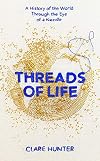
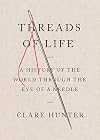
- Someone decided that putting a nail on the cover (instead of a needle) is a good idea. The positioning does not work for a nail so I am not sure what the thought behind that was -- I cannot figure out a way to get that picture to work at all. Unless it is a pin - which would make more sense but it looks closer to a nail to me... show less
"Thread of Life" is the personal story of one woman's relationship with textile, sewing and needlework, peppered with history of both the evolution of needlework and almost peripherally the world. There are real historical figures here - some well known (Mary, Queen of Scots), some not so much. The story is almost weaved together - a personal story gets connected to a show more traditional one which evolves into a historical account and then circles back. Most of the history is from the English speaking world (mainly USA and UK) but there are glimpses of traditional crafts from all over the world - from the Chinese minority and Ukraine to Africa, Chile and aboriginal Australia. Some of it is elaborated on, some of it is just mentioned in passing.
If you have any interest in embroidery or history of objects, this book is a treasure trove of anecdotes and history. Most of the book is about using the craft for banners and home objects and its relationship to art and not about clothing but as a history about textile, clothes are not forgotten - from the special motives sewn for protection from time immemorial to Singer and the sweatshops.
The book does not really follow any chronology - we jump in time - both in the author's history and the real history. The organization is based on the usage of the craft -- and the chapters follow that. That's also what makes the later part of the book somewhat weaker - because most of the works have more than one meaning, Hunter gets into a pattern of listing previously made points, then adding a new one and then doing it over and over again. The book start sounding repetitive - while these textiles are connected, the separate chapters are part of a whole and not just separate essays so the repetition grates.
The other big topic is the role of the women - the changes in the perception of needlework through the ages traces the changes in the position of women and their ability to provide for their families and to have their voices heard. The role of textiles through history and the changes brought by the markets and displacement run through the heart of the story - the traditions which had come before and the ones made today may sometimes be at odds and their balancing is not always easy. And sometimes things get lost in that shuffle.
Overall it is an engaging story (although I wish the last 1/3rd was consolidated in half the pages it took). There are two mostly visual problems with it:
- No graphics, pictures and images at all. The author discusses pieces of embroidery and various techniques and there is not even a small drawing let alone a picture somewhere. There is a list of sites and a bibliography at the end end where one can go and find these but... this is the kind of book where you want to read on its own, not with opening additional resources. I suspect that it was a cost cutting measure but...
- Someone decided that putting a nail on the cover (instead of a needle) is a good idea. The positioning does not work for a nail so I am not sure what the thought behind that was -- I cannot figure out a way to get that picture to work at all. Unless it is a pin - which would make more sense but it looks closer to a nail to me... show less
Lists
Awards

You May Also Like


Statistics
- Works
- 4
- Members
- 544
- Popularity
- #45,826
- Rating
- 4.2
- Reviews
- 19
- ISBNs
- 22
- Languages
- 3