
Victoria Chang (1) (1970–)
Author of Obit
For other authors named Victoria Chang, see the disambiguation page.
About the Author
Image credit: Chang in 2022
Works by Victoria Chang
If the Sky was My Heart 1 copy
Associated Works
The Poetry Review - Volume 113:4 Winter 2023 — Contributor — 2 copies
Tagged
Common Knowledge
- Birthdate
- 1970
- Gender
- female
- Nationality
- USA
- Birthplace
- Detroit, Michigan, USA
- Places of residence
- Orange County, California, USA
- Associated Place (for map)
- USA
Members
Reviews
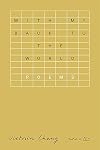
With My Back to the World, Victoria Chang
In her latest poetry book, With My Back to the World, Victoria Chang traces her reaction to abstract paintings, where she finds a communion in their recognition of the gaps between feeling and artistic expression, between emotion and language. This is not new territory for Chang – most of her poetry collections explore the adequacy or inadequacy of forms of any kind to express emotion fully and honestly. In OBIT, she used the physical columnar form show more of newspaper obituaries to contain, and to explode beyond, the emotions of grief and the experience of loss.
Here, she takes on a harder challenge, and is wildly inventive and exciting in her approach. Following Agnes Martin’s abstract art, she traces her own experience as a woman and an artist, and her experience of her father’s illness and death. The challenge is made harder because Agnes Martin’s artwork is unknown to most people who do not follow art closely and do not have access to galleries and museums. Martin’s work is abstract, based on repetition of lines or grids or dots, and the real impact of her art occurs when it is witnessed in person – the subtle brush work, the softly blurred lines in an apparently regular shape. The artwork’s subtleties, and scale, do not carry over well to printed reproductions. Unless you have seen Martin’s work in person at a gallery or museum, you really won’t “get” it. Chang’s attempt to give the reader some sense of the art, as she reacts with it or to it, includes naming poems with the title and year of a Martin piece, and having an imaginary dialogue with Martin as they look at the artwork together. That’s inventive, and pulls the reader in, but it also leaves the art and its impact, and the personality of Martin herself, unknown by the person reading the poetry. Chang complicates this even further by never telling the reader who the artist is – she mentions “Agnes” but there is nothing in the titles or intro to inform you the artist is Agnes Martin; you’ll need to deduce that from reviews and blurbs, and wonder how anyone figured it out. This adds a lot of work for the reader, and increases the ante for the poetry – will it be worth it?
I saw the blurbs and reviews mentioning Agnes Martin, and found an online documentary about her life and work. That added a good layer of depth to how I read Chang’s poems. Without that, I would not have sustained an interest in the poetry itself. Don’t get me wrong – it’s very good poetry, and there are images and lines that sparkle with insight and ask big questions. But tethering the whole thing to and being in dialogue with art and an artist that I can’t figure out is a really big ask of the reader, and would have left me exhausted and confused.
The poems themselves, per usual with Victoria Chang, are startling and insightful, veering rapidly from a huge personal grief into an observation about art in general, or Agnes Martin’s work in particular, and back again. That technique threads a needle, ever so skillfully, between deeply internal and hidden feelings and the artist’s need to express them, and really does stitch art and life together in a wonderful way. All the while, Chang sees how inadequate any art or language can be, and how an artist (and a woman) is always on the knife edge of wanting to be seen but not watched, not misunderstood. In The Islands, 1961, she asks: “Agnes left some lines uncovered on the borders, showing us how happiness is made. How even happiness is made by writing something down, then leaving it exposed for all to see. Is it possible to be seen, but not looked at?”
These philosophical battles about art, language, what is true or what is observed, what is exposed or not, the extra edge of being a woman, being a daughter – all make the poetry challenging, worthwhile, very intelligent, wonderfully creative, always fluid. This is a worthwhile poetry book—difficult, but definitely worthwhile.
Martin’s art is decidedly non-representational. She meant it to be experienced, responded to. She carefully avoided any representation, and went so far as to refuse to have titles of the artwork printed in a gallery catalogue – experience it, don’t read it, don’t try to figure out what it is, she might have said. If you haven’t seen Martin’s art but perhaps have seen a piece of Mark Rothko’s art, you’ll get it. I admire the courage and inventiveness of Victoria Chang in writing poetry – language! representation! nouns and verbs! – that uses such art as a launching pad. And in using the poetry and the art to navigate grief, feelings of inadequacy (what daughter doesn’t feel that?), sadness about her father’s death. The personal ache of the father’s death provides many of the moments the poetry reaches out to the reader.
The poetry collection plays with the ideas of art abstraction, showing the text of a poem overlaid with squiggles and made into an unreadable work of abstraction, and then providing the text of the poem. This constant back and forth keeps the reader immersed in the idea of abstract art, and the need to simply look at something and experience it before it can be read and understood. A few of the attempts to mirror a piece of art do not work so well – an example is Little Sister, where the art work is constructed of rows of dots formed by nails, and the poem reflecting that artwork is words broken up by regular dots, sort of like faux line-breaks. Lacking the texture, the physicalness, the starting contrast between material and title that the artwork holds, a poem broken up by dots just doesn’t bring the same effect. Other poems where, for example, Martin’s gridwork paintings are transformed into a poem with grids of phrases work much better (With My Back to the World, 1997).
The poems are at their best when Chang is simply doing what she does best – questioning, shaking grief loose by making it tangible in unexpected ways. In Untitled #10, 2002, she asks, “What happens if these aren’t pastoral or war poems? When I can feel the light I carry on my back but can’t see it or use it? // When sadness and language cast the same shadow. These six strips are the shadows of our blood, proving that every woman’s life can // be broken into and displayed.” She finishes that poem softly referring to both her parents’ deaths, then going back to the question of art: “Maybe our bodies never had a vanishing point, // so there will always be hunger. Even a woman’s life is trying to become more than the woman it represents.” Boom.
Thanks to #netgalley, and #fsg (#Farrar, Straus and Giroux) for the ARC. show less
In her latest poetry book, With My Back to the World, Victoria Chang traces her reaction to abstract paintings, where she finds a communion in their recognition of the gaps between feeling and artistic expression, between emotion and language. This is not new territory for Chang – most of her poetry collections explore the adequacy or inadequacy of forms of any kind to express emotion fully and honestly. In OBIT, she used the physical columnar form show more of newspaper obituaries to contain, and to explode beyond, the emotions of grief and the experience of loss.
Here, she takes on a harder challenge, and is wildly inventive and exciting in her approach. Following Agnes Martin’s abstract art, she traces her own experience as a woman and an artist, and her experience of her father’s illness and death. The challenge is made harder because Agnes Martin’s artwork is unknown to most people who do not follow art closely and do not have access to galleries and museums. Martin’s work is abstract, based on repetition of lines or grids or dots, and the real impact of her art occurs when it is witnessed in person – the subtle brush work, the softly blurred lines in an apparently regular shape. The artwork’s subtleties, and scale, do not carry over well to printed reproductions. Unless you have seen Martin’s work in person at a gallery or museum, you really won’t “get” it. Chang’s attempt to give the reader some sense of the art, as she reacts with it or to it, includes naming poems with the title and year of a Martin piece, and having an imaginary dialogue with Martin as they look at the artwork together. That’s inventive, and pulls the reader in, but it also leaves the art and its impact, and the personality of Martin herself, unknown by the person reading the poetry. Chang complicates this even further by never telling the reader who the artist is – she mentions “Agnes” but there is nothing in the titles or intro to inform you the artist is Agnes Martin; you’ll need to deduce that from reviews and blurbs, and wonder how anyone figured it out. This adds a lot of work for the reader, and increases the ante for the poetry – will it be worth it?
I saw the blurbs and reviews mentioning Agnes Martin, and found an online documentary about her life and work. That added a good layer of depth to how I read Chang’s poems. Without that, I would not have sustained an interest in the poetry itself. Don’t get me wrong – it’s very good poetry, and there are images and lines that sparkle with insight and ask big questions. But tethering the whole thing to and being in dialogue with art and an artist that I can’t figure out is a really big ask of the reader, and would have left me exhausted and confused.
The poems themselves, per usual with Victoria Chang, are startling and insightful, veering rapidly from a huge personal grief into an observation about art in general, or Agnes Martin’s work in particular, and back again. That technique threads a needle, ever so skillfully, between deeply internal and hidden feelings and the artist’s need to express them, and really does stitch art and life together in a wonderful way. All the while, Chang sees how inadequate any art or language can be, and how an artist (and a woman) is always on the knife edge of wanting to be seen but not watched, not misunderstood. In The Islands, 1961, she asks: “Agnes left some lines uncovered on the borders, showing us how happiness is made. How even happiness is made by writing something down, then leaving it exposed for all to see. Is it possible to be seen, but not looked at?”
These philosophical battles about art, language, what is true or what is observed, what is exposed or not, the extra edge of being a woman, being a daughter – all make the poetry challenging, worthwhile, very intelligent, wonderfully creative, always fluid. This is a worthwhile poetry book—difficult, but definitely worthwhile.
Martin’s art is decidedly non-representational. She meant it to be experienced, responded to. She carefully avoided any representation, and went so far as to refuse to have titles of the artwork printed in a gallery catalogue – experience it, don’t read it, don’t try to figure out what it is, she might have said. If you haven’t seen Martin’s art but perhaps have seen a piece of Mark Rothko’s art, you’ll get it. I admire the courage and inventiveness of Victoria Chang in writing poetry – language! representation! nouns and verbs! – that uses such art as a launching pad. And in using the poetry and the art to navigate grief, feelings of inadequacy (what daughter doesn’t feel that?), sadness about her father’s death. The personal ache of the father’s death provides many of the moments the poetry reaches out to the reader.
The poetry collection plays with the ideas of art abstraction, showing the text of a poem overlaid with squiggles and made into an unreadable work of abstraction, and then providing the text of the poem. This constant back and forth keeps the reader immersed in the idea of abstract art, and the need to simply look at something and experience it before it can be read and understood. A few of the attempts to mirror a piece of art do not work so well – an example is Little Sister, where the art work is constructed of rows of dots formed by nails, and the poem reflecting that artwork is words broken up by regular dots, sort of like faux line-breaks. Lacking the texture, the physicalness, the starting contrast between material and title that the artwork holds, a poem broken up by dots just doesn’t bring the same effect. Other poems where, for example, Martin’s gridwork paintings are transformed into a poem with grids of phrases work much better (With My Back to the World, 1997).
The poems are at their best when Chang is simply doing what she does best – questioning, shaking grief loose by making it tangible in unexpected ways. In Untitled #10, 2002, she asks, “What happens if these aren’t pastoral or war poems? When I can feel the light I carry on my back but can’t see it or use it? // When sadness and language cast the same shadow. These six strips are the shadows of our blood, proving that every woman’s life can // be broken into and displayed.” She finishes that poem softly referring to both her parents’ deaths, then going back to the question of art: “Maybe our bodies never had a vanishing point, // so there will always be hunger. Even a woman’s life is trying to become more than the woman it represents.” Boom.
Thanks to #netgalley, and #fsg (#Farrar, Straus and Giroux) for the ARC. show less
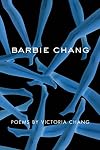
Barbie Chang Loves Evites
Victoria Chang
Barbie Chang loves Evites Paperless
Party Posts that host her
ego patch her holes she puts barrettes
on her heart so other
people will see her will hear her her
heart is made of hay is
disturbingly small held in its cage she
is never late when invited
always ready for mimesis ready to put
on her costume to
drink mimosas her heart smells like
moth balls jumps at
every broth bell her heart growls more
each day she trims it with
a number two it’s messy work missing
her show more aorta by a little bit
her heart is always sort of bleeding she is
always waiting for
invitations once she heard the Circle
planning a birthday party
for a daughter she stationed herself
sipped water for days
waiting for the Evite leaving her Kindle
on as a nightlight it
glowed a blue garden on the ceiling she
let her guard down it
never made a ringing sound when you
brush a child’s hair the
mother can also feel the pain she heard
the ice skating party
was a hit little girls going in figure
eights their breath
coming out in clouds shaped like
little white hearts
* "The Circle" is an elite group of "pretty slim mothers" at her daughter's school
* * * *
Victoria Chang uses a Barbie doll persona to explore a life of a single mother trying to integrate with and please others. She uses couplets and sonnets and internal rhyming to successful effect. Mr. Darcy is a recurring figure of longing, and men the cause of tears.
****
. . . . she wants to
be used she doesn't
want to be with you or you it is morning
again and she is already
mourning the men the night men who
never fight who never
write back she prefers to sleep on her
back so she can see the
eyes of her attackers in the morning
a bed with questions
with her depression on each side two
small holes from knees
* * * *
Chang has a style that snared me, and noteworthy formal skills. Barbie Chang's travails are shared by many, and I also felt the undercurrent of her being Asian in many of her experiences. show less
Victoria Chang
Barbie Chang loves Evites Paperless
Party Posts that host her
ego patch her holes she puts barrettes
on her heart so other
people will see her will hear her her
heart is made of hay is
disturbingly small held in its cage she
is never late when invited
always ready for mimesis ready to put
on her costume to
drink mimosas her heart smells like
moth balls jumps at
every broth bell her heart growls more
each day she trims it with
a number two it’s messy work missing
her show more aorta by a little bit
her heart is always sort of bleeding she is
always waiting for
invitations once she heard the Circle
planning a birthday party
for a daughter she stationed herself
sipped water for days
waiting for the Evite leaving her Kindle
on as a nightlight it
glowed a blue garden on the ceiling she
let her guard down it
never made a ringing sound when you
brush a child’s hair the
mother can also feel the pain she heard
the ice skating party
was a hit little girls going in figure
eights their breath
coming out in clouds shaped like
little white hearts
* "The Circle" is an elite group of "pretty slim mothers" at her daughter's school
* * * *
Victoria Chang uses a Barbie doll persona to explore a life of a single mother trying to integrate with and please others. She uses couplets and sonnets and internal rhyming to successful effect. Mr. Darcy is a recurring figure of longing, and men the cause of tears.
****
. . . . she wants to
be used she doesn't
want to be with you or you it is morning
again and she is already
mourning the men the night men who
never fight who never
write back she prefers to sleep on her
back so she can see the
eyes of her attackers in the morning
a bed with questions
with her depression on each side two
small holes from knees
* * * *
Chang has a style that snared me, and noteworthy formal skills. Barbie Chang's travails are shared by many, and I also felt the undercurrent of her being Asian in many of her experiences. show less
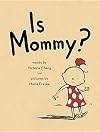
I gave it 2 stars, almost 3, because I GET the humor, and I can appreciate the "irreverent" mom is loved-no-matter-what, etc. message presented in this book. I think some of the language is harsh; words like: "ugly, mean, boring, etc", but those are the real life words & concepts kids tend to be taught to describe mundane discomforts. No? Obviously both moms and kids love each other no matter how they are labeled during their specific mood disturbances, and all is forgiven and love prevails, show more which seems to be the gist of this one. Maybe it wasn't as clever as it set out to be, but I got it. I would say it's basically okay, maybe the humor is too basic for my taste, but I can see why people are turned off by the language. show less
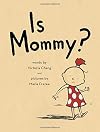
Brilliant. Unconditional love works both ways, you know. These mommies are real people, usually but not always perfect, but beloved anyway. And the children are both amused and amusing. I do love Frazee's art, even when it's over-the-top-ish, as it is here.
Still, the negative reviews have a point. You need to read this for yourself first. If you don't 'get' it, then don't share it with your kids.
4.5 stars rounded up to try to counter the defensiveness and hostility of the other reviewers, show more poor things. show less
Still, the negative reviews have a point. You need to read this for yourself first. If you don't 'get' it, then don't share it with your kids.
4.5 stars rounded up to try to counter the defensiveness and hostility of the other reviewers, show more poor things. show less
Awards


You May Also Like


Associated Authors
Statistics
- Works
- 13
- Also by
- 9
- Members
- 752
- Popularity
- #33,828
- Rating
- 3.9
- Reviews
- 28
- ISBNs
- 34