
Diane Seuss
Author of frank: sonnets
About the Author
Diane Seuss is a author of four previous books of poetry, including Still Life with Two Dead Peacocks and a Girl, a finalist for the National Book Critics Circle Award and the Los Angeles Times Book Prize, and Four-Legged Girl, a finalist for the Pulitzer Prize. She lives in Michigan.
Image credit: via Poets.org
Works by Diane Seuss
Associated Works
The Best American Poetry 2014 (The Best American Poetry series) (2014) — Contributor — 89 copies, 1 review
Embodied: An Intersectional Feminist Comics Poetry Anthology (2021) — Contributor — 76 copies, 3 reviews
Tagged
Common Knowledge
- Canonical name
- Seuss, Diane
- Birthdate
- 1956
- Gender
- female
- Occupations
- Writer in Residence, Kalamazoo College
- Awards and honors
- Juniper Prize (Poetry, 2009)
PEN/Voelcker Award for Poetry (2022) - Short biography
- DIANE SEUSS is writer-in-residence at Kalamazoo College. Her first poetry collection, It Blows You Hollow, was published in 1998 by New Issues Press. Her poems have been published in several anthologies and in many literary magazines, including Poetry, New Orleans Review, North American Review, and The Georgia Review.
- Nationality
- USA
- Birthplace
- Michigan City, Indiana, USA
Members
Reviews
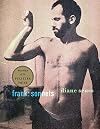
An astonishment, really. These poems took me back to a New York City in the mid-80s, a place so different from now, "another world" as Don Delillo said to me at a book signing; a place where you could get anything on the street from Olivetti portable manual typewriters to whatever poison was your destruction of choice; a place where there were weekly memorial services for the multitude dying of AIDS. This book is a song to that era, to a poet's friend who becomes, through these words of love show more and anger and tenderness and mourning, everyone's friend. Those whom we know and now are gone. I wrote this on a Twitter response: Frank: Sonnets is an act of remembrance sans the pretty film of nostalgia. A song to the lost of a different age and, by the associations of our own lives, the lost of our current age. show less
A masterpiece of interwoven images and storytelling. Each sonnets builds upon the last, extending and transforming one closing image or theme into the next sonnets opening. Possibly the greatest front to back collection of poetry I've ever read.
"Poverty, like a sonnet, is a good teacher. The kind that raps your /
knuckles with a ruler but not the kind that throws a dictionary/
Across the room and hits you in the brain with all the words /
That ever were...."
"Poverty, like a sonnet, is a good teacher. The kind that raps your /
knuckles with a ruler but not the kind that throws a dictionary/
Across the room and hits you in the brain with all the words /
That ever were...."
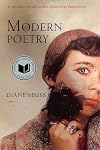
I don't know much about poetry. My enjoyment or non-enjoyment is a visceral thing and might, to those who do know about poetry, be meaningless or even laughable. And perhaps that is one of the things I love so much about Diane Seuss' work. She democratizes poetry, bats aside the flowery, and acknowledges that in fact, many poets we think of as having been romantic heroes were gross, dirty, unattractive, syphilitic messes. In that community, she finds herself comfortable. I have no reason to show more believe Seuss is gross, dirty, unattractive, or syphilitic, but she has divorced herself from striving toward or caring about being physically appealing or socially engaging. She speaks in these poems of having cared in the past about that, and when she does it is as if she is speaking of a person with no relation to her current self. She speaks too of poets she admires and both relates herself to and distinguishes herself from them. It is as if she is finding her place in the canon. She tries, as part of that quest I think, to define what modern poetry is. Her poetry is smart, generous, funny, heartbreaking, and vulnerable and is no slave to form. This was clearer in her last collection, frank, where she reinvented the sonnet, than it is here, but though subtler Seuss is as willing here to buck the rules as she was in that book.
As I said at the start, I don't know much about poetry, but Seuss' work excites me, challenges me, amuses me, and makes me reconsider all the rules. That makes it rare and special, at least to me. show less
As I said at the start, I don't know much about poetry, but Seuss' work excites me, challenges me, amuses me, and makes me reconsider all the rules. That makes it rare and special, at least to me. show less
I am not particularly vain, but I do get a twinge when I don't enjoy things that are lauded by most. a feeling that maybe I don't know what I am talking about. That is a bad feeling, and so I went into reading Diane Seuss' Frank: Sonnets with trepidation. This memoir in sonnets won both the Pulitzer and the National Book award. I struggle with both poetry and with things set in the southern part of my home state of Michigan, a geography very much not beloved by me (though I love northern show more Michigan still.) So what would others think if I did not like this book with multiple imprimaturs of excellence? I need not have worried. Holy Moses this is great!
I am not well schooled in poetry, but I have read a good deal of Frank O'Hara, mostly because I am interested in O'Hara the man/curator of my favorite museum and I immediately recognized a similarity to O'Hara in Seuss' work. It turns out that I am not the only person who recognized that and that I sort of fell ass-backsword into sounding well educated. I just read a piece about this collection in McSweeney's and the piece, an interview with Diane Seuss, the intro starts thusly"
If Frank O’Hara were a salt-of-the-earth, lightning-struck woman with a master’s in social work who’d grown up in the middle United States and wrote sonnets about childhood and addiction and friends dying of AIDS, she would likely compose lines like the ones that run through Diane Seuss’s frank: sonnets. But “frank” also means candor, and her variation on O’Hara’s sound soon turns wholly her own, and you mostly forget that Frank is in the background.
What she said.
I don't know what to say about this except that it is perfect in the way it defines a particular life, a particular historical moment (Seuss is a few years older than me, but all this is familiar.) She graduated from Kalamazoo College, I think a year before my brother did, so we are practically sisters. :) For anyone who thought sonnets were dead. read this. Seuss deconstructs and resurrects the form. In one poem she says: "The sonnet, like poverty, teaches you what you can do / without,” And so it apparently does. Spare yet missing nothing. A life told. I am ending this with the last poem, a meditation on death and legacy, and hoping it whets all my friends appetites and sends them scurrying to find this book.
[I hope when it happens]
By Diane Seuss
I hope when it happens I have time to say oh so this is how it is happening
unlike Frank hit by a jeep on Fire Island but not like dad who knew too
long six goddamn years in a young man’s life so long it made a sweet guy sarcastic
I want enough time to say oh so this is how I’ll go and smirk at that last rhyme
I rhymed at times because I wanted to make something pretty especially for Mikel
who liked pretty things soft and small things who cried into a white towel when I hurt
myself when it happens I don’t want to be afraid I want to be curious was Mikel curious
I’m afraid by then he was only sad he had no money left was living on green oranges
had kissed all his friends goodbye I kissed lips that kissed Frank’s lips though not
for me a willing kiss I willingly kissed lips that kissed Howard’s deathbed lips
I happily kissed lips that kissed lips that kissed Basquiat’s lips I know a man who said
he kissed lips that kissed lips that kissed lips that kissed Whitman’s
lips who will say of me I kissed her who will say of me I kissed someone who kissed
her or I kissed someone who kissed someone who kissed someone who kissed her. show less
I am not well schooled in poetry, but I have read a good deal of Frank O'Hara, mostly because I am interested in O'Hara the man/curator of my favorite museum and I immediately recognized a similarity to O'Hara in Seuss' work. It turns out that I am not the only person who recognized that and that I sort of fell ass-backsword into sounding well educated. I just read a piece about this collection in McSweeney's and the piece, an interview with Diane Seuss, the intro starts thusly"
If Frank O’Hara were a salt-of-the-earth, lightning-struck woman with a master’s in social work who’d grown up in the middle United States and wrote sonnets about childhood and addiction and friends dying of AIDS, she would likely compose lines like the ones that run through Diane Seuss’s frank: sonnets. But “frank” also means candor, and her variation on O’Hara’s sound soon turns wholly her own, and you mostly forget that Frank is in the background.
What she said.
I don't know what to say about this except that it is perfect in the way it defines a particular life, a particular historical moment (Seuss is a few years older than me, but all this is familiar.) She graduated from Kalamazoo College, I think a year before my brother did, so we are practically sisters. :) For anyone who thought sonnets were dead. read this. Seuss deconstructs and resurrects the form. In one poem she says: "The sonnet, like poverty, teaches you what you can do / without,” And so it apparently does. Spare yet missing nothing. A life told. I am ending this with the last poem, a meditation on death and legacy, and hoping it whets all my friends appetites and sends them scurrying to find this book.
[I hope when it happens]
By Diane Seuss
I hope when it happens I have time to say oh so this is how it is happening
unlike Frank hit by a jeep on Fire Island but not like dad who knew too
long six goddamn years in a young man’s life so long it made a sweet guy sarcastic
I want enough time to say oh so this is how I’ll go and smirk at that last rhyme
I rhymed at times because I wanted to make something pretty especially for Mikel
who liked pretty things soft and small things who cried into a white towel when I hurt
myself when it happens I don’t want to be afraid I want to be curious was Mikel curious
I’m afraid by then he was only sad he had no money left was living on green oranges
had kissed all his friends goodbye I kissed lips that kissed Frank’s lips though not
for me a willing kiss I willingly kissed lips that kissed Howard’s deathbed lips
I happily kissed lips that kissed lips that kissed Basquiat’s lips I know a man who said
he kissed lips that kissed lips that kissed lips that kissed Whitman’s
lips who will say of me I kissed her who will say of me I kissed someone who kissed
her or I kissed someone who kissed someone who kissed someone who kissed her. show less
Lists
Awards


You May Also Like


Associated Authors
Statistics
- Works
- 6
- Also by
- 6
- Members
- 457
- Popularity
- #53,729
- Rating
- 4.1
- Reviews
- 14
- ISBNs
- 19
- Favorited
- 2