
William Cobbett (1) (1763–1835)
Author of Rural Rides
For other authors named William Cobbett, see the disambiguation page.
About the Author
Image credit: Courtesy of the NYPL Digital Gallery (image use requires permission from the New York Public Library)
Works by William Cobbett
The autobiography of William Cobbett : the progress of a plough-boy to a seat in Parliament (1967) 14 copies
Life and adventures of Peter Porcupine, with other records of his early career in England & America (1970) 10 copies
Cobbett's tour in Scotland; and in the four northern counties of England: in the autumn of the year 1832 (1984) 7 copies
Cobbett's Political Register 7 copies
Cobbett's Easy Grammar 2 copies
Cobbett's Legacy to Parsons 2 copies
Cobbett's Legacy to Labourers 2 copies
WOODLANDS: A TREATISE 2 copies
Porcupine's Works Volume II 1 copy
Cobbett's monthly sermons 1 copy
Associated Works
Tagged
Common Knowledge
- Other names
- Porcupine, Peter
- Birthdate
- 1763-03-09
- Date of death
- 1835-06-18
- Gender
- male
- Occupations
- soldier
pamphleteer
farmer
political activist
Member of Parliament - Short biography
- William Cobbett (9 March 1763 – 18 June 1835) was an English pamphleteer, farmer and journalist, who was born in Farnham, Surrey.
Early in his career, he was a loyalist supporter of King and Country: but later he joined and successfully publicised the radical movement, which led to the Reform Bill of 1832, and to his being elected in 1832 as one of the two MPs for the newly enfranchised borough of Oldham.
He wrote many polemics, on subjects from political reform to religion, but is best known for his book from 1830, Rural Rides, which is still in print today. [Wikipedia] - Nationality
- Great Britain
- Birthplace
- Farnham, Surrey, England, UK
- Places of residence
- Farnham, Surrey, England, UK
Long Island, New York, USA
France
London, England, UK
New Brunswick, Canada - Place of death
- Normandy, Surrey, England, UK
- Map Location
- England, UK
Members
Reviews

Plough boy, soldier, political refugee, farmer, Cobbett knew what he was talking about - by no means can this book be dismissed as "the rich advising the poor on how they should cope".
Cottage Economy aims to help labourers achieve a decent standard of living for themselves and their families - "I lay it down as a maxim, that for a family to be happy, they must be well supplied with food and raiment". Cobbett uses his experience as a farm labourer, farmer, and nurseryman, backed by show more experimental results, to give instruction on brewing, baking, keeping livestock, making rushlights (to avoid the tax on candles), raising crops, and a host of related matters. His prose is clear and lively, his anger at the promises of a paradise in the next life to those suffering in this ("A couple of flitches of bacon are worth fifty-thousand Methodist sermons and religious tracts"), his love of England and his belief that unless families are happily off the nation can never be great, all shine through. show less
Cottage Economy aims to help labourers achieve a decent standard of living for themselves and their families - "I lay it down as a maxim, that for a family to be happy, they must be well supplied with food and raiment". Cobbett uses his experience as a farm labourer, farmer, and nurseryman, backed by show more experimental results, to give instruction on brewing, baking, keeping livestock, making rushlights (to avoid the tax on candles), raising crops, and a host of related matters. His prose is clear and lively, his anger at the promises of a paradise in the next life to those suffering in this ("A couple of flitches of bacon are worth fifty-thousand Methodist sermons and religious tracts"), his love of England and his belief that unless families are happily off the nation can never be great, all shine through. show less
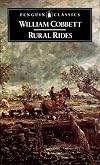
William Cobbett is a disagreeable character in some ways. He is a scold who rides his high horse, literally and figuratively, across early 19th century England. Unless you are really well up on the political controversies of the era, many of his shots will just whizz past your head. He suffered from an unpleasant anti-Semitism that he gives frequent vent to. He has an annoying habit of going into “I told you so” mode. And yet…Cobbett is one of the outstanding writers and appreciators show more of the English landscape, both wild and human-mediated, and I think he is an infinitely more interesting figure as a grumpy-lyrical artist than he would be as a purely lyrical one. It’s not everyone who can mix political vitriol with a sincere pleasure in a turnip harvest (and describe the latter so beautifully). Cobbett’s “Rural Rides,” which takes up two volumes and 642 closely printed pages in the old Everyman edition, deserves to be read and savored in full. show less

In response to another review which mentions Cobbett’s anti-Semitism, I note that while there are indeed a number of what I would consider pro-forma references to Jews along with other jobbers and money-lenders, his real bugbear is, wait for it, Quakers. He concedes that not all Jews are involved in banking and finance but several times contends that no Quakers whatever hold jobs outside this field. A real bee in his bonnet on this subject. Also very enthusiastic about turnips. A quirky show more book. Woodcock’s introduction and notes in Penguin edition give helpful context. show less
I must say, I could not finish this book. It was dreadful. Its pedantic tone and wordiness (in the extreme) became annoying almost immediately. Even for a book about grammar written in the 19th century, this book is so florid and takes so long to get to the point, any usefulness that might be buried within, is lost. I'm sure this author was a wealth of information. Too bad he couldn't communicate it without boring the reader to death.
Lists
You May Also Like


Associated Authors
Statistics
- Works
- 64
- Also by
- 3
- Members
- 1,380
- Popularity
- #18,637
- Rating
- 3.7
- Reviews
- 13
- ISBNs
- 173
- Languages
- 1
- Favorited
- 2
