
John Cho (1) (1972–)
Author of Troublemaker
For other authors named John Cho, see the disambiguation page.
Works by John Cho
Don't Make Me Go 2 copies
Searching - DVD + Digital 1 copy
Associated Works
Harold & Kumar: Go to White Castle [and] Escape From Guantanamo Bay (Double Feature Video) (2010) — Actor — 19 copies
Tagged
Common Knowledge
- Other names
- Cho Yo-Han
- Birthdate
- 1972-06-16
- Gender
- male
- Education
- University of California, Berkeley
- Occupations
- actor
musician - Birthplace
- Seoul, South Korea
- Associated Place (for map)
- Seoul, South Korea
Members
Reviews
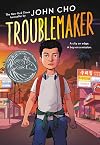
Korean-American Jordan lives with his Appa and Umma, his grandfather, and his older sister Sarah. Lately, Jordan is struggling: he's had a fight with his dad, is trying to keep his distance from former best friend Mike (who his dad thinks is a bad influence), and has just been suspended from school for cheating. But things are about to get worse: the Rodney King verdict was just announced, and L.A. is about to explode. Jordan's Appa goes to their liquor store to board it up, but doesn't call show more to let the family know he's safe, like he promised - so Jordan decides to prove he can think of someone other than himself and bring the gun Appa has hidden to him for protection. This well-intentioned, hare-brained scheme gets him into even worse trouble, but finally leads to honest conversations with both his father, his sister, and Mike.
Quotes
I'll never forgive myself if that's the last conversation we have. (33)
Geokjeonghajima [don't worry]. Back and forth, just like that, protecting each other from our worlds until we were living on two totally different planets. (144)
Nobody's just one thing. (160)
I've been running away from a lot of people tonight....All people who were trying to help me in their own way. (182)
It seems way too simple. To say sorry when you're sorry. To say you're hurt when you're hurt. To say something's not right when it's not right. But it's one of the hardest things in the world. (197) show less
Quotes
I'll never forgive myself if that's the last conversation we have. (33)
Geokjeonghajima [don't worry]. Back and forth, just like that, protecting each other from our worlds until we were living on two totally different planets. (144)
Nobody's just one thing. (160)
I've been running away from a lot of people tonight....All people who were trying to help me in their own way. (182)
It seems way too simple. To say sorry when you're sorry. To say you're hurt when you're hurt. To say something's not right when it's not right. But it's one of the hardest things in the world. (197) show less
Troublemaker is an absolute page-turner!
It is April 29, 1992, in Los Angeles, California, and Jordan Parks is about to have an extraordinary night. Sixth grade has been much harder than he’d ever expected, and to bring up flagging grades, he’s been cheating on his tests and gotten caught doing it several times. Now, he’s been suspended from school.
Thinking he’ll have a little time before his parents come home from working the family liquor store, Jordan is surprised and dismayed to show more find them already there when he arrives. But his Umma and Appa are wholly distracted by the day’s events unfolding in South Central, where their store is located. The verdict of acquittal in the trial of the four officers accused of beating unarmed Rodney King the previous year has been announced, and the South Central neighborhood is reacting with protests, demonstrations, and now, riots and looting. His parents closed the store early and came home to Glendale to wait things out. But when the news shows the demonstrations escalating into violence and destruction, Appa decides to return to the store and board up the windows as protection against vandalism. He promises to call home when he reaches the store, but the call never comes.
The whole family is worried, but none more so than Jordan. He and his father had recently had a huge blow-up, and Jordan had said some awful things to his father, which he immediately regretted. However, pride had kept him from apologizing, and with his father now in harm’s way, Jordan is worried he’ll never be able to tell his father he was sorry and what is really going on in his life.
When Jordan’s ne’er-do-well friend, Mike Rhee, phones to get him to hang out, Jordan sees a chance to help his father and prove to him that he’s not the big disappointment his father claimed him to be. Appa has a handgun in his bedroom closet, and Jordan plans to take the weapon to his father at the store for protection. Putting the gun in his backpack and sneaking out of the house to meet Mike is just the start of Jordan’s mission to reunite with his father and prove to him and himself that he’s not a complete failure.
Troublemaker is an exciting, tension-filled adventure set during the outrage, riots, and violence in South Central Los Angeles in the aftermath of the Rodney King verdict. The main character, Jordan Park, is twelve-years-old and he’s going through a tough time, as many children do when they transition from elementary school to sixth grade.
Jordan is the youngest and only son in an immigrant Korean family, which includes his parents, older sister, and grandfather. He knows his parents are struggling to make a success of their life in the U.S. He had heard them talking and arguing in the kitchen when they thought he couldn’t hear. But his parents don’t openly discuss their circumstances, only ever insisting that he not worry.
At the same time, Jordan keeps his struggles to himself with the same intention, not adding to his parents’ worries. He wants to fix things on his own, his own way. It’s just that his choices to do so have only made things worse. He also feels he’s being held to an impossible standard; his older sister, Sarah, is practically perfect!
The exciting and tense story of Jordan’s mission to get to his father makes Troublemaker an absolute page-turner! Danger lurks around every corner as he and his friend, Mike, race their way through Koreatown: danger not only from the unusual event unfolding nearby but also that as a result of the boys’ actions as well.
Troublemaker is a look inside a Korean American family, and the author includes Korean honorifics with just the right amount of context for the reader to quickly understand the meaning. The family dynamics are such that most readers will readily relate to young Jordan’s dilemmas. I found many scenes touching, and I became filled with emotion.
Another significant aspect of the story is the presentation of the events of April 29, 1992, and its effects on the people of South Central, in general, and the Korean community, in particular. The author’s notes describe this book as one result of Cho’s desire to explain to his own children current events occurring after the murder of George Floyd and also the rise and public awareness of discrimination and violence focused against Asian Americans. The similarities of events, 30 years apart, are eye-opening, disheartening, and should stand as a reminder to do better.
With its exciting plot and relatable characters, Troublemaker is a wonderful middle-grade novel that even reluctant readers will enjoy. The author’s writing style is easy to read and very engaging. Young and older readers alike will be caught up in the action and not only for the pure adventure but for the historical events portrayed.
I voluntarily reviewed this after receiving an Advanced Review Copy from TBR and Beyond Tours. show less
It is April 29, 1992, in Los Angeles, California, and Jordan Parks is about to have an extraordinary night. Sixth grade has been much harder than he’d ever expected, and to bring up flagging grades, he’s been cheating on his tests and gotten caught doing it several times. Now, he’s been suspended from school.
Thinking he’ll have a little time before his parents come home from working the family liquor store, Jordan is surprised and dismayed to show more find them already there when he arrives. But his Umma and Appa are wholly distracted by the day’s events unfolding in South Central, where their store is located. The verdict of acquittal in the trial of the four officers accused of beating unarmed Rodney King the previous year has been announced, and the South Central neighborhood is reacting with protests, demonstrations, and now, riots and looting. His parents closed the store early and came home to Glendale to wait things out. But when the news shows the demonstrations escalating into violence and destruction, Appa decides to return to the store and board up the windows as protection against vandalism. He promises to call home when he reaches the store, but the call never comes.
The whole family is worried, but none more so than Jordan. He and his father had recently had a huge blow-up, and Jordan had said some awful things to his father, which he immediately regretted. However, pride had kept him from apologizing, and with his father now in harm’s way, Jordan is worried he’ll never be able to tell his father he was sorry and what is really going on in his life.
When Jordan’s ne’er-do-well friend, Mike Rhee, phones to get him to hang out, Jordan sees a chance to help his father and prove to him that he’s not the big disappointment his father claimed him to be. Appa has a handgun in his bedroom closet, and Jordan plans to take the weapon to his father at the store for protection. Putting the gun in his backpack and sneaking out of the house to meet Mike is just the start of Jordan’s mission to reunite with his father and prove to him and himself that he’s not a complete failure.
Troublemaker is an exciting, tension-filled adventure set during the outrage, riots, and violence in South Central Los Angeles in the aftermath of the Rodney King verdict. The main character, Jordan Park, is twelve-years-old and he’s going through a tough time, as many children do when they transition from elementary school to sixth grade.
Jordan is the youngest and only son in an immigrant Korean family, which includes his parents, older sister, and grandfather. He knows his parents are struggling to make a success of their life in the U.S. He had heard them talking and arguing in the kitchen when they thought he couldn’t hear. But his parents don’t openly discuss their circumstances, only ever insisting that he not worry.
At the same time, Jordan keeps his struggles to himself with the same intention, not adding to his parents’ worries. He wants to fix things on his own, his own way. It’s just that his choices to do so have only made things worse. He also feels he’s being held to an impossible standard; his older sister, Sarah, is practically perfect!
The exciting and tense story of Jordan’s mission to get to his father makes Troublemaker an absolute page-turner! Danger lurks around every corner as he and his friend, Mike, race their way through Koreatown: danger not only from the unusual event unfolding nearby but also that as a result of the boys’ actions as well.
Troublemaker is a look inside a Korean American family, and the author includes Korean honorifics with just the right amount of context for the reader to quickly understand the meaning. The family dynamics are such that most readers will readily relate to young Jordan’s dilemmas. I found many scenes touching, and I became filled with emotion.
Another significant aspect of the story is the presentation of the events of April 29, 1992, and its effects on the people of South Central, in general, and the Korean community, in particular. The author’s notes describe this book as one result of Cho’s desire to explain to his own children current events occurring after the murder of George Floyd and also the rise and public awareness of discrimination and violence focused against Asian Americans. The similarities of events, 30 years apart, are eye-opening, disheartening, and should stand as a reminder to do better.
With its exciting plot and relatable characters, Troublemaker is a wonderful middle-grade novel that even reluctant readers will enjoy. The author’s writing style is easy to read and very engaging. Young and older readers alike will be caught up in the action and not only for the pure adventure but for the historical events portrayed.
I voluntarily reviewed this after receiving an Advanced Review Copy from TBR and Beyond Tours. show less
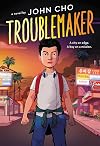
Summary: The first half of the book is fairly dull reading for an adult. The second half is more meaningful. For kids, it is best read with adult supervision to discuss the worthy, though weighty, subject matters.
“Troublemaker” is a middle-grades novel, written by John Cho, the actor. I’m not going to lie; I read it because he (with Sarah Suk) wrote it. I figured it’s only fair that I call myself out on it.
The time is the first day of the 1992 Los Angeles uprising, ignited by the show more Rodney King killers’ (policemen) verdict. The protesters especially targeted Korean owned businesses because 15-year-old Latasha Harlins was shot and killed by a Korean shopkeeper due to a mistaken belief that Harlins had stolen a bottle of orange juice. It was a terrible time in history that unfortunately repeats itself. 12-year-old Jordan Park is the narrator and key character. After being called the troublemaker of the family (the book goes deeper into this ‘label’), Jordan decides he needs to do something right. On this faithful night of pending riots, Appa (father) had left to board-up the family store. Jordan snuck out of the house with one goal in mind – to bring Appa his (unloaded) gun, so Appa can protect himself and his store.
The plot, writing style, and language is clear and simple for its target audience. Dare I say the premise of carrying a gun through LA is naïve, but what do I know about the mind of a 12-year-old boy? During this journey, the complexity of Jordan’s feelings reveals itself via memories of recent events. Compared to his “perfect” sister, he is the opposite of model-minority (the book also goes deeper on this). Umma and Appa are the classic immigrant parents, with all their hopes and dreams upon their children; queue the generational drama. Whatever struggles Jordan (and his sister) may suffer, they are exemplified by the weight of expectations. The first half lays the foundations of the story, while the second half, the much better half, addresses the depth of the motivations.
When writing this book, Cho struggled with whether to include a gun in a children’s book. Needless to say, violence, death, and racism are weighty, mature subjects. Then Cho thought about his own kids, who at 7 and 12 had been through active shooter drills at school. Cho decided that as an author and a parent to his children who have seen anti-Asian graffiti on their street – that “sanitizing the truth too much” would be “a disservice, an abdication of our responsibility to prepare them for independence.” This mindset is important to note when reading this book.
Lastly, I recently read Jamie Ford (author of ‘Hotel on the Corner of Bitter and Sweet’) commented there are infinite historical fictions yet to be written. I realized then this book fits this bill. Walking through the bustling Koreatown in LA today, one wouldn’t think much about the riots. That history is nonetheless indelible. Someone needs to tell this history to the kiddos, and Cho chose to cover it, motivated by the Asian hate messages throughout and after the pandemic. Good for him!
Quotes:
On Riots:
“…Even in this state, I can’t help but think of what Mr. Gary said. How the uprisings of tonight are from years of unheard anger, how people are setting the city on fire not because they love to see it burn but because they’re in pain. And I know it’s not at all the same, what I’m going through now, but I think I get it more than I did before. The feeling of being so mad you can’t help yourself…”
On Generational Gaps/Trauma:
“…they already looked so tired, I didn’t want to add any more worry onto their shoulders. That whenever I did try to sit down to study, all I could see was their stressed faces, full of things they wouldn’t tell me about.
Don’t worry, Umma would say, trying to protect me from their world where there wasn’t enough money.
Don’t worry, I would say back, trying to protect them from my world where there wasn’t enough focus.
Geokjeonghajima. Back and forth, just like that, protecting each other from our worlds until we living on two totally different planets.”
On Guns – if only more people understand this:
“Protection. This whole time, that’s how I was thinking of the gun. As a shield. But a gun isn’t a shield. A gun is a gun. It’s meant to kill people.”
On Expectations:
“My dad named me Jordan, after the river. I never thought I could live up to that name. The expectation of peace and freedom on the other side. The chance to be better.
I still don’t know if I’ll ever really be able to live up to it, but here’s the thing about rivers. They never stop running. Toward the ocean, toward something bigger than themselves.
Maybe in that way, we’re all a bit like rivers.” show less
“Troublemaker” is a middle-grades novel, written by John Cho, the actor. I’m not going to lie; I read it because he (with Sarah Suk) wrote it. I figured it’s only fair that I call myself out on it.
The time is the first day of the 1992 Los Angeles uprising, ignited by the show more Rodney King killers’ (policemen) verdict. The protesters especially targeted Korean owned businesses because 15-year-old Latasha Harlins was shot and killed by a Korean shopkeeper due to a mistaken belief that Harlins had stolen a bottle of orange juice. It was a terrible time in history that unfortunately repeats itself. 12-year-old Jordan Park is the narrator and key character. After being called the troublemaker of the family (the book goes deeper into this ‘label’), Jordan decides he needs to do something right. On this faithful night of pending riots, Appa (father) had left to board-up the family store. Jordan snuck out of the house with one goal in mind – to bring Appa his (unloaded) gun, so Appa can protect himself and his store.
The plot, writing style, and language is clear and simple for its target audience. Dare I say the premise of carrying a gun through LA is naïve, but what do I know about the mind of a 12-year-old boy? During this journey, the complexity of Jordan’s feelings reveals itself via memories of recent events. Compared to his “perfect” sister, he is the opposite of model-minority (the book also goes deeper on this). Umma and Appa are the classic immigrant parents, with all their hopes and dreams upon their children; queue the generational drama. Whatever struggles Jordan (and his sister) may suffer, they are exemplified by the weight of expectations. The first half lays the foundations of the story, while the second half, the much better half, addresses the depth of the motivations.
When writing this book, Cho struggled with whether to include a gun in a children’s book. Needless to say, violence, death, and racism are weighty, mature subjects. Then Cho thought about his own kids, who at 7 and 12 had been through active shooter drills at school. Cho decided that as an author and a parent to his children who have seen anti-Asian graffiti on their street – that “sanitizing the truth too much” would be “a disservice, an abdication of our responsibility to prepare them for independence.” This mindset is important to note when reading this book.
Lastly, I recently read Jamie Ford (author of ‘Hotel on the Corner of Bitter and Sweet’) commented there are infinite historical fictions yet to be written. I realized then this book fits this bill. Walking through the bustling Koreatown in LA today, one wouldn’t think much about the riots. That history is nonetheless indelible. Someone needs to tell this history to the kiddos, and Cho chose to cover it, motivated by the Asian hate messages throughout and after the pandemic. Good for him!
Quotes:
On Riots:
“…Even in this state, I can’t help but think of what Mr. Gary said. How the uprisings of tonight are from years of unheard anger, how people are setting the city on fire not because they love to see it burn but because they’re in pain. And I know it’s not at all the same, what I’m going through now, but I think I get it more than I did before. The feeling of being so mad you can’t help yourself…”
On Generational Gaps/Trauma:
“…they already looked so tired, I didn’t want to add any more worry onto their shoulders. That whenever I did try to sit down to study, all I could see was their stressed faces, full of things they wouldn’t tell me about.
Don’t worry, Umma would say, trying to protect me from their world where there wasn’t enough money.
Don’t worry, I would say back, trying to protect them from my world where there wasn’t enough focus.
Geokjeonghajima. Back and forth, just like that, protecting each other from our worlds until we living on two totally different planets.”
On Guns – if only more people understand this:
“Protection. This whole time, that’s how I was thinking of the gun. As a shield. But a gun isn’t a shield. A gun is a gun. It’s meant to kill people.”
On Expectations:
“My dad named me Jordan, after the river. I never thought I could live up to that name. The expectation of peace and freedom on the other side. The chance to be better.
I still don’t know if I’ll ever really be able to live up to it, but here’s the thing about rivers. They never stop running. Toward the ocean, toward something bigger than themselves.
Maybe in that way, we’re all a bit like rivers.” show less
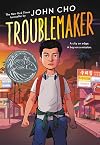
This is the kind of book that pulls you in and won’t let go. Fast paced, set in LA during the Rodney King Riots in 1992. Stark exploration of how things haven’t changed. Jordan has been having a hard time, messing up, disappointing his parents. He sees a chance to redeem himself by bringing his dad a gun during the riots, despite the danger on the streets, despite knowing it’s a bad idea, despite all of the things that go wrong.
Lists
Youth: DEI (1)
Awards


You May Also Like
Associated Authors
Statistics
- Works
- 5
- Also by
- 25
- Members
- 154
- Popularity
- #135,794
- Rating
- 3.8
- Reviews
- 12
- ISBNs
- 11