
Wallace Stegner (1909–1993)
Author of Angle of Repose
About the Author
In 1972, Wallace Earle Stegner won a Pulitzer Prize for Angle of Repose (1971), a novel about a wheelchair-bound man's recreation of his New England grandmother's experience in a late nineteenth-century frontier town. Stegner was born on February 18, 1909 in Lake Mills, Iowa. He was an American show more novelist, short story writer, environmentalist, and historian; he has been called "The Dean of Western Writers". He also won the US National Book Award in 1977 for The Spectator Bird. Stegner grew up in Great Falls, Montana; Salt Lake City, Utah; and in the village of Eastend, Saskatchewan, which he wrote about in his autobiography Wolf Willow. Stegner taught at the University of Wisconsin and Harvard University. Eventually he settled at Stanford University, where he initiated the creative writing program. His students included Wendell Berry, and Sandra Day O'Connor. The Stegner Fellowship program at Stanford University is a two-year creative writing fellowship. The house Stegner lived in from age 7 to 12 in Eastend, Saskatchewan, Canada, was restored by the Eastend Arts Council in 1990 and established as a Residence for Artists; the Wallace Stegner Grant For The Arts offers a grant of $500 and free residency at the house for the month of October for published Canadian writers. Stegner died in Santa Fe, New Mexico, on April 13, 1993, from a car accident on March 28, 1993. (Bowker Author Biography) show less
Series
Works by Wallace Stegner
Beyond the Hundredth Meridian: John Wesley Powell and the Second Opening of the West (1954) 913 copies, 14 reviews
Where the Bluebird Sings to the Lemonade Springs: Living and Writing in the West (1992) 801 copies, 12 reviews
Wolf Willow: A History, a Story, and a Memory of the Last Plains Frontier (1962) 485 copies, 12 reviews
Wilderness at the Edge: A Citizen Proposal to Protect Utah's Canyons and Deserts (1991) 13 copies, 2 reviews
Two Rivers 3 copies
The American West: The Magazine of the Western History Association, July 1968/Volume V, Number 4 3 copies
Fire and ice 2 copies
Beyond the hundreth meridian 2 copies
The Effective Theme 2 copies
Carrion Spring [short story] 2 copies
Angle Of Repose Part 1 Of 2 2 copies
Αμερικανική Λογοτεχνία 1 copy
Montana Stories 1 copy
Memo to the Mountain Lion 1 copy
The Spector Bird 1 copy
La Montagne de mes Réves 1 copy
Associated Works
The Adventures of Huckleberry Finn (1884) — Introduction, some editions — 49,318 copies, 585 reviews
The Exploration of the Colorado River and Its Canyons (1875) — Introduction, some editions — 790 copies, 6 reviews
A Patriot's Handbook: Songs, Poems, Stories, and Speeches Celebrating the Land We Love (2003) — some editions — 567 copies, 5 reviews
A Sense of History: The Best Writing from the Pages of American Heritage (1985) — Contributor — 491 copies, 4 reviews
The Best of the West: An Anthology of Classic Writing from the American West (1991) — Contributor — 285 copies, 1 review
The Workshop: Seven Decades of the Iowa Writers Workshop - 43 Stories, Recollections, & Essays on Iowa's Place in Twentieth-Century American Literature (1999) — Contributor — 197 copies, 1 review
Still Wild: Short Fiction of the American West 1950 to the Present (2000) — Contributor — 165 copies, 1 review
Novel History: Historians and Novelists Confront America's Past and Each Other (2001) — Contributor — 139 copies, 1 review
The Glorious American Essay: One Hundred Essays from Colonial Times to the Present (2020) — Contributor — 116 copies
Gentlemen, Scholars and Scoundrels: A Treasury of the Best of Harper's Magazine from 1850 to the Present (1972) — Contributor — 62 copies
Out of the Best Books: An Anthology of Literature, Vol. 4: The World Around Us (1968) — Contributor — 28 copies
Rediscoveries: Informal Essays in Which Well-Known Novelists Rediscover Neglected Works of Fiction by One of Their Favorite Authors (1971) — Contributor — 27 copies
Fifty Years of the American Short Story from the O. Henry Awards 1919-1970 (1970) — Contributor — 17 copies, 1 review
The Best Short Stories of 1941 and the Yearbook of the American Short Story (1941) — Contributor — 11 copies
West Coast Fiction: Modern Writing from California, Oregon, and Washington (1979) — Contributor — 8 copies, 1 review
Fifty Years of the American Short Story from the O. Henry Awards 1919-1970, Volume 2 (1970) — Contributor — 5 copies
Dialogue: A Journal of Mormon Thought - Vol. 6, No. 3&4 (Autumn-Winter 1971) (1971) — Contributor — 2 copies
Tagged
Common Knowledge
- Canonical name
- Stegner, Wallace
- Legal name
- Stegner, Wallace Earle
- Birthdate
- 1909-02-18
- Date of death
- 1993-04-13
- Gender
- male
- Education
- University of Utah (BA ∙ 1930)
State University of Iowa (MA ∙ 1932)
State University of Iowa (PhD ∙ 1935)
University of California - Occupations
- professor
historian
novelist
essayist - Organizations
- Stanford University
University of Wisconsin-Madison
Harvard University
University of Utah
Augusta College
Sierra Club (show all 9)
University of Toronto
American Academy in Rome
National Parks Advisory Board - Awards and honors
- Pulitzer Prize (1972)
American Academy of Arts and Letters (Literature ∙ 1969)
American Academy of Arts and Sciences (1965)
American Antiquarian Society (1985)
Robert Kirsch Award (1980)
Western Literature Association's Distinguished Achievement Award (1974) (show all 14)
Fellow, Utah State Historical Society
Commonwealth Club Gold Medal (1968)
Blackhawk Award (1963)
National Endowment for the Humanities Fellowship (1972)
Fublright Fellowship (1962, 1968)
Guggenheim Fellowship (1950, 1952, 1960)
Rockefeller Fellowship (1950-51)
Phi Beta Kappa - Relationships
- Stegner, Page (son)
Stegner, Mary (wife) - Short biography
- Wallace Earle Stegner was an American novelist, short story writer, environmentalist, and historian, often called "The Dean of Western Writers". He won the Pulitzer Prize in 1972 and the U.S. National Book Award in 1977.
- Cause of death
- respiratory failure
- Nationality
- USA
- Birthplace
- Lake Mills, Iowa, USA
- Places of residence
- Lake Mills, Iowa, USA
Great Falls, Montana, USA
Salt Lake City, Utah, USA
Saskatchewan, Canada
Los Altos Hills, California, USA - Place of death
- Santa Fe, New Mexico, USA
- Burial location
- Lincoln-Noyes Cemetery, Greensboro, Vermont, USA
- Associated Place (for map)
- USA
Members
Discussions
Found: Book about couples cited in another book in Name that Book (January 2024)
Wallace Stegner: American Author Challenge in 75 Books Challenge for 2015 (August 2015)
Group Read: Stegner, Where the Bluebird Sings..... in 75 Books Challenge for 2010 (October 2010)
Reviews

I'm afraid I must come down solidly in the contrarian camp on this one. So many LT colleagues have loved and praised [Angle of Repose], but rarely has a fine author frustrated me more than Stegner did here. When I started reading it, I thought I was going to set it aside almost immediately. I didn't take to the narrator, Lyman Ward, who sets out to research his grandmother's life and write her biography. Nevertheless, once the story of Susan Burling Ward began, I changed my mind, hated to show more put the book down, couldn't wait to get back to it.
With her talent for drawing, and his practical, idealistic plans for engineering projects, Susan and her husband Oliver seemed destined to leave their mark on civilization, setting out into the American West in the second half of the 19th century. These sections of the novel are often brilliant, containing icy-fresh prose and damnably fine evocations of terrain, weather, landscape and sky. But when the author reverts to Lyman's story, which is as grotesque as his mutilated calcified body, I simply could not care about, nor could I see the point of his torment, in the context of the novel. Ostensibly, there were to be connections made between his situation and his grandparents' life. He had known and loved both Susan and Oliver Ward, and he set out to understand something about their blighted marriage that he apparently hoped might help him deal with his own. As far as I could see, that didn't happen, while his story added nothing to theirs, which began to feel repetitious as one scheme after another came to nothing, and the elder Wards drifted apart. Although her writing and drawing were often the family's primary source of support, neither Susan nor her husband seemed to hold them in any particular regard. The respect and admiration Susan once felt for Oliver's single-minded pursuit of a dream dwindled with his prospects. As Oliver's latest venture failed yet again, necessitating yet another long separation from Susan and their children, not even Stegner's mastery of the language and talent for description of the grandeur of the American western landscape could make me want any more of it. And I grew impatient with Susan's interminable letters to her beloved friend back home, parts of which are apparently not Stegner's invention, but actual excerpts from correspondence written by the woman who was his model for Susan, Mary Hallock Foote. Frequently, Lyman Ward inserts himself into the narrative, telling us what he knows, and what he only imagines; where he got certain details, and which ones he has had to fill in when the source material is silent. I was overcome with irritation at what I call "TMA" (too much author). The distinction between fact and fiction, narrator and author, became blurry. I'm not a fan of the modern frame for the historical story, as I have seldom seen it done without finding it contrived. Finally, I found the modern ending awkward, painful and bewildering, while the conclusion of Susan's story was abrupt and unsatisfying. It pains me to be so negative about [Angle of Repose], which I have anticipated reading for several years. Unlike many other lauded works of fiction that just didn't work for me, I don't even feel inclined to give this one another chance some day.
June, 2015 show less
With her talent for drawing, and his practical, idealistic plans for engineering projects, Susan and her husband Oliver seemed destined to leave their mark on civilization, setting out into the American West in the second half of the 19th century. These sections of the novel are often brilliant, containing icy-fresh prose and damnably fine evocations of terrain, weather, landscape and sky. But when the author reverts to Lyman's story, which is as grotesque as his mutilated calcified body, I simply could not care about, nor could I see the point of his torment, in the context of the novel. Ostensibly, there were to be connections made between his situation and his grandparents' life. He had known and loved both Susan and Oliver Ward, and he set out to understand something about their blighted marriage that he apparently hoped might help him deal with his own. As far as I could see, that didn't happen, while his story added nothing to theirs, which began to feel repetitious as one scheme after another came to nothing, and the elder Wards drifted apart. Although her writing and drawing were often the family's primary source of support, neither Susan nor her husband seemed to hold them in any particular regard. The respect and admiration Susan once felt for Oliver's single-minded pursuit of a dream dwindled with his prospects. As Oliver's latest venture failed yet again, necessitating yet another long separation from Susan and their children, not even Stegner's mastery of the language and talent for description of the grandeur of the American western landscape could make me want any more of it. And I grew impatient with Susan's interminable letters to her beloved friend back home, parts of which are apparently not Stegner's invention, but actual excerpts from correspondence written by the woman who was his model for Susan, Mary Hallock Foote. Frequently, Lyman Ward inserts himself into the narrative, telling us what he knows, and what he only imagines; where he got certain details, and which ones he has had to fill in when the source material is silent. I was overcome with irritation at what I call "TMA" (too much author). The distinction between fact and fiction, narrator and author, became blurry. I'm not a fan of the modern frame for the historical story, as I have seldom seen it done without finding it contrived. Finally, I found the modern ending awkward, painful and bewildering, while the conclusion of Susan's story was abrupt and unsatisfying. It pains me to be so negative about [Angle of Repose], which I have anticipated reading for several years. Unlike many other lauded works of fiction that just didn't work for me, I don't even feel inclined to give this one another chance some day.
June, 2015 show less
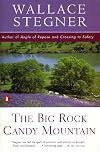
In the Big Rock Candy Mountains,
There's a land that's fair and bright,
Where the handouts grow on bushes
And you sleep out every night
Where the boxcars all are empty
And the sun shines every day
On the birds and the bees
And the cigarette trees
The lemonade springs
Where the bluebird sings
In the Big Rock Candy Mountains
Bo Mason is a dreamer. He isn’t lazy, or unskilled, or really even criminal, but he wants everything and he wants it now, and nothing is ever enough. He wears out the people around show more him, his wife and his children, with his inability to settle down and just live in peace. He flirts with danger and justifies anything he does that he believes will help him hit the big time.
It would be easy to hate Bo Mason, especially when it is so easy to respect and love his wife, the beleaguered Elsa. But there is much to admire at the heart of Bo and what you feel along with the disgust and dislike is kind of grudging pity and understanding. He is like a trapped animal and his cruelty rises from a place he cannot control and mostly fails to recognize.
The book poses interesting questions. Are we destined to be a certain kind of person, a person who is seeded in us during childhood? Can a drifter, who yearns for new horizons and new challenges, force himself to settle down? Should a man bury all his dreams once he assumes the responsibility of family? Can we forget being abused in our childhood and overcome our urge to withdraw or retaliate? When we have built a life on running from adversity, can we learn to stay and fight through the bad times? Can we ever, in fact, overcome who we are? And, does love conquer anything, let alone conquer all?
What is your husband a slave to, Mrs. Mason? To himself, Mrs. Webb, to himself. To his notion that he has to make a pile, be a big shot, have a hundred thousand dollars in negotiable securities in his safe deposit box, drive a Cadillac car...He doesn’t know, he wouldn’t know, what to do with money when he has it. Would he ever think of going to the theater, or reading a good book, or taking a trip somewhere just for the trip?
That is the saddest thing about Bo Mason, to me, he is wishing for all the wrong things when all the right things might be right at his elbow. I couldn’t help thinking that I have met far too many men like him in my lifetime, people who think everything can be solved with money. But, money beyond a certain level of need, cannot really purchase happiness; only things.
Love is a strange thing, it will make us hold on to someone when we know we ought to let go. It makes us turn down the respectable and kind suitor, who would adore us, take care of us, and love our children, and opt for the wild, unpredictable, sometimes cruel man, who excites our heart and soul. Love shows itself in different ways, and sometimes even though felt is hard to express. Hate is its mirror, so closely aligned with it that I dare say you can only truly hate someone that you truly love. For is it not love that leaves you vulnerable to the hurts and stings that you would never accept from someone to whom you were indifferent?
If I had any complaint about this novel it would be that it might be shortened without losing its impact. It is autobiographical, I understand, and it is easy to believe, because it feels very personal in places. There are no black and white characters here, all are shades of grey, and if we are fair isn’t that primarily the truth--the truly evil are rare and saints are virtually non-existent. show less
There's a land that's fair and bright,
Where the handouts grow on bushes
And you sleep out every night
Where the boxcars all are empty
And the sun shines every day
On the birds and the bees
And the cigarette trees
The lemonade springs
Where the bluebird sings
In the Big Rock Candy Mountains
Bo Mason is a dreamer. He isn’t lazy, or unskilled, or really even criminal, but he wants everything and he wants it now, and nothing is ever enough. He wears out the people around show more him, his wife and his children, with his inability to settle down and just live in peace. He flirts with danger and justifies anything he does that he believes will help him hit the big time.
It would be easy to hate Bo Mason, especially when it is so easy to respect and love his wife, the beleaguered Elsa. But there is much to admire at the heart of Bo and what you feel along with the disgust and dislike is kind of grudging pity and understanding. He is like a trapped animal and his cruelty rises from a place he cannot control and mostly fails to recognize.
The book poses interesting questions. Are we destined to be a certain kind of person, a person who is seeded in us during childhood? Can a drifter, who yearns for new horizons and new challenges, force himself to settle down? Should a man bury all his dreams once he assumes the responsibility of family? Can we forget being abused in our childhood and overcome our urge to withdraw or retaliate? When we have built a life on running from adversity, can we learn to stay and fight through the bad times? Can we ever, in fact, overcome who we are? And, does love conquer anything, let alone conquer all?
What is your husband a slave to, Mrs. Mason? To himself, Mrs. Webb, to himself. To his notion that he has to make a pile, be a big shot, have a hundred thousand dollars in negotiable securities in his safe deposit box, drive a Cadillac car...He doesn’t know, he wouldn’t know, what to do with money when he has it. Would he ever think of going to the theater, or reading a good book, or taking a trip somewhere just for the trip?
That is the saddest thing about Bo Mason, to me, he is wishing for all the wrong things when all the right things might be right at his elbow. I couldn’t help thinking that I have met far too many men like him in my lifetime, people who think everything can be solved with money. But, money beyond a certain level of need, cannot really purchase happiness; only things.
Love is a strange thing, it will make us hold on to someone when we know we ought to let go. It makes us turn down the respectable and kind suitor, who would adore us, take care of us, and love our children, and opt for the wild, unpredictable, sometimes cruel man, who excites our heart and soul. Love shows itself in different ways, and sometimes even though felt is hard to express. Hate is its mirror, so closely aligned with it that I dare say you can only truly hate someone that you truly love. For is it not love that leaves you vulnerable to the hurts and stings that you would never accept from someone to whom you were indifferent?
If I had any complaint about this novel it would be that it might be shortened without losing its impact. It is autobiographical, I understand, and it is easy to believe, because it feels very personal in places. There are no black and white characters here, all are shades of grey, and if we are fair isn’t that primarily the truth--the truly evil are rare and saints are virtually non-existent. show less

From the first page, I liked The Spectator Bird by Wallace Stegner. It's the writing. The narrator, Joe Allston, a retired literary agent, is shuffling papers in his study.
From my study I can watch wrens and bush tits in the live oak outside. The wrens are nesting in a hole for the fifth straight year and are very busy: tilted tails going in, sharp heads with the white eyebrow stripe coming out. They are surly and aggressive, and I wonder idly why I, who seems to be as testy as the wrens, show more much prefer the social bush tits. Maybe because the bush tits are doing what I thought we would be doing out here, just messing around , paying no attention to time or duty, kicking up leaves and playing hide-and-seek up and down the oak trunks and generally enjoying themselves.
It is meditation of this kind that keeps me, at nearly seventy, so contented and wholesome.
Joe is shuffling papers to "pacify a wife who worries about him and who reads newspaper psychiatrists urging the retired to keep their minds active." A postcard arrives that takes him back twenty years, to a trip he and Ruth (his wife) took to Denmark, in part seeking information about his mother's birthplace, but also to salve spirits and emotions damaged by the death six months before of their only child, a 20-year-old son, Curt.
Joe: "He died an over-age beach bum, evading to the last any obligation to become what his mother and I tried to make or help him be, and like my mother's, his death lay down accusingly at my door. He was my only descendant, as she was my only ancestor, and I failed both."
The trip was without itinerary or timetable. Within days of arriving, they rent an apartment, only to learn that the regular occupant is remaining there, giving them three rooms and keeping one for herself. She's a countess, but strangely ostracized by…well…just about everyone. We learn about the trip because Joe kept a diary. When the postcard arrives, he gets out his old diary to revisit that time and place. In short order, Ruth, who didn't know of its existence, insists that he read it to her.
"You don't expect me to read through the whole thing like some schoolmaster doing his annual rereading of Dickens?"
"I thought that's what we were going to do."
Rain like sand pattered at the window. I heard the clogged downspout by the door overflowing a heavy stream onto the bricks. I would have to get the leaves out of that before the next rain. "You want your pound of flesh," I said.
"Oh, Joe!"
"I told you, this isn't going to give either of us much pleasure."
"I didn't think that was the purpose."
"No?" I said. "What was the purpose?" But after a second or two in which we looked at each other with that baffled, stubborn expression that people who have been long time married often wear when they are reading each other's minds, I began reading again. My problem was the opposite of what I said it was. In our relationship with Astrid Wredel-Krarup, and in the recollections that the diary brought back, I wasn't quite spectator enough.
The novel is a story of the couple's explorations in Denmark, but even more, it's a story of an enduring marriage. show less
From my study I can watch wrens and bush tits in the live oak outside. The wrens are nesting in a hole for the fifth straight year and are very busy: tilted tails going in, sharp heads with the white eyebrow stripe coming out. They are surly and aggressive, and I wonder idly why I, who seems to be as testy as the wrens, show more much prefer the social bush tits. Maybe because the bush tits are doing what I thought we would be doing out here, just messing around , paying no attention to time or duty, kicking up leaves and playing hide-and-seek up and down the oak trunks and generally enjoying themselves.
It is meditation of this kind that keeps me, at nearly seventy, so contented and wholesome.
Joe is shuffling papers to "pacify a wife who worries about him and who reads newspaper psychiatrists urging the retired to keep their minds active." A postcard arrives that takes him back twenty years, to a trip he and Ruth (his wife) took to Denmark, in part seeking information about his mother's birthplace, but also to salve spirits and emotions damaged by the death six months before of their only child, a 20-year-old son, Curt.
Joe: "He died an over-age beach bum, evading to the last any obligation to become what his mother and I tried to make or help him be, and like my mother's, his death lay down accusingly at my door. He was my only descendant, as she was my only ancestor, and I failed both."
The trip was without itinerary or timetable. Within days of arriving, they rent an apartment, only to learn that the regular occupant is remaining there, giving them three rooms and keeping one for herself. She's a countess, but strangely ostracized by…well…just about everyone. We learn about the trip because Joe kept a diary. When the postcard arrives, he gets out his old diary to revisit that time and place. In short order, Ruth, who didn't know of its existence, insists that he read it to her.
"You don't expect me to read through the whole thing like some schoolmaster doing his annual rereading of Dickens?"
"I thought that's what we were going to do."
Rain like sand pattered at the window. I heard the clogged downspout by the door overflowing a heavy stream onto the bricks. I would have to get the leaves out of that before the next rain. "You want your pound of flesh," I said.
"Oh, Joe!"
"I told you, this isn't going to give either of us much pleasure."
"I didn't think that was the purpose."
"No?" I said. "What was the purpose?" But after a second or two in which we looked at each other with that baffled, stubborn expression that people who have been long time married often wear when they are reading each other's minds, I began reading again. My problem was the opposite of what I said it was. In our relationship with Astrid Wredel-Krarup, and in the recollections that the diary brought back, I wasn't quite spectator enough.
The novel is a story of the couple's explorations in Denmark, but even more, it's a story of an enduring marriage. show less

Stegner's eye for "all the little live things" around him is as keen as Annie Dillard's, or Barbara Kingsolver's. Some of those live things are gophers, some are weeds, some are hippies, some are mushrooms...but the most alive of them all is a dying pregnant woman whose brief appearance in the life of Stegner's main character, Joe Allston, challenges his resolve to withdraw from both pain and pleasure, into a "twilight sleep" where there are no emotional demands, and where non-involvement show more serves to blunt the grief he has determined to put behind him. This is a complex novel, emotionally troublesome at times, full of literary allusions, and the symbols roll and tumble over each other. I would have given this 5 stars, except for the awkward chapter "filling in" the story of Allston's son. It was necessary, but it didn't blend. Despite the title, a good bit of what is being explored here involves death. Like Allston's cat with its gruesome offerings, Stegner has left us a gift on the mat, which we are meant to examine, and admire with a shudder. show less
Lists
Five star books (4)
Classics (1)
Reading LIst (1)
Favourite Books (1)
Favourite Books (1)
Awards


You May Also Like


Associated Authors
Statistics
- Works
- 92
- Also by
- 53
- Members
- 20,829
- Popularity
- #1,039
- Rating
- 4.0
- Reviews
- 577
- ISBNs
- 336
- Languages
- 9
- Favorited
- 121


