
Claire Kohda
Author of Woman, Eating
Works by Claire Kohda
Associated Works
Tagged
Common Knowledge
Members
Reviews

Very disappointing paint-by-numbers literary fic about a young vampire woman struggling with her dying mother, breaking out into the art scene, and understanding her multi-layered racial identity.
It has an interesting premise and fine enough tone but it very much overstayed its welcome--and it's only 240 pages! The literary fiction part of this equation was the issue here. Kohda doesn't seem to play with what the genre excels at: words meaning something. The author spends far too long show more recycling internal musings that work at nailing down a theme or motif but betray a lack of real craft needed in writing a novel in this style. It struck me often that it was a bit stream-of-conscious, which I'm not against but doesn't work when the book is clearly not so experimental. Lots of tangents abound, again motifs and themes and whatnot, but it doesn't seem to have been written with as much attention to each sentences/scenes/etc inclusion as I would have liked. Like... It was very boring. And I like boring books.
If you're into vampire books this is worth picking up just for the novelty of it, but I would recommend The God of Endings over this if you want one that is more adult and interior in tone. show less
It has an interesting premise and fine enough tone but it very much overstayed its welcome--and it's only 240 pages! The literary fiction part of this equation was the issue here. Kohda doesn't seem to play with what the genre excels at: words meaning something. The author spends far too long show more recycling internal musings that work at nailing down a theme or motif but betray a lack of real craft needed in writing a novel in this style. It struck me often that it was a bit stream-of-conscious, which I'm not against but doesn't work when the book is clearly not so experimental. Lots of tangents abound, again motifs and themes and whatnot, but it doesn't seem to have been written with as much attention to each sentences/scenes/etc inclusion as I would have liked. Like... It was very boring. And I like boring books.
If you're into vampire books this is worth picking up just for the novelty of it, but I would recommend The God of Endings over this if you want one that is more adult and interior in tone. show less
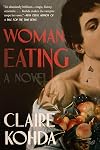
Perhaps it's morose of me to see so much of myself in the character of Lydia. Constantly tormented by the what if's of a life out of her own reach, unable to make peace with her own self. Struggling so hard against becoming who she is. Consuming other's lives (and by this I mean watching their behavoirs both in life and through video) and being wholly unable to understand what they feel like. Only truly being able to feel when they are feelings that others created.
I mean, morose maybe. But show more true. show less
I mean, morose maybe. But show more true. show less
Woman, Eating: 'Absolutely brilliant - Kohda takes the vampire trope and makes it her own' Ruth Ozeki by Claire Kohda
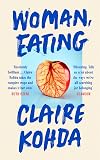
I always appreciate getting notes from the librarian on a book I'm borrowing. In the case of [b:Woman, Eating|58536037|Woman, Eating|Claire Kohda|https://i.gr-assets.com/images/S/compressed.photo.goodreads.com/books/1627322860l/58536037._SX50_.jpg|90046265], it was intriguing to be told, "I had very mixed feelings". Now that I've read it, the sentiment is easy to understand. My feelings are also somewhat confused and ambivalent. The novel is narrated in first person by a young woman named show more Lydia who is a vampire. As the book opens, she has just installed her mother, also a vampire, in a care home and moved alone to London. Lydia's mother has brought her up to believe she is demonic and should only consume pig's blood. The narrative treats vampirism as an allegory for an eating disorder in a very unsubtle way. I found this an interesting idea and not one that I've seen as fully explored in vampire fiction before. Lydia is isolated and traumatised by how she's been brought up to view her vampirism, as well as constantly, debilitatingly hungry.
Although the central conceit is clever, I was a bit puzzled by Lydia's relative lack of curiosity about vampirism.Also I find it odd that she didn't think of stealing from a blood bank or buying blood on the dark web. Her mother refused to give her any useful information, but faced with independence Lydia is largely interested in trying to be human. She gets an internship at an art gallery and rents an art studio space, which she also lives in. After meeting a man named Ben (about whom I can recall nothing much as he is dull as hell), she yearns for cohabitation, marriage, kids, etc. I found it puzzling that this guy shared her dreams, yet neither seemed to realise that a boring job and heterosexual relationship would actually be easier than their attempts to make a go of their art. Perhaps the implication is that in the art world, a mundane lifestyle is daring and transgressive? That seems pretty unlikely, given that the art gallery is depicted as highly commercial and run by a man who sexually harasses the young women working for him. Lydia's point of view thus frequently mystified me. Her fixation on human food that she couldn't eat worked well, though.
Perhaps unsurprisingly, the most interesting and memorable moments in the book are the strangest.I really liked the concept of Lydia absorbing the memories of beings whose blood she drank. She also seems able to see people's futures, but this power is selective in some mysterious way. Near the end, there's also an acknowledgement that she's stronger than humans to some extent. Her flashbacks to living with her mother are suitably unsettling, both in a psychological and supernatural sense. When Lydia was born she was human, but her mother immediately turned her into a vampire so she would survive.
I enjoyed Lydia most when she was draining the blood from a dead duck or talking to a puppet and least when she was pondering whether to text Ben or working at the gallery. I was relieved that at the end she finally cracks and eats the rapist gallery owner, yet found it a bit unearned. Apparently rejection by Ben drives her to drink human blood? Given how boring Ben is (and he has no personality traits except Dying Mother), I didn't see why she didn't try it earlier. Ultimately I don't think the combination of first person literary fiction and vampirism was executed as well as it might have been. The extreme lack of context for Lydia's vampirism made the narrative seem slight, although the analogy with an eating disorder is good. Lydia seemed determined to be less interesting than she could have been, which was odd. [b:Woman, Eating|58536037|Woman, Eating|Claire Kohda|https://i.gr-assets.com/images/S/compressed.photo.goodreads.com/books/1627322860l/58536037._SX50_.jpg|90046265] would have been much more substantive had it told something of her mother's story too. show less
Although the central conceit is clever, I was a bit puzzled by Lydia's relative lack of curiosity about vampirism.
Perhaps unsurprisingly, the most interesting and memorable moments in the book are the strangest.
I enjoyed Lydia most when she was draining the blood from a dead duck or talking to a puppet and least when she was pondering whether to text Ben or working at the gallery. I was relieved that at the end she finally cracks and eats the rapist gallery owner, yet found it a bit unearned. Apparently rejection by Ben drives her to drink human blood? Given how boring Ben is (and he has no personality traits except Dying Mother), I didn't see why she didn't try it earlier.
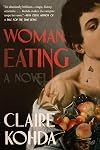
I have to admit I chuckled when I saw 'a literary vampire novel' come up as the official subtitle of this work, specifically because I felt what really made it an up-and-down read for me was its attempt to balance so much between being literary and horror, and I too often felt like the author wanted to write a literary novel, but 'make it vampire!', whereas I think I would have been far more satisfied by either a literary novel OR a horror novel, despite the fact that I often like show more mixed-genre work.
I did appreciate some of the character-study aspects here. The way the author incorporated issues of mental health and essentially made vampirism an eating disorder for the protagonist worked really well. The problem was that it felt like the novel was always either in literary mode or horror moved, and for a short novel, it opened up too many threads and then attempted to resolve them far too neatly, so that the ending was incredibly unsatisfying and underwhelming, as far as I was concerned.
I guess I can see why there was some hype around this book, but I don't see myself picking up something else by the author or recommending this one. show less
I did appreciate some of the character-study aspects here. The way the author incorporated issues of mental health and essentially made vampirism an eating disorder for the protagonist worked really well. The problem was that it felt like the novel was always either in literary mode or horror moved, and for a short novel, it opened up too many threads and then attempted to resolve them far too neatly, so that the ending was incredibly unsatisfying and underwhelming, as far as I was concerned.
I guess I can see why there was some hype around this book, but I don't see myself picking up something else by the author or recommending this one. show less
Lists
Awards

You May Also Like


Associated Authors
Statistics
- Works
- 1
- Also by
- 2
- Members
- 594
- Popularity
- #42,286
- Rating
- 3.5
- Reviews
- 16
- ISBNs
- 14
- Languages
- 2