
Russ Braun
Author of Fables, Vol. 20: Camelot
About the Author
Image credit: via Comic Vine
Works by Russ Braun
Jack of Fables Vol. 7: The New Adventures of Jack and Jack (2010) — Illustrator — 251 copies, 8 reviews
Where Monsters Dwell: The Phantom Eagle Flies the Savage Skies: Warzones! (2016) — Illustrator — 20 copies, 1 review
Jack of Fables #38 — Illustrator — 5 copies
Associated Works
Tagged
Common Knowledge
There is no Common Knowledge data for this author yet. You can help.
Members
Reviews
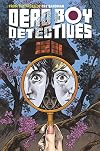
Ed Brubaker and Bryan Talbot, two creators I respect loads, had a fist at a Dead Boy Detective miniseries, and it didn't really work. It's pretty hard to replicate the charm Neil Gaiman brought to Edwin and Charles in their introduction in one of the best issues of his Sandman run, an interlude in the middle of Season Of Mists when the souls released by Lucifer have all returned to Earth and Death is running around trying to round them up. Getting their voices right is probably impossible if show more you're not Neil Gaiman. Toby Litt doesn't quite manage it - the prelude adventure here is a bit weak and not very promising. The series proper kicks off, however, with the introduction of Crystal Palace, a cutting-edge contemporary personality, privileged daughter of self-obsessed performance-artist Mum and ex-rock star Dad who is welded to her phone and computer as well as engaged in a big online game and the subject of media scrutiny - an enfant terrible in the making. With Edwin haling from 1916 and Charles from 1990, the addition of a child of the new century is entirely appropriate and she works as a foil to their terrible innocence.
After a performance art stunt goes wrong, Edwin and Charles rescue Crystal, but her glimpse of the supernatural sends her to enroll in their old school where very evil doings are afoot, and old school bullies and new stalk the dorms. By this time, Litt has stamped his own mark on the series and made it his own, you stop comparing the boys' voices in this series to their voices as written by Gaiman, and with typically lovely Mark Buckingham art it turns into a wonderful modern supernatural adventure. show less
After a performance art stunt goes wrong, Edwin and Charles rescue Crystal, but her glimpse of the supernatural sends her to enroll in their old school where very evil doings are afoot, and old school bullies and new stalk the dorms. By this time, Litt has stamped his own mark on the series and made it his own, you stop comparing the boys' voices in this series to their voices as written by Gaiman, and with typically lovely Mark Buckingham art it turns into a wonderful modern supernatural adventure. show less
Wow. Again with this. Willingham's Fables universe is incredibly addictive, yet only seems to make me grumpier and grumpier with every page. I apologize in advance for my commentary being more than a little influenced by crankiness.
[N.B. This review includes images, and was formatted for my site, dendrobibliography -- located here.]
The final Fairest arc follows in the footsteps of the two prior collections: "The Return of the Maharaja" and "Cinderella: Of Mice and Men," meaning it's barely show more relevant to the universe set-up by Fables and even less relevant to the purpose of the Fairest spin-off (i.e., "The women of Fables in a series all their own!").
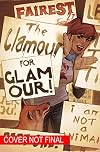
"The Clamour for Glamour" includes the 6-issue arc of the title (#27-32) written by long-time series artist Mark Buckingham, and the final issue (#33) by creator Bill Willingham, which focuses on Goldilocks--a prominent villain from Fables' earliest issues.
The bulk of this volume feels like the disappointing "Return of the Maharaja" story arc, yet not paced as well, and with far too many stories crammed into it: A reprise of the earlier demands for human glamours by the animals of the Fables-verse, an adventure in the mundy world by the glamour'd Reynard the fox, and our grumpy narrator's ("Mister Angry Sunflower Kid") shenanigans up at the Farm. The pace is spastic, reliant on strings of jokes rather than plot, and we're kept bouncing between settings every other page at the expense of coherence. It actually feels a lot like Jack of Fables in tone, humor, and pacing.
Do I need to ask where the heck the 'fairest' of the series' title are? Once in a while, they'll flap spit in the background, but most remain absent.
I've had a bit of a soft-spot for the character of Reynard, who has always felt like a lead being restricted to cameos. & unfortunately, he's no longer the plucky, witty trickster hero with mysterious, if goofy, intentions--no, he's been rewritten by Buckingham as Jack of Jack of Fables, another trickster, but a snarky, stupid, self-obsessed one that drove readers nuts. His--Reynard's--goofy adventures in the south make no sense. (The whole 10-minute flight to Louisiana from New York, and single-day, single-tank drive back is baffling. How did the creative team miss that?) All of 5 pages tackle actual plot and questions relevant to Fables, the rest is just...jokes.
(Edit: In my frustration, I ended up forgetting that the bulk of the glamour plot regarding non-human fables never gets a resolution. Characters like Pussy and Owl (who were actually kind of adorable) hit their quest's climax, and then, in a stunning display of Scooby Doo endings, we see a baby, fawn over it, give a raucous group laugh as the camera pans out, and we're done. It's over.)
The series finale is a phoned-in prequel to last year's underwhelming Fairest: In All the Land graphic novel spin-off, and adds nothing to the universe or character histories that wasn't already known and certainly didn't capture readers' imaginations enough to warrant its creation. I'm baffled at this story's existence. Why fill in years of a character's life in 21 pages without saying anything new? Why end a series this way? Sure, it's about a woman, so we're finally returning to the purpose of this series, but it also features some of the overt misogyny that's a staple of Willingham's writing. I.e., it's fuckin' gross and stupid.
As is required of anything Bill puts out where he's given creative control, we get pages of anti-Marxist, anti-feminist tirades, where he puts the words and ideas in the mouths of imaginary philosophical opposites (e.g., Goldilocks) and makes them look incredibly stupid to everyone so he, the rest of his cast and--hopefully--the readers can point and laugh at how stupid caricatures of Marxists and feminists are. It's particularly infuriating since this series, and the series it was born from, are known for making sacrifices to the plot in order to push the author's philosophical / political views, which, you know, could be fine--if it didn't feel like the characters were constantly being replaced by dozens of Rush Limbaughs caught in a gross, ideological circle jerk for 13 years.
This crap makes me want to tear my hair out in frustration, and I can't help but have the same level of response. If he's one of the best writers in the industry, the industry has to have insane quality-control problems. show less
[N.B. This review includes images, and was formatted for my site, dendrobibliography -- located here.]
The final Fairest arc follows in the footsteps of the two prior collections: "The Return of the Maharaja" and "Cinderella: Of Mice and Men," meaning it's barely show more relevant to the universe set-up by Fables and even less relevant to the purpose of the Fairest spin-off (i.e., "The women of Fables in a series all their own!").
"The Clamour for Glamour" includes the 6-issue arc of the title (#27-32) written by long-time series artist Mark Buckingham, and the final issue (#33) by creator Bill Willingham, which focuses on Goldilocks--a prominent villain from Fables' earliest issues.
The bulk of this volume feels like the disappointing "Return of the Maharaja" story arc, yet not paced as well, and with far too many stories crammed into it: A reprise of the earlier demands for human glamours by the animals of the Fables-verse, an adventure in the mundy world by the glamour'd Reynard the fox, and our grumpy narrator's ("Mister Angry Sunflower Kid") shenanigans up at the Farm. The pace is spastic, reliant on strings of jokes rather than plot, and we're kept bouncing between settings every other page at the expense of coherence. It actually feels a lot like Jack of Fables in tone, humor, and pacing.
Do I need to ask where the heck the 'fairest' of the series' title are? Once in a while, they'll flap spit in the background, but most remain absent.
I've had a bit of a soft-spot for the character of Reynard, who has always felt like a lead being restricted to cameos. & unfortunately, he's no longer the plucky, witty trickster hero with mysterious, if goofy, intentions--no, he's been rewritten by Buckingham as Jack of Jack of Fables, another trickster, but a snarky, stupid, self-obsessed one that drove readers nuts. His--Reynard's--goofy adventures in the south make no sense. (The whole 10-minute flight to Louisiana from New York, and single-day, single-tank drive back is baffling. How did the creative team miss that?) All of 5 pages tackle actual plot and questions relevant to Fables, the rest is just...jokes.
(Edit: In my frustration, I ended up forgetting that the bulk of the glamour plot regarding non-human fables never gets a resolution. Characters like Pussy and Owl (who were actually kind of adorable) hit their quest's climax, and then, in a stunning display of Scooby Doo endings, we see a baby, fawn over it, give a raucous group laugh as the camera pans out, and we're done. It's over.)
The series finale is a phoned-in prequel to last year's underwhelming Fairest: In All the Land graphic novel spin-off, and adds nothing to the universe or character histories that wasn't already known and certainly didn't capture readers' imaginations enough to warrant its creation. I'm baffled at this story's existence. Why fill in years of a character's life in 21 pages without saying anything new? Why end a series this way? Sure, it's about a woman, so we're finally returning to the purpose of this series, but it also features some of the overt misogyny that's a staple of Willingham's writing. I.e., it's fuckin' gross and stupid.
As is required of anything Bill puts out where he's given creative control, we get pages of anti-Marxist, anti-feminist tirades, where he puts the words and ideas in the mouths of imaginary philosophical opposites (e.g., Goldilocks) and makes them look incredibly stupid to everyone so he, the rest of his cast and--hopefully--the readers can point and laugh at how stupid caricatures of Marxists and feminists are. It's particularly infuriating since this series, and the series it was born from, are known for making sacrifices to the plot in order to push the author's philosophical / political views, which, you know, could be fine--if it didn't feel like the characters were constantly being replaced by dozens of Rush Limbaughs caught in a gross, ideological circle jerk for 13 years.
This crap makes me want to tear my hair out in frustration, and I can't help but have the same level of response. If he's one of the best writers in the industry, the industry has to have insane quality-control problems. show less
I knew that Fables was ending this year, but I figured that we had a while yet with this series. Apparently not, since this is the final collected volume of the series (though the story actually concludes in Fairest in the Land (which was published before the spin-off became an official series on its own). Fables may have finished strong, with a storyarc about the sisterly rivalry between Snow White and Rose Red, but this series didn't quite live up to expectations. The series is supposed to show more be about the female characters of Fabletown (the lesser known ones, essentially), but the focus of this storyarc are the non-human Fables on the Farm and their mania for getting transformative glamours (as promised previously by Prince Charming in his mayoral bid). The story could have easily focused on the group of Fabletown witches, since the majority are of a female persuasion, but they are barely featured in lieu of the crabby sunflower boy narrator and Reynard the Fox. Disappointing to say the least, but at least I won't really miss the series, since it wasn't living up to its earlier volumes which focused on the more interesting ladies of Fabletown - Lumi (the Snow Queen), Briar Rose, Rapunzel, and even the obnoxiously antiestablishment Goldilocks. show less
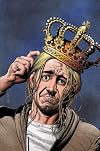
Apparently our Jack of Fables is nothing but a cheap knock-off. He was created due to his original (John, who became Wicked John after he escaped from Hell) being killed, and the master storyteller's need for another trickster character asap. I'm sure in the actual stories there was the duplication of some names, as these are more fluid storytelling elements than events and large themes, so I'm sure that this is what Willingham has used as his starting point. But even after Jack and John show more become two separate beings, with no more shared memories, they still wind up having many of the same personality characteristics. They're both womanizers, they're both money hungry, they both end up collecting sidekicks of some sort, and they both end up conversing with (the) devil(s). Pretty sure that Jack's ongoing deals are going to get him into some brimstone heated water soon, since it looks like his latest deal is almost up, and he hasn't yet found another buyer for his soul. show less
Lists
Awards

You May Also Like
Associated Authors
Statistics
- Works
- 47
- Also by
- 8
- Members
- 2,848
- Popularity
- #9,011
- Rating
- 3.6
- Reviews
- 88
- ISBNs
- 48
- Languages
- 5