

John P. Briggs
Author of Turbulent Mirror: An Illustrated Guide to Chaos Theory and the Science of Wholeness
About the Author
Works by John P. Briggs
Turbulent Mirror: An Illustrated Guide to Chaos Theory and the Science of Wholeness (1989) 458 copies, 3 reviews
Fractals: The Patterns of Chaos: A New Aesthetic of Art, Science, and Nature (1992) 286 copies, 3 reviews
Seven Life Lessons of Chaos: Spiritual Wisdom from the Science of Change (1999) 192 copies, 1 review
Looking Glass Universe: The Emerging Science of Wholeness (Touchstone Book) (1984) 114 copies, 1 review
Tagged
Common Knowledge
- Birthdate
- 1945-01-08
- Gender
- male
- Education
- Wesleyan University (BA, 1968)
New York University (MA, literature, 1972)
Union Institute & University (PhD, aesthetics and psychology, 1981) - Occupations
- non-fiction writer
fine art photographer
poet
professor of literature and creative writing - Organizations
- Western Connecticut State University
New School for Social Research - Nationality
- USA
- Birthplace
- Detroit, Michigan, USA
- Places of residence
- Granville, Massachusetts, USA
- Associated Place (for map)
- USA
Members
Reviews
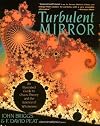
My reactions upon reading this book in 1990.
As befits the authors' dualistic structure for the book and their constant emphasis on the shifts between chaos and order, I found this book alternately exhilarating and annoying.
I found parts quite interesting: the explanation here of fractals helped me understand better their place as intermediaries between two dimensions, solitons (traveling waves of energy that, when conditions are right, travel amazing distances without dissipation), a show more smattering of info on the way the nervous system is thought to work and how personality and thought may be underpinned biologically by chaos type systems, the problem of three-body orbits, and an interesting theory on how chaotic processs can reconcile classical physics and quantum mechanics, and the ultimate universal apocalypse implied in the theoretical idea of a "vacuum bubble instanton" -- the universe boiling away.
The annoyance comes in several forms. First, in trying to be simple and nonmathematical, the authors obscure some issues. However, my main objections to parts of this book are philosophical. While certain types of social "sciences" (notably economics) have contributed to the development of chaos science, I dislike Briggs and Peat using chaos as what I call a "grand unified theory", a metaphor and paradigm through which to see and explain natural and social phenomena. Their view seems justified for physics, biology, etc. but I'm less sure -- far less sure -- it's justified in using it to study history, social organizations and the makeup of human. However, Briggs and Peat seem to want to run everything through their grand unified theory. Whereas other disciplines talk about conditioning (psychology), influences (history, literature), relationships, etc., Briggs and Peat seem to want to label almost all interactive relationships with the chaos term of feedback. Thus we talk of the checks and balances of the U.S. Constitution as feedback and speculate whether or not evolution is a chaotic process -- with the interesting note that chaotic behavior seems to slant chemical behavior toward amino acids and such more than mere chance would or the development of organizations. This all may be valid, but it also smacks of metaphor and paradigm run amok.
My biggest objection to this book is that Briggs and Peat seem to be examples of that strange type of scientist who are, in some sense, mystical and anti-sicence, anti-rational, anti-technology. There are constant allusions to Chinese myths including the title. This may, of itself, be fine as example and metaphor of chaotic behavior, but, taken with other things, this is evidence of that pro-Eastern religion, anti-West stance that crops up in some younger scientists. They speak about chaos' holistic aspect, how it cuts across disciplines. They are quite right to do so. Chaos, as James Gleick pointed out in a book of the same title, may save science from the perils of specialization. Specialization was a necessary outcropping probably of the quest for scientific truth, but Briggs and Peat pay homage, especially in the book's last chapter, to the holistic idea as opposition to "reductionism"; it is a Buddha-like reverence for nature's One. But it also seems to be an attack on traditional science and technology, on the attempt to understand, and especially to control, the parts of nature. Briggs and Peat seem to think that reductionism is not only intellectually incomplete but that its fruits are bad, almost morally tainted they imply. They ridicule reductionist science's attempts to control nature and correct past mistakes. Specifically, they ridicule an alleged proposal to reverse ozone depletion by putting frozen ozone in space. It probably is unworkable scheme, but Briggs and Peat's objetions are philosophical, not rational and technical.
The authors see chaos as showing us we cannot know everything, we have limitations. Chaos does show us not everything is predictable, but I contend it will advance our abilities, we will know more precisely what we can and can't do even better than now. Chaos will help us predict where we can't now and better know when we can't predict.
To the authors it sees a new Gothic philosophy where there are not only some things "man was not meant to know" but also things man was not meant to do or even think about. Jeremy Rivkin is favorably quoted. In the quote, Rivkin objects to the very words of science "the words of authorship, the words of a creator, an architect, a designer." It is a fatal blow to Briggs' and Peat's philosophical credibility. Any scientist quoting Rivkin in support of their ideas is not thinking. Further references to this quasi-religous prostration before nature, its inherent wonder and unknowability, before the Goddess of Ignorance and an almost literal interpretation of James Lovelock's Gaia hypothesis. show less
As befits the authors' dualistic structure for the book and their constant emphasis on the shifts between chaos and order, I found this book alternately exhilarating and annoying.
I found parts quite interesting: the explanation here of fractals helped me understand better their place as intermediaries between two dimensions, solitons (traveling waves of energy that, when conditions are right, travel amazing distances without dissipation), a show more smattering of info on the way the nervous system is thought to work and how personality and thought may be underpinned biologically by chaos type systems, the problem of three-body orbits, and an interesting theory on how chaotic processs can reconcile classical physics and quantum mechanics, and the ultimate universal apocalypse implied in the theoretical idea of a "vacuum bubble instanton" -- the universe boiling away.
The annoyance comes in several forms. First, in trying to be simple and nonmathematical, the authors obscure some issues. However, my main objections to parts of this book are philosophical. While certain types of social "sciences" (notably economics) have contributed to the development of chaos science, I dislike Briggs and Peat using chaos as what I call a "grand unified theory", a metaphor and paradigm through which to see and explain natural and social phenomena. Their view seems justified for physics, biology, etc. but I'm less sure -- far less sure -- it's justified in using it to study history, social organizations and the makeup of human. However, Briggs and Peat seem to want to run everything through their grand unified theory. Whereas other disciplines talk about conditioning (psychology), influences (history, literature), relationships, etc., Briggs and Peat seem to want to label almost all interactive relationships with the chaos term of feedback. Thus we talk of the checks and balances of the U.S. Constitution as feedback and speculate whether or not evolution is a chaotic process -- with the interesting note that chaotic behavior seems to slant chemical behavior toward amino acids and such more than mere chance would or the development of organizations. This all may be valid, but it also smacks of metaphor and paradigm run amok.
My biggest objection to this book is that Briggs and Peat seem to be examples of that strange type of scientist who are, in some sense, mystical and anti-sicence, anti-rational, anti-technology. There are constant allusions to Chinese myths including the title. This may, of itself, be fine as example and metaphor of chaotic behavior, but, taken with other things, this is evidence of that pro-Eastern religion, anti-West stance that crops up in some younger scientists. They speak about chaos' holistic aspect, how it cuts across disciplines. They are quite right to do so. Chaos, as James Gleick pointed out in a book of the same title, may save science from the perils of specialization. Specialization was a necessary outcropping probably of the quest for scientific truth, but Briggs and Peat pay homage, especially in the book's last chapter, to the holistic idea as opposition to "reductionism"; it is a Buddha-like reverence for nature's One. But it also seems to be an attack on traditional science and technology, on the attempt to understand, and especially to control, the parts of nature. Briggs and Peat seem to think that reductionism is not only intellectually incomplete but that its fruits are bad, almost morally tainted they imply. They ridicule reductionist science's attempts to control nature and correct past mistakes. Specifically, they ridicule an alleged proposal to reverse ozone depletion by putting frozen ozone in space. It probably is unworkable scheme, but Briggs and Peat's objetions are philosophical, not rational and technical.
The authors see chaos as showing us we cannot know everything, we have limitations. Chaos does show us not everything is predictable, but I contend it will advance our abilities, we will know more precisely what we can and can't do even better than now. Chaos will help us predict where we can't now and better know when we can't predict.
To the authors it sees a new Gothic philosophy where there are not only some things "man was not meant to know" but also things man was not meant to do or even think about. Jeremy Rivkin is favorably quoted. In the quote, Rivkin objects to the very words of science "the words of authorship, the words of a creator, an architect, a designer." It is a fatal blow to Briggs' and Peat's philosophical credibility. Any scientist quoting Rivkin in support of their ideas is not thinking. Further references to this quasi-religous prostration before nature, its inherent wonder and unknowability, before the Goddess of Ignorance and an almost literal interpretation of James Lovelock's Gaia hypothesis. show less
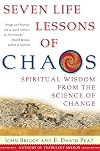
The development of chaos theory has provided new insights for science. It has enabled scientific thinking to move away from a picture of the universe based on idealised and inevitably simplified models, towards a more truthful representation of the world we actually experience.
This well written and fascinating book addresses the challenge of adapting our new scientific understanding and applying it to our daily lives. The book takes seven key features of our understanding of chaos and in show more turn explores how they may prompt us to think and act in new ways that better align with the true nature of the world.
Be Creative: engage with chaos to find imaginative new solutions and live more dynamically
Use Butterfly Power: Let chaos grow local efforts into global results
Go with the Flow: Use chaos to work collectively with others
Explore What’s Between: Discover life’s rich subtleties and avoid the traps of stereotypes.
See The Art of the World: Appreciate the beauty of life’s chaos.
Live Within Time: Utilise time’s hidden depths.
Rejoin the whole: Realise our fractal connectedness to each other and the world.
In many ways the book covers much of the ground that I have been exploring and am attempting to write about. So in one sense it is a very welcome addition to my knowledge, disappointingly however, for a book written in 1999 its impact seems to have been minimal. The final chapter of the book describes why this would be so. We live in a world that yearns for answers, even when they can’t exist. Chaos theory is about the inability to predict and control, the inability to know and the reality of the unknowable. This is a book that accepts that reality with the following statements.
1. Every statement in this book is limited.
2. 1. is a statement in this book.
If you want an alternative to the endless stream of ‘Look here I’ve discovered the winning formula’ books, then this would make a fabulous start point. show less
This well written and fascinating book addresses the challenge of adapting our new scientific understanding and applying it to our daily lives. The book takes seven key features of our understanding of chaos and in show more turn explores how they may prompt us to think and act in new ways that better align with the true nature of the world.
Be Creative: engage with chaos to find imaginative new solutions and live more dynamically
Use Butterfly Power: Let chaos grow local efforts into global results
Go with the Flow: Use chaos to work collectively with others
Explore What’s Between: Discover life’s rich subtleties and avoid the traps of stereotypes.
See The Art of the World: Appreciate the beauty of life’s chaos.
Live Within Time: Utilise time’s hidden depths.
Rejoin the whole: Realise our fractal connectedness to each other and the world.
In many ways the book covers much of the ground that I have been exploring and am attempting to write about. So in one sense it is a very welcome addition to my knowledge, disappointingly however, for a book written in 1999 its impact seems to have been minimal. The final chapter of the book describes why this would be so. We live in a world that yearns for answers, even when they can’t exist. Chaos theory is about the inability to predict and control, the inability to know and the reality of the unknowable. This is a book that accepts that reality with the following statements.
1. Every statement in this book is limited.
2. 1. is a statement in this book.
If you want an alternative to the endless stream of ‘Look here I’ve discovered the winning formula’ books, then this would make a fabulous start point. show less
Fractals: The Patterns of Chaos: Discovering a New Aesthetic of Art, Science, and Nature (A Touchstone Book) by John Briggs
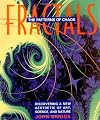
I liked the way this book was organized. It made the science more accessible for me, a non-mathematician and non-physicist. The photographs and visual images are phenomenal and are what drew me to this book in the first place. I particularly appreciated the 3 sections at the end that dealt with the overlap of fractals and the arts, visual arts in particular.
All pattern and colour and nothing behind it. I like very abstract art (being an artist myself) but there seemed to be no artistic sense in choosing the pictures and, seemingly without theme, it left me cold.,
You May Also Like


Associated Authors
Statistics
- Works
- 7
- Members
- 1,132
- Popularity
- #22,674
- Rating
- 3.7
- Reviews
- 10
- ISBNs
- 37
- Languages
- 4