
Chuck Thompson (2)
Author of Smile When You're Lying: Confessions of a Rogue Travel Writer
For other authors named Chuck Thompson, see the disambiguation page.
About the Author
Chuck Thompson is a resident of Timonium, Maryland.
Works by Chuck Thompson
Tagged
Common Knowledge
- Birthdate
- 20th Century
- Gender
- male
- Education
- University of Oregon
- Occupations
- travel writer
editor - Nationality
- USA
- Birthplace
- Juneau, Alaska, USA
- Associated Place (for map)
- Alaska, USA
Members
Reviews
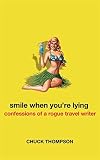
Former Maxim features editor and all-around bon vivant Chuck Thompson peels back the faux-bamboo veneer of the travel business in a scathing, often hysterically funny exposé.
Thompson bemoans the lack of any kind of ”authentic” point of view in contemporary travel writing while explaining exactly why such a voracious growth industry likes it that way. With some clever travel tips, handy editing advice, and a career’s worth of self-effacing travel disasters to draw from, he serves up show more some tasty travel tidbits (number one on Thompson’s list of things a writer should never do: describe anything other than food in culinary terms).
As a former magazine designer, my favorite part of the book is Thompson’s whole-hearted yet utterly doomed attempt to manage a start-up magazine for Travelocity. The sense of dread when consultants show up two weeks before the first issue is due on press is palpable—and spot on. Consultants are like bubonic rats and only bring grim death to any workplace.
Unlike Holidays in Hell, wherein misanthrope P.J. O’Rourke simply reinforces American xenophobic attitudes toward the Third World, Thompson actually dispels many preconceived notions toward places we never go, and portrays the usual hot spots as the crapholes they usually are.
Thompson and I see eye-to-eye on the questionable appeal of the Caribbean, Graceland, and Las Vegas. I also agree that Eric Clapton, while technically not a vacation destination is somewhat overrated. And thanks to Thompson’s detailed romp through Bangkok’s red-light district, I will never look at Ulysses S. Grant’s signature the same way again. show less
Thompson bemoans the lack of any kind of ”authentic” point of view in contemporary travel writing while explaining exactly why such a voracious growth industry likes it that way. With some clever travel tips, handy editing advice, and a career’s worth of self-effacing travel disasters to draw from, he serves up show more some tasty travel tidbits (number one on Thompson’s list of things a writer should never do: describe anything other than food in culinary terms).
As a former magazine designer, my favorite part of the book is Thompson’s whole-hearted yet utterly doomed attempt to manage a start-up magazine for Travelocity. The sense of dread when consultants show up two weeks before the first issue is due on press is palpable—and spot on. Consultants are like bubonic rats and only bring grim death to any workplace.
Unlike Holidays in Hell, wherein misanthrope P.J. O’Rourke simply reinforces American xenophobic attitudes toward the Third World, Thompson actually dispels many preconceived notions toward places we never go, and portrays the usual hot spots as the crapholes they usually are.
Thompson and I see eye-to-eye on the questionable appeal of the Caribbean, Graceland, and Las Vegas. I also agree that Eric Clapton, while technically not a vacation destination is somewhat overrated. And thanks to Thompson’s detailed romp through Bangkok’s red-light district, I will never look at Ulysses S. Grant’s signature the same way again. show less
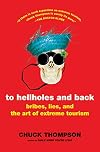
Here's a new one: a travel writer afraid of the world. After complaining that America and American's are too soft, Chuck Thompson decides to visit the countries that scare him the most, Congo, India, Mexico City and Disney World.
I found Thompson Paul Theroux-snarky, but self-effacing in his (sometimes) ignorance. He is a great storyteller and I found myself giggling out loud (on public transportation) at several of his descriptions, the funniest being the impending hippo brawl. I re-read show more that one and still laughed out loud.
His descriptions of boorish European tourists takes the takes the wind out of their smug, uncouth-American-tourists, sails. It is nice to see that third world poverty is the great equalizer.
In India and Africa, Thompson is opinionated and political. He blames Mexico's plight on bad PR, but he loses steam by the time he gets to Walt Disney World. I thought this was the weakest chapter. In his own words, Meh.
Overall, though, I thoroughly enjoyed this book and went right out and started to read his other book, Smile When You Are Lying, which is just as funny, snarky and entertaining. show less
I found Thompson Paul Theroux-snarky, but self-effacing in his (sometimes) ignorance. He is a great storyteller and I found myself giggling out loud (on public transportation) at several of his descriptions, the funniest being the impending hippo brawl. I re-read show more that one and still laughed out loud.
His descriptions of boorish European tourists takes the takes the wind out of their smug, uncouth-American-tourists, sails. It is nice to see that third world poverty is the great equalizer.
In India and Africa, Thompson is opinionated and political. He blames Mexico's plight on bad PR, but he loses steam by the time he gets to Walt Disney World. I thought this was the weakest chapter. In his own words, Meh.
Overall, though, I thoroughly enjoyed this book and went right out and started to read his other book, Smile When You Are Lying, which is just as funny, snarky and entertaining. show less
 This review was written for LibraryThing Early Reviewers.
During the last election campaign, a disinterested observer might have thought that a big chunk of the American electorate would jump at the chance to secede from the Union. According to Chuck Thompson’s often hilarious expanded essay proposing the North split from the South, both sides would be better off. As he says in the preface, “It’s too bad we didn’t just let the South secede when we had the chance."
Whether or not he is serious about secession, Thompson uses the secession show more proposal to rant against a personality type that appears all to commonly in the “land of pickled pig knuckles, prison farms, coon-hunting conservatives, NASCAA tailgaters, prayer warriors, and guys who build million-dollar careers out of bass fishing.” To him, the American South (rather imprecisely defined) is separated from the rest of the nation by “its own impenetrable morality, worldview, politics, religion, personality, and even language.”
Chief among his complaints is Southern evangelical religion. He writes: “To be a modern evangelist is to submit to the nullity of reason….[A]s every southern churchgoer can tell you, people lose their faith by degrees: first bachelors, then masters, then doctorate.” Only in the South, he argues, could something as zany as the Creation Museum (with exhibits showing that dinosaurs roamed the earth a mere 4,000 years ago) prosper. But the trouble with the evangelists is that “they’re infecting public schools all over the country with this same pigheaded stupidity.” And more importantly, they have been the impetus behind the nationwide growing division between the mostly white charter and religious schools, and the mostly underfunded and racially segregated public schools.
Thompson paints with a very broad brush, and his criticisms probably don’t hold uniformly true across the entire region. The real object of his bile is not so much a geographical region as a state of mind that one finds in Kansas as well as Mississippi. That said, that state of mind is surely more common in Alabama than in Oregon. In fact, he observes (incorrectly in my view), the Republican Party has become more of a group that pushes the South against the North than a group that leans right against the left. Nevertheless, Thompson claims that his “problem isn’t with Republicans. It’s with hyperventilating ideologues and extremists who want to conflate Bible law with U.S. law. When they’re behaving like reasonable negotiators, the Republicans are fine.”
Thompson takes many more pot shots at various southern idiosyncrasies, such as utter distrust of anything emanating from the federal government and residual racial animus. He even makes a moderately convincing case that Southeast Conference football is overrated. But his strongest argument for secession is not that southerners are different, backward, and uncooperative—it is that they take more from the rest of the country than they give. Every southern state receives more in federal benefits than it pays in taxes.
Thompson concedes that it may be that only a minority of southerners are crazy religious or racist. But he adds:
“What the majority of southerners are, and have always been, however, is willing to allow the most strident, mouth-breathing ‘patriotic’ firebrands among them to remain in control of their society’s most powerful and influential positions.”
The secession proposal is probably not serious, and it is clearly unworkable. Thompson is very funny, but he is also angry. In the end, the book amounts to a sad, but entertaining, recognition that so many of our fellow-Americans are so benighted. And unfortunately, some of that Southern ethos – anti-education, anti-secular, and anti-science – has migrated northward, to the detriment of all.
(JAB) show less
Whether or not he is serious about secession, Thompson uses the secession show more proposal to rant against a personality type that appears all to commonly in the “land of pickled pig knuckles, prison farms, coon-hunting conservatives, NASCAA tailgaters, prayer warriors, and guys who build million-dollar careers out of bass fishing.” To him, the American South (rather imprecisely defined) is separated from the rest of the nation by “its own impenetrable morality, worldview, politics, religion, personality, and even language.”
Chief among his complaints is Southern evangelical religion. He writes: “To be a modern evangelist is to submit to the nullity of reason….[A]s every southern churchgoer can tell you, people lose their faith by degrees: first bachelors, then masters, then doctorate.” Only in the South, he argues, could something as zany as the Creation Museum (with exhibits showing that dinosaurs roamed the earth a mere 4,000 years ago) prosper. But the trouble with the evangelists is that “they’re infecting public schools all over the country with this same pigheaded stupidity.” And more importantly, they have been the impetus behind the nationwide growing division between the mostly white charter and religious schools, and the mostly underfunded and racially segregated public schools.
Thompson paints with a very broad brush, and his criticisms probably don’t hold uniformly true across the entire region. The real object of his bile is not so much a geographical region as a state of mind that one finds in Kansas as well as Mississippi. That said, that state of mind is surely more common in Alabama than in Oregon. In fact, he observes (incorrectly in my view), the Republican Party has become more of a group that pushes the South against the North than a group that leans right against the left. Nevertheless, Thompson claims that his “problem isn’t with Republicans. It’s with hyperventilating ideologues and extremists who want to conflate Bible law with U.S. law. When they’re behaving like reasonable negotiators, the Republicans are fine.”
Thompson takes many more pot shots at various southern idiosyncrasies, such as utter distrust of anything emanating from the federal government and residual racial animus. He even makes a moderately convincing case that Southeast Conference football is overrated. But his strongest argument for secession is not that southerners are different, backward, and uncooperative—it is that they take more from the rest of the country than they give. Every southern state receives more in federal benefits than it pays in taxes.
Thompson concedes that it may be that only a minority of southerners are crazy religious or racist. But he adds:
“What the majority of southerners are, and have always been, however, is willing to allow the most strident, mouth-breathing ‘patriotic’ firebrands among them to remain in control of their society’s most powerful and influential positions.”
The secession proposal is probably not serious, and it is clearly unworkable. Thompson is very funny, but he is also angry. In the end, the book amounts to a sad, but entertaining, recognition that so many of our fellow-Americans are so benighted. And unfortunately, some of that Southern ethos – anti-education, anti-secular, and anti-science – has migrated northward, to the detriment of all.
(JAB) show less
The industry that writes and markets travel literature needed a solid thump on the head, and Thompson delivers it. More than anything, I appreciate that someone was willing to speak out against the too convenient perfect moments, the false reasons for visits, and the ridiculously over-used cliches. Thompson tells some real stories. More importantly, he's willing to be the grumpy traveler we all have to be now and then, when flights are delayed and service stinks. His real life stories are show more enjoyable and the seem very real, such that after reading this, you won't ever read Hemispheres or Travel & Leisure quite the same way. show less
You May Also Like


Statistics
- Works
- 5
- Members
- 601
- Popularity
- #41,821
- Rating
- 3.3
- Reviews
- 46
- ISBNs
- 27
