
Marshall B. Davidson (1907–1989)
Author of The Horizon Book of Lost Worlds
About the Author
Works by Marshall B. Davidson
The American Heritage History of American Antiques from the Revolution to the Civil War (1968) 57 copies
The Metropolitan Museum of Art Bulletin June 1958 — Editor — 2 copies
hi 2 copies
American Art Really Exists 1 copy
Life In America 1 copy
NEW YORK: A PICTORAL HISTORY 1 copy
Democracy Delineated 1 copy
Associated Works
The Original Water-Color Paintings by John James Audubon for The Birds of America (1966) — Introduction, some editions — 417 copies, 1 review
Metropolitan Seminars in Art, Portfolio 1: What Is a Painting? (1958) — Introduction — 136 copies, 1 review
Tagged
Common Knowledge
- Legal name
- Davidson, Marshall Bowman
- Other names
- Davidson, Nip
- Birthdate
- 1907-04-26
- Date of death
- 1989-08-07
- Gender
- male
- Education
- Princeton University
- Occupations
- curator
editor
art historian
cultural historian - Organizations
- Metropolitan Museum of Art
American Heritage
Horizon - Nationality
- USA
- Place of death
- Manhattan, New York, USA
- Associated Place (for map)
- New York, USA
Members
Reviews

It really is a shame this “magazine of the arts” is no longer produced. Hardbound and with 100+ pages of topics that span history, art, literature, and the modern world, it’s gorgeous.
In this issue a couple of the articles that stood out were on Daniel Defoe (slick businessman whose speculations would squander his wife’s fortune and leave him bankrupt at 32; government spy; satirist; and author of famous novels but not until age 60, and viewed as pulp fiction in his day) and Pablo show more Picasso (written while Picasso was still alive, and though I believe the author of the article was a bit too analytical and over-emphasized Guernica, it was still nice to see the prints included). The short non-fictional account of interactions with the locals in Pakistan by an Englishman living there, ‘A Horse at Islamabad Villa’, is also amusing.
The real star, however, was ‘The Merchandise was Human’, about the centuries long slave trade through the interior of Africa, run by Arabs, but feeding Western demand such that the entire world was culpable. Aside from the rationalizations from the time and eyewitness accounts of barbarity in treks across the Sahara desert to the port cities of Tangier, Tunis, Tripoli, and Benghazi , the sheer numbers are staggering: over four and a half centuries, the author puts the conservative total number at 12 million slaves imported into places like Hispaniola and the United States, and points out an estimate for the losses incurred before slaves reached the coast of Africa (even before getting on the slave ships to cross the ocean) at about ten to one . That’s upward of 120 million lives, which translates to 730 a day. For 450 years. show less
In this issue a couple of the articles that stood out were on Daniel Defoe (slick businessman whose speculations would squander his wife’s fortune and leave him bankrupt at 32; government spy; satirist; and author of famous novels but not until age 60, and viewed as pulp fiction in his day) and Pablo show more Picasso (written while Picasso was still alive, and though I believe the author of the article was a bit too analytical and over-emphasized Guernica, it was still nice to see the prints included). The short non-fictional account of interactions with the locals in Pakistan by an Englishman living there, ‘A Horse at Islamabad Villa’, is also amusing.
The real star, however, was ‘The Merchandise was Human’, about the centuries long slave trade through the interior of Africa, run by Arabs, but feeding Western demand such that the entire world was culpable. Aside from the rationalizations from the time and eyewitness accounts of barbarity in treks across the Sahara desert to the port cities of Tangier, Tunis, Tripoli, and Benghazi , the sheer numbers are staggering: over four and a half centuries, the author puts the conservative total number at 12 million slaves imported into places like Hispaniola and the United States, and points out an estimate for the losses incurred before slaves reached the coast of Africa (even before getting on the slave ships to cross the ocean) at about ten to one . That’s upward of 120 million lives, which translates to 730 a day. For 450 years. show less
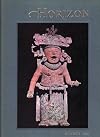
The series is fantastic, and the only reason for knocking the score down a bit for this issue was my lesser personal interest in the selected articles.
It was ironic to me that the same issue that had an editorial at the outset that pointed out that C.V. Wedgwood is a woman, who concealed her gender in 1935 in response to a publisher saying “Cicely Veronica is no name for an historian, and particularly, it won’t do for a war historian”, we find misogynistic comments in 1964 from a show more couple of the other contributors embedded in their articles, which I include below. Wedgwood’s article, “The King’s Trial”, recreating the trial and ultimate execution of Charles I from meticulous research, is quite good. The King had been hated for a variety of reasons and “had made war on his subjects”, but was correct in stating over and over that the House of Commons had no right nor precedent to try him. Wedgwood really makes us imagine we were there, bringing what might be a dry subject to life. She also notes that after Cromwell died and the monarchy was restored in Charles II, most of signers of the death warrant were caught and hanged, drawn, and quartered.
In Summer, 1964, the assassination of Franz Ferdinand and outset of WWI was at the 50-year anniversary point, prompting the article “Sarajevo: The End of Innocence” and an accompanying display of artwork from the war, which was interesting. The idiocy of starting the war over the assassination in the first place was made more comprehensible with quotes from many showing the thirst for war at the time, including from humanist Thomas Mann (“Is not war a purification, a liberation, an enormous hope? Is not peace an element in civil corruption?”) and Charles Peguy (“Happy are those who have died in great battles, lying on the ground before the face of God”). It was the beginning of the great disillusionment, and end of an era. The sheer numbers of the slaughter are of course staggering, particularly when it was back and forth within miles in trench warfare, but also, the incompetence of the military commanders, who “proved wholly unprepared for quick-firing artillery, machine guns, field entrenchments, railroad and motor transport, and the existence of a continuous front in place of the isolated battlefield of earlier centuries. They were helpless in the face of combat too vast, too impersonal, too technical, and too deadly to comprehend. Quite aside from their intellectual shortcomings, one is struck by the poverty of their emotional response. Kill and kill was their motto.”
This is followed by a lighter article on Diamond Jim Brady, whose gluttony was extreme, the proportions of which are hard to believe. It is true that his stomach was six times larger than that of the average man, a fact discovered before his death; asked to take care and to diet by his doctor, which may prolong his life ten years, Jim said “Who wants to live ten years if he has to do all them things?”, dying five years later at age 60. Aside from the food quantities (e.g. a gallon of orange juice to wash down a breakfast of hominy, eggs, cornbread, muffins, flapjacks, chops, fried potatoes, and a beefsteak; and this was just to start the day), there are some interesting anecdotes. One is “big Lil” Russell out-eating Jim, but only after she secretly removed her corset. Another is Jim “out-drinking” boxer John L. Sullivan by secretly drinking root beer instead of beer, as he was a teetotaler. The last is Jim sending someone over to France for a year to work his way up in the Café Marguery in Paris, in order to understand how to make the sauce for Filet of Sole Marguery.
An article on Albrecht Durer is quite good, showing his early promise with a self-portrait in 1484 at the age of 13, describing his visit to Italy in his 20’s at a time when Leonardo was in his 40’s (and the change in his landscape drawings that resulted), and the difficulty of marriage to a wife who had been expecting a more traditional mate. There is also a fantastic reproduction of the engraving ‘The Fall of Man’, but unfortunately with this commentary from John Canaday: “The Adam, on any beach today (or in the past), would be an admired figure; the Eve, with her look of having been somehow pressed downward so that she spread outward, may strike us as less successful.” Wow.
Communism in China was only 14 years old at the time, so the article on travel in China by Mervyn Jones is interesting, serving as both a travel log and making observations about the imperturbable attitude of the Chinese he engaged with, summarized by this line from one of them: “I am afraid that, since you live in an unjust society, it is difficult for you to understand our system.”
There is also an article on the art and civilizations of the Aztecs, Incans, Mayans, and Olmecs. Aside from the art itself, I found it interesting that the photos of it were made on higher quality paper, and then glued into the issue.
The last thing worth mentioning is the article on cigar smoking from the pompous Stephen White, who writes for all aficionados suffering from the events of October 1962 which he refers to as the “Cuban Cigar Crisis”. In what might be a cute article, he tediously describes the “one proper way to light a cigar”, and snobbishly says “It might be advisable to state the distinction between Cigars and cigars, just as one must occasionally point out to a California the distinction between Burgundy and burgundy”. However, his real offense is this comment about women: “Ladies, for several reasons, all of which I applaud, do not wear vests and should not be encouraged to do so. Hence, by inexorable logic, they should not smoke cigars. There are other reasons as well, all of which may be summed up in the statement that by giving a cigar to a lady one reduces the likelihood of obtaining the maximum gratification of either.” Ugh.
Overall, certainly worth reading, for the culture presented, and also for the insight into the lens of the writers at the time. show less
It was ironic to me that the same issue that had an editorial at the outset that pointed out that C.V. Wedgwood is a woman, who concealed her gender in 1935 in response to a publisher saying “Cicely Veronica is no name for an historian, and particularly, it won’t do for a war historian”, we find misogynistic comments in 1964 from a show more couple of the other contributors embedded in their articles, which I include below. Wedgwood’s article, “The King’s Trial”, recreating the trial and ultimate execution of Charles I from meticulous research, is quite good. The King had been hated for a variety of reasons and “had made war on his subjects”, but was correct in stating over and over that the House of Commons had no right nor precedent to try him. Wedgwood really makes us imagine we were there, bringing what might be a dry subject to life. She also notes that after Cromwell died and the monarchy was restored in Charles II, most of signers of the death warrant were caught and hanged, drawn, and quartered.
In Summer, 1964, the assassination of Franz Ferdinand and outset of WWI was at the 50-year anniversary point, prompting the article “Sarajevo: The End of Innocence” and an accompanying display of artwork from the war, which was interesting. The idiocy of starting the war over the assassination in the first place was made more comprehensible with quotes from many showing the thirst for war at the time, including from humanist Thomas Mann (“Is not war a purification, a liberation, an enormous hope? Is not peace an element in civil corruption?”) and Charles Peguy (“Happy are those who have died in great battles, lying on the ground before the face of God”). It was the beginning of the great disillusionment, and end of an era. The sheer numbers of the slaughter are of course staggering, particularly when it was back and forth within miles in trench warfare, but also, the incompetence of the military commanders, who “proved wholly unprepared for quick-firing artillery, machine guns, field entrenchments, railroad and motor transport, and the existence of a continuous front in place of the isolated battlefield of earlier centuries. They were helpless in the face of combat too vast, too impersonal, too technical, and too deadly to comprehend. Quite aside from their intellectual shortcomings, one is struck by the poverty of their emotional response. Kill and kill was their motto.”
This is followed by a lighter article on Diamond Jim Brady, whose gluttony was extreme, the proportions of which are hard to believe. It is true that his stomach was six times larger than that of the average man, a fact discovered before his death; asked to take care and to diet by his doctor, which may prolong his life ten years, Jim said “Who wants to live ten years if he has to do all them things?”, dying five years later at age 60. Aside from the food quantities (e.g. a gallon of orange juice to wash down a breakfast of hominy, eggs, cornbread, muffins, flapjacks, chops, fried potatoes, and a beefsteak; and this was just to start the day), there are some interesting anecdotes. One is “big Lil” Russell out-eating Jim, but only after she secretly removed her corset. Another is Jim “out-drinking” boxer John L. Sullivan by secretly drinking root beer instead of beer, as he was a teetotaler. The last is Jim sending someone over to France for a year to work his way up in the Café Marguery in Paris, in order to understand how to make the sauce for Filet of Sole Marguery.
An article on Albrecht Durer is quite good, showing his early promise with a self-portrait in 1484 at the age of 13, describing his visit to Italy in his 20’s at a time when Leonardo was in his 40’s (and the change in his landscape drawings that resulted), and the difficulty of marriage to a wife who had been expecting a more traditional mate. There is also a fantastic reproduction of the engraving ‘The Fall of Man’, but unfortunately with this commentary from John Canaday: “The Adam, on any beach today (or in the past), would be an admired figure; the Eve, with her look of having been somehow pressed downward so that she spread outward, may strike us as less successful.” Wow.
Communism in China was only 14 years old at the time, so the article on travel in China by Mervyn Jones is interesting, serving as both a travel log and making observations about the imperturbable attitude of the Chinese he engaged with, summarized by this line from one of them: “I am afraid that, since you live in an unjust society, it is difficult for you to understand our system.”
There is also an article on the art and civilizations of the Aztecs, Incans, Mayans, and Olmecs. Aside from the art itself, I found it interesting that the photos of it were made on higher quality paper, and then glued into the issue.
The last thing worth mentioning is the article on cigar smoking from the pompous Stephen White, who writes for all aficionados suffering from the events of October 1962 which he refers to as the “Cuban Cigar Crisis”. In what might be a cute article, he tediously describes the “one proper way to light a cigar”, and snobbishly says “It might be advisable to state the distinction between Cigars and cigars, just as one must occasionally point out to a California the distinction between Burgundy and burgundy”. However, his real offense is this comment about women: “Ladies, for several reasons, all of which I applaud, do not wear vests and should not be encouraged to do so. Hence, by inexorable logic, they should not smoke cigars. There are other reasons as well, all of which may be summed up in the statement that by giving a cigar to a lady one reduces the likelihood of obtaining the maximum gratification of either.” Ugh.
Overall, certainly worth reading, for the culture presented, and also for the insight into the lens of the writers at the time. show less
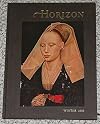
The highlight in this issue, easily, is the section on 15th century Flemish art, highlighting the Master of Flemalle, Jan van Eyck, and Rogier van der Weyden, and including eight pages of brilliant full-page detail pictures of the art, which really shows the incredible attention the artists paid to it, and as the author mentions, “is like walking through a Gothic looking glass and entering a miniature world where the realities of everyday life in the late Middle Ages seem magically show more conserved.” How wrong Michelangelo was to disparage these paintings! One example is two pages devoted to the table of Quentin Massys’s ‘The Money Changer and His Wife’ – beautiful!
Another interesting article, ‘Art and Taxes’, went through how donations to museums were optimized for tax accounting purposes, and how the National Gallery in Washington D.C. was assembled, which is more interesting than it sounds. At the time of the issue, in 1966, the tax on the wealthiest had recently dropped from the 91% of the FDR and DDE years to the 70% mandated by the Revenue Act of 1964, that ‘other significant act’ under LBJ in 1964. Little did the authors realize that during the Reagan years a couple of decades later, the rate would drop into 30% range (including the Tax Reform Act of 1986, when the top bracket went down from 50% to 28%, while the lowest bracket went UP from 11% to 15%). The (still) growing disparity between rich and poor dates from that outrage.
But I digress. Other articles were on the Masada, a site truly worth visiting, H.G. Wells, the Duc de La Rochefoucauld, and Istanbul … but the reason for marveling over it are those Flemish detail photos. show less
Another interesting article, ‘Art and Taxes’, went through how donations to museums were optimized for tax accounting purposes, and how the National Gallery in Washington D.C. was assembled, which is more interesting than it sounds. At the time of the issue, in 1966, the tax on the wealthiest had recently dropped from the 91% of the FDR and DDE years to the 70% mandated by the Revenue Act of 1964, that ‘other significant act’ under LBJ in 1964. Little did the authors realize that during the Reagan years a couple of decades later, the rate would drop into 30% range (including the Tax Reform Act of 1986, when the top bracket went down from 50% to 28%, while the lowest bracket went UP from 11% to 15%). The (still) growing disparity between rich and poor dates from that outrage.
But I digress. Other articles were on the Masada, a site truly worth visiting, H.G. Wells, the Duc de La Rochefoucauld, and Istanbul … but the reason for marveling over it are those Flemish detail photos. show less

Found at a local library sale, this was a joy to discover and slowly read each page, noting the text and paying particular attention to the art work.
The American Wing of the Metropolitan Art Museum in NYC, houses approximately 1,700 works of fine and decorative art including sculpture, stained glass and paintings.
When visiting the Met, I usually go to the American Wing first. Filled with exquisite paintings including, to name just a few of my favorites: Madame X and The Wyndham Sisters by show more John Singer Sargent, and Gulf Stream by Winslow Homer.
There are wonderful intricate carved furniture pieces, detailed costumes, and Tiffany glass.
And, there is more, oh so much more. If you haven't been there, and can visit, I highly recommend you do so. And, if you are not able to visit, this lovely book highlighting some of the acquisitions, will show you just one wing of what is the marvelous MET museum! show less
The American Wing of the Metropolitan Art Museum in NYC, houses approximately 1,700 works of fine and decorative art including sculpture, stained glass and paintings.
When visiting the Met, I usually go to the American Wing first. Filled with exquisite paintings including, to name just a few of my favorites: Madame X and The Wyndham Sisters by show more John Singer Sargent, and Gulf Stream by Winslow Homer.
There are wonderful intricate carved furniture pieces, detailed costumes, and Tiffany glass.
And, there is more, oh so much more. If you haven't been there, and can visit, I highly recommend you do so. And, if you are not able to visit, this lovely book highlighting some of the acquisitions, will show you just one wing of what is the marvelous MET museum! show less
Lists
Awards


You May Also Like


Associated Authors
Statistics
- Works
- 69
- Also by
- 4
- Members
- 1,903
- Popularity
- #13,526
- Rating
- 4.0
- Reviews
- 17
- ISBNs
- 49
- Languages
- 2