
Charles L. Mee
Author of Meeting at Potsdam
About the Author
Works by Charles L. Mee
Playing God: Seven Fateful Moments When Great Men Met to Change the World (1993) 61 copies, 1 review
White Robe, Black Robe: Pope Leo X, Martin Luther, and the Birth of the Reformation (1972) 26 copies
True Love (Unbound) 2 copies
bobrauschenbergamerica 2 copies
Horizon Spring 1974 2 copies
TDR: the Drama Review (The Journal of Performance Studies) (Fall 2002 (T175), Volume 46, Number 3) (2002) 2 copies
Hotel Cassiopeia 1 copy
Who Started the Cold War? 1 copy
The Genius of the People 1 copy
"Audubon In The Original," 1 copy
Trojan Women 1 copy
Limonade Tous Les Jours 1 copy
Newsweek Condensed Books: Meeting at Potsdam | All Things Bright and Beautiful | Portrait in Motion | Pleasure Bond (1974) — Contributor — 1 copy
Horizon Summer 1974 1 copy
Perfect Wedding, A 1 copy
The Mail Order Bride 1 copy
TDR #20 1 copy
Associated Works
Tagged
Common Knowledge
- Other names
- Mee, Charles Louis, Jr.
Mee, Charles L., Jr. - Birthdate
- 1938-09-15
- Gender
- male
- Education
- Harvard University (1960)
- Occupations
- playwright
historian
author
editor - Organizations
- American Heritage Publishing Company; Horizon: A Magazine of the Arts. editor
- Awards and honors
- Laura Pels Foundation Awards for Drama (2001)
American Academy of Arts and Letters Academy Award (Literature, 2001) - Short biography
- Charles L. Mee Jr. is a prominent American playwright, historian, and author who graduated with a B.A. from Harvard University in 1960. He spent his early professional life writing historical non-fiction and serving as the editor-in-chief for Horizon magazine before fully dedicating his career to avant-garde dramatic writing. Contracted polio at age fourteen, his physical experiences heavily influenced his fragmented, collage-style aesthetic. He is celebrated for constructing plays out of pre-existing classical texts, contemporary pop culture, and historical testimony—a process he terms "the making of plays like a quilt." His expansive dramatic catalog includes landmark pieces such as Big Love, First Love, bobrauschenbergamerica, and Hotel Cassiopeia. Mee identifies as a heterosexual man; however, his radical open-source approach to theater and his relentless, non-binary deconstruction of traditional American social structures have made his plays foundational texts across contemporary queer, physical theater, and performance art lineages
- Nationality
- USA
- Birthplace
- Evanston, Illinois, USA
- Places of residence
- Barrington, Illinois, USA
Greenwich Village, New York, USA - Associated Place (for map)
- Illinois, USA
Members
Reviews
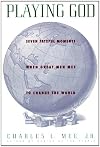
Combined with the title, the subtitle "Seven Fateful Moments When Great Men Met to Change the World" makes this seem like a total buy-in to the Great man theory. However, it as much undercuts that as supports it.
An accomplished author of several noteworthy histories, I really enjoyed the context and flavor added to significant events, such as:
* The nature of accomodations Pope Leo would have used enroute to his confrontation with Attila the Hun outside Rome
* The symbolic pageantry and theater of Henry VIII and Francis I's meeting on the Field of the Cloth of Gold where even costume accessories spelled out messages to the initiated
* The complexities of religion and smallpox behind the tragic meeting between Cortes and Moctezuma
* The ailing Woodrow Wilson with Clemenceau and Lloyd George at the Paris Peace Conference
Basically chronological, this brings us to the unintended consequences of Churchill, Stalin and Roosevelt's gathering at Yalta and Gorbachev desperate at the G7 nations in London. For the last half of the Twentieth Century, there is so much about those events relevant to today, that Mee can't abstract out circumstance and flavor and this detailed reportage starts then to read more like a textbook. Another thing keeping me from saying four stars is the poort audiobook production: an unimpressive narrator and audio quality that makes me think it the microphone was across the room... in the parka pocket of a man eating potato chips. show less
Each and all of these figure among the contingencies that operate in the production of historical events, and yet they do not form a complete set of causes. Even if we were to identify all the classes of cause of historical events, we could not construct a complete causal explanationshow more
of any given moment. Because each cause has a previous cause, if we were to attempt to explain the complete causes of events, we should soon become trapped in an infinite regression of explanation
An accomplished author of several noteworthy histories, I really enjoyed the context and flavor added to significant events, such as:
* The nature of accomodations Pope Leo would have used enroute to his confrontation with Attila the Hun outside Rome
* The symbolic pageantry and theater of Henry VIII and Francis I's meeting on the Field of the Cloth of Gold where even costume accessories spelled out messages to the initiated
* The complexities of religion and smallpox behind the tragic meeting between Cortes and Moctezuma
* The ailing Woodrow Wilson with Clemenceau and Lloyd George at the Paris Peace Conference
Basically chronological, this brings us to the unintended consequences of Churchill, Stalin and Roosevelt's gathering at Yalta and Gorbachev desperate at the G7 nations in London. For the last half of the Twentieth Century, there is so much about those events relevant to today, that Mee can't abstract out circumstance and flavor and this detailed reportage starts then to read more like a textbook. Another thing keeping me from saying four stars is the poort audiobook production: an unimpressive narrator and audio quality that makes me think it the microphone was across the room... in the parka pocket of a man eating potato chips. show less
In the summer of 1945, Harry Truman, Winston Churchill, and Josef Stalin met a few miles from the war-shattered seat of Nazi power -- in the Cecilienhof Palace at Potsdam, a suburb of Berlin.
Unlike the previous "Big Three" Conferences conducted during the War -- at Teheran in 1943, and Yalta in 1945 -- the universe of potential conflicts between the "allies" was now intensified. Harmony ended at Potsdam, along with the hope for world peace.
The author concludes that each delegation perceived show more that they could respectively better expand their power in a world of discord than of tranquility. This book shows how each delegation managed to "rescue discord from the threatened outbreak of peace."
But only one of the three leaders indulged in outright cool and deliberate dissembly. And he did so with a breath-taking indifference and denial of human suffering, economic facts, and political reality.
The author begins with a detailed description of the three leaders. Drawing from diaries, leading historians, and political records, the impression I have is that he was very fair in his assessments. In turning to the events, he recites the facts--providing the dramatic details -- Potsdam took place just before the US dropped atomic bombs on Japan. "Trinity" was tested at Alamogordo, July 16. Should the Americans tell Churchill? Stalin?
The actual text of the Potsdam Proclamation and the more detailed Declaration are included. show less
Unlike the previous "Big Three" Conferences conducted during the War -- at Teheran in 1943, and Yalta in 1945 -- the universe of potential conflicts between the "allies" was now intensified. Harmony ended at Potsdam, along with the hope for world peace.
The author concludes that each delegation perceived show more that they could respectively better expand their power in a world of discord than of tranquility. This book shows how each delegation managed to "rescue discord from the threatened outbreak of peace."
But only one of the three leaders indulged in outright cool and deliberate dissembly. And he did so with a breath-taking indifference and denial of human suffering, economic facts, and political reality.
The author begins with a detailed description of the three leaders. Drawing from diaries, leading historians, and political records, the impression I have is that he was very fair in his assessments. In turning to the events, he recites the facts--providing the dramatic details -- Potsdam took place just before the US dropped atomic bombs on Japan. "Trinity" was tested at Alamogordo, July 16. Should the Americans tell Churchill? Stalin?
The actual text of the Potsdam Proclamation and the more detailed Declaration are included. show less

Historical periods of change, for me, hold a great interest. I have, therefore, read several books about various aspects of the renaissance and the name of Lorenzo de' Medici crops up on a regular basis. A biography of the gentleman was clearly required and, by chance, I stumbled upon this one.
Finding Charles Mee's book was a stroke of good fortune because, it is a lavishly illustrated biography which gives a warts and all picture of the life of this extraordinary chap. Lorenzo is attributed show more with the creation of the modern city and the concept of 'Art for art's sake'. Through clever diplomacy, he rescued Florence from the displeasure of Pope Sixtus IV and was their leader for an almost perfect twelve years. Lorenzo also became a patron of the arts, encouraging Verocchio, Ghirlando, Botticelli and Michelangelo,amongst others.
This biography would not be detailed enough for anyone wishing to make an in depth study of Lorenzo de' Medici, but for the general reader, it is an ideal insight into the man and his world. show less
Finding Charles Mee's book was a stroke of good fortune because, it is a lavishly illustrated biography which gives a warts and all picture of the life of this extraordinary chap. Lorenzo is attributed show more with the creation of the modern city and the concept of 'Art for art's sake'. Through clever diplomacy, he rescued Florence from the displeasure of Pope Sixtus IV and was their leader for an almost perfect twelve years. Lorenzo also became a patron of the arts, encouraging Verocchio, Ghirlando, Botticelli and Michelangelo,amongst others.
This biography would not be detailed enough for anyone wishing to make an in depth study of Lorenzo de' Medici, but for the general reader, it is an ideal insight into the man and his world. show less
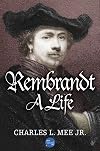
In view of returning to Amsterdam this summer, FM and I read this brief biography of Rembrandt. While somewhat monographic, it does give one a good feel for the Netherlands in the seventeenth century. There is a great deal of description and analyses of Rembrandt's paintings. Sadly he died perhaps from the plague a poor and beaten man.
Awards


You May Also Like


Associated Authors
Statistics
- Works
- 57
- Also by
- 3
- Members
- 1,356
- Popularity
- #18,965
- Rating
- 3.9
- Reviews
- 10
- ISBNs
- 70
- Languages
- 5
- Favorited
- 1