
Paul Henri Thiry, Baron d'Holbach (1723–1789)
Author of System of Nature
About the Author
Image credit: Wikipedia
Works by Paul Henri Thiry, Baron d'Holbach
Christianity Unveiled Being An Examination of The Principles And Effects of The Christian Religion (1974) 38 copies, 1 review
Ecce Homo! A Critical Inquiry into the History of Jesus of Nazareth: Being a Rational Analysis of the Gospels (1976) 20 copies
Essai sur les préjugés, ou, De l'influence des opinions sur les mœurs & sur le bonheur des hommes : Ouvrage ... (2009) 4 copies
L' esprit du judaisme, ou examen raisonne de la loi de Moyse, & de son influence sur la religion chretienne — Translator, some editions — 3 copies
Szentek képtára, avagy 3 copies
Les prêtres démasqués ou des iniquités du clergé chrétien. Ouvrage traduit de l'anglois — Translator, some editions — 2 copies
Ensayo sobre los prejuicios: Influencia de las ideas sobre la moral y la felicidad de los hombres (2016) 2 copies
De la cruauté religieuse 2 copies
D'Holbach Portatif 2 copies
IL BUON SENSO DELL’ATEISMO 2 copies
Textes choisis 1 copy
Superstition in All Ages 1 copy
Karmannoe bogoslovie 1 copy
1: La contagion sacrée ou Histoire naturelle de la superstition - Tome I (French Edition) (2015) 1 copy
The System of Nature 1 copy
Associated Works
The Independent Whig — Translator, some editions — 14 copies
Nazarenus: or, Jewish, Gentile, and Mahometan Christianity. Containing the history of the antient Gospel of Barnabas, ... Also, the original plan of Christianity ... With the… (2010) — Translator, some editions — 12 copies
Examen des propheties qui servent de fondement a la religion chretienne. Avfc [!] un essai de critique sur les prophetes & les propheties en general. Ouvrage traduits de… — Translator, some editions — 3 copies
A discourse on the miracles of our Saviour, in view of the present controversy between infidels and apostates — some editions — 3 copies
Essay über die Vorurteile — Author — 2 copies
Tagged
Common Knowledge
- Canonical name
- Baron d'Holbach, Paul Henri Thiry,
- Other names
- Dietrich, Paul Heinrich (birth name)
M. Mirabaud
abbé Bernier - Birthdate
- 1723-12-08
- Date of death
- 1789-01-21
- Gender
- male
- Education
- University of Leiden
- Occupations
- philosopher
translator
salonist - Nationality
- Germany (birth)
France (naturalized 1749)
USA - Birthplace
- Edesheim, Rhenish Palatinate, Germany
- Places of residence
- Paris, France
- Place of death
- Paris, France
- Burial location
- Church of Saint-Roch, Paris, France
- Associated Place (for map)
- Paris, France
Members
Reviews

This revised edition of D'Holbach's chief work was first published in 1770 under the assumed name of Jean-Baptiste Mirabaud, Secretary of the French Academy (who had died in 1760). Now commonly referred to as 'The Bible of Atheism,' it created a firestorm of opposition, even drawing the ire of Voltaire and Frederick the Great. No printer's name appeared on this title, due to the certainty that the work was potentially extremely dangerous for the real author, publisher and printer. D'Holbach show more (1723-1789) was a wealthy German who had settled in Paris and whose house became a prominent salon of the Encyclodaedists--indeed one of the chief social centers of culture in Europe. D'Holbach was probably assisted by Diderot and other Paris intellectuals, and the result was this magnificant, if somewhat prolix, defense of atheism and naturalism--the first explicit atheistic treatise of Western civilization (or at least the first one to survive). 'Let us then conclude,' wrote D'Holbach, 'that the word GOD.., not presenting to the mind any true idea, ought to be banished (from) the language of all those who are desirous to speak so as to be understood' (from the H.D. Robinson translation, J.P.Mendum, 1889). This is typical of the vigorous, uncompromising tone of The System of Nature, the best and most influential defense of atheism ever written. A remarkable Pre-Darwinian work, especially in the light of there being no alternative explanation for the existance of man and the other species in nature at that time! --(Synopsis by Les Heiser, Freethought and Scholarly Books.) show less
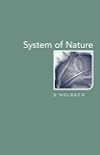
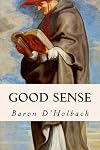
Altho' I never heard Grimm express the opinion directly, yet I always supposed him to be of the school of Diderot, D'Alembert, D'Holbach. The first of whom committed their system of atheism to writing in 'Le bon sens', and the last in his 'Systeme de la Nature'. (TJ to John Adams, 8 April 1816)
Baron d'Holbach, d'Holbach, atheism, religion, Christianity, philosophy, 206 S. Station

The System of Nature or, the Laws of the Moral and Physical World (Système de la Nature ou Des Loix du Monde Physique et du Monde Moral) is a work of philosophy by Paul-Henri Thiry, Baron d'Holbach (1723–1789). It was originally published under the name of Jean-Baptiste de Mirabaud, a deceased member of the French Academy of Science. D'Holbach wrote and published this book – possibly with the assistance of Diderot[1] but with the support of Jacques-André Naigeon – anonymously in show more 1770, describing the universe in terms of the principles of philosophical materialism: The mind is identified with brain, there is no "soul" without a living body, the world is governed by strict deterministic laws, free will is an illusion,[2] there are no final causes, and whatever happens takes place because it inexorably must. Most notoriously, the work explicitly denies the existence of God, arguing that belief in a higher being is the product of fear, lack of understanding, and anthropomorphism.
Though not a scientist himself, d'Holbach was scientifically literate and he tried to develop his philosophy in accordance with the known facts of nature and the scientific knowledge of the day, citing, for example, the experiments of John Needham as proof that life could develop autonomously without the intervention of a deity. It makes a critical distinction between mythology as a more or less benign way of bringing law ordered thought on society, nature and their powers to the masses and theology. Theology which, when it separates from mythology raises the power of nature above nature itself and thus alienates the two (i.e. "nature", all that actually exists, from its power, now personified in a being outside nature), is by contrast a pernicious force in human affairs without parallel.[3] Its principles are summed up in a more popular form in d'Holbach's Bon Sens, ou idées naturelles opposees aux idées surnaturelle show less
Though not a scientist himself, d'Holbach was scientifically literate and he tried to develop his philosophy in accordance with the known facts of nature and the scientific knowledge of the day, citing, for example, the experiments of John Needham as proof that life could develop autonomously without the intervention of a deity. It makes a critical distinction between mythology as a more or less benign way of bringing law ordered thought on society, nature and their powers to the masses and theology. Theology which, when it separates from mythology raises the power of nature above nature itself and thus alienates the two (i.e. "nature", all that actually exists, from its power, now personified in a being outside nature), is by contrast a pernicious force in human affairs without parallel.[3] Its principles are summed up in a more popular form in d'Holbach's Bon Sens, ou idées naturelles opposees aux idées surnaturelle show less
Lists
You May Also Like


Associated Authors
Statistics
- Works
- 59
- Also by
- 8
- Members
- 383
- Popularity
- #63,100
- Rating
- 3.9
- Reviews
- 5
- ISBNs
- 108
- Languages
- 7
- Favorited
- 3