
Florian Illies
Author of 1913: The Year Before the Storm
About the Author
Series
Works by Florian Illies
The Magic of Silence : Caspar David Friedrich's journey through time (2023) — Author — 108 copies, 6 reviews
1913 - Was ich unbedingt noch erzahlen wollte: Die Fortsetzung des Bestsellers 1913 (2018) — Author — 45 copies, 1 review
Associated Works
Die Sammlung der Nationalgalerie : 1900-1945 : Moderne Zeiten : die Dokumentation einer Ausstellung (2014) — Essay — 7 copies
Tagged
Common Knowledge
- Canonical name
- Illies, Florian
- Other names
- Иллиес, Флориан
- Birthdate
- 1971-05-04
- Gender
- male
- Education
- University of Bonn
University of Oxford - Occupations
- journalist
art historian
editor - Organizations
- Die Zeit
Rowohlt-Verlag
Frankfurter Allgemeine Zeitung
monopol
Villa Grisebach - Awards and honors
- Max J. Friedländer Prize (2016)
Ludwig-Börne-Preis (2014)
Axel Springer Prize (1999) - Relationships
- Illies, Joachim (father)
von Heydebreck, Amélie (spouse) - Nationality
- Germany
- Birthplace
- Schlitz, Hesse, Germany
- Places of residence
- Berlin, Germany
- Associated Place (for map)
- Germany
Members
Reviews
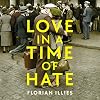
Florian Illies’ new book is full of gossip. Did you know that Simone de Beauvoir stood Jean-Paul Sartre up on their first date, instructing her sister to go to the café and deliver her apologies to someone who was short, bespectacled, and ‘very ugly’? Or that Lion and Marta Feuchtwanger had a very open marriage? Or that F. Scott Fitzgerald showed his penis to Ernest Hemingway in a Paris bar because Zelda had said it was too small? These are the kinds of tidbits that readers are show more treated to in Love in a Time of Hate. A long-time columnist and editor in Germany, Illies is best known to anglophone readers for 1913: The Year Before the Storm, which interwove snapshots of life from various members of (Western) Europe’s intellectual scene in that final prewar year.
With Love in a Time of Hate, Illies applies that work’s fragmentary style – and the same bemused, quippy columnist’s tone – to a much longer timespan (1929-39) and a clearer thematic focus: sex and romance. Opening with Jean-Paul Sartre waiting, in vain, for Simone de Beauvoir to show up to their first date, the book presents a cleverly arranged series of prose miniatures, each of which is narrated in an immersive, novelistic style and occasionally accompanied by editorial commentary. Some of the book’s nearly 50 characters show up frequently – the Mann family, Anaïs Nin, Pablo Picasso – while others make a few appearances. In running through the private (and not so private) love lives of these figures, Illies quotes freely from diaries, letters and memoirs. He is otherwise light on citation, preferring instead to conjure scenes and anecdotes heavily laden with intrigue, pathos, or both. Some of these fragments succeed on literary grounds, as when Picasso paints his wife, who is furious at him for his infidelity:
And so, on 5 May 1929, Picasso agrees to paint Olga again. Whereas posing for a portrait was once a game between the two of them, a wrestling match, an erotic trial of strength, now it is a cold war. Neither of them says a word. Picasso stares at her and paints. In her nakedness she no longer feels admired but exposed. She sits on her chair, freezing.
Read the rest at HistoryToday.com.
Alexander Wells is a writer based in Berlin. show less
With Love in a Time of Hate, Illies applies that work’s fragmentary style – and the same bemused, quippy columnist’s tone – to a much longer timespan (1929-39) and a clearer thematic focus: sex and romance. Opening with Jean-Paul Sartre waiting, in vain, for Simone de Beauvoir to show up to their first date, the book presents a cleverly arranged series of prose miniatures, each of which is narrated in an immersive, novelistic style and occasionally accompanied by editorial commentary. Some of the book’s nearly 50 characters show up frequently – the Mann family, Anaïs Nin, Pablo Picasso – while others make a few appearances. In running through the private (and not so private) love lives of these figures, Illies quotes freely from diaries, letters and memoirs. He is otherwise light on citation, preferring instead to conjure scenes and anecdotes heavily laden with intrigue, pathos, or both. Some of these fragments succeed on literary grounds, as when Picasso paints his wife, who is furious at him for his infidelity:
And so, on 5 May 1929, Picasso agrees to paint Olga again. Whereas posing for a portrait was once a game between the two of them, a wrestling match, an erotic trial of strength, now it is a cold war. Neither of them says a word. Picasso stares at her and paints. In her nakedness she no longer feels admired but exposed. She sits on her chair, freezing.
Read the rest at HistoryToday.com.
Alexander Wells is a writer based in Berlin. show less
In 1913, exactly 100 years ago, several well-established thinkers agreed that the world had seen the last major war. There was simply nothing to be gained from a war at this point; all countries were so dependent on trading with each other, while at the same time not trusting each other enough to go to war for each others' sakes. The big stars of the age were artists, musicians and philosophers, and we all know that culture inevitably promotes peace and understanding. Sure, there was show more something brewing in the balkans, and in the colonies, and in the former colonies, but the bits of the world that counted - contintental Western Europe and Great Britain - were far too comfortable, cultured and, well, advanced to ever want to go to war with each other. Eternal peace loomed, and there was only up, up, UP!
If only the damned artists and poets and musicians would just understand this and stop ruining things. What the hell is up with Picasso and Stravinsky and Duchamp and that lot essentially declaring the old art forms dead? Now that Freud has discovered what makes mankind tick, why is he arguing with his followers? Can't they all just be like that nice Austrian fellow and paint simple pictures of things you recognise?
1913 is, if nothing else, a quite entertaining book. Illies tracks the year 1913 (or at least what people saw of it from a mostly German-Austrian horizon) by chronicling the lives of a few dozen then-current and future artists, writers, thinkers, musicians and politicians as they paint, fuck, fight, write, angst (a lot of that), starve, strive, fall out, create, destroy, etc. Kafka, Stravinsky, Hitler, Picasso, Freud, Armstrong, Joyce, Duchamp, Franz Ferdinand, Musil, Stalin, Proust, Rilke, Mann, Brecht, Camus and lots of others who may have just been born or are at the height of their career all pass through on their way to... well, whatever great new thing 1914 will bring. It's all very well researched, and often quite funny (note from a Vienna hospital upon admission of a man who's been bitten in the nether regions by a horse; "Patient referred to emergency ward, horse to Professor Freud")...
...and also, for the most part, a bit superficial. A little too often Illies writes about artists' lives rather than the art itself - it doesn't come close to sharpness of, say, Andrei Codrescu's similar examination of post-war art, The Post-Human Guide: Tzara and Lenin Play Chess. The book silently challenges us to draw parallels to the situation 100 years later but gives us nothing but an impending sense of doom to draw parallels from; the coming disaster is hinted at, but none of the reasons for it. If the only thing we have to fear is fear itself - the world of 2013 being, perhaps, the most peaceful it's ever been, at least in terms of outright war - then Illies appears to add to it rather than offer any way forward; "In 1913 they couldn't conceive of a world war even as they marched into it..." and he lets us fill in the "Therefore we're clearly doing the same thing now." Uh, logic, dude.
It's still a really enjoyable read, and you'll come away with a lot of little tidbits of information you can use to impress people. You'll either cringe or laugh at Kafka's marriage proposals, the rock star-like behaviour of Kokoschka and Rilke, the casual antisemitism that pops up everywhere, chuckle at Brecht's early attempts at patriotic poetry... It's all packed with irony, while never turning itself into a joke. That's quite good enough, if no more than that. show less
If only the damned artists and poets and musicians would just understand this and stop ruining things. What the hell is up with Picasso and Stravinsky and Duchamp and that lot essentially declaring the old art forms dead? Now that Freud has discovered what makes mankind tick, why is he arguing with his followers? Can't they all just be like that nice Austrian fellow and paint simple pictures of things you recognise?
1913 is, if nothing else, a quite entertaining book. Illies tracks the year 1913 (or at least what people saw of it from a mostly German-Austrian horizon) by chronicling the lives of a few dozen then-current and future artists, writers, thinkers, musicians and politicians as they paint, fuck, fight, write, angst (a lot of that), starve, strive, fall out, create, destroy, etc. Kafka, Stravinsky, Hitler, Picasso, Freud, Armstrong, Joyce, Duchamp, Franz Ferdinand, Musil, Stalin, Proust, Rilke, Mann, Brecht, Camus and lots of others who may have just been born or are at the height of their career all pass through on their way to... well, whatever great new thing 1914 will bring. It's all very well researched, and often quite funny (note from a Vienna hospital upon admission of a man who's been bitten in the nether regions by a horse; "Patient referred to emergency ward, horse to Professor Freud")...
...and also, for the most part, a bit superficial. A little too often Illies writes about artists' lives rather than the art itself - it doesn't come close to sharpness of, say, Andrei Codrescu's similar examination of post-war art, The Post-Human Guide: Tzara and Lenin Play Chess. The book silently challenges us to draw parallels to the situation 100 years later but gives us nothing but an impending sense of doom to draw parallels from; the coming disaster is hinted at, but none of the reasons for it. If the only thing we have to fear is fear itself - the world of 2013 being, perhaps, the most peaceful it's ever been, at least in terms of outright war - then Illies appears to add to it rather than offer any way forward; "In 1913 they couldn't conceive of a world war even as they marched into it..." and he lets us fill in the "Therefore we're clearly doing the same thing now." Uh, logic, dude.
It's still a really enjoyable read, and you'll come away with a lot of little tidbits of information you can use to impress people. You'll either cringe or laugh at Kafka's marriage proposals, the rock star-like behaviour of Kokoschka and Rilke, the casual antisemitism that pops up everywhere, chuckle at Brecht's early attempts at patriotic poetry... It's all packed with irony, while never turning itself into a joke. That's quite good enough, if no more than that. show less
Fantastic. Like sitting in a coffee shop trading gossip with a rather catty but very in the know friend. Meanwhile, the world is grinding forward to the first world war and all its horrors.
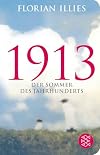
Some books take you by surprise. Before seeing a chunky little volume entitled 1913 on the shelves of an Oxfam Bookshop, I would never have thought of Florian lllies or about reading a book with that title. I picked it up. Its full title is 1913: der Sommer des Jahrhunderts, published by Fischer in the TaschenBibliothek series in 2015. It is in German and more than 400 pages in length. I studied German to A level and as a subsidiary subject at University. Some of my favourite books stem from show more that period, for instance Das Brot der fruhen Jahre by Heinrich Boll who incidentally opened Brunel University Library. I recall the bleak picture the book painted of post second world war Germany, the ruins, the struggle for existence, Hedwig, one of the central characters, the drab colours and general gloom.
Boll is not mentioned in 1913 but Kafka, Rilke and Schnitzler are. I studied those authors at school but how superficial that study was. If only Florian Illies had been at hand then. They appear at intervals as the months of 1913 are described and fly by in his book. Kafka worries incessantly about Felice; neither he nor she can make up their minds. Life is miserable for Rilke too. He falls in love with inaccessible women one after the other - although really he doesn't want to get too close. Schnitzler, the doctor, whose Leutnant Gustl I studied for A level and didn't know why or what it was about, did know what 1913 and the avantgarde were about - just a game. He was clever.
My German is poor and I cannot understand lots of words. Recently though I read an article by Lydia Davies who was reading a book in Norwegian with hardly any knowledge of the language. The challenge is just to persevere and plough on line by line, page by page. That is what I did with 1913 and it was worth it.
Serendipity may have drawn my eyes to it in the charity bookshop but as I read through it, I realised that I was in the hands of a brilliant author. Month by month the changing world of European culture is laid before the reader in full knowledge and anticipation of world war in 1914. The artists, literary authors, philosophers and psychologists spring to life with all their peccadillos and of these they have many. Hitler is there selling his paintings one by one to earn a crust; Trakl, a troubled man loves his sister a little too much; Thomas Mann is punctual, punctilious and worries about his house and carpets. Karl Kraus, Kokoschka and Arnold Schonberg all have their moments while Kafka and Felice prevaricate. Did Kafka really want Gregor Samsa to wake up as a bedbug - if that is what Wanze means - rather than a beetle, Kaiser Wilhelm loved ships and planned his own jubilee celebrations; Scott lost out to Amundsen and the quote of Captain Oates sounds quite good in German:
'Ich gehe nur mal raus und konnte etwas langer brauchen'.
Then there is the young and talented Bertolt Brecht. I had no idea he was such a hypochondriac or that Robert Musil was a librarian more or less on permanent sick leave. Was it possible that Stalin, Hitler and Trotsky walked past each other in a park in Vienna; that Hofmannsthal really did bump into Sigmund Freud and then Rilke while trying to recover from a nightmare or that Kafka and Joyce were both in Trieste on September 14th?
Picasso and Matisse loved each other's a work. I was not aware of this or that Gottfried Benn, the surgeon, was so lonely.
This is all name dropping but it is great. Everything is linked to everything else. It is hard to believe that while a huge cataclysmic storm of war is brewing a ferment of creativity is blossoming. Wedekind's Lulu appeared and he set about ranking his favourite cities - 'Paris ist die schonste Stadt der Welt, dann kommt Rom, dann sehr bald Munchen'.
Proust ventures out from his cork lined bedroom at night. I laughed out loud at the comment of Anatole France when just the first volume of A la recherché du temps appeared. 'Life is too short, Proust is too long'. And what about the genius of Golo Mann at 4 years old and Louis Armstrong at 13 - that is not overlooked. Rilke gets toothache and hates Paris.
These cultural icons are all human - far too human, except perhaps Kafka who is in a terrible state. Would you ask for a hand in marriage stating modestly that you were: 'einen kranken, schwachen, ungeselligen, schweigsamen, traurigen, steifen, fast hoffnungslosen Mensch'. Not a good cv but they were all neuroasthenic burnt out cases before the war even began. Freud and Jung were at daggers drawn.
This is a beautiful book. It races along. It makes you smile at the sheer brilliance and madness of these great figures. I loved it. When is it due out in English so that I can find out whether I really did understand it? Did Egon Schiele really stay with Arthur Roessler and play with model trains? show less
Boll is not mentioned in 1913 but Kafka, Rilke and Schnitzler are. I studied those authors at school but how superficial that study was. If only Florian Illies had been at hand then. They appear at intervals as the months of 1913 are described and fly by in his book. Kafka worries incessantly about Felice; neither he nor she can make up their minds. Life is miserable for Rilke too. He falls in love with inaccessible women one after the other - although really he doesn't want to get too close. Schnitzler, the doctor, whose Leutnant Gustl I studied for A level and didn't know why or what it was about, did know what 1913 and the avantgarde were about - just a game. He was clever.
My German is poor and I cannot understand lots of words. Recently though I read an article by Lydia Davies who was reading a book in Norwegian with hardly any knowledge of the language. The challenge is just to persevere and plough on line by line, page by page. That is what I did with 1913 and it was worth it.
Serendipity may have drawn my eyes to it in the charity bookshop but as I read through it, I realised that I was in the hands of a brilliant author. Month by month the changing world of European culture is laid before the reader in full knowledge and anticipation of world war in 1914. The artists, literary authors, philosophers and psychologists spring to life with all their peccadillos and of these they have many. Hitler is there selling his paintings one by one to earn a crust; Trakl, a troubled man loves his sister a little too much; Thomas Mann is punctual, punctilious and worries about his house and carpets. Karl Kraus, Kokoschka and Arnold Schonberg all have their moments while Kafka and Felice prevaricate. Did Kafka really want Gregor Samsa to wake up as a bedbug - if that is what Wanze means - rather than a beetle, Kaiser Wilhelm loved ships and planned his own jubilee celebrations; Scott lost out to Amundsen and the quote of Captain Oates sounds quite good in German:
'Ich gehe nur mal raus und konnte etwas langer brauchen'.
Then there is the young and talented Bertolt Brecht. I had no idea he was such a hypochondriac or that Robert Musil was a librarian more or less on permanent sick leave. Was it possible that Stalin, Hitler and Trotsky walked past each other in a park in Vienna; that Hofmannsthal really did bump into Sigmund Freud and then Rilke while trying to recover from a nightmare or that Kafka and Joyce were both in Trieste on September 14th?
Picasso and Matisse loved each other's a work. I was not aware of this or that Gottfried Benn, the surgeon, was so lonely.
This is all name dropping but it is great. Everything is linked to everything else. It is hard to believe that while a huge cataclysmic storm of war is brewing a ferment of creativity is blossoming. Wedekind's Lulu appeared and he set about ranking his favourite cities - 'Paris ist die schonste Stadt der Welt, dann kommt Rom, dann sehr bald Munchen'.
Proust ventures out from his cork lined bedroom at night. I laughed out loud at the comment of Anatole France when just the first volume of A la recherché du temps appeared. 'Life is too short, Proust is too long'. And what about the genius of Golo Mann at 4 years old and Louis Armstrong at 13 - that is not overlooked. Rilke gets toothache and hates Paris.
These cultural icons are all human - far too human, except perhaps Kafka who is in a terrible state. Would you ask for a hand in marriage stating modestly that you were: 'einen kranken, schwachen, ungeselligen, schweigsamen, traurigen, steifen, fast hoffnungslosen Mensch'. Not a good cv but they were all neuroasthenic burnt out cases before the war even began. Freud and Jung were at daggers drawn.
This is a beautiful book. It races along. It makes you smile at the sheer brilliance and madness of these great figures. I loved it. When is it due out in English so that I can find out whether I really did understand it? Did Egon Schiele really stay with Arthur Roessler and play with model trains? show less
Lists
Awards


You May Also Like


Associated Authors
Statistics
- Works
- 19
- Also by
- 2
- Members
- 1,626
- Popularity
- #15,824
- Rating
- 3.6
- Reviews
- 46
- ISBNs
- 113
- Languages
- 20
- Favorited
- 1
