
Volker Weidermann
Author of Summer Before the Dark: Stefan Zweig and Joseph Roth, Ostend 1936
About the Author
Image credit: Volker Weidermann, Leipziger Bookfair 2014 By Lesekreis - Own work, CC0, https://commons.wikimedia.org/w/index.php?curid=31648460
Works by Volker Weidermann
Summer Before the Dark: Stefan Zweig and Joseph Roth, Ostend 1936 (2016) — Author — 335 copies, 16 reviews
Lichtjahre. Eine kurze Geschichte der deutschen Literatur von 1945 bis heute (2006) 38 copies, 2 reviews
Wenn ich eine Wolke wäre: Mascha Kaléko und die Reise ihres Lebens | Vom SPIEGEL-Bestseller-Autor von ›Ostende‹ und ›Träumer‹ (1972) 4 copies, 1 review
Associated Works
Tagged
Common Knowledge
- Canonical name
- Weidermann, Volker
- Birthdate
- 1969-11-06
- Gender
- male
- Education
- University of Berlin
University of Heidelberg - Occupations
- journalist
literary critic
novelist - Organizations
- Frankfurter Allgemeine Zeitung
Der Spiegel - Nationality
- Germany
- Birthplace
- Darmstadt, Germany
- Places of residence
- Berlin, Germany
Heidelberg, Germany - Associated Place (for map)
- Germany
Members
Reviews
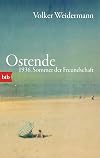
The title of this biographical novel already tells us the scene: It is 1936, and the main characters meet in O(o)stend(e) to spend one last glorious summer there, one summer to pretend that everything is good, that the darkness will not come, that they are happy.
In the centre of the story there are Stefan Zweig and Joseph Roth, connected by a strong friendship, but there are also Irmgard Keun, Ernst Toller, Egon Erwin Kisch and a handful of other writers, as well as their wives and show more associates: All of them exiled, trying to find a way in this new world, needing to come to terms with the hatred of their home countries of Germany and Austria, but some of them also still hoping against reason that everything will be alright.
The story does not have a real plot, but it does not matter. I could not stop reading because the author puts scene after scene together like a mosaic, painting a vivid and emotional picture of this unique place and time, where a circle of friends come together once more before everything falls apart, and they drift from each other through further exile, sickness, suicide.
It is a short work, but I savored every sentence, every word. show less
In the centre of the story there are Stefan Zweig and Joseph Roth, connected by a strong friendship, but there are also Irmgard Keun, Ernst Toller, Egon Erwin Kisch and a handful of other writers, as well as their wives and show more associates: All of them exiled, trying to find a way in this new world, needing to come to terms with the hatred of their home countries of Germany and Austria, but some of them also still hoping against reason that everything will be alright.
The story does not have a real plot, but it does not matter. I could not stop reading because the author puts scene after scene together like a mosaic, painting a vivid and emotional picture of this unique place and time, where a circle of friends come together once more before everything falls apart, and they drift from each other through further exile, sickness, suicide.
It is a short work, but I savored every sentence, every word. show less
The subtitle of this book is a little misleading - it isn't really a short history of post-war German literature, but rather a collection of short essays about some 150 German writers active in the post-war period. Weidermann avoids making any direct generalisations about literature as it exists in the German-speaking region, the role it has or should have in connection to German history and politics, the way it is controlled by publishers and journalists and writers' clubs, the way its show more annual cycle of prizes sometimes makes it seem more like a competitive sport than anything else, how it deals with regional differences, the way it's perceived outside Germany/Switzerland/Austria, etc., etc. - he sticks to the particular and only addresses those questions in passing, as and when they come up in the lives of individual writers. What this book is mostly about, in roughly equal measure, is sharing his gossipy journalistic interest in the lives of authors, and in discussing the way he reacts to what authors have written. It's unapologetically subjective - he claims that his inspiration was the semi-frivolous little book [Deutsche Literaturgeschichte in Einer Stunde] which the poet Klabund published in 1920, although it isn't hard to imagine that a large part of the motivation for putting together a book like this might have been the possession of a healthy backfile of his own newspaper articles and interviews about writers...
It is basically an anthology, so we can play "who's in and who's out". Essentially, he seems to have picked his candidates from amongst poets, dramatists and authors of literary fiction written in German and published between 1945 and 2005. There are a few essayists and diarists, but hardly any authors of genre fiction (the only crime writer apart from Dürrenmatt is Jakob Arjouni). Most writers who are included are there because Weidermann likes their work: only a few who are too big to ignore (Günter Grass, Christa Wolf, Stefan Heym) are there to be slapped down, and some notoriously successful mass-market authors (Simmel, Konsalik) are ignored altogether. With hindsight, the most embarrassing omission must have been Herta Müller - a literary journalist who failed to see the 2009 Nobel coming in 2006 obviously has some explaining to do! I had the feeling that he might have been under-representing both German-speakers from outside Germany/Switzerland/Austria and writers with an immigrant background, but so much has changed in Germany in the last ten years that it's hard to assess that objectively now. And of course there are authors I've read in the last ten years who might well appear in an updated edition of this book, but were unknown at the time (e.g. the DDR author Werner Bräunig, whose 1960s novel Rummelplatz was only published in 2007).
Obviously, in a book where most authors don't get more than two pages each, the opinions are usually quite summary, but most of the time he's given us enough context to understand how he gets there. But not always: in a couple of cases he plays with us, setting up the question "is it worth fighting through the obscurity of this author's prose?" and feeding us a string of good arguments for why we should attempt it, then concluding that we needn't bother.
There is perhaps a little hint of sexism in his choices and in the language he uses to describe writers: it's not blatant, but over the 150 or so mini-bios, you can see that he reacts to women writers in a different way from men. With Ingeborg Bachmann it almost seems that he's more interested in her role as a literary femme fatale than in what she wrote, but that could simply be because she only appears once in her own entry, but five or six times in those of others! Not a show-stopper, but something to bear in mind.
In any case, subjective as it obviously is, I found this a useful and entertaining book, even when I didn't altogether agree with his conclusions about the few authors I have read. It's meant to be readable, and Weidermann is obviously good at what he does. And it told me about a lot of writers I've overlooked through not reading the German papers regularly and only getting to visit big German bookshops once or twice a year. Not all of those will be writers I want to explore, but at least they are on my radar now, and I have some idea of a context to put them in when I do come across them. show less
It is basically an anthology, so we can play "who's in and who's out". Essentially, he seems to have picked his candidates from amongst poets, dramatists and authors of literary fiction written in German and published between 1945 and 2005. There are a few essayists and diarists, but hardly any authors of genre fiction (the only crime writer apart from Dürrenmatt is Jakob Arjouni). Most writers who are included are there because Weidermann likes their work: only a few who are too big to ignore (Günter Grass, Christa Wolf, Stefan Heym) are there to be slapped down, and some notoriously successful mass-market authors (Simmel, Konsalik) are ignored altogether. With hindsight, the most embarrassing omission must have been Herta Müller - a literary journalist who failed to see the 2009 Nobel coming in 2006 obviously has some explaining to do! I had the feeling that he might have been under-representing both German-speakers from outside Germany/Switzerland/Austria and writers with an immigrant background, but so much has changed in Germany in the last ten years that it's hard to assess that objectively now. And of course there are authors I've read in the last ten years who might well appear in an updated edition of this book, but were unknown at the time (e.g. the DDR author Werner Bräunig, whose 1960s novel Rummelplatz was only published in 2007).
Obviously, in a book where most authors don't get more than two pages each, the opinions are usually quite summary, but most of the time he's given us enough context to understand how he gets there. But not always: in a couple of cases he plays with us, setting up the question "is it worth fighting through the obscurity of this author's prose?" and feeding us a string of good arguments for why we should attempt it, then concluding that we needn't bother.
There is perhaps a little hint of sexism in his choices and in the language he uses to describe writers: it's not blatant, but over the 150 or so mini-bios, you can see that he reacts to women writers in a different way from men. With Ingeborg Bachmann it almost seems that he's more interested in her role as a literary femme fatale than in what she wrote, but that could simply be because she only appears once in her own entry, but five or six times in those of others! Not a show-stopper, but something to bear in mind.
In any case, subjective as it obviously is, I found this a useful and entertaining book, even when I didn't altogether agree with his conclusions about the few authors I have read. It's meant to be readable, and Weidermann is obviously good at what he does. And it told me about a lot of writers I've overlooked through not reading the German papers regularly and only getting to visit big German bookshops once or twice a year. Not all of those will be writers I want to explore, but at least they are on my radar now, and I have some idea of a context to put them in when I do come across them. show less

Weidermann gives us a charming, intelligent vignette of the life of the complicated, diverse community of writers exiled from Nazi Germany from the perspective of the group that came together to spend the summer of 1936 in the Flemish resort of Oostende. Maybe not the first place we would pick for a holiday, but it was apparently a lot nicer before it was bombed in WWII; and it seems to have been a convenient spot for them, not far from the exile publishing centre of Amsterdam, and only a show more short hop from both London and Paris. In any case, there was a formidable array of German literary and political talent assembled there, including the two writers who most interest Weidermann, the urbane, wealthy and popular Stefan Zweig and the touchy, impoverished and alcoholic Joseph Roth.
At the heart of the story is the unlikely friendship and literary collaboration between Zweig and Roth and the perhaps equally unlikely love affair that developed between the jaded Roth and the bright young novelist Irmgard Keun, an author of semi-frivolous "chicklit" novels thrown together with the heavyweights of German Lit only by the quirks of Nazi censorship, but apparently well able to keep up with Roth's drinking. From reading their books, it would be hard to see what Roth and Zweig might have had in common apart from race and nationality, but clearly they each had a great deal of respect for the other's work, and they trusted each other far enough to work on rewriting unpublished texts together. Weidermann describes Roth solving a difficult problem of composition in one of Zweig's stories by writing a complete new scene for him.
Although it's presented like a novel, this doesn't really seem to be a work of fiction in the usual sense - it's more like a piece of imaginative biography. Where Weidermann attributes thoughts or statements to his characters, he always seems to have a letter, diary entry or memoir to back it up, although he doesn't go to the length of providing footnotes. The novelist's freedom of invention seems to be exercised more in identifying patterns in the random events of his characters' lives than in interpolating fictional events between those in the historical record. It's obviously not meant as a profound piece of scholarship, but it gives us a few interesting insights into how literature copes with the idea of exile and it brings a generation of writers it's all too easy to overlook back into the limelight for a moment or two. show less
At the heart of the story is the unlikely friendship and literary collaboration between Zweig and Roth and the perhaps equally unlikely love affair that developed between the jaded Roth and the bright young novelist Irmgard Keun, an author of semi-frivolous "chicklit" novels thrown together with the heavyweights of German Lit only by the quirks of Nazi censorship, but apparently well able to keep up with Roth's drinking. From reading their books, it would be hard to see what Roth and Zweig might have had in common apart from race and nationality, but clearly they each had a great deal of respect for the other's work, and they trusted each other far enough to work on rewriting unpublished texts together. Weidermann describes Roth solving a difficult problem of composition in one of Zweig's stories by writing a complete new scene for him.
Although it's presented like a novel, this doesn't really seem to be a work of fiction in the usual sense - it's more like a piece of imaginative biography. Where Weidermann attributes thoughts or statements to his characters, he always seems to have a letter, diary entry or memoir to back it up, although he doesn't go to the length of providing footnotes. The novelist's freedom of invention seems to be exercised more in identifying patterns in the random events of his characters' lives than in interpolating fictional events between those in the historical record. It's obviously not meant as a profound piece of scholarship, but it gives us a few interesting insights into how literature copes with the idea of exile and it brings a generation of writers it's all too easy to overlook back into the limelight for a moment or two. show less
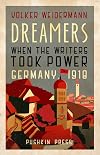
An interesting and ambitious attempt to convey a period of history in a novelistic way - which I'm sure will work for some people, but for me there were 2 problems. I had some knowledge of the period but not sure I had enough for the novelistic approach to work. It's certainly a very interesting period but personally, I would've preferred the history delivered in more conventional manner.
Another problem with the novelistic approach is that it tends to encourage expectations that you will be show more more drawn in than by a more conventional historical account e.g. you will sympathise with certain characters or at least feel sufficiently swept along by the plot and a sense of what is at stake to care what happens. But it didn't do that for me. Although it tries hard to sweep you along with a sense of the excitement of the times, ultimately I felt quite distanced from the narrative because most of the personalities covered are not particularly sympathetic and the events often have a slightly absurdist feel to them.
If there is a general lesson here, it is that writers and artists generally make lousy politicians - although even that feels like a massive generalisation e.g. I think Vaclav Havel did reasonably well as President of what was then Czechoslovakia following the Velvet Revolution (perhaps he is just the exception that proves the rule - I don't know). But a comparative analysis of that type was not what the author set out to provide here, so it's unfair to judge it by reference to that. show less
Another problem with the novelistic approach is that it tends to encourage expectations that you will be show more more drawn in than by a more conventional historical account e.g. you will sympathise with certain characters or at least feel sufficiently swept along by the plot and a sense of what is at stake to care what happens. But it didn't do that for me. Although it tries hard to sweep you along with a sense of the excitement of the times, ultimately I felt quite distanced from the narrative because most of the personalities covered are not particularly sympathetic and the events often have a slightly absurdist feel to them.
If there is a general lesson here, it is that writers and artists generally make lousy politicians - although even that feels like a massive generalisation e.g. I think Vaclav Havel did reasonably well as President of what was then Czechoslovakia following the Velvet Revolution (perhaps he is just the exception that proves the rule - I don't know). But a comparative analysis of that type was not what the author set out to provide here, so it's unfair to judge it by reference to that. show less
Lists
Awards


You May Also Like


Associated Authors
Statistics
- Works
- 13
- Also by
- 4
- Members
- 632
- Popularity
- #39,872
- Rating
- 3.8
- Reviews
- 30
- ISBNs
- 65
- Languages
- 11
- Favorited
- 1
