
Hope Adams (3)
Author of Dangerous Women
For other authors named Hope Adams, see the disambiguation page.
Hope Adams (3) has been aliased into Adèle Geras.
Works by Hope Adams
Works have been aliased into Adèle Geras.
Tagged
Common Knowledge
- Nationality
- Australia
- Associated Place (for map)
- Australia
Members
Reviews
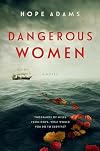
In 1841, one hundred and eighty female convicts departed from Woolwich Dock and boarded the Rajah, a ship that would take them from England to Hobart, Tasmania (formerly Van Diemen's Land). Twenty-three-year-old Kezia Hayter was a deeply religious and compassionate individual who was placed in charge of the ladies aboard the Rajah. The thinking was: "They're guilty of petty offenses, and [are] being transported because there's hope for their rehabilitation." To keep her charges occupied and show more encourage a spirit of camaraderie, Kezia enlisted eighteen of the women to sew a beautiful patchwork coverlet, which is on display at the National Gallery of Australia in Canberra. Hope Adams's "Dangerous Women" is a fictionalized account of this eventful and dramatic voyage.
Adams evokes the hardships that these passengers endured for fifteen weeks. They suffered from bouts of seasickness, ate vile food, and spent long nights trying to sleep on hard bunks and thin mattresses in squalid quarters that reeked of grimy clothes and unwashed bodies. Some missed the family and friends they left behind, and many had disturbing nightmares in which they relived the horrors of physical and emotional abuse, exploitation by employers, and years of hunger and abject poverty. We learn, partly in flashback, details of the tragic backstories of some of the prisoners. Suddenly, in an unexpected turn of events, an unidentified perpetrator stabs one of the convicts. The captain, a clergyman, and Kezia interrogate witnesses in an effort to discover the identity of the assailant.
"Dangerous Women" has it all: adventure, history, suspense, a touch of romance, and a disturbing examination of the plight of underprivileged and poorly educated females in nineteenth century Britain. As the plot unfolds, we come to understand why some of the women aboard the Rajah turned to crime in order to survive. This fascinating and vividly told work of fiction allows us to vicariously experience the fear, revulsion, longing, and despair that these convicts must have felt during this nerve-wracking journey to the other side of the world. On a more uplifting note, we observe the friendships that developed when the passengers decided to share their memories, regrets, sorrows, and dreams with one other, forming a sisterhood that helped raise their spirits at a time of intense anxiety and uncertainty. show less
Adams evokes the hardships that these passengers endured for fifteen weeks. They suffered from bouts of seasickness, ate vile food, and spent long nights trying to sleep on hard bunks and thin mattresses in squalid quarters that reeked of grimy clothes and unwashed bodies. Some missed the family and friends they left behind, and many had disturbing nightmares in which they relived the horrors of physical and emotional abuse, exploitation by employers, and years of hunger and abject poverty. We learn, partly in flashback, details of the tragic backstories of some of the prisoners. Suddenly, in an unexpected turn of events, an unidentified perpetrator stabs one of the convicts. The captain, a clergyman, and Kezia interrogate witnesses in an effort to discover the identity of the assailant.
"Dangerous Women" has it all: adventure, history, suspense, a touch of romance, and a disturbing examination of the plight of underprivileged and poorly educated females in nineteenth century Britain. As the plot unfolds, we come to understand why some of the women aboard the Rajah turned to crime in order to survive. This fascinating and vividly told work of fiction allows us to vicariously experience the fear, revulsion, longing, and despair that these convicts must have felt during this nerve-wracking journey to the other side of the world. On a more uplifting note, we observe the friendships that developed when the passengers decided to share their memories, regrets, sorrows, and dreams with one other, forming a sisterhood that helped raise their spirits at a time of intense anxiety and uncertainty. show less

First off, I loved that cover! I was aware of the history of the prison ships that delivered convicts to Australia and Van Diemen's Land. (Tasmania) I think its a fascinating piece of history. Knowing the name of the ship from the publisher's blurb, I had a quick look online first - and discovered that Adams has based her novel on facts. You can find out more about the women on the Rajah online - names, sentences and where they were sentenced. The other thing I discovered was the Rajah show more Quilt. In the novel, a group of women work on this quilt on the journey. Today it hangs in the National Gallery of Australia. It is stunning.
Okay, history, quilting and a mystery - I just knew I was going to love this book! Adams' protagonist is ship's Matron, Kezia Hayter. She's quite young, but is fiercely protective up the women, standing up for them against the Captain, Ship's Doctor and the Ship's Reverend. These characters are also based in fact.
When one of the women below decks is 'grievously harmed', an investigation is launched. Adams gives a voice to a number of the women, allowing us to hear their stories, their wants, their regrets and their hopes for a second chance in Van Diemen's Land. And from Kezia's chapters, the desire to have her words and thinking taken seriously. Taking clues from their narratives, the listener/reader can narrow down the suspects.
I enjoyed every facet of Adams' novel - the women's stories resonated with me, the challenges faced by women in that time period are still relevant today. I enjoyed the slow resolution of the crime, solved by questions and deductions, a nice change from DNA solving the case in a matter of hours.
Adams captures the setting, with vivid descriptions of the below decks quarters, the joy in a patch of sun on deck as well as descriptions of the fabric and stitching. As the quilt grows, so does the camaraderie of the women, the pride in their work - and themselves.
I chose to listen to Dangerous Women. The narrator was Fenella Woolgar and she was the perfect choice. She captures the different tones, timbres and accents of the women. And also proved believable voices for the male characters as well. Her voice is clear and easy to understand and her speaking pace is just right.
I really enjoyed this one! show less
Okay, history, quilting and a mystery - I just knew I was going to love this book! Adams' protagonist is ship's Matron, Kezia Hayter. She's quite young, but is fiercely protective up the women, standing up for them against the Captain, Ship's Doctor and the Ship's Reverend. These characters are also based in fact.
When one of the women below decks is 'grievously harmed', an investigation is launched. Adams gives a voice to a number of the women, allowing us to hear their stories, their wants, their regrets and their hopes for a second chance in Van Diemen's Land. And from Kezia's chapters, the desire to have her words and thinking taken seriously. Taking clues from their narratives, the listener/reader can narrow down the suspects.
I enjoyed every facet of Adams' novel - the women's stories resonated with me, the challenges faced by women in that time period are still relevant today. I enjoyed the slow resolution of the crime, solved by questions and deductions, a nice change from DNA solving the case in a matter of hours.
Adams captures the setting, with vivid descriptions of the below decks quarters, the joy in a patch of sun on deck as well as descriptions of the fabric and stitching. As the quilt grows, so does the camaraderie of the women, the pride in their work - and themselves.
I chose to listen to Dangerous Women. The narrator was Fenella Woolgar and she was the perfect choice. She captures the different tones, timbres and accents of the women. And also proved believable voices for the male characters as well. Her voice is clear and easy to understand and her speaking pace is just right.
I really enjoyed this one! show less

The Rajah sets sail from London in 1841 with one hundred eighty women on board, all convicted of crimes bearing the punishment of transportation. In what’s widely seen as great mercy, they’ll get a chance to redeem themselves in Australia. The modern reader considers that and wonders what kind of society banishes people for petty thievery; Adams wants us to see that irony.
Not that these convicts are easy to like. They’re a rough lot, most of them, cynical about the world that has given show more them the back of its hand and the men who run it, with good reason. Combative, hard, and schooled not to show tender feeling, they expect cruelty and can dish it out. And indeed one does, for a woman is stabbed, and as she lies comatose, her life in the balance, wheels turn.
Captain Ferguson decides that before the Rajah reaches Van Diemen’s Land, the attacker’s identity must be found. To assist him, he has Mr. Davies, a clergyman; Mr. Donovan, a naval surgeon; and Kezia Hayter, a proper middle-class woman who serves as matron for the women aboard, and through whose eyes Adams tells much of the narrative.
From the get-go, Davies, who looks down on women in general and female convicts most of all, wonders why Kezia even has an opinion about the inquiry or why she should be allowed to express it. Donovan and Ferguson, pointing out her knowledge of the women, seem more thoughtful and accepting — rather too much, I think — but for most of the novel, it hardly matters. All the women questioned give the same account of the stabbing, and the investigators uncover little they didn’t already know.
Nothing like a shipboard murder — or murder attempt — to propel a narrative, and among women who’ve led desperate lives and have no idea what awaits them in Australia, there’s much potential for tension. Kezia has also come aboard with a mission: to select enough capable needlewomen among the convicts to make a quilt. She hopes that producing a work of beauty will uplift her charges, and that communal labor (accompanied by hymns) will lead them on a more righteous path.
However, despite the possibilities, Dangerous Women founders, maybe because Adams tries to do too much. She wants us to know, in detail, how the women come to be there, and how the legal system discriminates against the poor, women worst of all. Fair enough. But these biographies neither advance the plot nor create much tension; they’re often intriguing, but no more than that, and sometimes rely too heavily on interior monologue. That makes me wonder whether pieces of that information, and certainly the themes and attitudes depicted, could have been replicated on board ship, skipping much of the back story.
Rather, to accommodate these women’s histories, the narrative keeps cutting away from the present, the tried-and-true diversion to create tension, but which here proves false, merely annoying. The mystery plot, which begins with such promise, loses steam and never really recovers. I get the impression that Adams cares more about the quilt and the women’s pasts. But if so, why have the mystery at all? It only sets up expectations that a hasty, convenient confession toward the end does little to satisfy, a trite convention unworthy of such a premise.
I’d have liked Dangerous Women better had the novel concentrated on two or three characters, deepened them, intertwined their shipboard lives, and played out the mystery concurrent with revelations about the past. All the suspects have every reason to mistrust their fellows and the law. Had Kezia assumed a more active (or effective) role as sleuth, admittedly difficult for a Victorian woman who takes her religion neat—but nevertheless possible given her character—she’d have discovered truths about the women’s lives. That would have given her the chance to wrestle with more challenges, let her grow more fully.
As it is, Adams focuses on Kezia’s own reasons for wishing to leave England and her struggle to make her voice heard as a woman. Again, there’s nothing wrong with that. But that limitation holds back the narrative, which never rises above an occasionally enlightening window on poor women’s lives in mid-nineteenth century England. The novel could have offered so much more. show less
Not that these convicts are easy to like. They’re a rough lot, most of them, cynical about the world that has given show more them the back of its hand and the men who run it, with good reason. Combative, hard, and schooled not to show tender feeling, they expect cruelty and can dish it out. And indeed one does, for a woman is stabbed, and as she lies comatose, her life in the balance, wheels turn.
Captain Ferguson decides that before the Rajah reaches Van Diemen’s Land, the attacker’s identity must be found. To assist him, he has Mr. Davies, a clergyman; Mr. Donovan, a naval surgeon; and Kezia Hayter, a proper middle-class woman who serves as matron for the women aboard, and through whose eyes Adams tells much of the narrative.
From the get-go, Davies, who looks down on women in general and female convicts most of all, wonders why Kezia even has an opinion about the inquiry or why she should be allowed to express it. Donovan and Ferguson, pointing out her knowledge of the women, seem more thoughtful and accepting — rather too much, I think — but for most of the novel, it hardly matters. All the women questioned give the same account of the stabbing, and the investigators uncover little they didn’t already know.
Nothing like a shipboard murder — or murder attempt — to propel a narrative, and among women who’ve led desperate lives and have no idea what awaits them in Australia, there’s much potential for tension. Kezia has also come aboard with a mission: to select enough capable needlewomen among the convicts to make a quilt. She hopes that producing a work of beauty will uplift her charges, and that communal labor (accompanied by hymns) will lead them on a more righteous path.
However, despite the possibilities, Dangerous Women founders, maybe because Adams tries to do too much. She wants us to know, in detail, how the women come to be there, and how the legal system discriminates against the poor, women worst of all. Fair enough. But these biographies neither advance the plot nor create much tension; they’re often intriguing, but no more than that, and sometimes rely too heavily on interior monologue. That makes me wonder whether pieces of that information, and certainly the themes and attitudes depicted, could have been replicated on board ship, skipping much of the back story.
Rather, to accommodate these women’s histories, the narrative keeps cutting away from the present, the tried-and-true diversion to create tension, but which here proves false, merely annoying. The mystery plot, which begins with such promise, loses steam and never really recovers. I get the impression that Adams cares more about the quilt and the women’s pasts. But if so, why have the mystery at all? It only sets up expectations that a hasty, convenient confession toward the end does little to satisfy, a trite convention unworthy of such a premise.
I’d have liked Dangerous Women better had the novel concentrated on two or three characters, deepened them, intertwined their shipboard lives, and played out the mystery concurrent with revelations about the past. All the suspects have every reason to mistrust their fellows and the law. Had Kezia assumed a more active (or effective) role as sleuth, admittedly difficult for a Victorian woman who takes her religion neat—but nevertheless possible given her character—she’d have discovered truths about the women’s lives. That would have given her the chance to wrestle with more challenges, let her grow more fully.
As it is, Adams focuses on Kezia’s own reasons for wishing to leave England and her struggle to make her voice heard as a woman. Again, there’s nothing wrong with that. But that limitation holds back the narrative, which never rises above an occasionally enlightening window on poor women’s lives in mid-nineteenth century England. The novel could have offered so much more. show less
I enjoyed Christina Baker Kline’s The Exiles about women who were convicted of petty crime and sent to Australia. Dangerous Women is set in the same time and place and is Hope Adams debut novel. 180 women set forth on the Rajah to Tasmania. The ship’s matron, Kezia Hayter, choses a group of women to work on a presentation quilt. When a woman is tabbed to death, they realize that a dangerous woman who has taken on a different identity is aboard. While the story is sensitive to feminists, show more it is clear men are in charge. Reflecting the times, Kezia finds her investigation hampered by men who doubt her ability to investigate. Readers of historical fiction will find this a satisfying novel, with a different approach to the female convicted of petty crime sent to Australia than Baker’s book. show less
Awards

Statistics
- Works
- 1
- Members
- 196
- Popularity
- #111,884
- Rating
- 3.5
- Reviews
- 9
- ISBNs
- 17
- Languages
- 2