
Thomas Halliday (1) (1989–)
Author of Otherlands: A World in the Making
For other authors named Thomas Halliday, see the disambiguation page.
Works by Thomas Halliday
Tagged
Common Knowledge
- Legal name
- Halliday, Thomas John Dixon
- Birthdate
- 1989
- Gender
- male
- Education
- Pembroke College, Cambridge (BS, Zoology)
University of Bristol (MS, Paleobiology)
University College London (PhD, Paleobiology) - Occupations
- paleobiologist
croquet player - Awards and honors
- John C. Marsden Medal (Linnean Society)
- Agent
- Catherine Clarke (Felicity Bryan Associates)
- Nationality
- UK
- Birthplace
- Rannoch, Scotland, UK
- Places of residence
- Rannoch, Scotland, UK
- Associated Place (for map)
- Rannoch, Scotland, UK
Members
Reviews
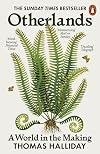
I rarely read popular books on science. Most of them are informative but very repetitive, a lot of them are just badly written (i.e. Sapiens), and some of them are simply wrong from the perspective of the science they aim to describe.
This book does not suffer from any of these typical drawbacks. It is probably the most interesting text on paleontology you will ever encounter, not just from the perspective of some amazing facts about history of life on our planet but also because of an show more enjoyable writing style and an incredible plot. I will not mention the structure of the book and why it is akin to a good plot with a great flow and sudden twists and a surprise ending. I will let you discover it yourself! show less
This book does not suffer from any of these typical drawbacks. It is probably the most interesting text on paleontology you will ever encounter, not just from the perspective of some amazing facts about history of life on our planet but also because of an show more enjoyable writing style and an incredible plot. I will not mention the structure of the book and why it is akin to a good plot with a great flow and sudden twists and a surprise ending. I will let you discover it yourself! show less
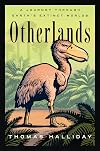
It could be argued that I really don't need to read another book on paleozoology, the history of deep time, or extinction studies, but Halliday has a lot to offer.
First off, the way he organizes his material is quite clever, in how he works backwards from those times that might most spark the shock of recognition in the reader, to increasingly alien environments.
Next, each of these vignettes are organized as a snapshot in time, wherein Halliday tries to weave together the prevalent life show more forms, climate, and geology into a coherent whole.
Third, Halliday is a graceful and clear writer, who is able to make his interpretive and ethical points without seeming overly judgemental about it.
As for myself, I was particularly intrigued by two portions. One, some 20,000 years ago, Halliday talks about the frigid and arid region, in what is now Alaska, where creatures like horses and mammoths eked out an existence before the arrival of humanity, and how increasing warmth and water was already putting great pressure on their survival. Two, Halliday deals with the scene a little over five million years ago when the Mediterranean Basin was a glorified salt flat, before tectonic forces broke the barrier holding back the Atlantic, and the water poured in. However, all of Halliday's tableaux are well done. show less
First off, the way he organizes his material is quite clever, in how he works backwards from those times that might most spark the shock of recognition in the reader, to increasingly alien environments.
Next, each of these vignettes are organized as a snapshot in time, wherein Halliday tries to weave together the prevalent life show more forms, climate, and geology into a coherent whole.
Third, Halliday is a graceful and clear writer, who is able to make his interpretive and ethical points without seeming overly judgemental about it.
As for myself, I was particularly intrigued by two portions. One, some 20,000 years ago, Halliday talks about the frigid and arid region, in what is now Alaska, where creatures like horses and mammoths eked out an existence before the arrival of humanity, and how increasing warmth and water was already putting great pressure on their survival. Two, Halliday deals with the scene a little over five million years ago when the Mediterranean Basin was a glorified salt flat, before tectonic forces broke the barrier holding back the Atlantic, and the water poured in. However, all of Halliday's tableaux are well done. show less
Every once in a long while, I come across a book that takes my breath away and makes me glad I learned to read. This one tells the history of our planet through sixteen instances of extinction, as awe-inspiring and dramatic a story as there is, narrated with sheer brilliance.
Halliday, a paleobiologist who has re-created these sixteen snapshots in time based on fossil records, leaps around the globe to illustrate how climate, geography, topography, and geology have changed, supported, and show more often annihilated life over the past several billion years.
Let’s unpack that summary. Paleobiology combines the study of living organisms with the evidence of dead ones; until now, I didn’t even know that discipline existed. When I say leaps around the globe, for each chapter, the author has to reset where the continents have wandered, because they’re never in the same place as before, and almost never where they are now. Things change over 600 million years.
Rather than by chronology, Halliday narrates by ecological theme, as with the development of insect and bird calls, the collaboration between different species, or the advent of seasons, so each chapter presents a mind-boggling panorama. To call these snapshots does them little justice, because they appeal to several senses, not just the visual, and they’re anything but static.
Halliday writes science from the soul of a poet, only fitting, because of his universal themes. You can’t read Otherlands without realizing how nature is even more infinitely varied and variable than you probably thought, and just how ridiculously late we humans arrived to the party. So much happened before we got here, in such complexity, that I can’t read these stories of empires rising and falling without feeling humbled.
One of my favorite chapters recounts the era when the Mediterranean was a hard-rock basin whose surface was hotter than Death Valley. Tectonic plates closed the Straits of Gibraltar, and mountain ranges blocked off several rivers from emptying into the basin; nothing lived on the baked rock save a hardy form of microbe. The Mediterranean, which later washed the shores of the great “ancient” Western civilizations, held no water—and it gives me pause to read that this arid condition occurred on two separate occasions during our planet’s past.
If there’s a drawback to Otherlands, it’s that there’s so much in it. Even if you read only one chapter at a time, as I did, you can’t retain a fraction of what Halliday says, and often I had to pause to think. Sometimes it’s his use of metaphor that’s arresting, as when he compares a present-day freshwater crocodile to Gothic architecture. Other times, he tosses out an astonishing fact, such as why deer suffer a much lower rate of cancer than other mammals, or why we’re related to dinosaurs (it has to do with laying eggs).
Sometimes, I wanted to know more, but I got why he didn’t linger—he’s got worlds to create and destroy, and that takes pages and pages. Often, I shook my head in wonder, as with his explanation for why the colors yellow and black mark certain insects, or the ingenious adaptations of the simplest creatures that had no brains. If you’re like me, you can’t just run your eyes over that and move on; you have to think. I paused for a while over his single paragraph theorizing about the origin of life, in which he rejects the once-popular idea of lightning striking the so-called primordial soup and embraces the current reigning hypothesis, a hydrothermal vent in the ocean deep.
You can’t read about sixteen extinctions without wondering what that means regarding global warming, an issue that Halliday leaves for an epilogue. Refusing to play doomsayer or argue that we must stop exploiting the planet’s resources, he nevertheless presents a concise, authoritative description of where that exploitation has led us. Further, he stresses how people who have profited the least from that exploitation stand to lose the most from our increasingly destructive climate.
He doesn’t assume that science or engineering will solve our problem, though he does marvel at the two microscopic organisms, a fungus and a bacterium, that can break down plastic. Rather, he holds out cautious hope for international cooperation. His plea, like the rest of Otherlands, deserves a hearing. show less
Halliday, a paleobiologist who has re-created these sixteen snapshots in time based on fossil records, leaps around the globe to illustrate how climate, geography, topography, and geology have changed, supported, and show more often annihilated life over the past several billion years.
Let’s unpack that summary. Paleobiology combines the study of living organisms with the evidence of dead ones; until now, I didn’t even know that discipline existed. When I say leaps around the globe, for each chapter, the author has to reset where the continents have wandered, because they’re never in the same place as before, and almost never where they are now. Things change over 600 million years.
Rather than by chronology, Halliday narrates by ecological theme, as with the development of insect and bird calls, the collaboration between different species, or the advent of seasons, so each chapter presents a mind-boggling panorama. To call these snapshots does them little justice, because they appeal to several senses, not just the visual, and they’re anything but static.
Halliday writes science from the soul of a poet, only fitting, because of his universal themes. You can’t read Otherlands without realizing how nature is even more infinitely varied and variable than you probably thought, and just how ridiculously late we humans arrived to the party. So much happened before we got here, in such complexity, that I can’t read these stories of empires rising and falling without feeling humbled.
One of my favorite chapters recounts the era when the Mediterranean was a hard-rock basin whose surface was hotter than Death Valley. Tectonic plates closed the Straits of Gibraltar, and mountain ranges blocked off several rivers from emptying into the basin; nothing lived on the baked rock save a hardy form of microbe. The Mediterranean, which later washed the shores of the great “ancient” Western civilizations, held no water—and it gives me pause to read that this arid condition occurred on two separate occasions during our planet’s past.
If there’s a drawback to Otherlands, it’s that there’s so much in it. Even if you read only one chapter at a time, as I did, you can’t retain a fraction of what Halliday says, and often I had to pause to think. Sometimes it’s his use of metaphor that’s arresting, as when he compares a present-day freshwater crocodile to Gothic architecture. Other times, he tosses out an astonishing fact, such as why deer suffer a much lower rate of cancer than other mammals, or why we’re related to dinosaurs (it has to do with laying eggs).
Sometimes, I wanted to know more, but I got why he didn’t linger—he’s got worlds to create and destroy, and that takes pages and pages. Often, I shook my head in wonder, as with his explanation for why the colors yellow and black mark certain insects, or the ingenious adaptations of the simplest creatures that had no brains. If you’re like me, you can’t just run your eyes over that and move on; you have to think. I paused for a while over his single paragraph theorizing about the origin of life, in which he rejects the once-popular idea of lightning striking the so-called primordial soup and embraces the current reigning hypothesis, a hydrothermal vent in the ocean deep.
You can’t read about sixteen extinctions without wondering what that means regarding global warming, an issue that Halliday leaves for an epilogue. Refusing to play doomsayer or argue that we must stop exploiting the planet’s resources, he nevertheless presents a concise, authoritative description of where that exploitation has led us. Further, he stresses how people who have profited the least from that exploitation stand to lose the most from our increasingly destructive climate.
He doesn’t assume that science or engineering will solve our problem, though he does marvel at the two microscopic organisms, a fungus and a bacterium, that can break down plastic. Rather, he holds out cautious hope for international cooperation. His plea, like the rest of Otherlands, deserves a hearing. show less
Otherlands: A World in the Making - The Sunday Times bestseller (English Edition) by Thomas Halliday
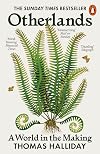
Who would have imagined that a book about paleobiology could be both so engaging and so informative. Thomas Halliday provides a history of life on Earth that is understandable for non-specialists and reads like you are watching a nature documentary on TV.
The book is remarkably well written but it's success comes from how Halliday chose to structure the book. He has selected geological sites which are especially rich in the fossils that help us understand a specific geological era. He then show more sets the scene for each chapter by describing the world as it would be experienced by one set of animals or plants at that site and at that geological time. He not only describes what would be seen but what would have been heard and even what would have been smelled. Then, after setting the scene, he provides more information about why life is the way it is at that time.
The other reason that the book succeeds is that it tells the story backwards, starting from the ice age and working it's way backwards through time. The last chapter leaps back to our current time and talks about what our understanding of the past can tell us about the environmental challenges of the near future.
The book is strongly recommended for anyone interested in geology, biology or nature in general. It does not require any specialized knowledge before reading it but this reader found it useful to look up locations and some expressions while reading. show less
The book is remarkably well written but it's success comes from how Halliday chose to structure the book. He has selected geological sites which are especially rich in the fossils that help us understand a specific geological era. He then show more sets the scene for each chapter by describing the world as it would be experienced by one set of animals or plants at that site and at that geological time. He not only describes what would be seen but what would have been heard and even what would have been smelled. Then, after setting the scene, he provides more information about why life is the way it is at that time.
The other reason that the book succeeds is that it tells the story backwards, starting from the ice age and working it's way backwards through time. The last chapter leaps back to our current time and talks about what our understanding of the past can tell us about the environmental challenges of the near future.
The book is strongly recommended for anyone interested in geology, biology or nature in general. It does not require any specialized knowledge before reading it but this reader found it useful to look up locations and some expressions while reading. show less
Lists
Awards


You May Also Like


Statistics
- Works
- 1
- Members
- 843
- Popularity
- #30,326
- Rating
- 4.1
- Reviews
- 27
- ISBNs
- 32
- Languages
- 7
