
Naomi Benaron
Author of Running the Rift
About the Author
Image credit: The Regents of the University of California
Works by Naomi Benaron
Heroes, Zombies & Sausages 1 copy
Tagged
Common Knowledge
- Gender
- female
- Occupations
- fiction writer
poet - Organizations
- UCLA
- Nationality
- USA
- Birthplace
- Boston, Massachusetts, USA
- Associated Place (for map)
- Massachusetts, USA
Members
Reviews
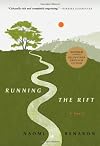
Running the Rift is the story of Jean Patrick Nkuba, growing up in Rwanda, having a huge talent for running, a talent that could see him in the Olympics. But Jean Patrick is a Tutsi in a country controlled and run by the Hutu and as the restrictions tighten and violence escalates will he survive the brutality much less make it to the Olympics?
The story covers fourteen years, and is paced much like a long-distance race, starting off slowly, taking the time to describe the country and it’s show more inhabitants. We learn of one family’s strengths, how much they love and respect each other through good times and bad, and we see Jean Patrick slowing growing into a runner. The middle part of the book increases in speed slowing, allow the tensions to build as we read of Jean Patrick’s university years, he is training hard now but also he is being confronted with the inequality and the force of power that exists, but he is also falling in love, which in a country like Rwanda that judges people by their ethnic classification, can be very dangerous. The final third of the book is the sprint to the finish, the political situation comes to a head, the genocide erupts and as the killings mount and the radio blares out hatred and lists of names to be killed, Jean Patrick finally runs the race of his life.
Running the Rift was a very layered story, moving the reader through this beautiful country that was seething with hatred, fear and ignorance just beneath the surface. I found this book to be riveting, thought-provoking and emotionally stirring. Naomi Benaron breathed life into these characters and delivered a first class story. show less
The story covers fourteen years, and is paced much like a long-distance race, starting off slowly, taking the time to describe the country and it’s show more inhabitants. We learn of one family’s strengths, how much they love and respect each other through good times and bad, and we see Jean Patrick slowing growing into a runner. The middle part of the book increases in speed slowing, allow the tensions to build as we read of Jean Patrick’s university years, he is training hard now but also he is being confronted with the inequality and the force of power that exists, but he is also falling in love, which in a country like Rwanda that judges people by their ethnic classification, can be very dangerous. The final third of the book is the sprint to the finish, the political situation comes to a head, the genocide erupts and as the killings mount and the radio blares out hatred and lists of names to be killed, Jean Patrick finally runs the race of his life.
Running the Rift was a very layered story, moving the reader through this beautiful country that was seething with hatred, fear and ignorance just beneath the surface. I found this book to be riveting, thought-provoking and emotionally stirring. Naomi Benaron breathed life into these characters and delivered a first class story. show less
A genocide is a poisonous bush that grows not from two or three roots, but from a whole tangle that has moldered underground without anyone noticing.
Claudine, genocide survivor, from "Life Laid Bare" by Jean Hatzfeld
So says the epigraph of this disturbing but necessary novel. Yes, we do have the benefit of hindsight, but it seems like the victims definitely noticed this growing. It was very obvious to them what was coming and the world stood by and watched it happen. I’ve always thought show more that if we eliminated the arms trade things like this would not happen. Or at least they would happen in smaller magnitudes than the Holocaust and other genocidal tragedies. But although grenades, RPGs, and guns were used by the Hutu to massacre the Tutsi, there were also plenty of machetes, homemade clubs, rocks, and fire. Hatred can find a way unless it is countered. And we must find ways to counter it or we are doomed to watch and read this story over and over again.
This is a gripping novel. It’s not for the light hearted looking for a diversion from the trials and tribulations of life. It’s dark and scary. But if you can stick with it, you’ll probably realize that your life could be considerably worse. You’ll be charmed by the protagonist, Jean Patrick, and pulling for him to realize his Olympic dream. Despite the hindsight of knowing what is going to happen, you will hope along with him and his Tutsi family and friends that it won’t.
This winner of the Bellwether Prize for socially engaged fiction is well worth the read. Read it and think about weeding out the hatred you see around you and within you before it gets to a point like this. A shout out to the Indispensable crew at Powell’s Books for putting this novel in my hands!
Urupfu rurarya ntiruhaga. Death eats and is never full.
--Book Three Epigraph show less
Claudine, genocide survivor, from "Life Laid Bare" by Jean Hatzfeld
So says the epigraph of this disturbing but necessary novel. Yes, we do have the benefit of hindsight, but it seems like the victims definitely noticed this growing. It was very obvious to them what was coming and the world stood by and watched it happen. I’ve always thought show more that if we eliminated the arms trade things like this would not happen. Or at least they would happen in smaller magnitudes than the Holocaust and other genocidal tragedies. But although grenades, RPGs, and guns were used by the Hutu to massacre the Tutsi, there were also plenty of machetes, homemade clubs, rocks, and fire. Hatred can find a way unless it is countered. And we must find ways to counter it or we are doomed to watch and read this story over and over again.
This is a gripping novel. It’s not for the light hearted looking for a diversion from the trials and tribulations of life. It’s dark and scary. But if you can stick with it, you’ll probably realize that your life could be considerably worse. You’ll be charmed by the protagonist, Jean Patrick, and pulling for him to realize his Olympic dream. Despite the hindsight of knowing what is going to happen, you will hope along with him and his Tutsi family and friends that it won’t.
This winner of the Bellwether Prize for socially engaged fiction is well worth the read. Read it and think about weeding out the hatred you see around you and within you before it gets to a point like this. A shout out to the Indispensable crew at Powell’s Books for putting this novel in my hands!
Urupfu rurarya ntiruhaga. Death eats and is never full.
--Book Three Epigraph show less
"Jean Patrick sprinted as hard as he could up the ridge. A reddish haze hung in the air and coated the brush. A blue turaco exploded into flight, its beak a flare of red and yellow. A bell tinkled in the clearing. It was Papa's inyambo steer, watching him with sleepy eyes, a clump of grass between his teeth. With a flash of understanding that took his breath, he saw that his father lived in all that surrounded him, and that every breath of wind contained his father's blessing."
Running the show more Rift by Naomi Benaron, a novel set in Rwanda, is filled with moments of great beauty, quiet and not-so-quiet family moments, obstacle-transcending love, and sorely tested friendship. Central character Jean Patrick Nkuba is named after "Nkuba, Lord of Heaven, the Swift One", and early on shows a passion for running that leads to Olympic-qualifying times in the 800 meters. But he is growing up in the time of increasing hostility between the Tutsi and the Hutu tribes, which eventually will lead to the horrifying genocide of 1994, only the most recent massacre in a series spanning decades. He learns his grandparents and uncle were killed in the 1973 government overthrow in which "Hutu rose up to murder Tutsi."
An irony is not even Jean Patrick, a Tutsi, can tell the Tutsi and the Hutu apart. "Some Hutu had coffee-and-cream complexions, long, delicate fingers, and sculpted features, and some Tutsi were short and round-faced, with black-coffee skin." The two tribes had been "mixed up together for so many years" that sure identification was impossible. His own Tutsi brother could be said to have short, stocky Hutu features. Nonetheless, many Tutsi traditionally wear felt hats and tend cattle, while Hutu work the fields and farms. Identification cards are carried to identify which tribe one belongs to. When tall and lean Jean Patrick is adamantly told by a Hutu train passenger that Tutsi have horns, he points out that he does not have them. The passenger knowingly responds, "That is because you are Hutu."
Jean Patrick is smart enough to place first in his class and get a much-sought assignment to a good secondary school with a running coach who sees his potential. All he wants to do is learn and live and win races. But that may not be permitted in the Rwanda of his time. His coach, a Hutu, pulls strings to protect him, and provides him with topnotch equipment: "Jean Patrick's feet slipped into the shoes as if gliding through butter. . . . The soles were springy; he almost lifted from the ground with his toe-off." The President, a Hutu, embraces him as a young hero of his country as his running prowess becomes recognized. But in the meantime he is subjected to humiliation and physical attacks by Hutus, and is constantly worried about the state of his family. The "Hutu Ten Commandments" proclaim the inferiority of the Tutsi, and urge the Hutu male to "be united in solidarity against his common enemy, the Tutsi."
As enmity increases, just getting around Rwanda through soldier checkpoints begins to cost ill-affordable bribes which may or may not work. Rebel groups arise, and there are frequent clashes. Jean Patrick is torn by the disparity between his sometimes privileged status and goals and the treatment of other Tutsis, but realizes while others had chosen "to fight with bullets, he had chosen to fight with his legs. As Uncle told him, each time he won, he carried all Tutsi with him." He has Hutu friends who sympathize and resist the escalating oppression, and he befriends an American professor who tries to help. In the midst of the country's chaos, Jean Patrick and a Hutu girl fall in love. Can their love survive? Can they survive, period? The rest of the world is disinclined to help a country where there is no oil, no diamonds.
Saying more would begin to enter spoiler territory, but the events of 1994 and after are experienced by the novel's characters in an unforgettable way. This book won the Bellwether Prize for Socially Engaged Fiction, and it deserves to be widely read. According to her bio, the author is an advocate for African refugees and has worked extensively with Rwanda genocide survivors. She brings this beautiful country and its people to vivid life. The people she depicts are constantly chased by demons of mistrust and misinformation, while so many are like any other citizens of the world, seeking only those things which many of us take for granted - enjoyment of life and nature, family moments, love, friendship - and safety. show less
Running the show more Rift by Naomi Benaron, a novel set in Rwanda, is filled with moments of great beauty, quiet and not-so-quiet family moments, obstacle-transcending love, and sorely tested friendship. Central character Jean Patrick Nkuba is named after "Nkuba, Lord of Heaven, the Swift One", and early on shows a passion for running that leads to Olympic-qualifying times in the 800 meters. But he is growing up in the time of increasing hostility between the Tutsi and the Hutu tribes, which eventually will lead to the horrifying genocide of 1994, only the most recent massacre in a series spanning decades. He learns his grandparents and uncle were killed in the 1973 government overthrow in which "Hutu rose up to murder Tutsi."
An irony is not even Jean Patrick, a Tutsi, can tell the Tutsi and the Hutu apart. "Some Hutu had coffee-and-cream complexions, long, delicate fingers, and sculpted features, and some Tutsi were short and round-faced, with black-coffee skin." The two tribes had been "mixed up together for so many years" that sure identification was impossible. His own Tutsi brother could be said to have short, stocky Hutu features. Nonetheless, many Tutsi traditionally wear felt hats and tend cattle, while Hutu work the fields and farms. Identification cards are carried to identify which tribe one belongs to. When tall and lean Jean Patrick is adamantly told by a Hutu train passenger that Tutsi have horns, he points out that he does not have them. The passenger knowingly responds, "That is because you are Hutu."
Jean Patrick is smart enough to place first in his class and get a much-sought assignment to a good secondary school with a running coach who sees his potential. All he wants to do is learn and live and win races. But that may not be permitted in the Rwanda of his time. His coach, a Hutu, pulls strings to protect him, and provides him with topnotch equipment: "Jean Patrick's feet slipped into the shoes as if gliding through butter. . . . The soles were springy; he almost lifted from the ground with his toe-off." The President, a Hutu, embraces him as a young hero of his country as his running prowess becomes recognized. But in the meantime he is subjected to humiliation and physical attacks by Hutus, and is constantly worried about the state of his family. The "Hutu Ten Commandments" proclaim the inferiority of the Tutsi, and urge the Hutu male to "be united in solidarity against his common enemy, the Tutsi."
As enmity increases, just getting around Rwanda through soldier checkpoints begins to cost ill-affordable bribes which may or may not work. Rebel groups arise, and there are frequent clashes. Jean Patrick is torn by the disparity between his sometimes privileged status and goals and the treatment of other Tutsis, but realizes while others had chosen "to fight with bullets, he had chosen to fight with his legs. As Uncle told him, each time he won, he carried all Tutsi with him." He has Hutu friends who sympathize and resist the escalating oppression, and he befriends an American professor who tries to help. In the midst of the country's chaos, Jean Patrick and a Hutu girl fall in love. Can their love survive? Can they survive, period? The rest of the world is disinclined to help a country where there is no oil, no diamonds.
Saying more would begin to enter spoiler territory, but the events of 1994 and after are experienced by the novel's characters in an unforgettable way. This book won the Bellwether Prize for Socially Engaged Fiction, and it deserves to be widely read. According to her bio, the author is an advocate for African refugees and has worked extensively with Rwanda genocide survivors. She brings this beautiful country and its people to vivid life. The people she depicts are constantly chased by demons of mistrust and misinformation, while so many are like any other citizens of the world, seeking only those things which many of us take for granted - enjoyment of life and nature, family moments, love, friendship - and safety. show less
I am an occasional runner. I go through spurts when I am good about getting myself out on the road and putting in miles and other times when I can't motivate myself off the couch. But I have that luxury. Running is never going to substantially change my life, well aside from changing my general fitness level a hair. None of this is the case with the main character in Naomi Benaron's novel Running the Rift winner of the Bellwether Prize for Fiction. He must literally run for his life.
Jean show more Patrick Nkuba is a young boy Tutsi boy living in Rwanda when the novel opens. He likes to race against his older brother outside their home at the boarding school where their father is a teacher. But tragedy comes early to their family when their father is killed in a car accident. After ethnically motivated bullying, Jean Patrick's mother moves the family to her brother's home sooner than planned and away from the school. Jean Patrick and his siblings know that they will have to work harder and be smarter than their Hutu peers in order to go back to the school on a scholarship and have a chance in life. In Jean Patrick's case, not only is he very smart and driven, he is also a very gifted runner whose talents on the track will ultimately carry his Tutsi family, friends, and neighbors' dreams on his back.
As the ethnic violence escalates, Jean Patrick is somewhat protected by his elite athletic status having qualified for the Olympic trials and been given a falsified Hutu identity card by his coach. Jean Patrick is not only driven to run, it literally carries him above the horror played out all over the country. But it can only save him for so long. As he trains hard and tries to shut out the reality of life for his own ethnic minority, he entrusts his coach with his safety and indeed his very life. Jean Patrick's drive and desire, his training regimen even in the face of greater and tighter restrictions, and the politicizing of sport all wind through the narrative no matter what evils overtake the rest of Rwandan society. And it's on a training run that he catches sight of the captivating Bea and meets her Hutu family who risk their own safety to speak out against the killings, a chance meeting that will forever change the trajectory of his life. As he falls in love with Bea, he thinks that he must decide whether his destiny is with her or in his dream of the Olympic track but in fact, there will be no choice. Instead, he will have to run to escape in order to survive and to eventually bear witness to the atrocities.
Benaron has done a good job showing how neighbor can suddenly turn against neighbor and how hatred can grow and consume everything in its path, leaving no one untouched. It translates the impersonality of numbers (over 800,000 people are estimated to have been killed) into the deeply personal tale of one gifted young man and the family and people he loved, showing what genocide means on a micro-level and allowing the reader to feel a kick to the gut in a way that abstract numbers do not inspire. The rising tension as the book progresses is masterful as Jean Patrick doesn't yet seem to understand he is running the race of his life in trying to become an Olympian before full scale bloodshed breaks out. The politics and history behind the 1994 genocide is well researched and well-presented through the use of secondary characters so that it is always fully integrated into the novel. Jean Patrick himself was a naive character and that was occasionally frustrating given the clear and obvious view of what was coming. Not always an easy read (although much of the graphic violence occurs off the page), this is an important look at evil and the slowness of healing in its wake. show less
Jean show more Patrick Nkuba is a young boy Tutsi boy living in Rwanda when the novel opens. He likes to race against his older brother outside their home at the boarding school where their father is a teacher. But tragedy comes early to their family when their father is killed in a car accident. After ethnically motivated bullying, Jean Patrick's mother moves the family to her brother's home sooner than planned and away from the school. Jean Patrick and his siblings know that they will have to work harder and be smarter than their Hutu peers in order to go back to the school on a scholarship and have a chance in life. In Jean Patrick's case, not only is he very smart and driven, he is also a very gifted runner whose talents on the track will ultimately carry his Tutsi family, friends, and neighbors' dreams on his back.
As the ethnic violence escalates, Jean Patrick is somewhat protected by his elite athletic status having qualified for the Olympic trials and been given a falsified Hutu identity card by his coach. Jean Patrick is not only driven to run, it literally carries him above the horror played out all over the country. But it can only save him for so long. As he trains hard and tries to shut out the reality of life for his own ethnic minority, he entrusts his coach with his safety and indeed his very life. Jean Patrick's drive and desire, his training regimen even in the face of greater and tighter restrictions, and the politicizing of sport all wind through the narrative no matter what evils overtake the rest of Rwandan society. And it's on a training run that he catches sight of the captivating Bea and meets her Hutu family who risk their own safety to speak out against the killings, a chance meeting that will forever change the trajectory of his life. As he falls in love with Bea, he thinks that he must decide whether his destiny is with her or in his dream of the Olympic track but in fact, there will be no choice. Instead, he will have to run to escape in order to survive and to eventually bear witness to the atrocities.
Benaron has done a good job showing how neighbor can suddenly turn against neighbor and how hatred can grow and consume everything in its path, leaving no one untouched. It translates the impersonality of numbers (over 800,000 people are estimated to have been killed) into the deeply personal tale of one gifted young man and the family and people he loved, showing what genocide means on a micro-level and allowing the reader to feel a kick to the gut in a way that abstract numbers do not inspire. The rising tension as the book progresses is masterful as Jean Patrick doesn't yet seem to understand he is running the race of his life in trying to become an Olympian before full scale bloodshed breaks out. The politics and history behind the 1994 genocide is well researched and well-presented through the use of secondary characters so that it is always fully integrated into the novel. Jean Patrick himself was a naive character and that was occasionally frustrating given the clear and obvious view of what was coming. Not always an easy read (although much of the graphic violence occurs off the page), this is an important look at evil and the slowness of healing in its wake. show less
Lists
Awards


You May Also Like


Statistics
- Works
- 3
- Members
- 622
- Popularity
- #40,475
- Rating
- 4.1
- Reviews
- 34
- ISBNs
- 18
- Languages
- 1
- Favorited
- 1