
Anthony Perry
Author of Keepunumuk: Weeâchumun's Thanksgiving Story
Works by Anthony Perry
Emma 1 copy
Associated Works
Tagged
Common Knowledge
- Gender
- male
Members
Reviews
(Disclaimer: This review is from my personal blog, and, as such, it is written from a Christian perspective.)
“My own sorrow was deep, but with each new cry from my mother and sister something else began to well up in my chest, too. It was anger. Anger at the men who caused this. Anger at the men who had killed my father and robbed my mother of her husband. Anger at the men who [had] taken my sister’s father from her. Silently, I vowed to make them pay.“
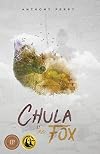
A Chickasaw youth named Chula is show more out on an extended hunting trip with members from his nation when they are attacked unexpectedly by a party of Choctaw men. Chula’s father is wounded, and, soon after their return to the village, he dies. Filled with anger over the senseless death and haunted by what he believes is the ghost of his father, Chula vows to make his father’s killers pay and give his father’s spirit peace.
In the midst of his grief, Chula meets one of the Little People who tells him he needs to be strong for his family and to remember his father and he will find his path. Chula has yet to see that his path may not be vengeance, and as the days pass, his determination to avenge his father only solidifies. However, the village council has decided to wait for several months before mounting an answer to the Choctaw raid, in order to lull the Choctaws into a false sense of security. In the meantime, they set about preparing their older boys like Chula to join them on the retaliatory raid. In pursuit of this goal, Chula’s Uncle Lheotubby buys him a gun and teaches him to shoot it.
Shortly after the Green Corn Ceremony and the renewal of all things, the village holds a toli (stickball) match with another village. The way the boys conduct themselves and excel in the match will determine who goes on the raid against the Choctaws. Unfortunately, a boy who constantly harasses Chula tries to bully his way through the match, and Chula loses his temper and tackles him. He is certain he will not be invited on the raid and that he will lose his chance to avenge his father. Much to Chula’s surprise, he is reprimanded but still invited to go.
As the group of warriors leave the village to raid the Choctaws, Chula is all of a sudden seized with the gravity of the situation and realizes he may not return home. This serious mood stays with him as the group passes a Choctaw burial platform and settles around the village. When one of the young men is wounded, Chula is chosen to guard him as the others attack. Chula sees a Choctaw warrior come down the trail, about to locate his comrade. He steps out of the undergrowth with his gun and orders the Choctaw man to stop. Just when Chula is preparing to shoot him, the man’s young son appears and clings to his father’s arm. Chula is struck with how like himself the boy with his father is.
“I wanted to shoot this man and ease my father’s suffering, but I couldn’t. He was a father with a loving son. I couldn’t take him from this boy as the Choctaws had done to me. I recognized this boy, too – innocent and afraid. I knew he would do all he could to find me and get revenge for his dead father, just as I had tried to do for mine.“
Unable to shoot the man, Chula tells him to go. The rest of the Chickasaw raid is successful, but on the victorious canoe ride home, Chula torments himself with guilt that he was unable to avenge and so give his father’s spirit peace. But, later, at his friend’s manhood ceremony, Chula is approached by the hopaii, the prophet of the village. He tells the truth to the hopaii, even though he couldn’t to the others. But the hopaii encourages him and tells him maybe he isn’t meant to be a warrior, but a hopaii, one who serves Aba Binili and intercedes with him for the people. Chula is very comforted by this, and that night he sees a vision of his father safe in the sky.
[Content Warning: The majority of this book is not that violent, but there are a couple spots that are somewhat graphic. The first, not as bad, is when Chula kills a deer, and it describes its death throes and the frothy blood that comes from its mouth. There is also once when the book describes a squirrel’s death and, although not graphic, it was a little bit difficult for me to read because of the squirrel’s desperate fight to stay alive. But the most graphic spot in the book is when the author describes a rotting corpse in vivid detail and then tells of the bone pickers who come to clean corpses and gather up the bones. This one section alone would make me hesitant to hand this book to any child at least in middle school. There are a few other places in the book that mention blood, but none graphic like the above-mentioned. This is an accurate Native book, so it is very spiritual; I will try to give a quick overview. The first instance is when Chula is superstitious about seeing a particular kind of bird that is believed to warn people of impending doom in battle. There are references to the spirit world, ex. talk of taking things to the spirit world and when Chula sees a vision of his dead father and brother in the sky. Chula sees visions at least twice, and he also meets one of the Little People. The Little People is a traditional belief across large portions of North America where the Indigenous belief is that there exists a tribe of diminutive people who carry on life like ordinary humans. They are believed to cause mischief but also to help humans. Chula also allegedly feels the ghost of his father making it difficult for him to rest. He believes that these feelings (where his hair stands up on the back of his neck) are caused by his dead father being unable to rest himself until he is avenged. The book describes different purification rites performed at the Green Corn Ceremony and before a raid. The hopaii in Chula’s village claims to have contact with spirits and is able to recount what happened to Chula despite Chula not having told anyone. Finally, there is Aba Binili. I don’t really know anything about the Chickasaw religion’s structure, but Aba Binili appears to be the primary spirit. He is talked about in numerous contexts and is thanked, petitioned for protection, and said to give rest with him to brave warriors. There are many instances in the book where he is prayed to.]
My biggest problem with this book is that it paints the Chickasaw religion as something beautiful. I will admit their trust in the love and protection of Aba Binili is beautiful if it’s God they’re really trusting in. But even if it is, “I bear them witness that they have a zeal for God, but not according to knowledge.” (Romans 10:2) They don’t rest in Christ, but instead, try to earn their way into heaven with bravery and good deeds. Then too, the Chickasaw beliefs in ghosts and spirits is on full display here. A little bit of the ugliness and spiritual darkness is seen, but it is mostly veiled; and instead the spiritual beliefs are portrayed as something good and lovely. The spiritual thread of the book is very strong and wound around the entire structure. I don’t recommend giving it to a child unless you are prepared to discuss it and guide them in how they think about it and interact with it.
That being said, I believe that this book still has value, mainly for its presentation of Chickasaw culture. It is difficult to find books of this genre that accurately present Indigenous culture and beliefs. Thankfully, more are being written now, but there are still few enough of them that this book is valuable. This book is filled with cultural details, and is also accurate in its depiction of human relationships. It shows how men respond to tragedy with anger and, also, how the memories of those you’ve killed haunt you. It captures both the warm of family relationships and the hard realities of the warrior culture.
Part of the reason I still like this book is because it is written by a Chickasaw man and printed by the Chickasaw Nation’s own press. Because of this, I trust that the book is accurate and indicative of true Chickasaw culture and life-ways. The book is a little bit Americanized, but on the whole, seems to me to reflect past Chickasaw attitudes and priorities.
Because of its right portrayal of the Chickasaw nation, I find this book to be a useful teaching tool for middle schoolers. Any younger than that I would be hesitant to give the book to because of its brief graphic content. For me, as an adult, I found the book enjoyable as a way to immerse myself in the culture and see the world through someone else’s eyes. There was much to learn, and I greatly appreciated being able to do it.
I recommend this book. show less
“My own sorrow was deep, but with each new cry from my mother and sister something else began to well up in my chest, too. It was anger. Anger at the men who caused this. Anger at the men who had killed my father and robbed my mother of her husband. Anger at the men who [had] taken my sister’s father from her. Silently, I vowed to make them pay.“
A Chickasaw youth named Chula is show more out on an extended hunting trip with members from his nation when they are attacked unexpectedly by a party of Choctaw men. Chula’s father is wounded, and, soon after their return to the village, he dies. Filled with anger over the senseless death and haunted by what he believes is the ghost of his father, Chula vows to make his father’s killers pay and give his father’s spirit peace.
In the midst of his grief, Chula meets one of the Little People who tells him he needs to be strong for his family and to remember his father and he will find his path. Chula has yet to see that his path may not be vengeance, and as the days pass, his determination to avenge his father only solidifies. However, the village council has decided to wait for several months before mounting an answer to the Choctaw raid, in order to lull the Choctaws into a false sense of security. In the meantime, they set about preparing their older boys like Chula to join them on the retaliatory raid. In pursuit of this goal, Chula’s Uncle Lheotubby buys him a gun and teaches him to shoot it.
Shortly after the Green Corn Ceremony and the renewal of all things, the village holds a toli (stickball) match with another village. The way the boys conduct themselves and excel in the match will determine who goes on the raid against the Choctaws. Unfortunately, a boy who constantly harasses Chula tries to bully his way through the match, and Chula loses his temper and tackles him. He is certain he will not be invited on the raid and that he will lose his chance to avenge his father. Much to Chula’s surprise, he is reprimanded but still invited to go.
As the group of warriors leave the village to raid the Choctaws, Chula is all of a sudden seized with the gravity of the situation and realizes he may not return home. This serious mood stays with him as the group passes a Choctaw burial platform and settles around the village. When one of the young men is wounded, Chula is chosen to guard him as the others attack. Chula sees a Choctaw warrior come down the trail, about to locate his comrade. He steps out of the undergrowth with his gun and orders the Choctaw man to stop. Just when Chula is preparing to shoot him, the man’s young son appears and clings to his father’s arm. Chula is struck with how like himself the boy with his father is.
“I wanted to shoot this man and ease my father’s suffering, but I couldn’t. He was a father with a loving son. I couldn’t take him from this boy as the Choctaws had done to me. I recognized this boy, too – innocent and afraid. I knew he would do all he could to find me and get revenge for his dead father, just as I had tried to do for mine.“
Unable to shoot the man, Chula tells him to go. The rest of the Chickasaw raid is successful, but on the victorious canoe ride home, Chula torments himself with guilt that he was unable to avenge and so give his father’s spirit peace. But, later, at his friend’s manhood ceremony, Chula is approached by the hopaii, the prophet of the village. He tells the truth to the hopaii, even though he couldn’t to the others. But the hopaii encourages him and tells him maybe he isn’t meant to be a warrior, but a hopaii, one who serves Aba Binili and intercedes with him for the people. Chula is very comforted by this, and that night he sees a vision of his father safe in the sky.
[Content Warning: The majority of this book is not that violent, but there are a couple spots that are somewhat graphic. The first, not as bad, is when Chula kills a deer, and it describes its death throes and the frothy blood that comes from its mouth. There is also once when the book describes a squirrel’s death and, although not graphic, it was a little bit difficult for me to read because of the squirrel’s desperate fight to stay alive. But the most graphic spot in the book is when the author describes a rotting corpse in vivid detail and then tells of the bone pickers who come to clean corpses and gather up the bones. This one section alone would make me hesitant to hand this book to any child at least in middle school. There are a few other places in the book that mention blood, but none graphic like the above-mentioned. This is an accurate Native book, so it is very spiritual; I will try to give a quick overview. The first instance is when Chula is superstitious about seeing a particular kind of bird that is believed to warn people of impending doom in battle. There are references to the spirit world, ex. talk of taking things to the spirit world and when Chula sees a vision of his dead father and brother in the sky. Chula sees visions at least twice, and he also meets one of the Little People. The Little People is a traditional belief across large portions of North America where the Indigenous belief is that there exists a tribe of diminutive people who carry on life like ordinary humans. They are believed to cause mischief but also to help humans. Chula also allegedly feels the ghost of his father making it difficult for him to rest. He believes that these feelings (where his hair stands up on the back of his neck) are caused by his dead father being unable to rest himself until he is avenged. The book describes different purification rites performed at the Green Corn Ceremony and before a raid. The hopaii in Chula’s village claims to have contact with spirits and is able to recount what happened to Chula despite Chula not having told anyone. Finally, there is Aba Binili. I don’t really know anything about the Chickasaw religion’s structure, but Aba Binili appears to be the primary spirit. He is talked about in numerous contexts and is thanked, petitioned for protection, and said to give rest with him to brave warriors. There are many instances in the book where he is prayed to.]
My biggest problem with this book is that it paints the Chickasaw religion as something beautiful. I will admit their trust in the love and protection of Aba Binili is beautiful if it’s God they’re really trusting in. But even if it is, “I bear them witness that they have a zeal for God, but not according to knowledge.” (Romans 10:2) They don’t rest in Christ, but instead, try to earn their way into heaven with bravery and good deeds. Then too, the Chickasaw beliefs in ghosts and spirits is on full display here. A little bit of the ugliness and spiritual darkness is seen, but it is mostly veiled; and instead the spiritual beliefs are portrayed as something good and lovely. The spiritual thread of the book is very strong and wound around the entire structure. I don’t recommend giving it to a child unless you are prepared to discuss it and guide them in how they think about it and interact with it.
That being said, I believe that this book still has value, mainly for its presentation of Chickasaw culture. It is difficult to find books of this genre that accurately present Indigenous culture and beliefs. Thankfully, more are being written now, but there are still few enough of them that this book is valuable. This book is filled with cultural details, and is also accurate in its depiction of human relationships. It shows how men respond to tragedy with anger and, also, how the memories of those you’ve killed haunt you. It captures both the warm of family relationships and the hard realities of the warrior culture.
Part of the reason I still like this book is because it is written by a Chickasaw man and printed by the Chickasaw Nation’s own press. Because of this, I trust that the book is accurate and indicative of true Chickasaw culture and life-ways. The book is a little bit Americanized, but on the whole, seems to me to reflect past Chickasaw attitudes and priorities.
Because of its right portrayal of the Chickasaw nation, I find this book to be a useful teaching tool for middle schoolers. Any younger than that I would be hesitant to give the book to because of its brief graphic content. For me, as an adult, I found the book enjoyable as a way to immerse myself in the culture and see the world through someone else’s eyes. There was much to learn, and I greatly appreciated being able to do it.
I recommend this book. show less
The Thanksgiving story, told from the perspective of the Wampanoag people.
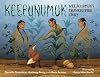
A Wampanoag grandmother plants her garden with weeâchumun (corn), beans, and squash, or the Three Sisters. When her grandchildren ask to hear the story of Thanksgiving, N8hkumuhs tells them that their people call it Keepunumuk, “the time of harvest,” and explains what really happened. The tale opens with Seagull warning Weeâchumun—depicted as a woman with a translucent body—of the Pilgrims’ arrival; show more Weeâchumun worries because many of the First Peoples who cared for her have gone to the Spirit World, and she fears this will be her last winter. Fox keeps an eye out and in spring tells Weeâchumun and her sisters that the newcomers endured a hard winter; many died. Weeâchumun and her sisters want to help: “We will send the First Peoples to help the newcomers.” The Wampanoag people teach the survivors how to plant corn, beans, and squash. The settlers hold a feast to celebrate the harvest; though it’s remembered by many as the first Thanksgiving, backmatter explains that because of the disease and warfare brought by the settlers, for the Wampanoag people, it is remembered as a day of mourning. Rich, saturated acrylics imbued with a touch of magic add to the vibrancy of this important, beautiful story.
A much-needed Thanksgiving retelling that centers the Wampanoag people. (glossary, information on the Wampanoag, map, recipes) (Picture book. 3-7)
-Kirkus Review show less
A Wampanoag grandmother plants her garden with weeâchumun (corn), beans, and squash, or the Three Sisters. When her grandchildren ask to hear the story of Thanksgiving, N8hkumuhs tells them that their people call it Keepunumuk, “the time of harvest,” and explains what really happened. The tale opens with Seagull warning Weeâchumun—depicted as a woman with a translucent body—of the Pilgrims’ arrival; show more Weeâchumun worries because many of the First Peoples who cared for her have gone to the Spirit World, and she fears this will be her last winter. Fox keeps an eye out and in spring tells Weeâchumun and her sisters that the newcomers endured a hard winter; many died. Weeâchumun and her sisters want to help: “We will send the First Peoples to help the newcomers.” The Wampanoag people teach the survivors how to plant corn, beans, and squash. The settlers hold a feast to celebrate the harvest; though it’s remembered by many as the first Thanksgiving, backmatter explains that because of the disease and warfare brought by the settlers, for the Wampanoag people, it is remembered as a day of mourning. Rich, saturated acrylics imbued with a touch of magic add to the vibrancy of this important, beautiful story.
A much-needed Thanksgiving retelling that centers the Wampanoag people. (glossary, information on the Wampanoag, map, recipes) (Picture book. 3-7)
-Kirkus Review show less
The Thanksgiving story, told from the perspective of the Wampanoag people.
A Wampanoag grandmother plants her garden with weeâchumun (corn), beans, and squash, or the Three Sisters. When her grandchildren ask to hear the story of Thanksgiving, N8hkumuhs tells them that their people call it Keepunumuk, “the time of harvest,” and explains what really happened. The tale opens with Seagull warning Weeâchumun—depicted as a woman with a translucent body—of the Pilgrims’ arrival; show more Weeâchumun worries because many of the First Peoples who cared for her have gone to the Spirit World, and she fears this will be her last winter. Fox keeps an eye out and in spring tells Weeâchumun and her sisters that the newcomers endured a hard winter; many died. Weeâchumun and her sisters want to help: “We will send the First Peoples to help the newcomers.” The Wampanoag people teach the survivors how to plant corn, beans, and squash. The settlers hold a feast to celebrate the harvest; though it’s remembered by many as the first Thanksgiving, backmatter explains that because of the disease and warfare brought by the settlers, for the Wampanoag people, it is remembered as a day of mourning. Rich, saturated acrylics imbued with a touch of magic add to the vibrancy of this important, beautiful story.
A much-needed Thanksgiving retelling that centers the Wampanoag people. (glossary, information on the Wampanoag, map, recipes) (Picture book. 3-7)
-Kirkus Review show less
A Wampanoag grandmother plants her garden with weeâchumun (corn), beans, and squash, or the Three Sisters. When her grandchildren ask to hear the story of Thanksgiving, N8hkumuhs tells them that their people call it Keepunumuk, “the time of harvest,” and explains what really happened. The tale opens with Seagull warning Weeâchumun—depicted as a woman with a translucent body—of the Pilgrims’ arrival; show more Weeâchumun worries because many of the First Peoples who cared for her have gone to the Spirit World, and she fears this will be her last winter. Fox keeps an eye out and in spring tells Weeâchumun and her sisters that the newcomers endured a hard winter; many died. Weeâchumun and her sisters want to help: “We will send the First Peoples to help the newcomers.” The Wampanoag people teach the survivors how to plant corn, beans, and squash. The settlers hold a feast to celebrate the harvest; though it’s remembered by many as the first Thanksgiving, backmatter explains that because of the disease and warfare brought by the settlers, for the Wampanoag people, it is remembered as a day of mourning. Rich, saturated acrylics imbued with a touch of magic add to the vibrancy of this important, beautiful story.
A much-needed Thanksgiving retelling that centers the Wampanoag people. (glossary, information on the Wampanoag, map, recipes) (Picture book. 3-7)
-Kirkus Review show less
Please don't misunderstand my rating. This is, in one sense, a five star book. It's an absolutely necessary acquisition for every library and school. And it's a book every family (and everyone else) should read. It's accessible, straightforward, #OwnVoices, and doesn't pick on white people nearly enough (imo).
But imo it's only a start. It's not all that interesting to me, nor beautiful, poetic, subtle, resonant.... I want more. Please, publishers, know that teachers & parents are desperate show more for stories for young children that tell the truth about the first thanksgiving. Bring us more, and bring us even better ones. show less
But imo it's only a start. It's not all that interesting to me, nor beautiful, poetic, subtle, resonant.... I want more. Please, publishers, know that teachers & parents are desperate show more for stories for young children that tell the truth about the first thanksgiving. Bring us more, and bring us even better ones. show less
Awards


You May Also Like
Associated Authors
Statistics
- Works
- 5
- Also by
- 2
- Members
- 345
- Popularity
- #69,184
- Rating
- 4.0
- Reviews
- 11
- ISBNs
- 7