
Theda Perdue
Author of The Cherokee Nation and the Trail of Tears
About the Author
Theda Perdue is a professor of history at the University of North Carolina at Chapel Hill.
Works by Theda Perdue
Nations Remembered: An Oral History of the Cherokees, Chickasaws, Choctaws, Creeks, and Seminoles in Oklahoma, 1865-1907 (1980) 25 copies, 1 review
Cherokee Women 1 copy
Associated Works
Unequal Sisters: A Multicultural Reader in U.S. Women's History {Third Edition} (2000) — Contributor — 107 copies
Unequal Sisters: A Multicultural Reader in U.S. Women's History {Second Edition} (1994) — Contributor — 97 copies
The American Indian as Slaveholder and Secessionist (1915) — Introduction, some editions — 56 copies, 1 review
The American Indian and the End of the Confederacy, 1863-1866 (1925) — Introduction, some editions — 33 copies
Tagged
Common Knowledge
- Birthdate
- 1949
- Gender
- female
- Organizations
- Southern Historical Association (president | 2011)
- Nationality
- USA
- Associated Place (for map)
- USA
Members
Reviews
Making a Difference: My Fight for Native Rights and Social Justice (Volume 19) (New Directions in Native American Studies Series) by ada deer

I’ve had my eye on this one since it became a staff selection at my library. Since one of the items on our reading challenge this year is to read a staff selection (not your own), I picked it up.
This book made quite an impression on me. Ada Deer’s tenacity in fighting and eventually reversing the government termination of the Menominee was incredible. I can’t imagine having the strength and energy to keep going with all the obstacles and red tape she and her fellow fighters show more encountered. It’s a really amazing story. It’s also infuriating to see how state and federal government kept finding ways to pull the rug out from under so many different tribes in the country, and how hard it was to fight against it. It’s despicable. I hadn’t heard about termination before I read this—I think a lot of it started when I was still a child—but I still wonder why it isn’t more widely known.
She talks a lot about her mother’s influence. A good chunk of the book is about her family and upbringing. Besides being quite interesting, it was important to understanding where Deer got a lot of her fire.
I recommend reading the introductory material that explains how the book was written—a combination of interviews with Deer and documentation from her period with the Bureau of Indian Affairs (and probably some other stuff I’ve already forgotten). The result is conversational, but well-documented. It gives a detailed account of what happened to the Menominee in Wisconsin, but it also has a wider discussion of what was happening to tribes all over the country. show less
This book made quite an impression on me. Ada Deer’s tenacity in fighting and eventually reversing the government termination of the Menominee was incredible. I can’t imagine having the strength and energy to keep going with all the obstacles and red tape she and her fellow fighters show more encountered. It’s a really amazing story. It’s also infuriating to see how state and federal government kept finding ways to pull the rug out from under so many different tribes in the country, and how hard it was to fight against it. It’s despicable. I hadn’t heard about termination before I read this—I think a lot of it started when I was still a child—but I still wonder why it isn’t more widely known.
She talks a lot about her mother’s influence. A good chunk of the book is about her family and upbringing. Besides being quite interesting, it was important to understanding where Deer got a lot of her fire.
I recommend reading the introductory material that explains how the book was written—a combination of interviews with Deer and documentation from her period with the Bureau of Indian Affairs (and probably some other stuff I’ve already forgotten). The result is conversational, but well-documented. It gives a detailed account of what happened to the Menominee in Wisconsin, but it also has a wider discussion of what was happening to tribes all over the country. show less
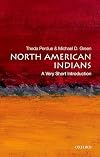
I find myself frequently reading about the indigenous people of North America lately, so this little book caught my eye as I was shelf-reading and gathering up a cache of books for myself during the last week my library was open -- after we had closed the doors to patrons due to coronavirus concerns but before restrictions sent us staff people home too. (I ended up taking home 50 books, supplementing the 75 I had already checked out from this and another library. I'm ready for the long show more haul!)
This is a serviceable if dry survey of the history of Native Americans in the United States. And yes, despite the title citing North America, anything that happened in Mexico and Canada is basically omitted unless it occurred within 100 miles of the present day U.S. border. I did learn stuff and now have a better sense of time and place than I previously had, but despite the book being only 140 pages, it took me seven days to listlessly work my way through it.
I thought the most interesting part was the last sentence: "At the beginning of the twenty-first century, Indian people speak for themselves." I found it super ironic since this book was written by a married white couple. Hrm. show less
This is a serviceable if dry survey of the history of Native Americans in the United States. And yes, despite the title citing North America, anything that happened in Mexico and Canada is basically omitted unless it occurred within 100 miles of the present day U.S. border. I did learn stuff and now have a better sense of time and place than I previously had, but despite the book being only 140 pages, it took me seven days to listlessly work my way through it.
I thought the most interesting part was the last sentence: "At the beginning of the twenty-first century, Indian people speak for themselves." I found it super ironic since this book was written by a married white couple. Hrm. show less
Mixed Blood Indians: Racial Construction in the Early South (Mercer University Lamar Memorial Lectures) by Theda Perdue
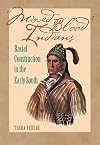
A group of lectures by an eminent historian that reframes our understanding of how race was constructed in the southeastern United States as people of European and African origin moved into Native American villages in the eighteenth and early nineteenth centuries.
Theda Perdue is a highly respected historian of Native American peoples, especially those who were living and farming in the southeast where European contact spread before and after the Revolution. She has published significant show more research about the “Five Civilized Tribes;” Choctaw, Chickasaw, Cherokee, Creek and Seminole people who were removed from their homelands in the 1830s. Under pressure from European American settlers who wanted their land, they were forced along the infamous “Trail of Tears” and granted lands further west “as long as the grass grew and rivers run.” Today those lands are the state of Oklahoma which is no longer owned by Native Americans.
With abundant evidence from primary sources, Perdue argues convincingly that “mixed blood” and “full blood” are outdated terms that define behavior as dependent on ethnic ancestry. Such terms are rooted in white supremacy, and yet they are still used to define tribal membership.
Read more: http://wp.me/p24OK2-1pb show less
Theda Perdue is a highly respected historian of Native American peoples, especially those who were living and farming in the southeast where European contact spread before and after the Revolution. She has published significant show more research about the “Five Civilized Tribes;” Choctaw, Chickasaw, Cherokee, Creek and Seminole people who were removed from their homelands in the 1830s. Under pressure from European American settlers who wanted their land, they were forced along the infamous “Trail of Tears” and granted lands further west “as long as the grass grew and rivers run.” Today those lands are the state of Oklahoma which is no longer owned by Native Americans.
With abundant evidence from primary sources, Perdue argues convincingly that “mixed blood” and “full blood” are outdated terms that define behavior as dependent on ethnic ancestry. Such terms are rooted in white supremacy, and yet they are still used to define tribal membership.
Read more: http://wp.me/p24OK2-1pb show less
The Cherokee Nation and the Trail of Tears (Penguin Library of American Indian History) by Theda Perdue
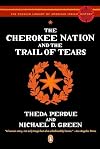
The Cherokee Nation and the Trail of Tears
Author: Theda Perdue and Michael D. Green
Publisher: Penguin Group
Published In: New York City, NY
Date: 2007
Pgs: 189
_________________________________________________
REVIEW MAY CONTAIN SPOILERS
Summary:
The forced Native American diaspora which came to be known as The Trail of Tears brought an irreparable injustice onto the Cherokee Nation. The US government forcibly drove 17,000 Cherokee from their ancestral homeland in the southern Appalachians. Trauma, show more tragedy, hardship, and betrayal, these and blood paved The Trail of Tears.
The determined survival of the Cherokee people represents a resilience of the human spirit.
A Cherokee tragedy. An Indian tragedy. An American tragedy.
_________________________________________________
Genre:
Academics
History
Non-fiction
Why this book:
Human will to survive amidst man’s inhumanity to man.
_________________________________________________
Favorite Character:
Secretary of War Henry Knox. He seems to have tried. But the post-Revolutionary War white settler engaging in continual confiscatory invasions of Indian lands made his job impossible. While the Feds were supposed to remove white settlers from Indian lands this may never have happened. There are no examples of confiscatory squatters being removed from Indian land by the Feds. Knox stood at the crux between his own Enlightenment fueled principles and the expansionist policies of the states. He tried to drive respect for territorial rights and Indian culture. This was one of those moments in history that gave truth to the axiom, ‘the road to hell is paved with good intentions.”the white settlers ant-mounded themselves westward, invading Indian land, fighting and killing Indians, and then, expecting state militias and the Federal government to protect them. Knox believed that the Indians would not surrender short of a long and bloody war that would give the United States a reputation for rapacity that would stain the future with blood.
The Ridges and Boudinot caught in the middle, acting in good faith for the survival of their people. Would there be a Cherokee people today if they had continued to stay in Georgia after the state had dispossessed them of their property and were trying to ethnically cleanse them from their state. The signatories of the treaty that set the Cherokee on the Trail of Tears were described as good men doing a bad thing for the love of their people. They and their allies in the Nation became known as the Treaty Party.
Least Favorite Character:
Andrew Jackson and the Georgian Legislature of this era were real SOBs. The term hadn’t been coined yet, but what they did was ethnic cleansing. The reputation that Henry Knox feared came to fruition during this time. Jackson purporting that he was saving the Indians by forcing removal on them is one of the most two-faced ideas I’ve ever read.
Character I Most Identified With:
John Ridge. What was the poor bastard supposed to do? Sit still and watch Georgia give all that the Cherokee Nation had away to the white settlers piecemeal and destroy their culture besides. I fear that if Ross’s hand hadn’t been forced by the Treaty of New Echota, that may be exactly what happened to the Cherokee.
The Feel:
Depressed the hell out of me, but damned good book.
Favorite Scene / Quote:
The chiefs of the Cherokee Nation wanted the education for their children that came with civilization. They weren’t much interested in the Christianity that was parceled out with it. I see this through the stained glass of the push to force children in our modern world out of public school into the indoctrination webs of charter schools.
Plot Holes/Out of Character:
I expected more about the Trail. This was very heavy on the politics and the money, the land, and Georgia being a son of a bitch.
Hmm Moments:
Next time a Christian scientist pushes Adam and Eve as something that should be taught in school, I’m bringing the Cherokee genesis story where the first humans were a brother and sister and, when he struck her with a fish, she started giving birth to another child every seven days until the world was full.
The Cherokee history in relation to the English is fraught with betrayals and backsliding. Why did they ever trust the Federal government?
Rage Against the Machine’s Bulls on Parade came on while I was reading about the Georgia Legislature’s moves to screw over the Cherokee Nation and accelerate the ethnic cleansing of northwestern Georgia.
Reading the SCOTUS rulings in the Cherokee Nation-Georgia chapters with the question of sovereignty and jurisdiction, and the way they were worded, I’m left to wonder what the result would have been if the Cherokee had sued for statehood instead of staying the course in the treaty-jurisdiction vein. I believe the result would have pissed Georgia off.
If the Treaty Party hadn’t signed the Treaty of New Echota, Georgia would have still taken the Cherokee land in the lottery for white settlers. Then, Georgia and the Army would have still dragged the Cherokee out of the southern Appalachians and set them on the Trail of Tears in even worse shape.
It’s surprising with the way that history portrays Ross and the National Party having thorns in their sides in the persons of the Old Settlers and the Treaty Party that following Ross’s passing in 1866, political parties in the Cherokee Nation began to develop along new lines and the animosity between groups began to moderate.
WTF Moments:
Despite treaties claiming that the Cherokee had freedom of choice in matters of commerce, too often, they found themselves in fait accompli deals involving land sales.
Thomas Jefferson was of two minds. In one instance, he wanted to trade with and “civilize” the Indians. While in the other, he believed that America’s future depended on land acquisition and expansion. Due to deer herd depletion, some of the civilizing elements acting on the Cherokee came internally, instead of from the encroaching Americans. The federal government’s agents were rather schizophrenic in their actions; while one agent acts from a position of fairness, the next acts in conjunction with pro-land grab governors and state governments.
The Georgia murder case against George Corn Tassell for an act taking place in the Cherokee Nation, the way Georgia used it to subvert Cherokee law, and the Georgia Legislature, Governor, and courts ignoring of a Supreme Court stay and subpoena in the case is one more slip on the long slow slide toward Civil War. Showed that the Feds only had the power that the states decided they had at that time instead of it codified and spelled out. After Tassell’s initial arrest, the judge in the case tossed it to an appellate tribunal who confirmed Georgia’s jurisdiction despite the Cherokee Nation having a treaty right of self jurisprudence. Tassell was convicted and sentenced to hang on December 24, 1830. Tassell’s lawyer appealed to SCOTUS. The court issued their stay and subpoena on Georgia’s governor. The governor and legislature chose to ignore SCOTUS and hanged him on Christmas Eve.
The separation of families, the leaving behind of old people, the arresting and imprisoning, the gathering into forts/prisons/internment camps/concentration camps as a middle step in the ethnic cleansing of Georgia and the southern Appalachians; measles, cholera, dysentery, and whooping cough. Rare were the removal expeditions that made the trip without casualties. Rape was rampant in the camps.
Seen as traitors because of they signed and because of the words of John Ross and the National Party, the Treaty Party leaders, after the Cherokee began to settle in Indian Territory and the Treaty Party began to ally itself with the Old Settlers who preceded the Cherokee Nation to Indian Territory, were dragged from their new homes and killed. This was done after a convocation about the future of the tribe. The convocation featured debate between the Old Settlers, the Treaty Party and their followers, and the Cherokee Nation group lead by John Ross. A secret meeting of the Cherokee Nation rulers after the bigger convocation rubberstamped the actions to be taken against the Treaty Party leaders. John Ross wasn’t at the secret meeting. His son was. The idea that John Ross didn’t know what was going on is crap. This was a historical example of plausible deniability.
Meh / PFFT Moments:
The United States, post-revolution, used a confiscatory policy in Indian lands despite signing concurrent treaties that presupposed the purchase of lands.
Despite Knox’s high ideals, he pushed prerequisites that the Indians give up hunting and gathering on their lands and become more analogous to the settlers who were invading their lands, learn English, become civilized, etc. Though even in instances where the Indians did this, the settlers continued to advance and the governments of the states and those lawmakers in the Federal capital rubberstamped and money whipped the problems. The states paid lip service to the civilization policy and if/when Indians followed the policy, they found themselves not equal to the white settler, but more equal to the freed Black slave.
Andrew Jackson’s beloved Old Hickory nickname in context of his actions vis-a-vis Georgia and the Trail of Tears is inappropriate. In light of his hiding in his hypocrisy, the name given him by Ridge in the Cherokee Phoenix is much more appropriate, Chicken Snake.
Despite a later victory before SCOTUS that recognized the Cherokee Nation, Jackson forbore execution of the Court’s decree. The Cherokee’s allies in Washington started to advise the Cherokee to prepare for removal. They feared a Constitutional crisis. Ridge and Boudinot came home convinced. John Ross and the Council opposed them despite the writing becoming plainer on the wall.
The reason we mainly hear John Ross’s version is because the opposition party’s leaders were killed before they got down, collectively, to forming a new government in Indian Territory. The National Party, following the killings, legislated that there should be no revenge and that the killers were granted amnesty if they publically apologized. Ross’s brother and son were part of the group which set the ball in motion that placed targets on the leaders of the Treaty Party. The Treaty Party were pragmatists, better alive in Indian Territory and still Cherokee, than dead on Georgia’s bayonets.
The National Party’s refusal to arrest and prosecute those who murdered the leaders of the Treaty Party eventually lead to reprisals and revenge slayings.
_________________________________________________
Last Page Sound:
The book was more about the internal and external political strife than about the Trail; was more about money than the suffering. This painted a picture of the impossible position the Cherokee were in in Georgia. If they had stayed and resisted I wonder if there would be a Cherokee Nation today. The abuse of authority inside Indian Territory is a story rarely told. The revenge brigandage is though. This did make me view the history through a different lens; Old Hickory vs Chicken Snake, Georgia’s actions and how their flaunting of Federal power was a waystation on the way to Civil War, the conflict between the Rosses, the Treaty Party, and the Old Settlers. There’s very much a cult of personality aspect to John Ross that I had never noticed before.
Author Assessment:
Very well written.
Editorial Assessment:
Well edited.
Knee Jerk Reaction:
glad I read it
Disposition of Book:
Irving Public Library
South Campus
Dewey Decimal System:
970.3
CHE
Would recommend to:
genre fans
_________________________________________________ show less
Author: Theda Perdue and Michael D. Green
Publisher: Penguin Group
Published In: New York City, NY
Date: 2007
Pgs: 189
_________________________________________________
REVIEW MAY CONTAIN SPOILERS
Summary:
The forced Native American diaspora which came to be known as The Trail of Tears brought an irreparable injustice onto the Cherokee Nation. The US government forcibly drove 17,000 Cherokee from their ancestral homeland in the southern Appalachians. Trauma, show more tragedy, hardship, and betrayal, these and blood paved The Trail of Tears.
The determined survival of the Cherokee people represents a resilience of the human spirit.
A Cherokee tragedy. An Indian tragedy. An American tragedy.
_________________________________________________
Genre:
Academics
History
Non-fiction
Why this book:
Human will to survive amidst man’s inhumanity to man.
_________________________________________________
Favorite Character:
Secretary of War Henry Knox. He seems to have tried. But the post-Revolutionary War white settler engaging in continual confiscatory invasions of Indian lands made his job impossible. While the Feds were supposed to remove white settlers from Indian lands this may never have happened. There are no examples of confiscatory squatters being removed from Indian land by the Feds. Knox stood at the crux between his own Enlightenment fueled principles and the expansionist policies of the states. He tried to drive respect for territorial rights and Indian culture. This was one of those moments in history that gave truth to the axiom, ‘the road to hell is paved with good intentions.”the white settlers ant-mounded themselves westward, invading Indian land, fighting and killing Indians, and then, expecting state militias and the Federal government to protect them. Knox believed that the Indians would not surrender short of a long and bloody war that would give the United States a reputation for rapacity that would stain the future with blood.
The Ridges and Boudinot caught in the middle, acting in good faith for the survival of their people. Would there be a Cherokee people today if they had continued to stay in Georgia after the state had dispossessed them of their property and were trying to ethnically cleanse them from their state. The signatories of the treaty that set the Cherokee on the Trail of Tears were described as good men doing a bad thing for the love of their people. They and their allies in the Nation became known as the Treaty Party.
Least Favorite Character:
Andrew Jackson and the Georgian Legislature of this era were real SOBs. The term hadn’t been coined yet, but what they did was ethnic cleansing. The reputation that Henry Knox feared came to fruition during this time. Jackson purporting that he was saving the Indians by forcing removal on them is one of the most two-faced ideas I’ve ever read.
Character I Most Identified With:
John Ridge. What was the poor bastard supposed to do? Sit still and watch Georgia give all that the Cherokee Nation had away to the white settlers piecemeal and destroy their culture besides. I fear that if Ross’s hand hadn’t been forced by the Treaty of New Echota, that may be exactly what happened to the Cherokee.
The Feel:
Depressed the hell out of me, but damned good book.
Favorite Scene / Quote:
The chiefs of the Cherokee Nation wanted the education for their children that came with civilization. They weren’t much interested in the Christianity that was parceled out with it. I see this through the stained glass of the push to force children in our modern world out of public school into the indoctrination webs of charter schools.
Plot Holes/Out of Character:
I expected more about the Trail. This was very heavy on the politics and the money, the land, and Georgia being a son of a bitch.
Hmm Moments:
Next time a Christian scientist pushes Adam and Eve as something that should be taught in school, I’m bringing the Cherokee genesis story where the first humans were a brother and sister and, when he struck her with a fish, she started giving birth to another child every seven days until the world was full.
The Cherokee history in relation to the English is fraught with betrayals and backsliding. Why did they ever trust the Federal government?
Rage Against the Machine’s Bulls on Parade came on while I was reading about the Georgia Legislature’s moves to screw over the Cherokee Nation and accelerate the ethnic cleansing of northwestern Georgia.
Reading the SCOTUS rulings in the Cherokee Nation-Georgia chapters with the question of sovereignty and jurisdiction, and the way they were worded, I’m left to wonder what the result would have been if the Cherokee had sued for statehood instead of staying the course in the treaty-jurisdiction vein. I believe the result would have pissed Georgia off.
If the Treaty Party hadn’t signed the Treaty of New Echota, Georgia would have still taken the Cherokee land in the lottery for white settlers. Then, Georgia and the Army would have still dragged the Cherokee out of the southern Appalachians and set them on the Trail of Tears in even worse shape.
It’s surprising with the way that history portrays Ross and the National Party having thorns in their sides in the persons of the Old Settlers and the Treaty Party that following Ross’s passing in 1866, political parties in the Cherokee Nation began to develop along new lines and the animosity between groups began to moderate.
WTF Moments:
Despite treaties claiming that the Cherokee had freedom of choice in matters of commerce, too often, they found themselves in fait accompli deals involving land sales.
Thomas Jefferson was of two minds. In one instance, he wanted to trade with and “civilize” the Indians. While in the other, he believed that America’s future depended on land acquisition and expansion. Due to deer herd depletion, some of the civilizing elements acting on the Cherokee came internally, instead of from the encroaching Americans. The federal government’s agents were rather schizophrenic in their actions; while one agent acts from a position of fairness, the next acts in conjunction with pro-land grab governors and state governments.
The Georgia murder case against George Corn Tassell for an act taking place in the Cherokee Nation, the way Georgia used it to subvert Cherokee law, and the Georgia Legislature, Governor, and courts ignoring of a Supreme Court stay and subpoena in the case is one more slip on the long slow slide toward Civil War. Showed that the Feds only had the power that the states decided they had at that time instead of it codified and spelled out. After Tassell’s initial arrest, the judge in the case tossed it to an appellate tribunal who confirmed Georgia’s jurisdiction despite the Cherokee Nation having a treaty right of self jurisprudence. Tassell was convicted and sentenced to hang on December 24, 1830. Tassell’s lawyer appealed to SCOTUS. The court issued their stay and subpoena on Georgia’s governor. The governor and legislature chose to ignore SCOTUS and hanged him on Christmas Eve.
The separation of families, the leaving behind of old people, the arresting and imprisoning, the gathering into forts/prisons/internment camps/concentration camps as a middle step in the ethnic cleansing of Georgia and the southern Appalachians; measles, cholera, dysentery, and whooping cough. Rare were the removal expeditions that made the trip without casualties. Rape was rampant in the camps.
Seen as traitors because of they signed and because of the words of John Ross and the National Party, the Treaty Party leaders, after the Cherokee began to settle in Indian Territory and the Treaty Party began to ally itself with the Old Settlers who preceded the Cherokee Nation to Indian Territory, were dragged from their new homes and killed. This was done after a convocation about the future of the tribe. The convocation featured debate between the Old Settlers, the Treaty Party and their followers, and the Cherokee Nation group lead by John Ross. A secret meeting of the Cherokee Nation rulers after the bigger convocation rubberstamped the actions to be taken against the Treaty Party leaders. John Ross wasn’t at the secret meeting. His son was. The idea that John Ross didn’t know what was going on is crap. This was a historical example of plausible deniability.
Meh / PFFT Moments:
The United States, post-revolution, used a confiscatory policy in Indian lands despite signing concurrent treaties that presupposed the purchase of lands.
Despite Knox’s high ideals, he pushed prerequisites that the Indians give up hunting and gathering on their lands and become more analogous to the settlers who were invading their lands, learn English, become civilized, etc. Though even in instances where the Indians did this, the settlers continued to advance and the governments of the states and those lawmakers in the Federal capital rubberstamped and money whipped the problems. The states paid lip service to the civilization policy and if/when Indians followed the policy, they found themselves not equal to the white settler, but more equal to the freed Black slave.
Andrew Jackson’s beloved Old Hickory nickname in context of his actions vis-a-vis Georgia and the Trail of Tears is inappropriate. In light of his hiding in his hypocrisy, the name given him by Ridge in the Cherokee Phoenix is much more appropriate, Chicken Snake.
Despite a later victory before SCOTUS that recognized the Cherokee Nation, Jackson forbore execution of the Court’s decree. The Cherokee’s allies in Washington started to advise the Cherokee to prepare for removal. They feared a Constitutional crisis. Ridge and Boudinot came home convinced. John Ross and the Council opposed them despite the writing becoming plainer on the wall.
The reason we mainly hear John Ross’s version is because the opposition party’s leaders were killed before they got down, collectively, to forming a new government in Indian Territory. The National Party, following the killings, legislated that there should be no revenge and that the killers were granted amnesty if they publically apologized. Ross’s brother and son were part of the group which set the ball in motion that placed targets on the leaders of the Treaty Party. The Treaty Party were pragmatists, better alive in Indian Territory and still Cherokee, than dead on Georgia’s bayonets.
The National Party’s refusal to arrest and prosecute those who murdered the leaders of the Treaty Party eventually lead to reprisals and revenge slayings.
_________________________________________________
Last Page Sound:
The book was more about the internal and external political strife than about the Trail; was more about money than the suffering. This painted a picture of the impossible position the Cherokee were in in Georgia. If they had stayed and resisted I wonder if there would be a Cherokee Nation today. The abuse of authority inside Indian Territory is a story rarely told. The revenge brigandage is though. This did make me view the history through a different lens; Old Hickory vs Chicken Snake, Georgia’s actions and how their flaunting of Federal power was a waystation on the way to Civil War, the conflict between the Rosses, the Treaty Party, and the Old Settlers. There’s very much a cult of personality aspect to John Ross that I had never noticed before.
Author Assessment:
Very well written.
Editorial Assessment:
Well edited.
Knee Jerk Reaction:
glad I read it
Disposition of Book:
Irving Public Library
South Campus
Dewey Decimal System:
970.3
CHE
Would recommend to:
genre fans
_________________________________________________ show less
Lists
Awards

You May Also Like


Associated Authors
Statistics
- Works
- 22
- Also by
- 7
- Members
- 1,385
- Popularity
- #18,563
- Rating
- 3.6
- Reviews
- 14
- ISBNs
- 64
- Languages
- 2
- Favorited
- 1