
John Shors
Author of Beneath a Marble Sky: A Love Story
About the Author
John Shor's novels have won multiple awards and have been translated into twenty-five languages. His novels include Beneath a Marble Sky, Beside a Burning Sea, Dragon House, The Wishing Trees, and Cross Currents. (Bowker Author Biography)
Image credit: via Fresh Fiction
Series
Works by John Shors
The Demon Seekers, Book One 1 copy
Моето полноќно сонце 1 copy
Tagged
Common Knowledge
- Birthdate
- 1969-03-04
- Gender
- male
- Education
- Colorado College
- Occupations
- teacher
public relations - Organizations
- GroundFloor Media
- Nationality
- USA
- Places of residence
- Kyoto, Japan
Des Moines, Iowa, USA
Boulder, Colorado, USA - Associated Place (for map)
- USA
Members
Reviews

If I were to describe the perfect story for me, Beside A Burning Sea by John Shors would be a very close fit. Set in 1942 the hospital ship Benevolence is torpedoed and nine survivors make their way to a deserted South Pacific island.
A story of survival and redemption. These people struggle against the elements, their fear of discovery by the Japanese and even against each other. Unbeknownst to them, one of them is a traitor, he betrayed their ship and now is about to reveal their location show more to the Japanese. More than this, he is a true psychopath eagerly anticipating the damage he will do, the terror he will inflict. The survivors are a mixed crowd, three nurses, the ship’s captain, two naval officers, an ship’s mechanic, a young stowaway and a Japanese prisoner of war. Many of these people have conflicts within themselves and how they bond together and help each other survive makes for a wonderful story.
Each chapter is the equivalent of a day and as we are drawn deeper into the story the suspense rises. I literally couldn’t put the book down, I had to know how it would end. Not a perfect book but I found myself willing to overlook some minor flaws and simply savour the story. This was so much more than a simple action story, the characters are well developed, the writing extremely lyrical and the story telling rich and varied. Like the haiku that start each chapter, this book is a small gem. show less
A story of survival and redemption. These people struggle against the elements, their fear of discovery by the Japanese and even against each other. Unbeknownst to them, one of them is a traitor, he betrayed their ship and now is about to reveal their location show more to the Japanese. More than this, he is a true psychopath eagerly anticipating the damage he will do, the terror he will inflict. The survivors are a mixed crowd, three nurses, the ship’s captain, two naval officers, an ship’s mechanic, a young stowaway and a Japanese prisoner of war. Many of these people have conflicts within themselves and how they bond together and help each other survive makes for a wonderful story.
Each chapter is the equivalent of a day and as we are drawn deeper into the story the suspense rises. I literally couldn’t put the book down, I had to know how it would end. Not a perfect book but I found myself willing to overlook some minor flaws and simply savour the story. This was so much more than a simple action story, the characters are well developed, the writing extremely lyrical and the story telling rich and varied. Like the haiku that start each chapter, this book is a small gem. show less

*An Evocative and Intoxicating Debut*
If there was a 12 star rating, I'd give it that and then some. This debut deserves all the stars in the heavens and more. Truly this is a wonderful, evocative tale of the wonderous building of one of the world's most crowning architectural achievements. I learned so much while reading this book, the history of India and it's culture, of it's people and their beliefs, and learned so much about the Taj Mahal that I never realized or knew before. The author show more should be highly proud of this first achievement, his writing is so beautiful and full of talent. Each word, each phrase, like poetry and I found myself reading passages over and over they were so well crafted. I really felt I was there in India, I could smell the spices, feel the desert sand, hear the jingling bells on the feet of sari swathed beautiful women, one can feel the cool smooth marble that built the majestic tomb that hold the Emperor's wife. Never have I read such a magnificent historical novel that left me mesmerized and telling all my friends to go buy a copy. Don't miss this story, you won't forget it for a long time. show less
If there was a 12 star rating, I'd give it that and then some. This debut deserves all the stars in the heavens and more. Truly this is a wonderful, evocative tale of the wonderous building of one of the world's most crowning architectural achievements. I learned so much while reading this book, the history of India and it's culture, of it's people and their beliefs, and learned so much about the Taj Mahal that I never realized or knew before. The author show more should be highly proud of this first achievement, his writing is so beautiful and full of talent. Each word, each phrase, like poetry and I found myself reading passages over and over they were so well crafted. I really felt I was there in India, I could smell the spices, feel the desert sand, hear the jingling bells on the feet of sari swathed beautiful women, one can feel the cool smooth marble that built the majestic tomb that hold the Emperor's wife. Never have I read such a magnificent historical novel that left me mesmerized and telling all my friends to go buy a copy. Don't miss this story, you won't forget it for a long time. show less
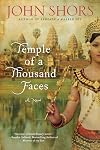
This book is everything that its beautiful cover promises. Set in 1177 when the great Khmer Empire dominated what is now known as Cambodia, this book tells a fictionalized version of the actual invasion of that Empire by the Chams from what is now Vietnam. Led by their ruthless and powerful king, Jaya Indravarman IV, the Chams overthrew the Khmers and conquered their capital city of Angkor. Indravarman knows that he must not rest until he has captured and killed the Khmer prince and his wife show more who fled into the surrounding jungle. Meanwhile, Prince Jayavar and his wife, Anjadevi, must figure out how to regroup the remaining Khmers so that they can fight to take back their kingdom.
Filled with the sights and sounds of that ancient kingdom, this story beautifully captures the struggle between two cultures for the same lands. I loved how the great temples were described and how the religious beliefs were explained within the context of the story. The point of view of the fully fleshed and diverse characters also make this book memorable - I really liked reading about the struggle from different perspectives. My favorite character by far was that of Asal, a Cham warrior who struggles to remain true to his own moral code while serving a king whose lust for power in insatiable. This is historical fiction that is well done and worthy of the time that it takes to read. The second half of the book really picks up the pace of the story and keeps you turning the pages as you nervously await the outcome. And perhaps best of all, this is a story complete within itself - the very rare and sought after standalone novel. Highly recommended.
"'It's good for you to beg,' Ajadevi whispered, when no one was near. 'One day, when you rule this land, you shall remember the suffering of your people.'
'You think I need reminders?'
'Not reminders, but memories.'
'And the difference between the two?'
'Reminders are for those who cannot remember. Memories are for those who want to remember.'
Jayavar thought about his children, visualizing each of their faces, starting with the youngest. He envisioned them when each of them had seemed happiest. His little girl, Chivy, laughed as she rode on his shoulders. His eldest son, Kosal, rejoiced at the birth of his own child. He wished them well, as he often did, taking his time with his thoughts, trying to connect with his loved ones.
'I think memories make us human,' he finally replied. 'They give substance to our spirits.'" show less
Filled with the sights and sounds of that ancient kingdom, this story beautifully captures the struggle between two cultures for the same lands. I loved how the great temples were described and how the religious beliefs were explained within the context of the story. The point of view of the fully fleshed and diverse characters also make this book memorable - I really liked reading about the struggle from different perspectives. My favorite character by far was that of Asal, a Cham warrior who struggles to remain true to his own moral code while serving a king whose lust for power in insatiable. This is historical fiction that is well done and worthy of the time that it takes to read. The second half of the book really picks up the pace of the story and keeps you turning the pages as you nervously await the outcome. And perhaps best of all, this is a story complete within itself - the very rare and sought after standalone novel. Highly recommended.
"'It's good for you to beg,' Ajadevi whispered, when no one was near. 'One day, when you rule this land, you shall remember the suffering of your people.'
'You think I need reminders?'
'Not reminders, but memories.'
'And the difference between the two?'
'Reminders are for those who cannot remember. Memories are for those who want to remember.'
Jayavar thought about his children, visualizing each of their faces, starting with the youngest. He envisioned them when each of them had seemed happiest. His little girl, Chivy, laughed as she rode on his shoulders. His eldest son, Kosal, rejoiced at the birth of his own child. He wished them well, as he often did, taking his time with his thoughts, trying to connect with his loved ones.
'I think memories make us human,' he finally replied. 'They give substance to our spirits.'" show less
 This review was written for LibraryThing Early Reviewers.
If this wasn't a book group selection, I would have ditched it after the first chapter. As it was, I texted several quotes to one of the members who hadn't yet started the book, including parts of the paragraph below and the barge/slug simile in my fifth paragraph.
Starting at the bottom of page 1 in my edition: "His daughter sat beside his bed. She was taller than an average-size man, though her shoulders and waist were slender. Her eyes were as dark as walnuts. Her hair, a comparable color, show more was unkempt and rife with wide curls. Her face was thin like the rest of her. After thirty-one years of wear, the contours of her forehead and cheeks had been infiltrated by faint wrinkles. At first glance she might have appeared awkward, but when she leaned forward to adjust his blankets, her movements were graceful."
And so Iris is introduced, one of several protagonists in the story. As her father dies later in the scene (the prologue), she promises to travel to Vietnam to open the center for street children that he's been working to set up. Oh, and this wrinkly old man-woman? She's not a farmer's daughter, a'workin' out in the sun all day. She's a book reviewer, who lives by herself in an apartment that is described as part college professor's office (living room) and part monk's cell. We are told again and again how hurt and rejected she's felt because of her absent Vietnam-vet father.
In the first chapter, a woman shows up at Iris's door as she prepares for her trip to Vietnam. Allow me to paraphrase, "It is I, your former neighbor who you haven't seen in many years. Alas, my son, who was madly in love with you when you were children, had just come back from Iraq missing part of his leg and most of his heart. He drinks all day and I can't watch him die. I have heard through my mysterious connections that you are going to Vietnam, and I had this great idea. You can take him with you!" And so Noah is introduced to the story.
Now we are whisked to Vietnam where we see a new day dawn on Saigon, where "the barges fought the currents like slugs making their way up a brown leaf."
And this is where I would have stopped, if not for the book group policy of reading at least 50 pages. So I read the next two chapters and things improved enough that I read the entire book.
By "things improved," I don't mean that the descriptions were any less inane or the dialogue any less stilted (enough with the ellipses already!) or false-sounding. I don't mean that Shors started showing instead of telling what was going on inside the characters, because he tells us again and again and again how angry Noah is, along with how Iris and other characters feel, and yet I don't feel like I really know any of the characters. They never become more than one dimensional. And I don't mean that the plot rises above the sappy, sentimental puddle where it wallows. What I mean by "things improved" is that the story moves to Vietnam. If this story was not set in Vietnam, a country that Shors seems to know and love, I would not have continued to read after page 50.
A pair of homeless children are the other element that makes this book bearable. Mai is a little chatterbox who knows how to work people. Minh is a mute, Connect-Four whiz, missing a hand (which of course gives him a connection to Noah). Of course, they are unshakably loyal to each other. Mai's epithets for Minh and her use of phrases like "sure, sure" made me laugh, but when she waxes philosophical about their role as street children, she doesn't sound like a 10-year-old girl, educated or not.
The bad guy is irredeemably bad (although there is some explanation given for how he became that way), emotional manipulation is rampant, and after a very close call with a convenient save, there are happy endings for all. If that's how you like your books, you might enjoy this one. It was not, however, a cup of my tea.
Read for book group, January 2013 show less
Starting at the bottom of page 1 in my edition: "His daughter sat beside his bed. She was taller than an average-size man, though her shoulders and waist were slender. Her eyes were as dark as walnuts. Her hair, a comparable color, show more was unkempt and rife with wide curls. Her face was thin like the rest of her. After thirty-one years of wear, the contours of her forehead and cheeks had been infiltrated by faint wrinkles. At first glance she might have appeared awkward, but when she leaned forward to adjust his blankets, her movements were graceful."
And so Iris is introduced, one of several protagonists in the story. As her father dies later in the scene (the prologue), she promises to travel to Vietnam to open the center for street children that he's been working to set up. Oh, and this wrinkly old man-woman? She's not a farmer's daughter, a'workin' out in the sun all day. She's a book reviewer, who lives by herself in an apartment that is described as part college professor's office (living room) and part monk's cell. We are told again and again how hurt and rejected she's felt because of her absent Vietnam-vet father.
In the first chapter, a woman shows up at Iris's door as she prepares for her trip to Vietnam. Allow me to paraphrase, "It is I, your former neighbor who you haven't seen in many years. Alas, my son, who was madly in love with you when you were children, had just come back from Iraq missing part of his leg and most of his heart. He drinks all day and I can't watch him die. I have heard through my mysterious connections that you are going to Vietnam, and I had this great idea. You can take him with you!" And so Noah is introduced to the story.
Now we are whisked to Vietnam where we see a new day dawn on Saigon, where "the barges fought the currents like slugs making their way up a brown leaf."
And this is where I would have stopped, if not for the book group policy of reading at least 50 pages. So I read the next two chapters and things improved enough that I read the entire book.
By "things improved," I don't mean that the descriptions were any less inane or the dialogue any less stilted (enough with the ellipses already!) or false-sounding. I don't mean that Shors started showing instead of telling what was going on inside the characters, because he tells us again and again and again how angry Noah is, along with how Iris and other characters feel, and yet I don't feel like I really know any of the characters. They never become more than one dimensional. And I don't mean that the plot rises above the sappy, sentimental puddle where it wallows. What I mean by "things improved" is that the story moves to Vietnam. If this story was not set in Vietnam, a country that Shors seems to know and love, I would not have continued to read after page 50.
A pair of homeless children are the other element that makes this book bearable. Mai is a little chatterbox who knows how to work people. Minh is a mute, Connect-Four whiz, missing a hand (which of course gives him a connection to Noah). Of course, they are unshakably loyal to each other. Mai's epithets for Minh and her use of phrases like "sure, sure" made me laugh, but when she waxes philosophical about their role as street children, she doesn't sound like a 10-year-old girl, educated or not.
The bad guy is irredeemably bad (although there is some explanation given for how he became that way), emotional manipulation is rampant, and after a very close call with a convenient save, there are happy endings for all. If that's how you like your books, you might enjoy this one. It was not, however, a cup of my tea.
Read for book group, January 2013 show less
Lists
You May Also Like


Statistics
- Works
- 11
- Members
- 1,952
- Popularity
- #13,182
- Rating
- 3.8
- Reviews
- 173
- ISBNs
- 54
- Languages
- 7
- Favorited
- 9
