
Anthony F. C. Wallace (1923–2015)
Author of The Death and Rebirth of the Seneca
About the Author
Anthony F. C. Wallace is Professor Emeritus of Anthropology at the University of Pennsylvania. He is the author of many books including, The Death and Rebirth of the Seneca.
Image credit: Photo
Works by Anthony F. C. Wallace
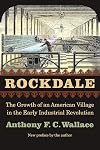
Rockdale: The Growth of an American Village in the Early Industrial Revolution (1978) 81 copies, 1 review
St. Clair: A Nineteenth-Century Coal Town's Experience With a Disaster-Prone Industry (1987) 57 copies, 1 review
The Social Context of Innovation: Bureaucrats, Families and Heroes in the Early Industrial Revolution, as Foreseen in Bacon's NEW ATLANTIS (1982) 10 copies
The modal personality structure of the Tuscarora Indians as revealed by the Rorschach test (2016) 9 copies
Tuscarora: A History (Tribal Worlds: Critical Studies in American Indian Nation Building) (2012) 8 copies
Associated Works
Ethnohistory. Summer, 1957 — Book Reviewer — 1 copy
Tagged
Common Knowledge
- Legal name
- Wallace, Anthony Francis Clarke
- Birthdate
- 1923-04-15
- Date of death
- 2015-10-05
- Gender
- male
- Education
- University of Pennsylvania
- Organizations
- University of Pennsylvania
- Relationships
- Wallace, Paul A. W. (father)
- Nationality
- Canada
- Birthplace
- Toronto, Ontario, Canada
- Map Location
- Canada
Members
Reviews
Rockdale: The Growth of an American Village in the Early Industrial Revolution by Anthony F. C. Wallace
Excerpted as "The Fraternity of Mechanicians" in Gary Kornblith, ed., The Industrial Revolution in America (1998)
Wallace contributes an understanding of the collective nature of technological innovation.
"The production machines -- the machines that transformed raw materials into consumer products, that generated power, that propelled bullets -- were made by a small group of highly skilled men ..." (p.23)
Not only did the Mechanicians build machines, they built machine tools that built show more machines. As opposed to managers, these machinists had dirty hands form working with them everyday. The machine shop was peopled by men of all walks of life who sought to learn the general skills of the mechanical trades. These men were, above all, generalists.
Looking at memoirs and recollections of George Escol Sellers, Wallace examines the composition of the "machinists fraternity". He estimates that perhaps 6,000 skilled machinists worked in the Anglo-American world. The circle of professional acquaintances around Sellers alone numbered in the hundreds. Similar to a school of art or a theological tradition, this was "a paradigmatic community." (p. 26)
Invention did not take place in this machinists community as the act of one sole inventor laboring away in a secluded laboratory. It was based on "the collaborative working out, by generations of mechanics, of the potentialities hidden yet implicit in a certain principle of mechanism, and the solving of the problems each successive improvement called forth." (p. 27) Invention was a process of generations of collective effort.
Machinists' communication was through models and diagrams, as opposed to language. Words have limitations for spatial thinkers. Pictures convey the meaning better. We can trace the conflict between science and technology in our modern world to the differences in cognitive styles between these machinists (who thought in pictures) and the community of non-machinists (who thought with language). This dichotomy between technology and science emerged along the lines of practical/dirty hands/pictures vs. abstract/ivory tower/scientific method and scholarly papers. As often as not, argues Wallace, the machinists' (read technologists') approach gives us the innovation we were looking for as an outgrowth of the continued working out of technical challenges in the "real world." show less
Wallace contributes an understanding of the collective nature of technological innovation.
"The production machines -- the machines that transformed raw materials into consumer products, that generated power, that propelled bullets -- were made by a small group of highly skilled men ..." (p.23)
Not only did the Mechanicians build machines, they built machine tools that built show more machines. As opposed to managers, these machinists had dirty hands form working with them everyday. The machine shop was peopled by men of all walks of life who sought to learn the general skills of the mechanical trades. These men were, above all, generalists.
Looking at memoirs and recollections of George Escol Sellers, Wallace examines the composition of the "machinists fraternity". He estimates that perhaps 6,000 skilled machinists worked in the Anglo-American world. The circle of professional acquaintances around Sellers alone numbered in the hundreds. Similar to a school of art or a theological tradition, this was "a paradigmatic community." (p. 26)
Invention did not take place in this machinists community as the act of one sole inventor laboring away in a secluded laboratory. It was based on "the collaborative working out, by generations of mechanics, of the potentialities hidden yet implicit in a certain principle of mechanism, and the solving of the problems each successive improvement called forth." (p. 27) Invention was a process of generations of collective effort.
Machinists' communication was through models and diagrams, as opposed to language. Words have limitations for spatial thinkers. Pictures convey the meaning better. We can trace the conflict between science and technology in our modern world to the differences in cognitive styles between these machinists (who thought in pictures) and the community of non-machinists (who thought with language). This dichotomy between technology and science emerged along the lines of practical/dirty hands/pictures vs. abstract/ivory tower/scientific method and scholarly papers. As often as not, argues Wallace, the machinists' (read technologists') approach gives us the innovation we were looking for as an outgrowth of the continued working out of technical challenges in the "real world." show less

Excellent labor history of the Pennsylvania anthracite region. It holds a special place in my library as the title is the town where I was born and raised.

Lists
Awards


You May Also Like


Associated Authors
Statistics
- Works
- 23
- Also by
- 2
- Members
- 898
- Popularity
- #28,531
- Rating
- 3.3
- Reviews
- 3
- ISBNs
- 33