
Nancy Marie Brown
Author of The Far Traveler: Voyages of a Viking Woman
About the Author
Works by Nancy Marie Brown
Ivory Vikings: The Mystery of the Most Famous Chessmen in the World and the Woman Who Made Them (2015) 282 copies, 16 reviews
The Abacus and the Cross: The Story of the Pope Who Brought the Light of Science to the Dark Ages (2010) 260 copies, 2 reviews
Mendel in the Kitchen: A Scientist's View of Genetically Modified Foods (2004) — Author — 69 copies, 6 reviews
Tagged
Common Knowledge
- Birthdate
- about 1960
- Gender
- female
- Relationships
- Fergus, Charles (husband)
- Nationality
- USA
- Associated Place (for map)
- USA
Members
Reviews
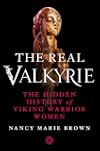
In 2017, DNA tests revealed to the collective shock of many scholars that a Viking warrior in a high-status grave in Birka, Sweden was actually a woman. Nancy Brown weaves together archaeology, history, and literature to imagine this woman's life and times, showing that women had more power and agency than historians have imagined.
Nancy Brown uses science to link the Birka Warrior, whom she names Hervor, to Viking trading towns and to their great trade route east to Byzantium and beyond. show more Brown imagines Hervor's life interesting with larger-than-life but real women, including Queen Gunnhild Mother-of-Kings, the Viking leader known as the Red Girl, and Queen Olga of Kyiv. What Brown reveals in these pages that much of what we have taken as truth about women in the Viking Age is based not on data, but on nineteenth-century Victorian biases.
One of my favorite parts of reading this was that the beginning of each chapter began with a fictionalized account of what Hervor would've been doing based on Viking literature and stories. It was able to grab a hold of me before learning about the culture and life of women, men, and society as a whole during this time period.
The way she crafts the story makes a fascinating read, but also is still approachable to those who may not know much about Viking history (this girl here). I was excited to read this and was blown away by how much I learned and how fun it was to read this book. This is definitely an important book not only for historians but for the every day person. We have this preconceived idea (again, largely based on Victorian misconceptions) that women weren't only regulated to the domestic sphere. show less
Nancy Brown uses science to link the Birka Warrior, whom she names Hervor, to Viking trading towns and to their great trade route east to Byzantium and beyond. show more Brown imagines Hervor's life interesting with larger-than-life but real women, including Queen Gunnhild Mother-of-Kings, the Viking leader known as the Red Girl, and Queen Olga of Kyiv. What Brown reveals in these pages that much of what we have taken as truth about women in the Viking Age is based not on data, but on nineteenth-century Victorian biases.
One of my favorite parts of reading this was that the beginning of each chapter began with a fictionalized account of what Hervor would've been doing based on Viking literature and stories. It was able to grab a hold of me before learning about the culture and life of women, men, and society as a whole during this time period.
The way she crafts the story makes a fascinating read, but also is still approachable to those who may not know much about Viking history (this girl here). I was excited to read this and was blown away by how much I learned and how fun it was to read this book. This is definitely an important book not only for historians but for the every day person. We have this preconceived idea (again, largely based on Victorian misconceptions) that women weren't only regulated to the domestic sphere. show less
Last year I read [The Sea Road] by Margaret Elphinstone, a historical fiction novel about a woman named Gudrid who is said to have been among the group who were the first Europeans to create a settlement in the New World in the 900s. I heard about this nonfiction book about the same woman, and knew I had to read it.
This is a very readable and interesting book. The author blends evidence from archaeological digs in Iceland, Greenland, and the U.S. with literary evidence from the Sagas to try show more to create a picture of Gudrid's life. Considering she's trying to reconstruct a life that occurred over a thousand years ago, she does a remarkable job. Brown blends accounts of the technology behind creating an archaeological record with information about life at the time, especially for women. She talks about how houses were set up and constructed and details how wool was used to create fabric. It was all very interesting.
Of course, in the end, it's pretty tough to recreate Gudrid's life in a convincing way relying on science. It was just so long ago. But in combination with the historical fiction I read, I feel I have a picture of what life might have been like back then, and I enjoy the speculation about this time period. show less
This is a very readable and interesting book. The author blends evidence from archaeological digs in Iceland, Greenland, and the U.S. with literary evidence from the Sagas to try show more to create a picture of Gudrid's life. Considering she's trying to reconstruct a life that occurred over a thousand years ago, she does a remarkable job. Brown blends accounts of the technology behind creating an archaeological record with information about life at the time, especially for women. She talks about how houses were set up and constructed and details how wool was used to create fabric. It was all very interesting.
Of course, in the end, it's pretty tough to recreate Gudrid's life in a convincing way relying on science. It was just so long ago. But in combination with the historical fiction I read, I feel I have a picture of what life might have been like back then, and I enjoy the speculation about this time period. show less
This book is why I only use 5 stars for an absolutely splendiforous book. This is one of them. Ms. Brown does not try to write a historical fiction novel or a speculative "who she must have been" book. Instead, she takes ways to research a life and puts them all together: Icelandic sagas, Viking history, archeology, and needlework. And creates a rich book that explains how Gudrid, a Viking wife, mother, and daughter, made a voyage across the Northern Atlantic ocean in about the year 1000, show more gave birth to a son, and made it back to Iceland 3 years later.
Along the way, we learn about Viking ship building techniques, how the forests yielded the particular tree with the particular V-shape to it to serve as the ship's ribs. Several trees, in fact. And a tree with a straight trunk, about 36' high, to serve as the mast. And how the nails were cut off once they were embedded, instead of bent down.
Then there is navigation through the Northern Atlantic, perhaps when the sun barely sets, without astrolabes, through the thick fog and possibly in pitching seas. Much of the archeological evidence about Vikings is from a prosperous farm, inhabited between 1000 and 1400, called "Farm Beneath the Sand" that was discovered in Greenland in 1991. It was later claimed by the Greenland tides 6 years later.
The map that accompanies this book is a brilliant viewpoint of an Icelandic voyage to Vinland, "Wine Land" which could be anywhere along the Eastern US coast. And Ms. Brown provides quotes and papers for all the researchers who claim what they think was *the* place where Vikings settled because, well, grapes. But the best evidence comes from northern Newfoundland in L'Anse aux Meadows where a sharpening stone and other Viking relics from the proper timeframe were found.
And the needlework! Thank the Goddesses of Threads that Ms. Brown put as much research into thread and cloth as she did into all the other discoveries and explanations! For the general public to know the painstaking way to take a shorn fleece, wash it, card it, then using a drop spindle to create thread. And the different whorls (disks) that are used to create the different thicknesses (or weights) of thread in drop spinning lends credence to the excavated homesteads where these whorls are found. They pinpoint the room, usually to the side of the Viking longhouse, where the women sat and spun, And wove. While I don't have a complete visual of a Viking loom, it is not a treadle loom. It's a walking loom. An estimate in the book is that a "hardworking weaver walked 23 miles every day."
What makes this book work on so many levels is the story-telling, the lyricism, of the words on the page. It is carefully crafted to give the history of a woman who lived a thousand years ago, who went on a dangerous voyage, and came home to create a prosperous farm, Glaumbauer, in northern Iceland that was excavated and researched in the early 2000's. show less
Along the way, we learn about Viking ship building techniques, how the forests yielded the particular tree with the particular V-shape to it to serve as the ship's ribs. Several trees, in fact. And a tree with a straight trunk, about 36' high, to serve as the mast. And how the nails were cut off once they were embedded, instead of bent down.
Then there is navigation through the Northern Atlantic, perhaps when the sun barely sets, without astrolabes, through the thick fog and possibly in pitching seas. Much of the archeological evidence about Vikings is from a prosperous farm, inhabited between 1000 and 1400, called "Farm Beneath the Sand" that was discovered in Greenland in 1991. It was later claimed by the Greenland tides 6 years later.
The map that accompanies this book is a brilliant viewpoint of an Icelandic voyage to Vinland, "Wine Land" which could be anywhere along the Eastern US coast. And Ms. Brown provides quotes and papers for all the researchers who claim what they think was *the* place where Vikings settled because, well, grapes. But the best evidence comes from northern Newfoundland in L'Anse aux Meadows where a sharpening stone and other Viking relics from the proper timeframe were found.
And the needlework! Thank the Goddesses of Threads that Ms. Brown put as much research into thread and cloth as she did into all the other discoveries and explanations! For the general public to know the painstaking way to take a shorn fleece, wash it, card it, then using a drop spindle to create thread. And the different whorls (disks) that are used to create the different thicknesses (or weights) of thread in drop spinning lends credence to the excavated homesteads where these whorls are found. They pinpoint the room, usually to the side of the Viking longhouse, where the women sat and spun, And wove. While I don't have a complete visual of a Viking loom, it is not a treadle loom. It's a walking loom. An estimate in the book is that a "hardworking weaver walked 23 miles every day."
What makes this book work on so many levels is the story-telling, the lyricism, of the words on the page. It is carefully crafted to give the history of a woman who lived a thousand years ago, who went on a dangerous voyage, and came home to create a prosperous farm, Glaumbauer, in northern Iceland that was excavated and researched in the early 2000's. show less
This book starts with the shock many anthropologists expressed when it was found that the Viking Warrior buried with honor and revered for years was found to be female. Brown goes on to discuss other Viking women: Queen Gunnhild Mother-of-Kings, the Viking leader known as the Red Girl, and Queen Olga of Kyiv. The tired trope that women kept the hearth while the robust men went out conquering and exploring is turned on its head. Both men and women wove. Both men and women baked bread. Both show more men and women wore jewelry, rode horses, used weapons, and governed. Admitedly, this is pretty dry, as anthropology books often are, but there's lots to learn here. show less
Lists
Awards


You May Also Like


Associated Authors
Statistics
- Works
- 10
- Members
- 1,732
- Popularity
- #14,838
- Rating
- 3.7
- Reviews
- 81
- ISBNs
- 44
- Languages
- 1
