
Meg McKinlay
Author of No Bears
About the Author
Meg McKinlay grew up in Bendigo, Victoria. She has worked a variety of jobs including swim instructor, tour guide, translator and teacher. She is an Honorary Research Associate at the University of Western Australia, where she has taught Australian Literature, Japanese, and Creative Writing. Meg show more divides her time between teaching and writing. Her books include Duck for a Day, The Truth About Penguins, Annabel, again, Surface Tension, which won the Best Young Fiction category of the 2012 Davitt Awards. Her book A Single Stone won a Queensland Literary Award 2015 in the Children's category. It also won the 2015 Aurealis Awards Best Children's Fiction. In 2016, it won the 2016 Prime Minister's Literary Award for Young Adult Fiction. (Bowker Author Biography) show less
Series
Works by Meg McKinlay
Tagged
Common Knowledge
Members
Reviews
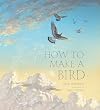
I'm not quite sure what to make of this book, honestly. It's an odd combination of factual information (birds' bones are hollow, their hearts beat faster than ours, etc) woven into surrealist prose that describes the construction of a bird from its component parts (bones, feathers, beak, eyes). I'm sure there's a metaphor in there somewhere, but it's not entirely clear to me what it is - that the whole is more than the sum of its parts? If you love something, let it go? The author's show more dedication hints at that interpretation - "To all the makers out there... to everyone who has the courage to breathe life and let go." But I think the metaphor is likely to be lost on literal-minded young readers, who may be confused by the implication that you can create a living creature just by assembling its bones and feathers.
The illustrations are beautiful though, and I love details like the subtle embossed blueprints on the cover. The style is an interesting combination of realistic natural elements and maker, almost steampunk, aesthetic. Some of the illustrations are a bit creepy, such as the skeleton of the huge fish on the first page, which may be off-putting to young kids. As another reviewer mentioned, there is a melancholy feel to the book - even gently dystopian - with the young protagonist apparently alone in a deserted landscape; yet there is also some sense of optimism as she creates and then releases the bird.
This story could be an interesting text to discuss with older elementary or middle school students, but I think it's unlikely to be very engaging for most younger kids. Even as an adult reader, it left me feeling a bit underwhelmed and wanting more to the story. Probably not one I'm going to find myself going back to often. show less
The illustrations are beautiful though, and I love details like the subtle embossed blueprints on the cover. The style is an interesting combination of realistic natural elements and maker, almost steampunk, aesthetic. Some of the illustrations are a bit creepy, such as the skeleton of the huge fish on the first page, which may be off-putting to young kids. As another reviewer mentioned, there is a melancholy feel to the book - even gently dystopian - with the young protagonist apparently alone in a deserted landscape; yet there is also some sense of optimism as she creates and then releases the bird.
This story could be an interesting text to discuss with older elementary or middle school students, but I think it's unlikely to be very engaging for most younger kids. Even as an adult reader, it left me feeling a bit underwhelmed and wanting more to the story. Probably not one I'm going to find myself going back to often. show less
 This review was written for LibraryThing Early Reviewers.
Having difficulty finding tags for this one as it doesn't quite fit into any particular category. This is a story of isolation and the damage it can do when there is no outside influence to change the way people think. Jena is the leader of the line. A group of 7 girls tied together who crawl through mountain caves to find mica; a rock that burns and provides fuel for the village. What is unique about this village is that is hemmed in on all sides by mountains so steep that no-one can climb show more out and so the villagers are essentially trapped in a caldera which is fine in Summer but when Winter comes, their entire village is submerged in snow. Mica is the only thing that keeps them warm and alive. It wasn't always that way, however, as miners in Ancient times set off a rockfall that trapped miners and visiting tourists in the area.
Now back to the present and Jena - all the girls are ultra skinny to be able to crawl through the tunnels and can bend their bodies into the smallest space. The villagers worship the mountain and don't mine (because it caused their entrapment) and also only girls are allowed to do this because it was male miners who angered the mountain with their mining. The village is controlled by a group of women called the Mothers who bind the baby girls in the village to make them smaller ( a la Chinese foot binding) and MAJOR SPOILER ALERT they also give the pregnant women in the village medicine to make their babies come early so that they can be as small as possible.
Lena, through conversations with Luca, one of the Mother's grandsons, her own deduction and memories of what happened after her baby sister was born, puts this all together.
It forces her to confront her father's attempt to escape from the village after Jena's mother died and what happened to her baby sister.
A really interesting take on "ends justifies the means" - the survival of the village depends on the smallness of the girls born in it - and the torment one faces when you learn everything that you believe to hold true suddenly looks morally wrong.
Due to some of the concepts being quite sophisticated I have suggested this be a Year 8 upwards book.
Well-written, engrossing and totally not what I was expecting at all! show less
Now back to the present and Jena - all the girls are ultra skinny to be able to crawl through the tunnels and can bend their bodies into the smallest space. The villagers worship the mountain and don't mine (because it caused their entrapment) and also only girls are allowed to do this because it was male miners who angered the mountain with their mining. The village is controlled by a group of women called the Mothers who bind the baby girls in the village to make them smaller ( a la Chinese foot binding) and MAJOR SPOILER ALERT they also give the pregnant women in the village medicine to make their babies come early so that they can be as small as possible.
Lena, through conversations with Luca, one of the Mother's grandsons, her own deduction and memories of what happened after her baby sister was born, puts this all together.
It forces her to confront her father's attempt to escape from the village after Jena's mother died and what happened to her baby sister.
A really interesting take on "ends justifies the means" - the survival of the village depends on the smallness of the girls born in it - and the torment one faces when you learn everything that you believe to hold true suddenly looks morally wrong.
Due to some of the concepts being quite sophisticated I have suggested this be a Year 8 upwards book.
Well-written, engrossing and totally not what I was expecting at all! show less
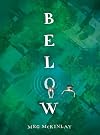
Below by Meg McKinlay is the story of a town that is gearing up to celebrate its relocation and the creation of a lake (due to the intentional flooding of the old town). Twelve years on, the town is facing a new drought and pieces of the old town have begun to surface at the back of their man made lake. As a Californian watching my state go through its own worst drought in years and seeing old things surfacing as the water recedes, I can say this book struck home.
Cassie who was born the day show more the town was flooded feels compelled to investigate the true story behind the town's flooding, feeling that something is off on the way everyone seems to remember it. Her best way to do that is through the old town itself, which means swimming in the out of bounds area.
The story of Old Lower Grange rings true. Many towns have been relocated and the old buildings flooded as populations grow and with them the need for water. Near where I live, there is Shasta Lake which sits above Kennett when the Pit, McCloud and Sacramento Rivers were damed in 1948. More recently near San Diego, Olivenhain Dam was built and flooded out a valley near Escondido. Looking at Google Maps, you can see a road that leads right up to the water's edge (and under it).
Suffice it to say, I loved this book. I loved how the true story behind the town's flooding was revealed over the course of the summer. Cassie and her friend who are both outsiders in that they are just too young to have known the old town but are too old to feel a part of the new town were the perfect pair to uncover the ways their lives were forever changed by the flooding. show less
Cassie who was born the day show more the town was flooded feels compelled to investigate the true story behind the town's flooding, feeling that something is off on the way everyone seems to remember it. Her best way to do that is through the old town itself, which means swimming in the out of bounds area.
The story of Old Lower Grange rings true. Many towns have been relocated and the old buildings flooded as populations grow and with them the need for water. Near where I live, there is Shasta Lake which sits above Kennett when the Pit, McCloud and Sacramento Rivers were damed in 1948. More recently near San Diego, Olivenhain Dam was built and flooded out a valley near Escondido. Looking at Google Maps, you can see a road that leads right up to the water's edge (and under it).
Suffice it to say, I loved this book. I loved how the true story behind the town's flooding was revealed over the course of the summer. Cassie and her friend who are both outsiders in that they are just too young to have known the old town but are too old to feel a part of the new town were the perfect pair to uncover the ways their lives were forever changed by the flooding. show less
Even though I figured out the mystery about halfway through, I remained engaged to see how Cassie would solve it and what would happen when she did. (Middle schoolers probably won't figure it out as quickly as I did. It's certainly realistic that Cassie didn't.) The tone is quietly ominous. I appreciated the philosophical questions: when we tell history, what gets left out and why? What's the value in knowing the history of a place? Is home about people or places or some combination? I felt show more beat over the head sometimes with literary metaphor -- yes, I get it, a lot is hiding "under the surface of the water"! -- but overall I found it an enjoyable read. Not sure which kids I would give it to, though. It's too short for the middle schoolers who are ready for weird and challenging, and too slow and non-linear for the more reluctant readers or concrete thinkers. Maybe advanced 4th or 5th grade readers who like unusual mysteries?
Maybe I missed something, but I was still confused by the timeline by the end. Did Finkle push for the town to be drowned because of the accident, or did he just take advantage of the plan for his own ends? I live in Boston, which pushed for towns to be drowned to build the Quabbin Reservoir at the turn of the last century, so I found that whole decision-making process an intriguing part of the book! show less
Lists
Awards


You May Also Like


Associated Authors
Statistics
- Works
- 27
- Members
- 681
- Popularity
- #37,120
- Rating
- 3.7
- Reviews
- 59
- ISBNs
- 111
- Languages
- 1
