
Joseph T. Glatthaar
Author of General Lee's Army: From Victory to Collapse
About the Author
Joseph T. Glatthaar is the Stephenson Distinguished Professor of History and chair of the Curriculum in Peace, War, and Defense at the University of North Carolina at Chapel Hill.
Works by Joseph T. Glatthaar
Forged in Battle: The Civil War Alliance of Black Soldiers and White Officers (1989) 238 copies, 2 reviews
The March to the Sea and Beyond: Sherman's Troops in the Savannah and Carolinas Campaigns (1985) 197 copies, 2 reviews
Leaders of the Lost Cause: New Perspectives on the Confederate High Command (2004) — Editor — 87 copies, 1 review
Associated Works
The View from the Ground: Experiences of Civil War Soldiers (2007) — Afterword; Afterword — 32 copies
Inside the Confederate Nation: Essays in Honor of Emory M. Thomas (Conflicting Worlds: New Dimensions of the American Civil War) (2005) — Contributor — 20 copies
MHQ: The Quarterly Journal of Military History — Summer 1994 (1994) — Author "Lord High Admiral of the U.S. Navy" and "Grant at Vicksburg: A Lesson in Operational Art" — 11 copies
Tagged
Common Knowledge
- Canonical name
- Glatthaar, Joseph T.
- Birthdate
- 1956-10-26
- Gender
- male
- Education
- Ohio Wesleyan University (BA|1978)
Rice University (MA|History|1981)
University of Wisconsin-Madison (PhD|History|1983) - Occupations
- military historian
professor - Nationality
- USA
- Associated Place (for map)
- USA
Members
Reviews
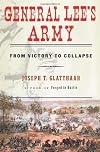
This book is quite a thorough social history of The Army of Northern Virginia. The focus is on the Army not the military history. There is some material on the battles but very little as a percentage of the book. It is evident that the author has done a tremendous amount of research using primary sources. The excerpts from letters would probably amount to 25% of the text. Those excerpts illustrate the differing levels of literacy among the soldiers and are sometimes difficult to understand show more because of the creative spelling. In addition there is a large amount of statistical research on all aspects of the Army. The author explains in an appendix how he created the sample and did the statistical analysis.
There were times when I considered not finishing the book. The author's style is dry and there is a good amount of repetition. When I had finished the book I felt I had added a significant amount of knowledge regarding the soldiers of the Army of Northern Virginia and all aspects of their experience in the war. The manner in which the material was set forth was necessary to impart the complete experience of the soldiers who fought for Robert E. Lee.
The privations suffered by the soldiers are thoroughly documented. I had read about the problems with lack of shoes but just as great was the lack of pants. During the siege at Petersburg the soldiers were paid to scour the battlefield for lead to be used in making bullets. The courage and confidence showed by the soldiers in these conditions is remarkable.
They were a heck of an Army. Almost always outnumbered, under equipped, lacking basic supplies they took on the Army of the Potomac and with rare exceptions defeated them. They fought with a confidence in themselves and their generals that compensated for their material shortcomings. Up until the end of 1864 they were confident that they would not be defeated. They became the heart of the Confederacy and embodied the best and worst of the people for whom they fought.
Their destruction proved the efficacy of Grant's strategy beginning in May of 1864. His tenacity wore them out while the destruction wrought by Sherman destroyed the support of the Confederate people for their fight. Families wrote letters to soldiers begging them to desert and come home to help the family.
All of the repetition and the statistics made reading the book a total immersion experience in the life of the Army. It is not the book to read for entertainment to get through it does take a bit of work. It is the book to read to gain a unique understanding of General Lee's Army. If you can make the commitment you will be rewarded by this excellent contribution to the scholarship on the Civil War. show less
There were times when I considered not finishing the book. The author's style is dry and there is a good amount of repetition. When I had finished the book I felt I had added a significant amount of knowledge regarding the soldiers of the Army of Northern Virginia and all aspects of their experience in the war. The manner in which the material was set forth was necessary to impart the complete experience of the soldiers who fought for Robert E. Lee.
The privations suffered by the soldiers are thoroughly documented. I had read about the problems with lack of shoes but just as great was the lack of pants. During the siege at Petersburg the soldiers were paid to scour the battlefield for lead to be used in making bullets. The courage and confidence showed by the soldiers in these conditions is remarkable.
They were a heck of an Army. Almost always outnumbered, under equipped, lacking basic supplies they took on the Army of the Potomac and with rare exceptions defeated them. They fought with a confidence in themselves and their generals that compensated for their material shortcomings. Up until the end of 1864 they were confident that they would not be defeated. They became the heart of the Confederacy and embodied the best and worst of the people for whom they fought.
Their destruction proved the efficacy of Grant's strategy beginning in May of 1864. His tenacity wore them out while the destruction wrought by Sherman destroyed the support of the Confederate people for their fight. Families wrote letters to soldiers begging them to desert and come home to help the family.
All of the repetition and the statistics made reading the book a total immersion experience in the life of the Army. It is not the book to read for entertainment to get through it does take a bit of work. It is the book to read to gain a unique understanding of General Lee's Army. If you can make the commitment you will be rewarded by this excellent contribution to the scholarship on the Civil War. show less
Combining classic military history with a wealth of social history insights, Joseph Glatthaar details the exploits and experiences of the Army of Northern Virginia in the aptly titled "General Lee's Army: From Victory to Collapse." Drawing from a wealth of material, including countless letters and diaries from soldiers of all ranks, the University of North Carolina professor offers a comprehensive view of the Confederacy's most-storied fighting force.
While never skimping on descriptions of show more overall tactics in battle, Glatthaar is as interested in offering a broad picture of the makeup and general experiences of the soldiers in Lee's army. Alongside details of the Gettysburg Campaign and the massive trench warfare of 1864, there are chapters on such day-to-day issues as medical care, quartermaster supply, religion, and general camp life.
Perhaps the greatest contribution of this volume is the attention to the make-up of the army, extrapolated from careful analysis of a 600 soldier sample. This analysis allows Glatthaar to describe the divergent backgrounds of the fighting men, including family wealth and relationship to the institution of slavery. The findings suggest that while the army initially was a mostly representative group of the southern population, as the war progressed replacement soldiers were overwhelmingly drawn from non-slaveholding families of little wealth.
This changing demographic makeup of the army is one of the challenges that led to the ultimate collapse and defeat of the Army of Northern Virginia, alongside other better known issues as increasingly limited manpower and the persistent problems of arms, ammunition, and food supplies. Glatthaar also highlights the difficulties in advancing qualified people into officer positions that Lee struggled to overcome, with some success, throughout the war.
While the focus of this book is on the common soldier, it is clear that Glatthaar holds Robert E. Lee is great esteem. The surprising implicit argument of this book is that Lee was really the guiding force behind the army, not only in generally aggressive tactical decisions, but as importantly in improving nuts and bolts matters of supply, training, and officer selection. This makes the book's title quite apropos indeed.
On the whole, this well-researched volume is an excellent resource on the famed Army of Northern Virginia. While some expecting heavily detailed campaign analysis might be disappointed, those hoping for a more complete portrait of this fighting force will greatly appreciate this book for its scope, its research, and its unexpectedly pleasant prose. show less
While never skimping on descriptions of show more overall tactics in battle, Glatthaar is as interested in offering a broad picture of the makeup and general experiences of the soldiers in Lee's army. Alongside details of the Gettysburg Campaign and the massive trench warfare of 1864, there are chapters on such day-to-day issues as medical care, quartermaster supply, religion, and general camp life.
Perhaps the greatest contribution of this volume is the attention to the make-up of the army, extrapolated from careful analysis of a 600 soldier sample. This analysis allows Glatthaar to describe the divergent backgrounds of the fighting men, including family wealth and relationship to the institution of slavery. The findings suggest that while the army initially was a mostly representative group of the southern population, as the war progressed replacement soldiers were overwhelmingly drawn from non-slaveholding families of little wealth.
This changing demographic makeup of the army is one of the challenges that led to the ultimate collapse and defeat of the Army of Northern Virginia, alongside other better known issues as increasingly limited manpower and the persistent problems of arms, ammunition, and food supplies. Glatthaar also highlights the difficulties in advancing qualified people into officer positions that Lee struggled to overcome, with some success, throughout the war.
While the focus of this book is on the common soldier, it is clear that Glatthaar holds Robert E. Lee is great esteem. The surprising implicit argument of this book is that Lee was really the guiding force behind the army, not only in generally aggressive tactical decisions, but as importantly in improving nuts and bolts matters of supply, training, and officer selection. This makes the book's title quite apropos indeed.
On the whole, this well-researched volume is an excellent resource on the famed Army of Northern Virginia. While some expecting heavily detailed campaign analysis might be disappointed, those hoping for a more complete portrait of this fighting force will greatly appreciate this book for its scope, its research, and its unexpectedly pleasant prose. show less
A history of the USA Civil War, exclusively from the perspective of the men who fought on the losing side. The author really digs into the mentality of the people who served in the Confederate army, relying on letters written by those men to get a sense of what motivated them.
The dynamic of this civil war was fascinating to me: a smaller army made up of volunteers extremely motivated to defend their way of life fighting largely a defensive war against a much larger and better armed, but show more less motivated enemy. I was particularly interested in the way Southerners' cultural habits and sense of honour often clashed with their military objectives -- because of the independent spirit prized by Southern culture, their undisciplined behaviour negated their advantage in motivation, for example.
This is going to sound stupid, but I had no idea that slavery was such a central issue -- I thought that was one of those myths that grew up around the war, because I couldn't believe that anyone would be motivated to defend slavery on moral grounds (economic grounds, I can see). But Glatthaar shows that slavery was a focal point in the culture of the south, not only by reproducing soldiers' letters that frequently make mention of their "negroes", but by producing a demographic sample that shows how many people benefited from slavery: one-third of the people who served in the army or their families had slaves, and almost half lived in a household that had slaves. Moreover, slave owners frequently "lent" slaves to many of the poorer Southerners who couldn't afford slaves themselves.
(In several passages Glatthaar writes about slaves who had been brought into the army by some soldiers to serve as servants -- who then took the first opportunity to run away to the Northern lines, actions that surprised absolutely nobody. Nobody, except for their perplexed ex-owners: some of the rare amusing moments come when the author produces letters home from these Southerners, who couldn't imagine why their slaves had run away, After all, hadn't they always treated them right?. The level of denial is unbelievalble.)
The major battles are described in detail, along with the commanding officers. I could have used more maps (a major help in a military history), but since the focus of the book is not on the fighting itself, but the fighters, it wasn't necessary.
I really enjoyed the format of the book, which relies heavily on the soldiers' own words to flesh out the picture of the men who fought and why they fought. It was a good introduction to a period in history I knew nothing about. show less
The dynamic of this civil war was fascinating to me: a smaller army made up of volunteers extremely motivated to defend their way of life fighting largely a defensive war against a much larger and better armed, but show more less motivated enemy. I was particularly interested in the way Southerners' cultural habits and sense of honour often clashed with their military objectives -- because of the independent spirit prized by Southern culture, their undisciplined behaviour negated their advantage in motivation, for example.
This is going to sound stupid, but I had no idea that slavery was such a central issue -- I thought that was one of those myths that grew up around the war, because I couldn't believe that anyone would be motivated to defend slavery on moral grounds (economic grounds, I can see). But Glatthaar shows that slavery was a focal point in the culture of the south, not only by reproducing soldiers' letters that frequently make mention of their "negroes", but by producing a demographic sample that shows how many people benefited from slavery: one-third of the people who served in the army or their families had slaves, and almost half lived in a household that had slaves. Moreover, slave owners frequently "lent" slaves to many of the poorer Southerners who couldn't afford slaves themselves.
(In several passages Glatthaar writes about slaves who had been brought into the army by some soldiers to serve as servants -- who then took the first opportunity to run away to the Northern lines, actions that surprised absolutely nobody. Nobody, except for their perplexed ex-owners: some of the rare amusing moments come when the author produces letters home from these Southerners, who couldn't imagine why their slaves had run away, After all, hadn't they always treated them right?. The level of denial is unbelievalble.)
The major battles are described in detail, along with the commanding officers. I could have used more maps (a major help in a military history), but since the focus of the book is not on the fighting itself, but the fighters, it wasn't necessary.
I really enjoyed the format of the book, which relies heavily on the soldiers' own words to flesh out the picture of the men who fought and why they fought. It was a good introduction to a period in history I knew nothing about. show less
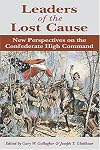
Sometimes it is the others in the smaller spotlight that make the biggest difference. The star can dominate the headlines, receive the most praise and adulation, be critiqued the most and the harshest, but sometimes it comes down to who is playing the other parts that matter in determining the outcome. That is/was the case in the American Civil War with General Lee and the rest of the Confederate commanders who received the rank of full general. The book Leaders of the Lost Cause edited by show more the Civil War heavyweights Gary W. Gallagher and Joseph T. Glatthaar takes a look at just this topic.
The editors of this title, Misters Gallagher and Glatthaar, have gather together some of the brightest minds and authors of all things American Civil War and had each of them take new critical looks and write new biographical essay on those individuals who attained the rank of full general in the short life of the army of the Confederate government. The list is illustrious, a who’s who so to speak of well known individuals in the Amy of the Confederacy: Robert E. Lee, P. G. T. Beauregard, Braxton Bragg, Samuel Cooper, Albert Sidney Johnson, Joseph E. Johnston, Edmund Kirby Smith, and John Bell Hood. The author list of each essay is just as illustrious: the aforementioned Gary W. Gallagher, Charles P. Roland, James I. Robertson, Jr., William C. Davis, Stephen D. Engle, Robert K. Krick, Glatthaar, and Keith S. Bohannon respectively.
Of course Gallagher’s essay on Lee was mostly a positive one, though no one would doubt it wouldn’t be. What I was more curious about was the story of the other generals who were not as popular, who did not share the bright spotlight with Lee.
The Beauregard story was interesting to me. Here was a man of grand ideas, but what it seemed to me was one who was afraid to act and in turn fail. He seemed to be very comfortable criticizing and finding fault with others, but did not seem to be able to turn the jaundiced eye upon himself. For all his faults, President Davis seemed to find him irreplaceable, like he did with the majority of the others, and when he needed to be disciplined, Davis just seemed to move him to another theater of the war and gave ‘the problem’ to someone else.
Bragg on the other hand, seemed like he had a half-way decent mind on his shoulders. His problem stemmed from the fact that he only had a half-way decent mind on his shoulders as well as a terrible personality. There were not too many out there that liked this guy. The one that did was Davis, who is also the only one that counted.
Samuel Cooper was a mystery to me. I had never heard of this man, but as it turns out not many really have with the exception of some die-hard scholars. He, as it turns out, rarely wore a uniform, never appeared on a field of battle against the Union army, but was very influential in the war as a member of the front office personnel (I envisioned him as someone who would be on the Joint Chiefs of Staff in today’s world). Mr. William C. Davis I thought did a very good job of introducing him to the reader and keeping him interesting even though he isn’t the most romantic story out there.
Albert Sidney Johnson was a general that President Davis though very highly of, maybe more so than even Lee. He was given a huge and almost impossible work load, and died way to early to allow him to live up to any of the hype.
Joseph E. Johnston was similar to Beauregard, but maybe more childish and one who held grudges more so than anyone of the other generals. Krick’s writing reflected a very bitter and small man to a degree that I was unaware of.
I did not know hardly a lick about E. Kirby Smith. In fact, he was one of the main reasons I got the book in the first place. I had heard and seen his name in many places, but never really knew anything about him. His story reminds me of Albert Johnson’s, someone of ability who was given way to much for one man to accomplish successfully.
John Bell Hood was shown to be more of a fighter than a thinker. The title of his essay says it all “’A Bold Fighter’ Promoted Beyond His Abilities”.
I like this book very much. None of the essays were too long to not read in a couple sittings at the most. The authors know how to write which made for exceptional prose for the most part. The essays were filled with much of the high points as well as the low points of each of their subjects lives. What I am not too sure of was the complete and utter negativity of the overall evaluation of the generals (with the exception of Lee and somewhat of Cooper) Confederate careers. What I took away from this read was that one man, Lee, could not do it all for the Southern nation, though even he had his faults. Others that were looked upon to lead did not pull their weight, play their part to the best of their abilities, and accept they had a part to play at times, or were just given Sisyphusian job to do. Which in the end led to the failure of the Confederate experiment.
I would definitely recommend this to others who are interested in gaining more insight into the leadership, if you can call it that, of the Confederates. It has created in me a need to find out more about these intriguing individuals (they can’t be all this negative…can they?). Great, just what I need, another excuse to get more books… show less
The editors of this title, Misters Gallagher and Glatthaar, have gather together some of the brightest minds and authors of all things American Civil War and had each of them take new critical looks and write new biographical essay on those individuals who attained the rank of full general in the short life of the army of the Confederate government. The list is illustrious, a who’s who so to speak of well known individuals in the Amy of the Confederacy: Robert E. Lee, P. G. T. Beauregard, Braxton Bragg, Samuel Cooper, Albert Sidney Johnson, Joseph E. Johnston, Edmund Kirby Smith, and John Bell Hood. The author list of each essay is just as illustrious: the aforementioned Gary W. Gallagher, Charles P. Roland, James I. Robertson, Jr., William C. Davis, Stephen D. Engle, Robert K. Krick, Glatthaar, and Keith S. Bohannon respectively.
Of course Gallagher’s essay on Lee was mostly a positive one, though no one would doubt it wouldn’t be. What I was more curious about was the story of the other generals who were not as popular, who did not share the bright spotlight with Lee.
The Beauregard story was interesting to me. Here was a man of grand ideas, but what it seemed to me was one who was afraid to act and in turn fail. He seemed to be very comfortable criticizing and finding fault with others, but did not seem to be able to turn the jaundiced eye upon himself. For all his faults, President Davis seemed to find him irreplaceable, like he did with the majority of the others, and when he needed to be disciplined, Davis just seemed to move him to another theater of the war and gave ‘the problem’ to someone else.
Bragg on the other hand, seemed like he had a half-way decent mind on his shoulders. His problem stemmed from the fact that he only had a half-way decent mind on his shoulders as well as a terrible personality. There were not too many out there that liked this guy. The one that did was Davis, who is also the only one that counted.
Samuel Cooper was a mystery to me. I had never heard of this man, but as it turns out not many really have with the exception of some die-hard scholars. He, as it turns out, rarely wore a uniform, never appeared on a field of battle against the Union army, but was very influential in the war as a member of the front office personnel (I envisioned him as someone who would be on the Joint Chiefs of Staff in today’s world). Mr. William C. Davis I thought did a very good job of introducing him to the reader and keeping him interesting even though he isn’t the most romantic story out there.
Albert Sidney Johnson was a general that President Davis though very highly of, maybe more so than even Lee. He was given a huge and almost impossible work load, and died way to early to allow him to live up to any of the hype.
Joseph E. Johnston was similar to Beauregard, but maybe more childish and one who held grudges more so than anyone of the other generals. Krick’s writing reflected a very bitter and small man to a degree that I was unaware of.
I did not know hardly a lick about E. Kirby Smith. In fact, he was one of the main reasons I got the book in the first place. I had heard and seen his name in many places, but never really knew anything about him. His story reminds me of Albert Johnson’s, someone of ability who was given way to much for one man to accomplish successfully.
John Bell Hood was shown to be more of a fighter than a thinker. The title of his essay says it all “’A Bold Fighter’ Promoted Beyond His Abilities”.
I like this book very much. None of the essays were too long to not read in a couple sittings at the most. The authors know how to write which made for exceptional prose for the most part. The essays were filled with much of the high points as well as the low points of each of their subjects lives. What I am not too sure of was the complete and utter negativity of the overall evaluation of the generals (with the exception of Lee and somewhat of Cooper) Confederate careers. What I took away from this read was that one man, Lee, could not do it all for the Southern nation, though even he had his faults. Others that were looked upon to lead did not pull their weight, play their part to the best of their abilities, and accept they had a part to play at times, or were just given Sisyphusian job to do. Which in the end led to the failure of the Confederate experiment.
I would definitely recommend this to others who are interested in gaining more insight into the leadership, if you can call it that, of the Confederates. It has created in me a need to find out more about these intriguing individuals (they can’t be all this negative…can they?). Great, just what I need, another excuse to get more books… show less
Awards


You May Also Like


Associated Authors
Statistics
- Works
- 13
- Also by
- 5
- Members
- 1,467
- Popularity
- #17,513
- Rating
- 4.0
- Reviews
- 16
- ISBNs
- 59
- Favorited
- 1