
Paul T. Barber
Author of Vampires, Burial, and Death: Folklore and Reality
About the Author
Works by Paul T. Barber
Associated Works
The Bog People; Iron Age Man Preserved (1965) — Introduction, some editions — 747 copies, 10 reviews
Tagged
Common Knowledge
- Birthdate
- 1941
- Gender
- male
- Organizations
- Fowler Museum of Cultural History
- Nationality
- USA
- Associated Place (for map)
- USA
Members
Reviews
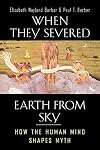
This book takes a completely different approach to mythology than any I've read before, studying it through cognitive science rather than as literature or archetypal psychology. The Barbers' theory is that many myths describe real events and phenomena, such as volcanic eruptions, the precession of the equinoxes, or the dangers of flammable methane gas trapped in burial mounds. Myths happen when non-literate people pass a description of an event down for generations via an oral tradition, show more subject to the limitations of human memory, how well the witnesses understood the original event, if the people stayed in the area where the event happened or migrated to somewhere where the myth no longer fit, and so on.
The Barbers came up with about 40 "myth principles" that explain what processes have affected the development of these myths. The sheer number of the principles overwhelmed me, and I lost track of which one was which, but happily they're all summarized in an appendix at the end for further study. Aside from that, I thought the authors' argument was convincing and the book was fascinating. show less
The Barbers came up with about 40 "myth principles" that explain what processes have affected the development of these myths. The sheer number of the principles overwhelmed me, and I lost track of which one was which, but happily they're all summarized in an appendix at the end for further study. Aside from that, I thought the authors' argument was convincing and the book was fascinating. show less

Anyone with an interest in vampires needs to investigate this marvelous book by Paul Barber, a rare scholarly study that is written with verve, wit, and charm. Barber reminds us that the undead of folklore have precious little in common with Bram Stoker's Dracula or Anne Rice's Lestat -- those are completely modern concoctions. The traditional vampire is, in fact, a corpse. And not a corpse in any too good shape, either! Barber includes more information about the body after death than you show more could ever have imagined, and yet somehow manages to maintain a jolly tone while he discusses the details of decomposition and other potentially gut-churning subjects. I laughed out loud at lines like these: "However tragic your death may be, it would be far more tragic if you were to take me with you." This is a great book! show less
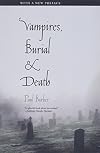
Are no sparkly or sexy vampires here; not even any who wear evening dress and travel with coffins of dirt. This nonfiction book explores the very roots of the vampire legend and ties it to the unexpected things that dead bodies can do and how the people of yesterday interpreted those things.
The average corpse does certain things: the face turns pale and waxy, the limbs become rigid, the blood coagulates, and it lays silent and unmoving. But not all corpses follow those rules; depending on show more how the person died, they may have a red face. After a certain point, rigor leaves and the body becomes limp again. The blood does not always coagulate. A corpse filled with gasses from decay may make sounds when moved or prodded. These things are explainable through science today, but weren’t 500 or more years ago.
The book reads like a master’s or doctoral thesis: Barber makes his points clearly and presents well researched proof to back them. While much of his research was in folklore, he has also gone to the experts in dead bodies: coroners and medical examiners. He’s got the facts down cold: the physical signs of bodies that were declared vampires or revenants could all be explained by science. The stories that grew around them, of course, were all human imagination. If a body could groan and move and bleed, why couldn’t it be what was making trouble at night in the village?
I’m not going to say that lovers of vampire novels will like this book (I’m not saying they won’t, either). Lovers of folklore and human nature will. A warning: the descriptions of dead bodies are very graphic, although certainly not sensational. It’s all presented in a dry, just the facts manner, but very interesting. show less
The average corpse does certain things: the face turns pale and waxy, the limbs become rigid, the blood coagulates, and it lays silent and unmoving. But not all corpses follow those rules; depending on show more how the person died, they may have a red face. After a certain point, rigor leaves and the body becomes limp again. The blood does not always coagulate. A corpse filled with gasses from decay may make sounds when moved or prodded. These things are explainable through science today, but weren’t 500 or more years ago.
The book reads like a master’s or doctoral thesis: Barber makes his points clearly and presents well researched proof to back them. While much of his research was in folklore, he has also gone to the experts in dead bodies: coroners and medical examiners. He’s got the facts down cold: the physical signs of bodies that were declared vampires or revenants could all be explained by science. The stories that grew around them, of course, were all human imagination. If a body could groan and move and bleed, why couldn’t it be what was making trouble at night in the village?
I’m not going to say that lovers of vampire novels will like this book (I’m not saying they won’t, either). Lovers of folklore and human nature will. A warning: the descriptions of dead bodies are very graphic, although certainly not sensational. It’s all presented in a dry, just the facts manner, but very interesting. show less
This book provides a methodology for interpreting myths in order to determine the natural historical roots of the myth. Doing so, the authors demonstrate how many myths actually provide a record of what happened thousands of years ago long before there were any written records.
The book begins with the analysis of a story told by American Indians tracing the roots of the story back to a major volcanic eruption. The book then goes on to discuss numerous myths from cultures all over the world show more including discussions of fire-breathing, treasure-hording dragons, vampires, Prometheus, Noah's flood, and dwarves that forge iron. The book is fascinating and wonderfully readable. It also leaves you with a new way of looking at history and literature. show less
The book begins with the analysis of a story told by American Indians tracing the roots of the story back to a major volcanic eruption. The book then goes on to discuss numerous myths from cultures all over the world show more including discussions of fire-breathing, treasure-hording dragons, vampires, Prometheus, Noah's flood, and dwarves that forge iron. The book is fascinating and wonderfully readable. It also leaves you with a new way of looking at history and literature. show less
Lists
You May Also Like


Statistics
- Works
- 2
- Also by
- 1
- Members
- 733
- Popularity
- #34,654
- Rating
- 4.0
- Reviews
- 11
- ISBNs
- 11
- Languages
- 1