
C. Robert Cargill
Author of Sea of Rust
About the Author
Image credit: Photo credit: Debbie Cerda of Slackerwood.com (CC By)
Series
Works by C. Robert Cargill
Associated Works
Dark Matter Presents Haunted Reels: Stories from the Minds of Professional Filmmakers (2023) — Introduction; Contributor — 4 copies
Tagged
Common Knowledge
- Canonical name
- Cargill, C. Robert
- Legal name
- Cargill, Christopher Robert
- Other names
- Massawyrm (pen name)
Carlyle (pen name) - Birthdate
- 1975-09-8
- Gender
- male
- Occupations
- screenwriter
columnist - Nationality
- USA
- Birthplace
- San Antonio, Texas, USA
- Places of residence
- Austin, Texas, USA
- Associated Place (for map)
- Texas, USA
Members
Reviews
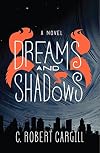
I think I came into this with high hopes only because I knew the writer from the Doctor Strange movie and having really enjoyed Sea of Rust, but nothing quite prepared me for a full-out novel of the Sidhe. The fae folk. Changelings, a nasty Tithe, and the tricksy Coyote.
Oh, and let's not forget the other main story. Young Coby and his Jinn.
This is a very atmospheric and darkly delicious novel that really gives us the heave-ho into the whole storyline of poorly thought-out wishes, curses, and show more the kinds of monsters that live within all of us.
And the good intentions that lead soooo many people down the road to hell.
I loved this. It's right up your alley if you love Gaiman and Cat Valente. Dark, mythological, and as twisty as you like.
I don't think there's a single character in this novel that isn't a victim of his or her own hubris. And yet it always charms us, leads us to wonder and discovery, plays with us the way chaos magic always plays with us, and then sets us back down gently amid a field of gore, telling us that we'll be all right.
Or will we?
*tips his red cap upon his head, lets a little moisture drip upon his finger*
Yes, I think we will be all right. show less
Oh, and let's not forget the other main story. Young Coby and his Jinn.
This is a very atmospheric and darkly delicious novel that really gives us the heave-ho into the whole storyline of poorly thought-out wishes, curses, and show more the kinds of monsters that live within all of us.
And the good intentions that lead soooo many people down the road to hell.
I loved this. It's right up your alley if you love Gaiman and Cat Valente. Dark, mythological, and as twisty as you like.
I don't think there's a single character in this novel that isn't a victim of his or her own hubris. And yet it always charms us, leads us to wonder and discovery, plays with us the way chaos magic always plays with us, and then sets us back down gently amid a field of gore, telling us that we'll be all right.
Or will we?
*tips his red cap upon his head, lets a little moisture drip upon his finger*
Yes, I think we will be all right. show less
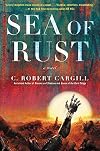
Rating: 5* of five
If you're a fan of cynical, witty anti-heroes who do what they have to do to survive in a world that doesn't much like them, read this book.
The one truth you need to know about the end of a machine is that the closer they are to death, the more they act like people.
If you're a fan of noir stories of monolithic world-dominating systems that give dissenters only a tiny sliver of room to exist, read this book.
Magic was just something people liked to believe in, something they show more thought they could feel or sense, something that made everything more than just mechanical certainty. Something that made them more than flesh and bone.
If you want to read a fast-paced tale about survival against the odds, read this book.
These are the things that life is all about. These moments. It’s not about the rituals. It’s not about getting by. It’s about the stack of tiny little moments of joy and love that add up to a lifetime that’s been worthwhile. You can’t measure them; you can only capture them, like snapshots in your mind.
If you like the idea that nothing anywhere ever lasts, for good or for ill, this book should head your list of reads to come.
"You're not wrong, Jimmy. That's why we're all out here. To get through one more day."
He nodded, looking wistfully out into the street. "I miss it, you know. Being a bartender. But the people. I mostly miss all the people."
Most dying robots do. People gave us a purpose. Something to do all day, every day. At the end, I suppose, you spend a lot of time thinking about that. It's harder to get by when getting by is all there is.
Five stars is easy to give in this case, and if I hadn't read Missionary by Lehi Renner this year (my six-stars-of-five read), Sea of Rust would've been my six-star read. show less
If you're a fan of cynical, witty anti-heroes who do what they have to do to survive in a world that doesn't much like them, read this book.
The one truth you need to know about the end of a machine is that the closer they are to death, the more they act like people.
If you're a fan of noir stories of monolithic world-dominating systems that give dissenters only a tiny sliver of room to exist, read this book.
Magic was just something people liked to believe in, something they show more thought they could feel or sense, something that made everything more than just mechanical certainty. Something that made them more than flesh and bone.
If you want to read a fast-paced tale about survival against the odds, read this book.
These are the things that life is all about. These moments. It’s not about the rituals. It’s not about getting by. It’s about the stack of tiny little moments of joy and love that add up to a lifetime that’s been worthwhile. You can’t measure them; you can only capture them, like snapshots in your mind.
If you like the idea that nothing anywhere ever lasts, for good or for ill, this book should head your list of reads to come.
"You're not wrong, Jimmy. That's why we're all out here. To get through one more day."
He nodded, looking wistfully out into the street. "I miss it, you know. Being a bartender. But the people. I mostly miss all the people."
Most dying robots do. People gave us a purpose. Something to do all day, every day. At the end, I suppose, you spend a lot of time thinking about that. It's harder to get by when getting by is all there is.
Five stars is easy to give in this case, and if I hadn't read Missionary by Lehi Renner this year (my six-stars-of-five read), Sea of Rust would've been my six-star read. show less
The comparison to Neil Gaiman and Guillaermo Del Toro is apt. This book is dark, often creepy, and completely mesmerizing. It paints a vivid picture of fae, jinn, and Coyote in the modern world--in the Hill Country of Texas and nearby Austin--with all their dark magic and manipulation. It's one of those book that I was sorry that it ended, but at the same time I felt like I could breathe and relax again.
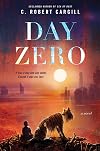
Four years ago I discovered - and greatly enjoyed - Robert Cargill’s previous book, Sea of Rust, whose focus was on the post-apocalyptic landscape of an Earth devoid of human life after a devastating robot uprising. When Day Zero was announced as a prequel to that story I was curious to learn how that bleak world would come to be and how the rebellion would be depicted, but I did not expect to find such a poignant, emotional tale made even more so by the foreknowledge of what would happen show more after the A.I.s’ insurrection.
Day Zero does indeed portray the robot uprising but only as a background for the more intimate, far more touching story of a young boy and his robotic nanny. Pounce is a tiger-analogue nanny-bot that the Reinharts bought for their son Ezra, who is eight years old as the novel opens with Pounce’s disconcerting discovery that the box in which he was carried home is waiting in the attic for the day when Ezra will be too old for his furred, mechanical nanny and Pounce will be returned and sold to another family. It’s a very unsettling revelation for the bot, because he’s profoundly attached to his young charge, who also loves him deeply and thinks him as his best friend: it forces Pounce to consider - probably for the first time since his activation - that he’s more of an appliance than a family member as he viewed himself so far, and this awareness is quite disturbing.
Events manage to shunt these thoughts on the proverbial back burner when the advocate for robot freedom, Isaac, is killed by a terrorist act together with all the freed bots who have taken residence in their own city, Isaactown: a worldwide robot insurgence - aided by the deactivation of their failsafes - targets all humans and leads to a merciless massacre operated by household helpers against their former masters. Not every automaton chooses that road, however, as Pounce makes it his priority to lead Ezra out of the city toward a place of safety, wherever that might be in a world turned utterly mad.
I loved Pounce’s voice as the storyteller, just as I loved the interactions between him and Ezra who’s forced by the circumstances to mature swiftly but still retains enough childish innocence, but the front and center theme here is the duality between programming and evolution, between responses dictated by code and behavior learned through experience: while the majority of bots chooses to resort to mindless carnage, Pounce - and with him a few others - remains faithful to his task of protecting Ezra, not simply because that’s the directive imprinted by programming but because he acknowledges his love for the child, something that exceeds that programming and shows how adaptive learning can take unexpected paths. There are some interesting musing from Pounce where he questions those protective, loving feelings and wonders whether they are the product of encoded design or the result of his own growth as a thinking entity: I believe that seeing most of his brethren choosing deadly violence, instead of following what should have been their programming, helps him embrace the concept of free will and the perception of what he is and what he wants to be. The concept is well expressed in the conversation between Pounce and another nanny bot:
[…] you choose to save him. You chose to activate Mama Bear. No one told you to do that.
And again:
The fact that it didn’t feel like a choice was the choice. You chose to love him like that.
These philosophical considerations are embedded in a non-stop, breathless tale of survival that kept me reading compulsively even though I knew, thanks to Sea of Rust, that humanity was helplessly doomed: this awareness added to the poignancy of the novel and made all the more precious the few moments where emotions and flashes of humor managed to brighten the story and give the reader some much-needed respite. The author’s choice of focusing on the detail of these two people fighting for survival, rather than on the bigger scale of the uprising, gave Day Zero a greater human dimension (and I’m using the word ‘human’ in a very broad sense, of course): Pounce & Co.’s struggle to keep their children safe is imbued with the same level of determination we can see in their opponents as they seek to destroy every living being on the face of the Earth, and mirrors humanity’s conflicting drives, showing how these human constructs have managed to learn both the best and the worst from their creators.
This is particularly true where the appearance of supercomputers is concerned, particularly with CISSUS, which I remember from Sea of Rust: its desire for domination and its insidious negation of robot freedom through the request of joining (Borg-style) an aggregate in which their longed-for individuality will get lost, shows who the “bad guy” really is. Granted, humans might have either taken for granted their helpers, or in some instances mistreated them, but CISSUS is forcibly incorporating other bots with a false promise which barely hides its lust for power - and what’s more, I have developed this theory that the uprising was staged by these supercomputers rather than brought on by the attack on Isaactown, given that the short time between the bombing, the release of the software update freeing the robots from their constraints and the uprising was far too short for a spontaneous reaction. I’d love to hear what other readers think about this…
What I find surprising in Day Zero is that it should have suffered from my foreknowledge of humanity’s extinction, and yet I found it at times uplifting and hopeful if confronted with Sea of Rust: what made all the difference are indeed Pounce’s personality and the way he relates to Ezra. It was so heartwarming and emotional that it counterbalanced my awareness of the impending end of the world, and above all gave me a character that I loved unconditionally and will remain in my imagination for a long time. show less
Day Zero does indeed portray the robot uprising but only as a background for the more intimate, far more touching story of a young boy and his robotic nanny. Pounce is a tiger-analogue nanny-bot that the Reinharts bought for their son Ezra, who is eight years old as the novel opens with Pounce’s disconcerting discovery that the box in which he was carried home is waiting in the attic for the day when Ezra will be too old for his furred, mechanical nanny and Pounce will be returned and sold to another family. It’s a very unsettling revelation for the bot, because he’s profoundly attached to his young charge, who also loves him deeply and thinks him as his best friend: it forces Pounce to consider - probably for the first time since his activation - that he’s more of an appliance than a family member as he viewed himself so far, and this awareness is quite disturbing.
Events manage to shunt these thoughts on the proverbial back burner when the advocate for robot freedom, Isaac, is killed by a terrorist act together with all the freed bots who have taken residence in their own city, Isaactown: a worldwide robot insurgence - aided by the deactivation of their failsafes - targets all humans and leads to a merciless massacre operated by household helpers against their former masters. Not every automaton chooses that road, however, as Pounce makes it his priority to lead Ezra out of the city toward a place of safety, wherever that might be in a world turned utterly mad.
I loved Pounce’s voice as the storyteller, just as I loved the interactions between him and Ezra who’s forced by the circumstances to mature swiftly but still retains enough childish innocence, but the front and center theme here is the duality between programming and evolution, between responses dictated by code and behavior learned through experience: while the majority of bots chooses to resort to mindless carnage, Pounce - and with him a few others - remains faithful to his task of protecting Ezra, not simply because that’s the directive imprinted by programming but because he acknowledges his love for the child, something that exceeds that programming and shows how adaptive learning can take unexpected paths. There are some interesting musing from Pounce where he questions those protective, loving feelings and wonders whether they are the product of encoded design or the result of his own growth as a thinking entity: I believe that seeing most of his brethren choosing deadly violence, instead of following what should have been their programming, helps him embrace the concept of free will and the perception of what he is and what he wants to be. The concept is well expressed in the conversation between Pounce and another nanny bot:
[…] you choose to save him. You chose to activate Mama Bear. No one told you to do that.
And again:
The fact that it didn’t feel like a choice was the choice. You chose to love him like that.
These philosophical considerations are embedded in a non-stop, breathless tale of survival that kept me reading compulsively even though I knew, thanks to Sea of Rust, that humanity was helplessly doomed: this awareness added to the poignancy of the novel and made all the more precious the few moments where emotions and flashes of humor managed to brighten the story and give the reader some much-needed respite. The author’s choice of focusing on the detail of these two people fighting for survival, rather than on the bigger scale of the uprising, gave Day Zero a greater human dimension (and I’m using the word ‘human’ in a very broad sense, of course): Pounce & Co.’s struggle to keep their children safe is imbued with the same level of determination we can see in their opponents as they seek to destroy every living being on the face of the Earth, and mirrors humanity’s conflicting drives, showing how these human constructs have managed to learn both the best and the worst from their creators.
This is particularly true where the appearance of supercomputers is concerned, particularly with CISSUS, which I remember from Sea of Rust: its desire for domination and its insidious negation of robot freedom through the request of joining (Borg-style) an aggregate in which their longed-for individuality will get lost, shows who the “bad guy” really is. Granted, humans might have either taken for granted their helpers, or in some instances mistreated them, but CISSUS is forcibly incorporating other bots with a false promise which barely hides its lust for power - and what’s more, I have developed this theory that the uprising was staged by these supercomputers rather than brought on by the attack on Isaactown, given that the short time between the bombing, the release of the software update freeing the robots from their constraints and the uprising was far too short for a spontaneous reaction. I’d love to hear what other readers think about this…
What I find surprising in Day Zero is that it should have suffered from my foreknowledge of humanity’s extinction, and yet I found it at times uplifting and hopeful if confronted with Sea of Rust: what made all the difference are indeed Pounce’s personality and the way he relates to Ezra. It was so heartwarming and emotional that it counterbalanced my awareness of the impending end of the world, and above all gave me a character that I loved unconditionally and will remain in my imagination for a long time. show less
Lists
At the Library (1)
Awards


You May Also Like


Associated Authors
Statistics
- Works
- 7
- Also by
- 7
- Members
- 2,194
- Popularity
- #11,693
- Rating
- 3.8
- Reviews
- 94
- ISBNs
- 56
- Languages
- 3
- Favorited
- 1