
Juliet Clutton-Brock (1933–2015)
Author of Horse (Eyewitness Books)
About the Author
Works by Juliet Clutton-Brock
Enciclopédia Visual - Cães 2 copies
Tagged
Common Knowledge
- Birthdate
- 1933-09-16
- Date of death
- 2015-09-21
- Gender
- female
- Education
- Runton Hill, Norfolk
University College London (Institute of Archaeology|archaeological technique|1953)
Chelsea College of Science and Technology (zoology) - Occupations
- research worker (Mammal Section of the Natural History Museum|1969-1993)
editor
zoologist
archaeozoologist - Organizations
- Natural History Museum (senior research worker|1969-1993)
Rare Breeds Survival Trust (founder member|1973)
Journal of Zoology (editor and managing editor|1994-2006) - Relationships
- Clutton-Brock, Alan (father)
Clutton-Brock, Arthur (grandfather)
Jewell, Peter Arundel (husband) - Nationality
- UK
- Birthplace
- London, England, UK
- Places of residence
- Blackheath, England
Zimbabwe (as Southern Rhodesia|1936-1945) - Associated Place (for map)
- London, England, UK
Members
Reviews
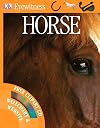
I have a lot of horse books big and small, but there's nothing quite like the Eyewitness books. The reading feels like kicking your feet up while a cool breeze washes over you and you drink lemonade, while reading other books feel serious despite all the fascinating content. There's no hurry to read an Eyewitness book, and Horse is no exception. It's a graceful journey with common tidbits and tidbits rarely mentioned in other books with far more words, it has so many clear images and small show more enough paragraphs that your eyes don't feel like they're working--just witnessing. Ah, now I understand why after all these years the format hasn't changed. And 20 years later I still think I should collect the series.
Am I just talking about the publisher and not the book? Well, indeed the book fits the series and I'm thinking of other illustrated horse encyclopedias when I make my comparisons. I love most horse books and they share a lot of subject matter, so often impressions come down to how the book was formatted.
Also, like any Eyewitness book, Horse covers the broadest spectrum of the subject. So what's not in other horse books? Usually not archaeology, the role in the industrial transition, and other history that isn't sport, recreation, or breed oriented.
And somehow it all condenses into a product that doesn't read as childish or particularly dumbed down. You finish reading this feeling as accomplished as a longer book, and probably more so because you enjoyed this one more. show less
Am I just talking about the publisher and not the book? Well, indeed the book fits the series and I'm thinking of other illustrated horse encyclopedias when I make my comparisons. I love most horse books and they share a lot of subject matter, so often impressions come down to how the book was formatted.
Also, like any Eyewitness book, Horse covers the broadest spectrum of the subject. So what's not in other horse books? Usually not archaeology, the role in the industrial transition, and other history that isn't sport, recreation, or breed oriented.
And somehow it all condenses into a product that doesn't read as childish or particularly dumbed down. You finish reading this feeling as accomplished as a longer book, and probably more so because you enjoyed this one more. show less
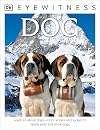
I liked the book Dogs by Juliet Clutton-Brock for two reasons. First, I liked the writing style. The writing style was informative and organized. For example, “The dog family, called Canidae from the Latin canis, includes about 35 species of wolf, jackal, fox, and wild and domestic dog. Canids are carnivores (meat-eaters), with special adaptations for hunting.” The use of academic vocabulary enhances the style of writing as it gives the book a formal and academic appeal. The writing show more style is organized as each section of the book is marked off into different areas of information about dogs. Lastly, I liked the non-fiction text features. I thought the text features were engaging, concise and clear. The text features included labels, captions, and a glossary. For example, “Dogs come in all shapes, sizes, and colors, with 400 breeds of domestic dog, all descended from the wolf, which was first tamed by humans about 12,000 years ago.” This text feature was of captions that were followed by a larger body of text that thoroughly explained the different breeds of dogs. The book also included labeled pictures such as a dog’s skeleton with labels so the reader could identify the various bone structures. This text feature is engaging as it gives the readers an extra component to visually look at while reading vocabulary that may be too hard. The big idea of this book is that there are many different breeds of dogs and a large background history on how dogs became household pets. show less
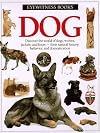
Dogs is a Dorling Kindersley Eyewitness Book. It is a wonderfully comprehensive book about the natural history, behavior, and domestication of man’s best friend. With full color pictures, diagrams and fun facts, it is an engaging book for anyone interested in learning more about canines.
The book is divided in to small, two page chapters that cover every aspect of dogs: The definition of what makes a dog; the evolution of the dog family; the skeletal, muscular, and digestive systems of show more dogs; Behavior and skills; domestic and wild breeds, and history of domestication.
I am more of a cat person than a dog person, but I really enjoyed reading this book. I learned a great deal. I knew wolves had been domesticated since the last Ice Age, but I did not know breeding started so early. The Ancient Egyptians and Asians bred and domesticated dogs. I learned that the now extinct Tasmanian wolf is not classified as a dog, and that there is an animal called a raccoon dog, which looks like a fat raccoon. I did not even know it existed.
I really like how the book breaks down the different breeds. I am not as familiar with dog breeds as I would like to be, and I learned a great deal. The pictures are extremely helpful and engaging. One problem I found with this book was that the set up is non-linear, but many different pictures and blurbs all over the pages. This made it difficult to sit down and read in one setting. I can see this more as a book to browse through, rather than sit and read. I can see a middle schooler getting bored trying to follow the entire book. I would suggest this book to supplement a lesson or research for a middle school science project, but not as a primary text. Three Stars. show less
The book is divided in to small, two page chapters that cover every aspect of dogs: The definition of what makes a dog; the evolution of the dog family; the skeletal, muscular, and digestive systems of show more dogs; Behavior and skills; domestic and wild breeds, and history of domestication.
I am more of a cat person than a dog person, but I really enjoyed reading this book. I learned a great deal. I knew wolves had been domesticated since the last Ice Age, but I did not know breeding started so early. The Ancient Egyptians and Asians bred and domesticated dogs. I learned that the now extinct Tasmanian wolf is not classified as a dog, and that there is an animal called a raccoon dog, which looks like a fat raccoon. I did not even know it existed.
I really like how the book breaks down the different breeds. I am not as familiar with dog breeds as I would like to be, and I learned a great deal. The pictures are extremely helpful and engaging. One problem I found with this book was that the set up is non-linear, but many different pictures and blurbs all over the pages. This made it difficult to sit down and read in one setting. I can see this more as a book to browse through, rather than sit and read. I can see a middle schooler getting bored trying to follow the entire book. I would suggest this book to supplement a lesson or research for a middle school science project, but not as a primary text. Three Stars. show less
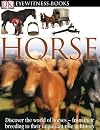
The writers of Eyewitness books have done it again. This book is a collection of everything a child could ever wonder about horses! It contains everything from how horses have evolved, to war horses, to identifying horse breeds. Each page is absolutely filled with informational text, illustrations, and diagrams to help both the linguistic and visual learners obtain new, fascinating information. For example, under the section of Bones and Teeth on page ten, the text states, “when a foal is show more born, it may be toothless, but the milk, or baby teeth may erupt through the soft jaw bones” and a diagram on page 11 shows a foal’s skull with lines to the milk premolar, milk canine, and milk incisor. I especially enjoyed the interesting horse facts located toward the back of the book. Who knew that a herd of horses is actually led by a female horse? This book contains a rich bank of easy-to-read information, which is essentially why I enjoyed it. show less
Lists
You May Also Like


Associated Authors
Statistics
- Works
- 15
- Members
- 2,741
- Popularity
- #9,367
- Rating
- 4.0
- Reviews
- 18
- ISBNs
- 167
- Languages
- 13
