
Mark Cocker
Author of Crow Country
About the Author
Mark Cocker is the author of an acclaimed biography of Britain's most colorful ornithologist, Richard Meinertzhagen (shortlisted for the Angel Literary Award), as well as Loneliness and Time and Rivers of Blood, Rivers of Gold
Image credit: Ty Newydd
Works by Mark Cocker
David Reekie 1 copy
Associated Works
The Peregrine, The Hill of Summer, and Diaries: The Complete Works of J. A. Baker (2010) — Introduction — 112 copies, 1 review
Archipelago: Number Ten (Winter 2015) — Contributor — 1 copy
Tagged
Common Knowledge
- Birthdate
- 1959
- Gender
- male
- Education
- University of East Anglia
- Occupations
- birder
author
naturalist - Nationality
- UK
- Places of residence
- Norwich, Norfolk, England, UK
Claxton, Norfolk, England, UK
Buxton, Derbyshire, England, UK - Associated Place (for map)
- England, UK
Members
Discussions
Mark Cocker's Birds and People in Birds, Birding & Books (October 2013)
Reviews
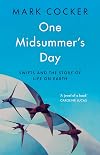
Mark Cocker wants us to enjoy the swift as much as he does: to feel a sense of wonder at its aerial acrobatics and its extraordinary journeys across continents. He wants us too to understand how all of life is inter-connected: how we are share the same origins if you go back far enough - to the Cretaceous period in fact. Mark Cocker, a non-scientist, explains all this in accessible language. And each chapter brings with it more knowledge about the swift - what and where it eats and nests, show more how far and how high it flies - everything that is known about this creature: while emphasising how much there is that is still unknown. He shows how farming practices have reduced drastically the insect numbers on which the bird depends, and so much else. Each chapter begins with Mark in his garden, at a different time of the day, observing the swifts on their daily round. Each chapter unfolds into demonstrating the swift's - and our - interconnectedness. Their numbers are drastically decreasing. Mark Cocker invites us to imagine a world with no swifts. I'd rather not. show less
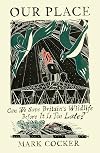
Britain has always liked to think of itself as a nation of animal lovers, we spend several billion pounds on our pets each year get outraged when people commit acts of cruelty towards our furry friends. This love of animals drives people who care about wildlife too. It wasn't until 2013 that we finally voted for our own national animal, the hedgehog and there are a couple of million people in organisations such as the RSPB and the various wildlife trusts. The National Trust has now reached show more five million members. Programmes like Springwatch have made people far more aware of the amazing variety of wildlife in our country, they are more aware of environmental issues, try to put food out for the birds and make their gardens a little more friendly towards wildlife.
Cocker celebrates the achievements of the visionary people who have managed to save a landscape or a species, create some of our national institutions and inspire others to do the same. However, the reality is that our wildlife is suffering; species are going extinct, the whole ecosystem from the bottom up is reaching a critical tipping point that we may never return from. The numbers are pretty horrific, in the past 50 years, we have lost 50% of our biodiversity. That is the past 50 years, not since the industrial revolution. Just in the case of farmland birds, there are 44 million less now than there were in 1970. We only have 1% of our wildflower meadows left now.
So how did we reach the point where green concerns are on the rise just as the creatures people are beginning to care about fall off an actual and metaphorical cliff? In this really radical text, Cocker takes a long hard look at how we have got to this moment, what has caused this, and the people and systems to blame and boy, he does not hold back. He argues that the roots of this reach way back to almost 100 years ago after William invade with his Norman Army. This feudal system that he imposed on the country has shaped our politics and culture ever since. The landed classes manage to avoid almost all tax on their properties and still get large subsidies from the UK government and EU. They have no interest in preserving the fragile ecosystems unless it suits their narrow interests. He is prepared to criticise other organisations too, the Forestry Commission has a scathing attack on the monoculture of trees that they have imposed on regions that are totally unsuitable for them. Again they are another organisation that the elite has used for tax evasion, I mean efficient investments. The NT fairs a little better, but with its focus on maintaining the properties as the previous owners would have wanted and the continuation of their sporting activities, which mostly involves shooting, rather than making an effort to preserve the wildlife that they have on their extensive properties.
There are many other examples that make this essential reading, but as the subtitle says, is it too late? Whilst this is an intense polemic, he still manages to be lyrical, I was delighted by the writing whilst seething reading about the things that have happened. Part of his enthusiasm is driven by a small part of Norfolk that he has purchased and is slowly restoring to become a wildlife haven. Whilst he is doing his own small thing there are lots of people who aren't. We are to blame in part too, for example, we have demanded cheaper food, meaning that agri-business has managed to make farms and fields outdoor factories that wildlife does not play a part at all. But can we make a difference? There are around 8 million of us in the RSPB, National Trust and the Wildlife Trusts, but only a handful are prepared to rattle the doors of the politicians and ask them some very difficult questions. Another problem is the small number of people that own vast swathes of the land, they have no desire to change at the moment and will fit all the way to stop this.
Would also recommend Wild Kingdom: Bringing Back Britain's Wildlife by Stephen Moss and The Running hare by John Lewis-Stempel as must-read books in the same vein. It is not a book that you will like reading, but it demands to be read. Then acted on. Join a wildlife trust and start to make a difference. show less
Cocker celebrates the achievements of the visionary people who have managed to save a landscape or a species, create some of our national institutions and inspire others to do the same. However, the reality is that our wildlife is suffering; species are going extinct, the whole ecosystem from the bottom up is reaching a critical tipping point that we may never return from. The numbers are pretty horrific, in the past 50 years, we have lost 50% of our biodiversity. That is the past 50 years, not since the industrial revolution. Just in the case of farmland birds, there are 44 million less now than there were in 1970. We only have 1% of our wildflower meadows left now.
So how did we reach the point where green concerns are on the rise just as the creatures people are beginning to care about fall off an actual and metaphorical cliff? In this really radical text, Cocker takes a long hard look at how we have got to this moment, what has caused this, and the people and systems to blame and boy, he does not hold back. He argues that the roots of this reach way back to almost 100 years ago after William invade with his Norman Army. This feudal system that he imposed on the country has shaped our politics and culture ever since. The landed classes manage to avoid almost all tax on their properties and still get large subsidies from the UK government and EU. They have no interest in preserving the fragile ecosystems unless it suits their narrow interests. He is prepared to criticise other organisations too, the Forestry Commission has a scathing attack on the monoculture of trees that they have imposed on regions that are totally unsuitable for them. Again they are another organisation that the elite has used for tax evasion, I mean efficient investments. The NT fairs a little better, but with its focus on maintaining the properties as the previous owners would have wanted and the continuation of their sporting activities, which mostly involves shooting, rather than making an effort to preserve the wildlife that they have on their extensive properties.
There are many other examples that make this essential reading, but as the subtitle says, is it too late? Whilst this is an intense polemic, he still manages to be lyrical, I was delighted by the writing whilst seething reading about the things that have happened. Part of his enthusiasm is driven by a small part of Norfolk that he has purchased and is slowly restoring to become a wildlife haven. Whilst he is doing his own small thing there are lots of people who aren't. We are to blame in part too, for example, we have demanded cheaper food, meaning that agri-business has managed to make farms and fields outdoor factories that wildlife does not play a part at all. But can we make a difference? There are around 8 million of us in the RSPB, National Trust and the Wildlife Trusts, but only a handful are prepared to rattle the doors of the politicians and ask them some very difficult questions. Another problem is the small number of people that own vast swathes of the land, they have no desire to change at the moment and will fit all the way to stop this.
Would also recommend Wild Kingdom: Bringing Back Britain's Wildlife by Stephen Moss and The Running hare by John Lewis-Stempel as must-read books in the same vein. It is not a book that you will like reading, but it demands to be read. Then acted on. Join a wildlife trust and start to make a difference. show less
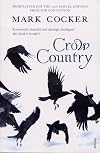
Is this book a natural history? Is it an autobiography? Is it a prose poem? Well, in fact it's all three, and sometimes all at once. In this book, we learn about Mark Cocker's developing fascination with all members of the crow family, as he moves from innner city Norwich to the countryside, and quite simply, gets to see more corvids. He indulges in lyrical descriptions of their movements, follows research projects of his own devising, travels and reads voraciously in search of more show more information about his new love, and engages his readers as he does so. A magical book. show less
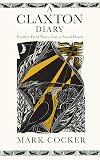
Every day possible, Mark Cocker has taken a walk from his home alongside the Norfolk Broads National Park, down to the river near his home. These two-mile walks get him outside in the natural world and away from any screens or other distractions. It also gives him time to see the minute daily changes that happen, the imperceptible way that a tree changes from skeletal branches to the first flush of leaves, glimpsing the first of the spring flowers, spotting the first of the butterflies and show more noticing the arrival of the migrants after their long journeys. These are the things that flit through his vision and are then written about.
We know that at some level there is no such thing as season or month or week or even a day. There is just the liquid passage of time flowing across our lives that we chop and segment with these invented names to give it all clarity and structure.
He has distilled these walks into a series of columns that first were published in the Guardian and have now appeared here in a month by month diary. They are reproduced in day order, so the years jump around, but for me, that adds to the charm. You have the sense that these columns show the way that the world is changing too. His subjects vary from badgers to owls, to bees and flowers, as well as trees, climate, weather, bees, deer, fungi, frogs, oh, and bees again.
He doesn’t shy away from the harsh realities of life; that the hedgerow full of juvenile birds are more than likely to be the next meal for the sparrow hawk that he has just seen, the spiders catching and wrapping wasps and bumblebees and the swifts cutting through the sky eating the insects that are never going to get out of the way in time. But this is about the beauty of his regular haunts too, seeing the first flush of wildflowers, hearing the dawn chorus and the smell of summer rain. He does occasionally venture further afield and there are columns from Greece, Scotland and elsewhere in Norfolk.
This is another wonderful book by Cocker. He has been writing about the natural world for the past fifty years and while he has seen some of the world great creatures, he gets as much pleasure from the exotica that we can find around us if we care to look for it. It is a worthy continuation to his first, Claxton: Field Notes from a Small Planet, which I can also highly recommend along with this. show less
We know that at some level there is no such thing as season or month or week or even a day. There is just the liquid passage of time flowing across our lives that we chop and segment with these invented names to give it all clarity and structure.
He has distilled these walks into a series of columns that first were published in the Guardian and have now appeared here in a month by month diary. They are reproduced in day order, so the years jump around, but for me, that adds to the charm. You have the sense that these columns show the way that the world is changing too. His subjects vary from badgers to owls, to bees and flowers, as well as trees, climate, weather, bees, deer, fungi, frogs, oh, and bees again.
He doesn’t shy away from the harsh realities of life; that the hedgerow full of juvenile birds are more than likely to be the next meal for the sparrow hawk that he has just seen, the spiders catching and wrapping wasps and bumblebees and the swifts cutting through the sky eating the insects that are never going to get out of the way in time. But this is about the beauty of his regular haunts too, seeing the first flush of wildflowers, hearing the dawn chorus and the smell of summer rain. He does occasionally venture further afield and there are columns from Greece, Scotland and elsewhere in Norfolk.
This is another wonderful book by Cocker. He has been writing about the natural world for the past fifty years and while he has seen some of the world great creatures, he gets as much pleasure from the exotica that we can find around us if we care to look for it. It is a worthy continuation to his first, Claxton: Field Notes from a Small Planet, which I can also highly recommend along with this. show less
Lists
Awards


You May Also Like


Associated Authors
Statistics
- Works
- 16
- Also by
- 3
- Members
- 886
- Popularity
- #28,919
- Rating
- 3.9
- Reviews
- 21
- ISBNs
- 41
- Languages
- 1