
Stephen Moss (1) (1960–)
Author of Ten Birds That Changed the World
For other authors named Stephen Moss, see the disambiguation page.
About the Author
Stephen Moss is a television producer, naturalist and author who has worked on many groundbreaking wildlife programmes. He has written more than 20 books.
Series
Works by Stephen Moss
The Garden Bird Handbook: How to Attract, Identify and Watch the Birds in Your Garden (2003) 14 copies
Bird-Friendly Garden: A Practical Month-by-Month Guide to Attracting Birds to Your Garden (2004) 10 copies
The Hedgerows Heaped with May: The Telegraph Book of the Countryside (Telegraph Books) (2012) 7 copies
A spotter's guide to Urban Wildlife (Guardian Shorts Book 1) (2012) — Editor, contributor — 2 copies
Wildlife in Britian part Two 1 copy
Associated Works
The Guardian and Observer guides to nature spotting : part 1 : animals — Contributor — 1 copy
Tagged
Common Knowledge
- Birthdate
- 1960
- Gender
- male
- Occupations
- natural historian
television producer - Nationality
- UK
- Places of residence
- Mark, Somerset, England, UK
- Associated Place (for map)
- England, UK
Members
Reviews
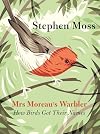
For Anglophile bird nerds only! A quite charming, rambling trawl through ornithological history by a dedicated twitcher (a birder who travels widely and expensively to spot birds, especially in places they're not supposed to be) and nature journalist. While he does tell some traveling tales of his own, a large part is devoted to linguistic and etymologic development of what we have chosen to call the birds around us, as far back as some thousands of years, and across the continents. In case show more you're wondering, one of the very earliest words for a particular bird is "ghans" or "ghas"... for goose, and Moss tracks the name across languages and cultures. He scatters gems like the scientific name for the hoopoe (pronounced hoo-poo, much to the pleasure of small boys): Upupa epops - can't you hear Ella Fitzgerald scat-singing that? Overall, a delightful read - I just wish he'd come across the pond and do something similar for North American bird lingo: thunderpumper, anyone? show less
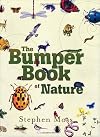
The Bumper Book of Nature: A User's Guide to the Great Outdoors by Stepehen Moss offers to help children and parents rediscover the great outdoors. And while it does offer some beautifully illustrated suggestions, the book is not the be-all and end-all to juvenile outdoor activities you might be looking for.
My problem here two fold — the intended audience and the (unintentional?) smugness to the text. The book contains, not one, but two letters of introduction. The first is addressed to show more concerned parents and grandparents who worry about their children's Nature Deficit Disorder. The second is to children who might not know what to do out in nature (condescending, much?). The introduction also includes a trip down memory lane to the author's own suburban childhood and all the adventures he had between houses and the bit of scrub behind the houses.
With the audience question — the book as a "handbook" seems to offer a promise of helping any child with limited access to nature make the most of what little access there is. There are also different types of animals, birds, plants, and flowers lovingly rendered in full color. The book is further divided into things to do during different seasons.
Now stop and think for a moment what the different seasons mean where you live — they may not line up with the book. Now think about the types of flora and fauna around your home. Things just didn't seem to add up to me.
So I started keeping a tally of what things would work in the natural surrounds of the San Francisco East Bay. I also counted the number of represented animals, birds, flowers and trees. For each section, there was on average — one relevant, doable thing — or one plant, or one flower, or one bird, and a couple animals.
That got me thinking about other parts of North America. I looked for things relevant to kids growing up in desert areas, or tropical places, or urban areas (think New York City, San Francisco, etc.) and found a similar lack of on-topic, relevant (meaning possible) things to do.
So although I love the artistry of the line drawings and the water colors, I can not recommend this book with any sort of enthusiasm to anyone living in an area that doesn't match the author's own childhood. It is very Eastern Seaboard centric in its outlook, and more specifically, very upper middle class, suburban oriented. If you or the child you are thinking of doesn't fit that description, move on to another book. show less
My problem here two fold — the intended audience and the (unintentional?) smugness to the text. The book contains, not one, but two letters of introduction. The first is addressed to show more concerned parents and grandparents who worry about their children's Nature Deficit Disorder. The second is to children who might not know what to do out in nature (condescending, much?). The introduction also includes a trip down memory lane to the author's own suburban childhood and all the adventures he had between houses and the bit of scrub behind the houses.
With the audience question — the book as a "handbook" seems to offer a promise of helping any child with limited access to nature make the most of what little access there is. There are also different types of animals, birds, plants, and flowers lovingly rendered in full color. The book is further divided into things to do during different seasons.
Now stop and think for a moment what the different seasons mean where you live — they may not line up with the book. Now think about the types of flora and fauna around your home. Things just didn't seem to add up to me.
So I started keeping a tally of what things would work in the natural surrounds of the San Francisco East Bay. I also counted the number of represented animals, birds, flowers and trees. For each section, there was on average — one relevant, doable thing — or one plant, or one flower, or one bird, and a couple animals.
That got me thinking about other parts of North America. I looked for things relevant to kids growing up in desert areas, or tropical places, or urban areas (think New York City, San Francisco, etc.) and found a similar lack of on-topic, relevant (meaning possible) things to do.
So although I love the artistry of the line drawings and the water colors, I can not recommend this book with any sort of enthusiasm to anyone living in an area that doesn't match the author's own childhood. It is very Eastern Seaboard centric in its outlook, and more specifically, very upper middle class, suburban oriented. If you or the child you are thinking of doesn't fit that description, move on to another book. show less

My enjoyment of this delightful book was certainly enhanced by the fact that we were trying to find birds in Somerset in September. (With very little luck. Everything was much too dry and the waterbirds were off somewhere wetter. Except for the cattle egrets and great egret that posed for comparisons.) Moss is a knowledgable observer and very good writer. Limiting himself mostly to the concentric areas of his garden, his parish, and sometimes the rest of Somerset concentrates his show more observations and draws us in.
The illustrations are a lovely addition to the text. show less
The illustrations are a lovely addition to the text. show less
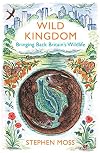
I've followed Stephen Moss's writing with interest over the years, getting to know it first through his Guardian columns on birdwatching.
This book is about wildlife. About birds, certainly, but equally about all the other wild creatures - animals, invertebrates, fish and so on - which call Britain home. He examines all their possible habitats in turn: farmland, woodland, moorland, water and wetland, seaside, towns and cities. He discovers how our imperative to produce ever-increasing show more quantities of cheap food is destroying and impoverishing the habitats of so much wildlife: not just on farmland increasingly turned over to agri-business, but also on moorland, the sea, and wetlands. He illustrates his arguments not only by drawing on research and statistics, but with anecdote and personal stories.
This is a very thorough and convincing account of the perilous state that much of the wildlife we think of as part of our natural heritage is in. Though he's careful to point out that every creature, even if not cute and well-loved like the hedgehog and red squirrel, has a part to play in ensuring the health of some other creature in the food chain. And he writes too about success stories - the re-introduction of the red kite: the egrets which, now that our climate is generally warming, are making regular appearances on UK waterways are just two examples.
He writes this book as a warning, wanting everybody who reads it to become part of the fightback in a cause he regards as too important to lose. His style is informal, very easy to read. Even when he's making known the results of various studies, or sharing dismal statistics, the information is easy to absorb, and I continued to read with interest and attention.
Nevertheless, little of what he writes about here is unknown to the averagely well-informed and concerned reader. Though I really enjoyed reading this book, I'm not sure I learned a great deal that at some level I didn't already know about. I'd like to think that if I gave a copy to someone who doesn't yet think too hard about environmental matters, they'd find it an approachable and worthwhile read, and one which might change their viewpoint a little. I want this book to find a wide audience. show less
This book is about wildlife. About birds, certainly, but equally about all the other wild creatures - animals, invertebrates, fish and so on - which call Britain home. He examines all their possible habitats in turn: farmland, woodland, moorland, water and wetland, seaside, towns and cities. He discovers how our imperative to produce ever-increasing show more quantities of cheap food is destroying and impoverishing the habitats of so much wildlife: not just on farmland increasingly turned over to agri-business, but also on moorland, the sea, and wetlands. He illustrates his arguments not only by drawing on research and statistics, but with anecdote and personal stories.
This is a very thorough and convincing account of the perilous state that much of the wildlife we think of as part of our natural heritage is in. Though he's careful to point out that every creature, even if not cute and well-loved like the hedgehog and red squirrel, has a part to play in ensuring the health of some other creature in the food chain. And he writes too about success stories - the re-introduction of the red kite: the egrets which, now that our climate is generally warming, are making regular appearances on UK waterways are just two examples.
He writes this book as a warning, wanting everybody who reads it to become part of the fightback in a cause he regards as too important to lose. His style is informal, very easy to read. Even when he's making known the results of various studies, or sharing dismal statistics, the information is easy to absorb, and I continued to read with interest and attention.
Nevertheless, little of what he writes about here is unknown to the averagely well-informed and concerned reader. Though I really enjoyed reading this book, I'm not sure I learned a great deal that at some level I didn't already know about. I'd like to think that if I gave a copy to someone who doesn't yet think too hard about environmental matters, they'd find it an approachable and worthwhile read, and one which might change their viewpoint a little. I want this book to find a wide audience. show less
Lists
Awards

You May Also Like


Associated Authors
Statistics
- Works
- 48
- Also by
- 1
- Members
- 1,393
- Popularity
- #18,450
- Rating
- 3.8
- Reviews
- 25
- ISBNs
- 164
- Languages
- 4
- Favorited
- 1