
About the Author
Lise Eliot, Ph.D., is a neurobiologist & assistant professor at the Chicago Medical School. She received her Ph.D. in neuroscience from Columbia University & has published papers in professional journals. She lives outside Chicago with her husband & three young children. (Bowker Author Biography)
Works by Lise Eliot
What's Going on in There? : How the Brain and Mind Develop in the First Five Years of Life (1999) 420 copies, 12 reviews
Pink Brain, Blue Brain: How Small Differences Grow Into Troublesome Gaps -- And What We Can Do About It (2009) 228 copies, 13 reviews
Tagged
Common Knowledge
- Gender
- female
- Education
- Columbia University (PhD)
- Occupations
- associate professor (neuroscience)
Members
Reviews
Pink Brain, Blue Brain: How Small Differences Grow Into Troublesome Gaps - And What We Can Do about It by Lise Eliot
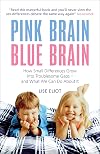
There is no such a thing as a "male brain", and there is no such a thing as a "female brain". As the author rightly insists, there are more variations within groups than between; and if the Venus vs Mars paradigm makes for good press (it's lazy, sensationalist, and taps into all of our gendered prejudices -so why not?) it is, nevertheless, not only completely bogus scientifically but, also and above all, causing a lot of harm -to men and women, to boys and girls. Now, of course, if you're show more not convinced by that (or already are, but want to sharpen your argumentations when debunking the tiring yet never tired pop nonsense pink/ blue...) then you could grab a lot of books on the topic already e.g. Delusions of Gender: How Our Minds, Society, and Neurosexism Create Difference By Cordelia Fine, The Gendered Brain: The New Neuroscience That Shatters the Myth of the Female Brain by Gina Rippon, and Gender Mosaic: Beyond the Myth of the Male and Female Brain by Daphna Joel and Luba Vikhanski are just some of my favourites so far. However, I personally think that this is the best by far. Lise Eliot's perspective is the most encompassing; the more thorough; and, also, the more accessible. What about it?
It starts lengthily on foetal development, genetics and epigenetics. Now, it surely is a pity that we need to recap the birds and the bees to truly grasp how a human being takes shape. In a time when hormones pre-birth are being used and abused to peddle the same claptraps that have been peddled for decades, though, it's important to stress a few points that otherwise ought to be obvious (e.g. believe it or not, you're not a rat -please, just stop with the rats!). The author does that brilliantly. It then goes on by showing the impact of socialisation upon behaviours and, another key point we ought to bear in mind, expectations. This, here, is absolutely not to say that biological differences between male and female are inexistent. That's the straw man argument usually thrown at by the 'pink vs blue' partisans against whose valuing environment as much as brain plasticity, and (no less usually) when being lazy. This is to say, quite bluntly, that hormones impact behaviours and sexuality, certainly not cognitive abilities and interests (and no, that's not a subtle point -please don't be lazy!). It ends, finally, by showing how our misunderstanding of gender differences, blamed on recycled biological determinism taken to various degrees, makes for more than silly pop stories and simplistic understanding of each others to be downright harmful. All along, of course, it also debunks the supposedly "ground breaking studies" that have come CLANG! CLANG! with the pink/ blue paradigm (most of them flawed, questionable, or, just plain fraudulent -you've read that right) while offering different research and coming to grip with the file drawer effect (yes, it matters).
All in all, then, do whatever you want with 'boys and men are this and that' and 'women and girls are this and that' because: genes/ brain/ hormones (delete whatever option[s], as per prejudice). If, however, you're tired as much of the reductionist clichés making a mockery of biological complexities as the covert sexism now wearing white laboratory coats, then I urge you to read this. It's enthralling. It's engaging. It's refreshing. show less
It starts lengthily on foetal development, genetics and epigenetics. Now, it surely is a pity that we need to recap the birds and the bees to truly grasp how a human being takes shape. In a time when hormones pre-birth are being used and abused to peddle the same claptraps that have been peddled for decades, though, it's important to stress a few points that otherwise ought to be obvious (e.g. believe it or not, you're not a rat -please, just stop with the rats!). The author does that brilliantly. It then goes on by showing the impact of socialisation upon behaviours and, another key point we ought to bear in mind, expectations. This, here, is absolutely not to say that biological differences between male and female are inexistent. That's the straw man argument usually thrown at by the 'pink vs blue' partisans against whose valuing environment as much as brain plasticity, and (no less usually) when being lazy. This is to say, quite bluntly, that hormones impact behaviours and sexuality, certainly not cognitive abilities and interests (and no, that's not a subtle point -please don't be lazy!). It ends, finally, by showing how our misunderstanding of gender differences, blamed on recycled biological determinism taken to various degrees, makes for more than silly pop stories and simplistic understanding of each others to be downright harmful. All along, of course, it also debunks the supposedly "ground breaking studies" that have come CLANG! CLANG! with the pink/ blue paradigm (most of them flawed, questionable, or, just plain fraudulent -you've read that right) while offering different research and coming to grip with the file drawer effect (yes, it matters).
All in all, then, do whatever you want with 'boys and men are this and that' and 'women and girls are this and that' because: genes/ brain/ hormones (delete whatever option[s], as per prejudice). If, however, you're tired as much of the reductionist clichés making a mockery of biological complexities as the covert sexism now wearing white laboratory coats, then I urge you to read this. It's enthralling. It's engaging. It's refreshing. show less
Pink Brain, Blue Brain: How Small Differences Grow Into Troublesome Gaps -- And What We Can Do About It by Lise Eliot

A look at just what we can demonstrate about the innate differences between men and women. The author is a neuroscientist, and started looking at the brain expecting to find large differences; this is not what she found. She discusses many different studies that have found differences between boys and girls at very young ages, and parses them to discover just when the differences show up, how strong they are, and whether a noted difference actually results in any decreased functionality. She show more also gives tips on ways to raise boys and girls that won't maximize the small differences that do exist, and that will allow them to explore their own interests rather than being pushed in a certain direction by pre-existing expectations. That was one of the lesser parts of the book for me, perhaps because I have already raised my son, so the tips would be too late for me (but it did provide positive affirmation, since I had done most of the things she talked about). These might have been better presented in an appendix to help make a rather long book more readable. Also, it probably would have helped to go into more depth about the more subtle pressures on girls, the open and/or covert misogyny, that has little to do with physical differences or with parenting, but with messages sent by society as a whole. She directs only a couple of paragraphs to what may be one of the biggest issues. Other than that, an excellent book, and should be read by anyone who is preparing to get up and start spouting about innate differences - it would be nice if more people were better informed. show less
Pink Brain, Blue Brain: How Small Differences Grow into Troublesome Gaps--and What We Can Do About It by Lise Eliot

I really enjoyed this. The book is broken down by life stages. In each, she looks at what the evidence really shows for in-built sex differences: hormones, brain structure, genetics. Then she looks at how social forces play on these differences (typically, but not always, small) to turn them into the larger gaps we see in adults. The premise is that it's not as simple as nature or nurture; rather, we start with a small dose of nature and amplify them with a lot of nurture. Along the way, she show more takes down a lot of simplistic pop science about boys and girls and shows how studies are misquoted so that we believe the differences are more hard wired than they are--though some differences are there.
Her emphasis is on the plasticity of our brains and how we create their wiring--and how sex stereotypes become self fulfilling prophecies.
As a parent, I really enjoyed the descriptions of how parents affect their children and what we can do differently. The good news about our plastic brains is that it means we can change our interactions with children to help them develop the skills they need. It's not a simplistic explanation of how girls and boys aren't really different, or that all boys and all girls need to be treated in sex-stereotyped ways, but a way of looking at how our own ideas about sex and gender are transmitted to our children. For example, how we teach boys to suppress their emotions; how we teach girls to be nice; how we can get girls more interested in math and build spatial awareness, and how we can encourage verbal fluency in boys. I would have liked a little more examination about what boys and girls prefer to read as I felt social stereotyping wasn't as strongly examined there as it might have been (in other words, that even if boys might prefer more action, that the books that are published and how they are marketed to kids shapes their ideas of what's okay for boys and girls to read); I also think toy stereotyping got off lightly beyond the broader trucks vs. dolls problem.
Overall, I think it's a great book for anyone who has or works with kids. show less
Her emphasis is on the plasticity of our brains and how we create their wiring--and how sex stereotypes become self fulfilling prophecies.
As a parent, I really enjoyed the descriptions of how parents affect their children and what we can do differently. The good news about our plastic brains is that it means we can change our interactions with children to help them develop the skills they need. It's not a simplistic explanation of how girls and boys aren't really different, or that all boys and all girls need to be treated in sex-stereotyped ways, but a way of looking at how our own ideas about sex and gender are transmitted to our children. For example, how we teach boys to suppress their emotions; how we teach girls to be nice; how we can get girls more interested in math and build spatial awareness, and how we can encourage verbal fluency in boys. I would have liked a little more examination about what boys and girls prefer to read as I felt social stereotyping wasn't as strongly examined there as it might have been (in other words, that even if boys might prefer more action, that the books that are published and how they are marketed to kids shapes their ideas of what's okay for boys and girls to read); I also think toy stereotyping got off lightly beyond the broader trucks vs. dolls problem.
Overall, I think it's a great book for anyone who has or works with kids. show less
Pink Brain, Blue Brain: How Small Differences Grow Into Troublesome Gaps -- And What We Can Do About It by Lise Eliot
Eliot takes a much debated issue - are girls and boys fundamentally different? - and sets out with a well restrained heart. Eliot painstakingly goes thru all available scientific research and popular culture books to sort out the truth. Are men from Mars and women from Venus? In a nutshell, no.
What Eliot does is walk us thru the research, data and the facts about the differences. I say painstakingly because this 315 page tome has almost 40 pages of endnotes and 45 pages of bibliography and show more zero fluff. Some might find this book too much - to that I say, read the sections you want to read. Even a paragraph is worthy of your time. Take small bites if you must, you won't be disappointed.
By now I hope you get the idea that Eliot has given us a book that puts all the research in perspective. She's not far left nor far right. As the mom of two boys and one girl, she has personal interest in each side of the debate.
Eliot does a great job at taking the popular culture literature that tells us that boys and girls are so different they can't be taught together and rips it to shreds WITH DATA! Yet, she also acknowledges the boy crisis as a real phenomena WITH DATA!
And this is where I think the book is genius. Eliot gives us so much data to prove her conclusions that you find yourself nodding along with one idea, then she switches over to the "counter" issue and you nod along. Here's what I mean:
Prenatal testosterone does make a difference to how boys and girls act and think, but not as much as we think. There are biological differences to the hormone levels, but it is not the end all be all reason why boys are more aggressive, better at math or whatnot.
Eliot shows us that nature does give boys and girls their own small advantages in life, but it is our socialization that exasperates them to such an extreme that we think that bravery is masculine and the need for emotional attention is feminine. Example: In an experiment where moms were asked to guess how steep an incline their infants can climb down - face first - the moms underestimated the girls by 9 degrees. This suggests that even at infancy moms already believe that girls can't be as brave or agile at such a young age. "Girls attempted and successfully descended slopes ranging in angle from 10 degress to 46 degress, while boys attempted slopes between 12 and 38 degree (pp 66-67)." Thus no difference in performance, but a big difference in expectation. Does this mean that moms are holding back their girls?
Eliot also points out that boys are, on average, larger at birth than girls. We usually think about how tough this might had been on the woman pushing an extra few pounds of baby out, but Eliot reminds us that this is tough on the newborn too. This could be why boys are fussier babies. Where our gender ideas come into play is that Eliot points to research that shows that parents are more willing to let baby boys cry longer than baby girls. This is the beginning of toughening our boys out AND where they start to learn that expressing their emotions doesn't pay. Are we shushing our boys into their un-emo ways?
Eliot covers the gamut from in utero thru the teen years, from emotions to math skills.
What I learned here is simple and honestly pretty much what I've been saying for years too. Yes, girls and boys are different, they have biological differences, but most of the differences we see are created. Eliot shows us the research that proves over and over that there are bigger differences within genders than between them. That the differences that are there are small. SMALL!
But it also challenged me to reexamine my views of gender and how we are socializing our kids. This book didn't just reaffirm my beliefs, but it taught me a lot about how we see gender. show less
What Eliot does is walk us thru the research, data and the facts about the differences. I say painstakingly because this 315 page tome has almost 40 pages of endnotes and 45 pages of bibliography and show more zero fluff. Some might find this book too much - to that I say, read the sections you want to read. Even a paragraph is worthy of your time. Take small bites if you must, you won't be disappointed.
By now I hope you get the idea that Eliot has given us a book that puts all the research in perspective. She's not far left nor far right. As the mom of two boys and one girl, she has personal interest in each side of the debate.
Eliot does a great job at taking the popular culture literature that tells us that boys and girls are so different they can't be taught together and rips it to shreds WITH DATA! Yet, she also acknowledges the boy crisis as a real phenomena WITH DATA!
And this is where I think the book is genius. Eliot gives us so much data to prove her conclusions that you find yourself nodding along with one idea, then she switches over to the "counter" issue and you nod along. Here's what I mean:
Prenatal testosterone does make a difference to how boys and girls act and think, but not as much as we think. There are biological differences to the hormone levels, but it is not the end all be all reason why boys are more aggressive, better at math or whatnot.
Eliot shows us that nature does give boys and girls their own small advantages in life, but it is our socialization that exasperates them to such an extreme that we think that bravery is masculine and the need for emotional attention is feminine. Example: In an experiment where moms were asked to guess how steep an incline their infants can climb down - face first - the moms underestimated the girls by 9 degrees. This suggests that even at infancy moms already believe that girls can't be as brave or agile at such a young age. "Girls attempted and successfully descended slopes ranging in angle from 10 degress to 46 degress, while boys attempted slopes between 12 and 38 degree (pp 66-67)." Thus no difference in performance, but a big difference in expectation. Does this mean that moms are holding back their girls?
Eliot also points out that boys are, on average, larger at birth than girls. We usually think about how tough this might had been on the woman pushing an extra few pounds of baby out, but Eliot reminds us that this is tough on the newborn too. This could be why boys are fussier babies. Where our gender ideas come into play is that Eliot points to research that shows that parents are more willing to let baby boys cry longer than baby girls. This is the beginning of toughening our boys out AND where they start to learn that expressing their emotions doesn't pay. Are we shushing our boys into their un-emo ways?
Eliot covers the gamut from in utero thru the teen years, from emotions to math skills.
What I learned here is simple and honestly pretty much what I've been saying for years too. Yes, girls and boys are different, they have biological differences, but most of the differences we see are created. Eliot shows us the research that proves over and over that there are bigger differences within genders than between them. That the differences that are there are small. SMALL!
But it also challenged me to reexamine my views of gender and how we are socializing our kids. This book didn't just reaffirm my beliefs, but it taught me a lot about how we see gender. show less
You May Also Like


Statistics
- Works
- 5
- Members
- 658
- Popularity
- #38,342
- Rating
- 4.0
- Reviews
- 26
- ISBNs
- 19
- Languages
- 4