

Jack Finegan (1908–2000)
Author of The Archeology of the New Testament: The Life of Jesus and the Beginning of the Early Church
About the Author
Works by Jack Finegan
The Archeology of the New Testament: The Life of Jesus and the Beginning of the Early Church (1981) 210 copies
Handbook of Biblical Chronology: Principles of Time Reckoning in the Ancient World and Problems of Chronology in the Bible (1964) 171 copies, 3 reviews
Light from the Ancient Past: Archaeological Background of the Hebrew-Christian Religion (1946) 154 copies, 1 review
Encountering New Testament Manuscripts: A Working Introduction to Textual Criticism (1974) 112 copies, 1 review
Light from the Ancient Past: The Archeological Background of the Hebrew-Christian Religion, Vol. 1 (1959) 73 copies
Light from the Ancient Past: The Archeological Background of the Hebrew-Christian Religion, Vol. 2 (1969) 40 copies
The Archeology of World Religions, Vol. 2: The Background of Primitivism, Zoroastrianism, Hinduism, Jainism (1965) 5 copies
At wit's end 4 copies
The Archeology of World Religions, Vol. 1: The Background of Buddhism, Confucianism, Taoism (1965) 3 copies
Teach Yourself Christian Theology 2 copies
Like the great mountains 2 copies
India Today 1 copy
Indien 1 copy
Tagged
Common Knowledge
- Canonical name
- Finegan, Jack
- Birthdate
- 1908-07-11
- Date of death
- 2000-07-15
- Gender
- male
- Education
- Drake University (BA ∙ 1928 ∙ MA ∙ 1929 ∙ BD ∙ 1930)
Colgate Rochester Divinity School (BD ∙ 1931 ∙ MTh ∙ 1932) - Organizations
- Studiorum Novi Testamenti Societas
- Nationality
- USA
- Birthplace
- Des Moines, Iowa, USA
- Places of residence
- Oakland, California, USA
- Associated Place (for map)
- USA
Members
Reviews
Encountering New Testament manuscripts;: A working introduction to textual criticism by Jack Finegan

Book can have multiple personality disorder just as much as people.
I'm honestly not sure if this book wants to be primarily about textual criticism (that is, determining the original text of the New Testament), or about paleography (that is, the study of ancient writing and what it tells us about manuscripts), or about the evolution of text-types within the New Testament tradition.
There are major sections on each of these topics. The first quarter of the book is mostly about how ancient show more manuscripts were made -- paleography. The next quarter is about textual criticism. Then we start seeing actual manuscript photos -- but they're organized into "sequences" illustrating the (alleged) history of text-types. Then we get "conclusions" and "the future task" to try to bind it all together.
The best part of the book is probably the manuscript photos. It would be nicer if they were in color, but the book is from the 1970s.... There is useful analysis of each manuscript page shown, with a transcription into modern Greek lettering and information about abbreviations and such. This will be a genuine help to the beginner trying to learn Greek handwriting (especially minuscule handwriting, which is the hardest to read). But to really learn this topic requires more samples. And the other sections are even less complete.
Plus the author is really, really wordy. Many of his sentences are longer than a better writer's paragraphs.
On the whole, I would have to consider this more a first taste than a genuine introduction. It's good to have all those samples and analysis, but you'll need far, far more to learn to be either a paleographer or a textual critic. show less
I'm honestly not sure if this book wants to be primarily about textual criticism (that is, determining the original text of the New Testament), or about paleography (that is, the study of ancient writing and what it tells us about manuscripts), or about the evolution of text-types within the New Testament tradition.
There are major sections on each of these topics. The first quarter of the book is mostly about how ancient show more manuscripts were made -- paleography. The next quarter is about textual criticism. Then we start seeing actual manuscript photos -- but they're organized into "sequences" illustrating the (alleged) history of text-types. Then we get "conclusions" and "the future task" to try to bind it all together.
The best part of the book is probably the manuscript photos. It would be nicer if they were in color, but the book is from the 1970s.... There is useful analysis of each manuscript page shown, with a transcription into modern Greek lettering and information about abbreviations and such. This will be a genuine help to the beginner trying to learn Greek handwriting (especially minuscule handwriting, which is the hardest to read). But to really learn this topic requires more samples. And the other sections are even less complete.
Plus the author is really, really wordy. Many of his sentences are longer than a better writer's paragraphs.
On the whole, I would have to consider this more a first taste than a genuine introduction. It's good to have all those samples and analysis, but you'll need far, far more to learn to be either a paleographer or a textual critic. show less
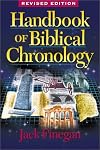
A wonderful, must-have reference for anyone who enjoys mucking around in the morass of biblical chronology and history.
Light from the ancient past; the archeological background of Judaism and Christianity by Jack Finegan

I was reading the 1959 edition of this book, which is extremely dated. When I realized the author was assuming the Bible was a reliable historical source, I gave up. The chapters on Sumer and Egypt provide a good overview of what was known about these civilizations at the time.

About a Jew from the time of the fall of Jerusaem who travels meast and meets Zoroaster, Mahavira, Buddha, Lao Tzu, Confucius etc. Suspiciously similar to the plot of Vidal's later work Creation except Vidal used a Persian instead of a Jew.
Finegan was a professor at Pacific School of Religion and probably new more of what he was talking about than Vidal.
It is remarkable so many great teacers lived at much the same time, so just possibly the plot similarity is a coincidence.
Finegan was a professor at Pacific School of Religion and probably new more of what he was talking about than Vidal.
It is remarkable so many great teacers lived at much the same time, so just possibly the plot similarity is a coincidence.
You May Also Like


Statistics
- Works
- 44
- Members
- 1,253
- Popularity
- #20,469
- Rating
- 3.6
- Reviews
- 8
- ISBNs
- 59
- Languages
- 1