
Roger Rapoport
Author of I Should Have Stayed Home: The Worst Trips of the Great Writers
About the Author
Series
Works by Roger Rapoport
I Should Have Stayed Home: The Worst Trips of the Great Writers (1994) — Editor — 188 copies, 5 reviews
I Really Should Have Stayed Home: Worst Journeys from Harare to Eternity (2001) — Editor — 39 copies, 2 reviews
California Dreaming: The Political Odyssey of Pat and Jerry Brown (The Pacific rim series) (1982) 10 copies
I Should Have Stayed Home: Hotels - Hospitality Disasters At Home and Abroad (2006) — Editor — 6 copies
Associated Works
Reporting Vietnam: American Journalism 1959-1969, Volume 1 (1998) — Contributor — 348 copies, 3 reviews
Tagged
Common Knowledge
- Other names
- Rapoport, Roger P.
- Birthdate
- 1946
- Gender
- male
Members
Reviews
I Should Have Stayed Home: The Worst Trips of the Great Writers (Travel Literature Series) by Roger Rapoport
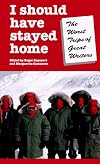
I love travel and have had a few bad experiences, i.e. robbed by Gypsies in Dublin, two day flight delay in Iceland, pursued by a coconut carving junkie in Tobago, but nothing compares to the misadventures of these writers. Other reviewers have complained that the writing is uneven, but that’s ok. It’s like meeting strangers in a bar in a foreign country who are telling you the “Guess what happened to us” story. The tales are thrilling and you can suffer vicariously with those who show more have been stranded in war zones, assaulted by orangutans, had falling outs with their travel companions, and been forced to bribe border guards. It makes missed flights and lost luggage look like a cakewalk. Enjoy from the safety of your armchair or throw it in your bag as you hike the Andes. show less
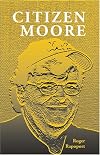
A critical biography of Moore, centering on his brilliance as well as his hypocrisy (like living the high life while purporting to be a man of the people and the working class). Moore is a rabble-rouser, an actor, a filmmaker, a polemicist, a creative force. The author objects to the, well, sleight of hand that Moore employs in his performances and projects, but Moore uses tricks of rhetoric in service of the left, and the good of the many. Certainly we've had enough rhetorical tricks from show more the right; Michael Moore is the antidote, badly needed. show less
Michael Moore's a fascinating figure, and I have equal parts respect for his iconoclasm and disdain for the self-righteous and impractical politics that informs it. I found Bowling for Columbine - for my money Moore's creative peak thus far - entertaining but disingenuous, although ultimately honest enough to admit that the easy, pat, leftie answers didn't really cuit the mustard.
Roger Rappaport's biography doesn't feature any direct, for-purpose interviews with Moore, and is even-handed show more enough: it tracks, sympathetically, his early progress through the Flint Voice up to his ill-fated and short editorship of Mother Jones, but then unsheathes the knife in the context of Moore's failure to "stay true to his roots" or reciprocate help or acknowledgment from people who have helped him on his way up.
Rappaport's most damning criticism is Moore's hypocrisy: his refusal to confront his own critics, and his own poor sportsmanship (if not quite underhandedness) in cutting them off at the knees. That said, there's nothing like a knock-out blow here, and Rappaport's attempt to affect a New Journalism-style sizzling literary style falls flat - most of Rappaport's efforts at clever wordcraft leads not so much to zip and sparkle as ambiguity and confusion. Once the early history - with which Rappaport seems more familiar - is dispensed with the book moves at a real clip - too much of a clip, really - spending very little time on any of Moore's projects, and certainly including little if any useful political or social analysis of them.
All in all a passable read if you're stuck in an airport terminal, but Michael Moore is an interesting - and politically significant - enough character to warrant a better biography than this. show less
Roger Rappaport's biography doesn't feature any direct, for-purpose interviews with Moore, and is even-handed show more enough: it tracks, sympathetically, his early progress through the Flint Voice up to his ill-fated and short editorship of Mother Jones, but then unsheathes the knife in the context of Moore's failure to "stay true to his roots" or reciprocate help or acknowledgment from people who have helped him on his way up.
Rappaport's most damning criticism is Moore's hypocrisy: his refusal to confront his own critics, and his own poor sportsmanship (if not quite underhandedness) in cutting them off at the knees. That said, there's nothing like a knock-out blow here, and Rappaport's attempt to affect a New Journalism-style sizzling literary style falls flat - most of Rappaport's efforts at clever wordcraft leads not so much to zip and sparkle as ambiguity and confusion. Once the early history - with which Rappaport seems more familiar - is dispensed with the book moves at a real clip - too much of a clip, really - spending very little time on any of Moore's projects, and certainly including little if any useful political or social analysis of them.
All in all a passable read if you're stuck in an airport terminal, but Michael Moore is an interesting - and politically significant - enough character to warrant a better biography than this. show less
I Should Have Stayed Home: The Worst Trips of the Great Writers (Travel Literature Series) by Roger Rapoport
Entertaining, but the quality of the writing varies widely. Good beach read, and especially good read if you're stuck in an airport and feeling sorry for yourself. Others have had it a lot worse.
You May Also Like


Associated Authors
Statistics
- Works
- 29
- Also by
- 1
- Members
- 417
- Popularity
- #58,442
- Rating
- 3.4
- Reviews
- 10
- ISBNs
- 51
- Languages
- 2