
David D. Busch
Author of Digital SLR Cameras & Photography For Dummies
About the Author
With over three million books in print, David D. Busch is the world's #1 bestselling camera guide author, and the originator of popular series like David Busch's Pro Secrets, David Busch's Compact Field Guides, and David Busch's Quick Snap Guides. He has written more than 100 hugely successful show more guidebooks for Canon and other digital models, as well as many popular books devoted to photographic techniques, including Mastering Digital SLR Photography. Fourth Edition and Digital SLR Pro Secrets. As a roving photojournatist for more than 20 years, he illustrated his books, magazine articles, and newspaper reports with award-winning images. He's operated his own commercial studio, suffocated in formal dress while shooting weddings, and shot sports for a daily newspaper and an upstate New York college. His photos and articles have appeared in Popular Photography, Rangefinder. Professional Photographer, and hundreds of other publications. He's also reviewed dozens of digital cameras for CNet and other CBS publications, Busch has been a guest on numerous radio and television programs in the United States and Canada, and his advice has been featured an National Public Radio's All Tech Considered. Busch is a member of the Cleveland Photographic Society (www.cievelandphoto.org), which has operated continuously since 1887. Visit his website at http://www.canonguides.com or his Facebook group David D. Busch Photography Guides. show less
Series
Works by David D. Busch
David Busch's Compact Field Guide for the Nikon D7000 (David Busch's Digital Photography Guides) (2011) 72 copies
David Busch's Compact Field Guide for the Canon EOS 7D (David Busch's Digital Photography Guides) (2011) 40 copies
David Busch’s Canon EOS 7D Guide to Digital SLR Photography (David Busch's Digital Photography Guides) (2010) 33 copies
David Busch's Nikon D90 Guide to Digital SLR Photography (David Busch's Digital Photography Guides) (2009) 33 copies
Quick Snap Guide to Digital SLR Photography: An Instant Start-Up Manual for New dSLR Owners (2006) 31 copies
David Busch's Digital Photography Bucket List: 100 Great Digital Photos You Must Take Before You Die (2009) 26 copies
David Busch’s Sony Alpha a6000/ILCE-6000 Guide to Digital Photography (The David Busch Camera Guide Series) (2014) 23 copies
David Busch's Canon EOS Rebel T3i/600D Guide to Digital SLR Photography (David Busch's Digital Photography Guides) (2011) 23 copies
David Busch's Nikon D7000 Guide to Digital SLR Photography (David Busch's Digital Photography Guides) (2011) 21 copies
David Busch's Canon EOS Rebel T2i/550D Guide to Digital SLR Photography (David Busch's Digital Photography Guides) (2010) 20 copies
David Busch's Nikon D850 Guide to Digital SLR Photography (The David Busch Camera Guide Series) (2018) 16 copies
David Busch's Nikon D700 Guide to Digital SLR Photography (David Busch's Digital Photography Guides) (2010) 15 copies
David Busch's Quick Snap Guide to Photoblogging with WordPress: An Instant Start-Up Manual for Creating and Promoting Your Own Photoblog (2009) 12 copies
David Busch's Nikon D7500 Guide to Digital SLR Photography (The David Busch Camera Guide Series) (2017) 12 copies
Your Photos Stink!: David Busch's Lessons in Elevating Your Photography from Awful to Awesome (2014) 11 copies
David Busch's Nikon D3000 Guide to Digital SLR Photography (David Busch's Digital Photography Guides) (2009) 11 copies
Quick Snap Guide to Digital Photography: An Instant Start-Up Manual for New Digital Camera Owners (2006) 11 copies
David Busch's Nikon D800/D800E Guide to Digital SLR Photography (David Busch's Digital Photography Guides) (2012) 11 copies
David Busch's Canon EOS 5D Mark III Guide to Digital SLR Photography (David Busch's Digital Photography Guides) (2013) 10 copies
David Busch's Olympus OM-D E-M5: Guide to Digital Photography (David Busch's Digital Photography Guides) (2012) 9 copies
David Busch's Nikon D3200 Guide to Digital SLR Photography (David Busch's Digital Photography Guides) (2012) 9 copies
David Busch's Canon EOS R5/R6 Guide to Digital Photography (The David Busch Camera Guide Series) (2021) 8 copies
David Busch's Nikon D3500 Guide to Digital SLR Photography (The David Busch Camera Guide Series) (2019) 8 copies
David Busch's Canon EOS Rebel T5/1200D Guide to Digital SLR Photography (David Busch's Digital Photography Guides) (2014) 8 copies
David Busch's Close-Up and Macro Photography Compact Field Guide (David Busch's Digital Photography Guides) (2012) 8 copies
David Busch's Canon EOS 90D Guide to Digital Photography (The David Busch Camera Guide Series) (2020) 7 copies
David Busch’s Nikon D500 Guide to Digital SLR Photography (The David Busch Camera Guide Series) (2016) 7 copies
David Busch's Quick Snap Guide to Adobe Photoshop.com: An Instant Start-Up Manual for Editing and Sharing Your Photos Online (2008) 7 copies
David Busch's Sony Alpha NEX-7 Guide to Digital Photography (David Busch's Digital Photography Guides) (2012) 7 copies
David Busch's Nikon D3s/D3x Guide to Digital SLR Photography (David Busch's Digital Photography Guides) (2010) 6 copies
David Busch's Canon EOS Rebel SL1/100D Guide to Digital SLR Photography (David Busch's Digital Photography Guides) (2013) 6 copies
David Busch's Nikon Z6 Guide to Digital Photography (The David Busch Camera Guide Series) (2019) 6 copies
David Busch's Canon EOS R Guide to Digital Photography (The David Busch Camera Guide Series) (2019) 6 copies
David Busch's Canon EOS Rebel T5i/700D Guide to Digital SLR Photography (David Busch's Digital Photography Guides) (2013) 6 copies
David Busch's Canon EOS 6D Guide to Digital SLR Photography (David Busch's Digital Photography Guides) (2013) 6 copies
David Busch's Nikon D5600 Guide to Digital SLR Photography (The David Busch Camera Guide Series) (2017) 6 copies
David Busch's Nikon Z9/Z8 Guide to Digital Still Photography (The David Busch Camera Guide Series) 5 copies
David Busch’s Sony Alpha a7R II/a7 II Guide to Digital Photography (The David Busch Camera Guide Series) (2016) 5 copies
David Busch's Canon EOS R7 Guide to Digital Photography (The David Busch Camera Guide Series) (2023) 5 copies, 1 review
David Busch's Canon EOS 80D Guide to Digital SLR Photography (The David Busch Camera Guide Series) (2016) 5 copies
David Busch's Sony Alpha a7 III Guide to Digital Photography (The David Busch Camera Guide Series) (2018) 4 copies
Digital Photography: From Camera to Printer, Print to Computer, Videotape to DVD, and More! (2004) 4 copies
David Busch’s Sony Alpha a6600/ILCE-6600 Guide to Digital Photography (The David Busch Camera Guide Series) (2020) 3 copies, 1 review
David Busch's Sony Alpha a7R IV Guide to Digital Photography (The David Busch Camera Guide) (2020) 3 copies, 1 review
David Busch's Canon EOS 6D Mark II Guide to Digital SLR Photography (The David Busch Camera Guide Series) (2017) 3 copies
David Busch's Nikon Z5 Guide to Digital Photography (The David Busch Camera Guide Series) (2021) 3 copies
David Busch's Olympus E-5 Guide to Digital SLR Photography (David Busch's Digital Photography Guides) (2011) 3 copies
David Busch's Sony Alpha a7 IV Guide to Digital Photography (David Busch's Guide to Digital Photography) (2022) 3 copies
David Busch's Nikon Z7 II/Z6 II Guide to Digital Photography (The David Busch Camera Guide Series) (2021) 3 copies
David Busch's Nikon D3400 Guide to Digital SLR Photography (The David Busch Camera Guide Series) (2017) 2 copies
David Busch's Nikon Zf Guide to Digital Photography (The David Busch Camera Guide Series) (2024) 2 copies
David Busch's Nikon Z50 Guide to Digital Photography (The David Busch Camera Guide Series) (2020) 2 copies
David Busch's Canon EOS R8 Guide to Digital Photography (The David Busch Camera Guide Series) (2023) 2 copies
The Complete Scanner Toolkit for the IBM Pc/With Disk (Business One Irwin Desktop Publishing Library) (1991) 2 copies
David Busch's Canon EOS R10 Guide to Digital Photography (The David Busch Camera Guide Series) (2023) 2 copies
David Busch’s Sony Alpha a6300/ILCE-6300 Guide to Digital Photography (The David Busch Camera Guide Series) (2016) 2 copies
David Busch's Canon EOS RP Guide to Digital Photography (The David Busch Camera Guide Series) (2019) 2 copies
Sorry About the Explosion: A Humorous Guide to Computers (Prentice-Hall personal computing series) (1985) 2 copies
David Busch's Compact Field Guide for the Nikon D810 (David Busch's Digital Photography Guides) 1 copy
David Busch's DJI Mavic Air 2/2S Guide to Drone Photography (The David Busch Camera Guide Series) (2023) 1 copy
David Busch's Canon EOS Rebel SL2/200D Guide to Digital SLR Photography (The David Busch Camera Guide Series) (2018) 1 copy
David Busch's Sony Alpha a68/ILCA-68 Guide to Digital Photography (The David Busch Camera Guide Series) (2016) 1 copy
David Busch's Canon EOS Rebel T6/1300D Guide to Digital SLR Photography (The David Busch Camera Guide Series) (2016) 1 copy
David Busch’s Sony Alpha a6100/ILCE-6100 Guide to Digital Photography (The David Busch Camera Guide Series) (2020) 1 copy
Associated Works
Tagged
Common Knowledge
- Legal name
- Busch, David Dennis
- Birthdate
- 1947-12-03
- Gender
- male
- Occupations
- photojournalist
writer - Nationality
- USA
- Associated Place (for map)
- USA
Members
Reviews
David Busch’s Sony Alpha a6600/ILCE-6600 Guide to Digital Photography (The David Busch Camera Guide Series) by David D. Busch
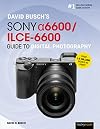
This is not a book that one reads cover-to-cover, just for fun. It's a reference book that one skims and then uses the table of contents and index to answer questions as they come up while one is using the camera. Author has published many books; that surely keeps him off the street much of the time because the books are very detailed and precise. This one is a good reference and has been used by professionals. I prefer the paperback version for that reason.
David Busch's Sony Alpha a7R IV Guide to Digital Photography (The David Busch Camera Guide Series) by David D. Busch
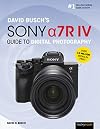
This is not a book that one reads cover-to-cover, just for fun. It's a reference book that one skims and then uses the table of contents and index to answer questions as they come up while one is using the camera. Author has published many books; that surely keeps him off the street much of the time because the books are very detailed and precise. This one is a good reference and has been used by professionals. I prefer the paperback version for that reason. If this review looks similar show more (alike) to the Sony A6600 review, that's because I have used both books with both cameras. show less
A great reference book that explains not only the features of the camera but also why to use certain settings. I learned a great deal about photography and about this specific camera.
The book did not get five stars because I did not a few editorial issues mostly in illustrations being incorrectly labeled or referenced.
The book did not get five stars because I did not a few editorial issues mostly in illustrations being incorrectly labeled or referenced.

This book consists of subroutines for BASIC programmers. Although the program modules and snippets were written with Model 100 BASIC in mind, they will work just as well with the MS-DOS version of line-numbered BASIC.
In all, there are seventy subroutines in this book categorized into nine groups: (1) Simulating Joysticks and Paddles, (2) Using the Clock and Interrupts, (3) Using Sound, (4) BASIC Tricks, (5) Game Routines, (6) Data Files, (7) Business and Financial Subroutines, (8) Add New show more Capabilities, and (9) Bits and Bytes.
Each subroutine is presented in a clearly understandable way: (1) Name, (2) What it Does, (3) Variables, (4) How To Use the Subroutine, (5) Line-By-Line Description, (6) You Supply, (7) Result, and (8) BASIC Listing.
Personally, I did not find these subroutines to be as useful as the ones written by Grillo and Robertson (1983) in their Subroutine Sandwich and More Subroutine Sandwich. As a matter of fact, I did very little BASIC programming on my Model 100 and ran very few BASIC programs on it.
About the Radio Shack Model 100 Portable Computer
The TRS-80 Model 100 portable computer was introduced in 1983. It was one of the first-ever notebook computers. The computer was sold through Radio Shack stores and became very popular with over six million units sold worldwide.
It was one of the best computers I ever owned. I especially liked its almost instantaneous boot-up time. It was a great note-taking machine in meetings because it made no noise -- no fans, no keyboard click. I was so pleased with mine that I purchased two more as gifts for my children. Model 100s were sturdy, practical, and portable. I bought mine in 1983 and used it well into the 1990s, long after DOS-powered laptops had taken over the market. I used it mostly for note-taking in meetings.
Almost 25 years after the Model 100's introduction, you can still find people who do real work on them. For example, the Model 100 is still popular with journalists. They like its compactness, exceptional battery life, ruggedness, and built-in modem. Another popular use is by hobbyists for remote monitoring, remote control, and ham radio use.
In summary, Model 100 features include:
•Microsoft BASIC programming language
•built-in word processing software
•built-in telecommunications software
•port for connecting a cassette recorder or external 3.5-inch floppy drive
•built-in, full-size keyboard
•monochrome LCD display, readable both in dim light and in bright sunlight
•serial port
•optional 300 baud modem
•the size of a standard three-ring binder
•runs about 20 hours on readily available AA batteries
•contains no moving parts
•ROM modules could be purchased with various built-in applications
Trivia: The Model 100 was the first popular notebook computer.
More Trivia: The guts of a Model 100 were used in the Mars Pathfinder probe's Sojourner rover.
Still More Trivia: The model 100 was the last computer system for which Bill Gates personally wrote the code for its built-in BASIC programming language. show less
In all, there are seventy subroutines in this book categorized into nine groups: (1) Simulating Joysticks and Paddles, (2) Using the Clock and Interrupts, (3) Using Sound, (4) BASIC Tricks, (5) Game Routines, (6) Data Files, (7) Business and Financial Subroutines, (8) Add New show more Capabilities, and (9) Bits and Bytes.
Each subroutine is presented in a clearly understandable way: (1) Name, (2) What it Does, (3) Variables, (4) How To Use the Subroutine, (5) Line-By-Line Description, (6) You Supply, (7) Result, and (8) BASIC Listing.
Personally, I did not find these subroutines to be as useful as the ones written by Grillo and Robertson (1983) in their Subroutine Sandwich and More Subroutine Sandwich. As a matter of fact, I did very little BASIC programming on my Model 100 and ran very few BASIC programs on it.
About the Radio Shack Model 100 Portable Computer
The TRS-80 Model 100 portable computer was introduced in 1983. It was one of the first-ever notebook computers. The computer was sold through Radio Shack stores and became very popular with over six million units sold worldwide.
It was one of the best computers I ever owned. I especially liked its almost instantaneous boot-up time. It was a great note-taking machine in meetings because it made no noise -- no fans, no keyboard click. I was so pleased with mine that I purchased two more as gifts for my children. Model 100s were sturdy, practical, and portable. I bought mine in 1983 and used it well into the 1990s, long after DOS-powered laptops had taken over the market. I used it mostly for note-taking in meetings.
Almost 25 years after the Model 100's introduction, you can still find people who do real work on them. For example, the Model 100 is still popular with journalists. They like its compactness, exceptional battery life, ruggedness, and built-in modem. Another popular use is by hobbyists for remote monitoring, remote control, and ham radio use.
In summary, Model 100 features include:
•Microsoft BASIC programming language
•built-in word processing software
•built-in telecommunications software
•port for connecting a cassette recorder or external 3.5-inch floppy drive
•built-in, full-size keyboard
•monochrome LCD display, readable both in dim light and in bright sunlight
•serial port
•optional 300 baud modem
•the size of a standard three-ring binder
•runs about 20 hours on readily available AA batteries
•contains no moving parts
•ROM modules could be purchased with various built-in applications
Trivia: The Model 100 was the first popular notebook computer.
More Trivia: The guts of a Model 100 were used in the Mars Pathfinder probe's Sojourner rover.
Still More Trivia: The model 100 was the last computer system for which Bill Gates personally wrote the code for its built-in BASIC programming language. show less
You May Also Like


Statistics
- Works
- 242
- Also by
- 1
- Members
- 2,727
- Popularity
- #9,415
- Rating
- 3.7
- Reviews
- 11
- ISBNs
- 528
- Languages
- 7
- Favorited
- 1