
Lawrence Bush
Author of Rooftop Secrets and Other Stories of Anti-Semitism
About the Author
He is the author of several books about American Judaism, and is the editor of Reconstructionism Today. He lives in Accord, New York. (Bowker Author Biography)
Works by Lawrence Bush
Associated Works
Tagged
Common Knowledge
- Canonical name
- Bush, Lawrence
- Birthdate
- 1951
- Gender
- male
- Education
- City College of New York (BA)
- Occupations
- writer
editor
puppeteer
music teacher
speechwriter - Birthplace
- New York, New York, USA
- Places of residence
- Accord, New York, USA
- Associated Place (for map)
- New York, USA
Members
Reviews
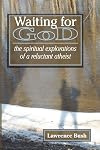
I picked this up to see where it would lead, and how it relates to my own feelings of atheism. It is both a very thought provoking and somewhat frustrating book.
Lawrence Bush is atheist, and grew up that way. However he has always been associated with Reformed Judaism having spent 12 years as a speech writer for a Reformed Rabbi and another 10+ years as an editor of a magazine about Reconstructionist Judaism. He has an affection for Jewish thought and Reformed Jewish ideas, and he has done a show more lot of exploration into religious concepts in general. He is not, however, a scholar in any of these fields.
His main thesis is that a in the 1940's-1950's there was a strong sense of scientific rationalism in the intellectual thought processes of times and that drove a lot of people into a humanist atheism, or just atheism. However, the nuclear age turned that upside down. The next "Woodstock" generation became skeptical of scientific rationalism and began to turn to alternate forms of religion - variations on Hinduism, Buddhism and pagan religions. Lawrence Bush stands in the middle, a skeptic of traditional religious belief and the "Woodstock" religions - he is also a skeptic of scientific rationalism and finds humanist atheism unsatisfactory.
It was concerns about scientific rationalism that really struck home. This excerpt, discussing his father's generation (born in the 1930's), has been spinning in my head over and over:
"To my knowledge, there was simply no analogy in the humanistic communities of his day to the Catholic sacrament of confession, the Jewish practice of prayer and teshuvah (repentance), the Buddhist discipline of meditation, or other religious traditions' regularly scheduled rituals of self-revelation, mental training and emotional expurgation. Psychotherapy, in all its variations, is the closest he might have had to a humanistic equivalent -- but unlike religious rituals, therapy has no context of communal bonding and social approval, no mystique of virtue and piety, no fixed place on the calendar, no formal, prescriptive structure, and little ideological imperative beyond "know thyself." Therapy, moreover, is expensive -- and, as a marketplace transaction, it lacks something in the way of dignity."
Alas, Lawrence Bush is a reluctant atheist who wants a religion, but can't find one. This was the source of frustration for me - he is inconclusive. There is really nothing here to justify his atheism, and yet no religious answer for the skeptic. I'm left stranded holding partially undermined atheistic ideas.
2009
http://www.librarything.com/topic/68641#1500477 show less
Lawrence Bush is atheist, and grew up that way. However he has always been associated with Reformed Judaism having spent 12 years as a speech writer for a Reformed Rabbi and another 10+ years as an editor of a magazine about Reconstructionist Judaism. He has an affection for Jewish thought and Reformed Jewish ideas, and he has done a show more lot of exploration into religious concepts in general. He is not, however, a scholar in any of these fields.
His main thesis is that a in the 1940's-1950's there was a strong sense of scientific rationalism in the intellectual thought processes of times and that drove a lot of people into a humanist atheism, or just atheism. However, the nuclear age turned that upside down. The next "Woodstock" generation became skeptical of scientific rationalism and began to turn to alternate forms of religion - variations on Hinduism, Buddhism and pagan religions. Lawrence Bush stands in the middle, a skeptic of traditional religious belief and the "Woodstock" religions - he is also a skeptic of scientific rationalism and finds humanist atheism unsatisfactory.
It was concerns about scientific rationalism that really struck home. This excerpt, discussing his father's generation (born in the 1930's), has been spinning in my head over and over:
"To my knowledge, there was simply no analogy in the humanistic communities of his day to the Catholic sacrament of confession, the Jewish practice of prayer and teshuvah (repentance), the Buddhist discipline of meditation, or other religious traditions' regularly scheduled rituals of self-revelation, mental training and emotional expurgation. Psychotherapy, in all its variations, is the closest he might have had to a humanistic equivalent -- but unlike religious rituals, therapy has no context of communal bonding and social approval, no mystique of virtue and piety, no fixed place on the calendar, no formal, prescriptive structure, and little ideological imperative beyond "know thyself." Therapy, moreover, is expensive -- and, as a marketplace transaction, it lacks something in the way of dignity."
Alas, Lawrence Bush is a reluctant atheist who wants a religion, but can't find one. This was the source of frustration for me - he is inconclusive. There is really nothing here to justify his atheism, and yet no religious answer for the skeptic. I'm left stranded holding partially undermined atheistic ideas.
2009
http://www.librarything.com/topic/68641#1500477 show less
(Reprinted from the Chicago Center for Literature and Photography [cclapcenter.com]. I am the original author of this essay, as well as the owner of CCLaP; it is not being reprinted here illegally.)
Regular readers know that I have been an atheist for around 25 years now; but they will also know that I am a religion-friendly atheist (otherwise known as a "secular humanist"), and in fact a member of the progressive interfaith movement as well. And so when I recently came across last year's show more Waiting for God by Lawrence Bush here in the Chicago library system, I was understandably excited; according to the cover, it was to be an intellectual examination of spiritual issues by a humanist-style atheist, exactly the kind of things I muse about in my personal life these days as well. Unfortunately, though, Waiting for God turns out to not be that at all; penned by a former '60s radical (what he terms a "Woodstocker"), the book is much more an examination and long-term analysis of that remarkable period of history, looking back 40 years later at whether any of the things the Woodstockers believed in spiritually have actually come to pass. And from that aspect, this book is actually kind of fascinating; various chapters here deal with such things as the long-term effect of psychedelics on the Woodstockers' view of spirituality, whether the mixing of Eastern and Western philosophies in the '60s turned out to be ultimately a good or bad thing, and whether it was right for hippies to reject such conservative religious concepts as "original sin" and the existence of Hell. Just, you know, please realize that this book actually has very little to do with atheism, and is much more interested in asking questions than providing answers; as long as you realize this beforehand, though, I definitely recommend the slim and easily readable volume. show less
Regular readers know that I have been an atheist for around 25 years now; but they will also know that I am a religion-friendly atheist (otherwise known as a "secular humanist"), and in fact a member of the progressive interfaith movement as well. And so when I recently came across last year's show more Waiting for God by Lawrence Bush here in the Chicago library system, I was understandably excited; according to the cover, it was to be an intellectual examination of spiritual issues by a humanist-style atheist, exactly the kind of things I muse about in my personal life these days as well. Unfortunately, though, Waiting for God turns out to not be that at all; penned by a former '60s radical (what he terms a "Woodstocker"), the book is much more an examination and long-term analysis of that remarkable period of history, looking back 40 years later at whether any of the things the Woodstockers believed in spiritually have actually come to pass. And from that aspect, this book is actually kind of fascinating; various chapters here deal with such things as the long-term effect of psychedelics on the Woodstockers' view of spirituality, whether the mixing of Eastern and Western philosophies in the '60s turned out to be ultimately a good or bad thing, and whether it was right for hippies to reject such conservative religious concepts as "original sin" and the existence of Hell. Just, you know, please realize that this book actually has very little to do with atheism, and is much more interested in asking questions than providing answers; as long as you realize this beforehand, though, I definitely recommend the slim and easily readable volume. show less

Probably best used to open up a discussion with your discussion about anti-semitism throughout history. Be aware, there are racial slurs in two (I believe) of the stories. Each chapter gives a bit of an introduction, then a fictional account, and then more of a discussion afterwards. I would estimate it as probably best for middle school level readers, but the topics and discussion can be made more deep and sized up for some high schoolers. The title of the book is actually referring to a show more story in the book of a girl who had a secret spot to go look at the moon. show less

Historical novel based on the life of the author's spunky grandmother, from Ukraine to the Bronx
You May Also Like


Associated Authors
Statistics
- Works
- 10
- Also by
- 2
- Members
- 190
- Popularity
- #114,773
- Rating
- 4.1
- Reviews
- 9
- ISBNs
- 13