
Works by Gill Rapley
Baby-Led Weaning: The Essential Guide to Introducing Solid Foods-and Helping Your Baby to Grow Up a Happy and Confident Eater (2010) 189 copies, 3 reviews
The Baby-Led Weaning Cookbook: Delicious Recipes That Will Help Your Baby Learn to Eat Solid Foods―and That the Whole Family Will Enjoy (2010) 120 copies
Baby-Led Breastfeeding: How to Make Breastfeeding Work - With Your Baby's Help. by Gill Rapley, Tracey Murkett (2012) 10 copies
EL NIÑO YA COME SOLO: Consiga que su bebé disfrute de la buena comida (MADRE Y BEBÉ) (2012) 9 copies
Baby-led weaning DVD 3 copies
The Baby-Led Weaning Cookbook—Volume 2: 99 More No-Stress Recipes for the Whole Family (2019) 2 copies
Tagged
Common Knowledge
- Gender
- female
- Nationality
- UK
- Places of residence
- Kent, England, UK
- Associated Place (for map)
- England, UK
Members
Reviews
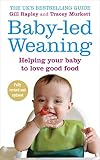
'Baby led weaning' by Gill Rapley and Tracey Murkett
As a first-time mother much of my current to-read pile consists of books about child development and various aspects of parenting. As my son (somewhat unbelievably to me) approached four months old I wanted to learn more about weaning. After hearing about baby led weaning from a health visitor at my local sure start centre I was keen to find out more about it. This specific book was recommended and lent to me by the leader of my postnatal show more NCT course.
What is baby led weaning?
Weaning is the gradual transition a baby makes from living on an entirely milk based diet to eating a typical diet based on solid food. Like most other topics surrounding babies and childcare, there is a great deal of debate between parents and experts over when and how this process should begin, develop and be completed.
Essentially, baby led weaning happens when your baby is given solid food in a grab-able form (not purées) from 6 months and is allowed to gum / play with / eat as much or as little of it as they want. The idea is that they will gradually eat more and more but will remain 'in control' of their food and will eat to suit their appetite while experiencing a range of textures and tastes. This differs from the 'usual' approach of parents spoon-feeding their babies puréed foods alongside selected finger foods. In 'conventional' weaning parents decide when the baby is ready for solid food and which solid foods they are ready for. In baby led weaning the baby 'decides' (although of course the parents still provide the options).
The key difference between this approach and a more conventional one is that Rapley and Murkett advocate avoiding purées entirely. In fact, they are rather evangelical about it, suggesting that baby-led weaning has myriad benefits and no real flaws while stating that purées have numerous flaws and scarcely any benefits. It is a shame that their approach is so strict as it seems very likely to alienate some readers in its totalitarian approach and exaggeration of the benefits (of finger foods) and flaws (of purées). After all, given that most adults alive today will have been weaned using some puréed food it seems exaggerated to claim, as these authors do, that feeding these to babies increases the risk of diabetes, obesity and fussy eating.
Why the change of strategy?
The authors argue that conventional weaning methods are the result of babies being weaned too early in recent decades. They give a short history of official advice from the 1900's to now with some explanation of how and why the advice has changed. I found the history very interesting and it helped me to understand why some people say that you can wean from four months old and others say you shouldn't start weaning until six months old.
The current advice from the Department of Health and the World Health Organisation is that all babies should be fed on an exclusively milk diet until they are six months old. This is because milk is specially formulated to provide babies with all their nutritional needs up til this point and their developing reflexes and gut may not be quite ready to handle solid food until this time. The authors of this book state that if you are feeding a baby solid food from six months rather than four months, they should be physically developed enough to start handling it themselves, rather than needing it to be mashed up.
Rapley and Murkett also claim a wide range of benefits from using baby-led weaning, although some of these are a little dubious. For instance, they insist that baby-led weaning is less time consuming for parents because, rather than spending 'hours' creating purées they can simply feed the baby the same food they are eating. This sounds quite reasonable, until you think it through. My diet isn't perfect and although I enjoy cooking I do make frequent use of ready made sauces, pies and filled pastas. In order to minimise a baby's exposure to salt, all these kinds of foods should be home-made and any salt added at the table. Less time-consuming?
Similarly, the authors state that eating out in restaurants will be easier because, rather than asking the restaurant to heat up jars of baby food, you can just feed the baby from your plate or even order them a small dish or let them share some tapas style dishes with you. Again, this seems disingenuous. How difficult is it to ask a restaurant to heat up a jar? How difficult might it be to order a baby friendly meal with no salt, limited sugar and food cut into appropriate shapes for the baby to grip?
By insisting so hard on these kinds of advantages the authors actually undermine their own argument, which is a shame. There are definite advantages to baby-led weaning, not least the fact that it might make parents eat more healthily and enjoy more fresh fruit and vegetables, but there are also some difficulties and it would be better to acknowledge and address these. Instead, they create multiple 'benefits' by stating that (a) families can enjoy eating together and that (b) babies won't have to eat alone. Spot the difference?
The demonisation of spoon-feeding is also problematic. The authors equate spoon-feeding with force-feeding and are insistent that it leads to unhappy babies and stressful mealtimes. I am sure that this can be the case, and equally sure that it is not always the case. Parents who have previously spoon-fed children may justly feel offended by the implication that they were in some way harming their children. Perhaps to mitigate such feelings, there are many statements throughout the book from parents who struggled with spoon-feeding.
Does anyone really need this book?
You may be wondering whether this approach is really so new and unique that a book is required to discuss it. This is a worthwhile question and, if you've already happily weaned children using purées or a mixture of purées and finger foods then you may feel you have very little to gain from reading this. However, if you are a first time parent considering your options or an experienced parent who would like to consider a change in strategy then this book may be of use to you. Personally I found it very interesting reading and I found that it seemed to involve a lot of common sense. For instance, babies love to copy their parents, so surely they would rather copy how and what their parents are eating.
However, I would question the length of the book. The basic principles are easy to grasp and I quickly became impatient with the endless repetition of the basic points re-worded and explained under slightly different subheadings. There are only 256 pages, but this is about 200 pages more than necessary. Once you grasp the idea that babies can be fed almost everything you eat if it is suitably presented and prepared, you only really need a bit of guidance regarding preparation. Presumably the reader is already interested in the concept of baby-led weaning or they would never have picked up a book with this title, so it seems rather pointless to repeatedly oversell the benefits of this way of feeding.
There are a few Q and A sections and a final troubleshooting chapter which constantly refer to earlier parts of the book. This is because the vast majority of the answers involve repetition of earlier chunks of the book. This is not surprising since the questions are the same throughout. In fact, I can sum up all these exchanges as follows:
Q: "My _ month old is playing with her food / not eating a lot. I / my partner / my parents (in law) are worried that s/he may not be getting enough nutrition."
A: "Milk is a baby's primary food until they are 1 year old. They go through phases and may eat less food at times. You need to trust them to eat what they need."
After a while this becomes rather boring and I skimmed the trouble shooting section in seconds rather than minutes, learning little that was new.
I did appreciate the BLW stories interspersed throughout the book. These are anecdotes from a variety of parents who have tried this method of feeding and found it worked well for them (unsurprisingly, given the focus of this book). I found the anecdotes reassuring as there were clearly a number of people other than the rather insistent authors who had found this a viable and indeed positive way to feed their children.
It is important to note that this is a guide to the theory and practice of weaning and not a recipe book. Rapley has subsequently published a baby led weaning cookbook which can be purchased separately. (I find this interesting since Rapley and Murkett insist in this book that special recipes are not required...)
My baby is precious... Can I trust the advice this book gives?
The only difference between this book and the department of health advice is the embargo on purées. I do not believe there is anything dangerous being advised here and the authors are clear that, if you have any concerns about your child's eating or weight then you should see your child's GP. Although I feel that the benefits of this way of weaning are over stressed and the possible difficulties minimised, the advice given is largely common sense and would be safe to follow.
I was a little disappointed by the lack of references and research based information in the book. While I found that almost everything the authors wrote appealed to my common sense, I was conscious throughout that nothing they say has been independently, scientifically verified and tested. In fact, the 'references' section of the book is laughably short, containing a mere nine references, two of which are to Rapley's previous publications on this topic and one of which is a dictionary definition.
In an attempt to gain credibility, there is a short section titled 'the history of baby-led weaning' which explains that this theory essentially arose from Rapley's work as a health visitor for twenty years and her research for her masters dissertation. Clearly she has a lot of practical knowledge in this field, which I found reassuring, but there is rather a lot of guesswork. Baby led weaning may / could / might / possibly / seems to have certain effects and strengths, (these words are used exhaustively throughout the book,) but in the end this is an anecdotal and theoretical book rather than one based on solid research and data. If that makes you uncomfortable then this isn't the book for you.
Is it worth buying?
£10.99 feels costly for a paperback, especially one that's so repetitive. However, it is comprehensive and offers a great deal of reassurance to parents trying this way of weaning. If you think baby-led weaning might suit you then this is probably the best book on the topic to read, written as it is by the lady who developed the theory behind the practice, but I would advise borrowing this from a library or buying a cheaper copy, perhaps second-hand, to check that you find this useful enough to invest in. There are lists of suitable first foods and there is clear advice about allergies and nutrition. Overall, this is a thorough guide to the topic and nothing has been left out. I am planning to try baby led weaning myself, although I do not intend to religiously avoid pureed food, and I am seriously considering buying a copy of this - although not for nearly £11!
Read this if:
- you are keen to try baby-led weaning and would like to know what it's all about;
- you are happy to adopt a common sense approach that is logical but has only anecdotal evidence to support it;
- you have a grandchild / nephew / godchild whose parents are following baby-led weaning and you are concerned about their development / nutrition.
Avoid this if:
- you find yourself irritated by repetition and bias;
- you prefer to choose parenting strategies that are supported by scientific data and widely published research;
- you find yourself irritated by repetition and bias. show less
As a first-time mother much of my current to-read pile consists of books about child development and various aspects of parenting. As my son (somewhat unbelievably to me) approached four months old I wanted to learn more about weaning. After hearing about baby led weaning from a health visitor at my local sure start centre I was keen to find out more about it. This specific book was recommended and lent to me by the leader of my postnatal show more NCT course.
What is baby led weaning?
Weaning is the gradual transition a baby makes from living on an entirely milk based diet to eating a typical diet based on solid food. Like most other topics surrounding babies and childcare, there is a great deal of debate between parents and experts over when and how this process should begin, develop and be completed.
Essentially, baby led weaning happens when your baby is given solid food in a grab-able form (not purées) from 6 months and is allowed to gum / play with / eat as much or as little of it as they want. The idea is that they will gradually eat more and more but will remain 'in control' of their food and will eat to suit their appetite while experiencing a range of textures and tastes. This differs from the 'usual' approach of parents spoon-feeding their babies puréed foods alongside selected finger foods. In 'conventional' weaning parents decide when the baby is ready for solid food and which solid foods they are ready for. In baby led weaning the baby 'decides' (although of course the parents still provide the options).
The key difference between this approach and a more conventional one is that Rapley and Murkett advocate avoiding purées entirely. In fact, they are rather evangelical about it, suggesting that baby-led weaning has myriad benefits and no real flaws while stating that purées have numerous flaws and scarcely any benefits. It is a shame that their approach is so strict as it seems very likely to alienate some readers in its totalitarian approach and exaggeration of the benefits (of finger foods) and flaws (of purées). After all, given that most adults alive today will have been weaned using some puréed food it seems exaggerated to claim, as these authors do, that feeding these to babies increases the risk of diabetes, obesity and fussy eating.
Why the change of strategy?
The authors argue that conventional weaning methods are the result of babies being weaned too early in recent decades. They give a short history of official advice from the 1900's to now with some explanation of how and why the advice has changed. I found the history very interesting and it helped me to understand why some people say that you can wean from four months old and others say you shouldn't start weaning until six months old.
The current advice from the Department of Health and the World Health Organisation is that all babies should be fed on an exclusively milk diet until they are six months old. This is because milk is specially formulated to provide babies with all their nutritional needs up til this point and their developing reflexes and gut may not be quite ready to handle solid food until this time. The authors of this book state that if you are feeding a baby solid food from six months rather than four months, they should be physically developed enough to start handling it themselves, rather than needing it to be mashed up.
Rapley and Murkett also claim a wide range of benefits from using baby-led weaning, although some of these are a little dubious. For instance, they insist that baby-led weaning is less time consuming for parents because, rather than spending 'hours' creating purées they can simply feed the baby the same food they are eating. This sounds quite reasonable, until you think it through. My diet isn't perfect and although I enjoy cooking I do make frequent use of ready made sauces, pies and filled pastas. In order to minimise a baby's exposure to salt, all these kinds of foods should be home-made and any salt added at the table. Less time-consuming?
Similarly, the authors state that eating out in restaurants will be easier because, rather than asking the restaurant to heat up jars of baby food, you can just feed the baby from your plate or even order them a small dish or let them share some tapas style dishes with you. Again, this seems disingenuous. How difficult is it to ask a restaurant to heat up a jar? How difficult might it be to order a baby friendly meal with no salt, limited sugar and food cut into appropriate shapes for the baby to grip?
By insisting so hard on these kinds of advantages the authors actually undermine their own argument, which is a shame. There are definite advantages to baby-led weaning, not least the fact that it might make parents eat more healthily and enjoy more fresh fruit and vegetables, but there are also some difficulties and it would be better to acknowledge and address these. Instead, they create multiple 'benefits' by stating that (a) families can enjoy eating together and that (b) babies won't have to eat alone. Spot the difference?
The demonisation of spoon-feeding is also problematic. The authors equate spoon-feeding with force-feeding and are insistent that it leads to unhappy babies and stressful mealtimes. I am sure that this can be the case, and equally sure that it is not always the case. Parents who have previously spoon-fed children may justly feel offended by the implication that they were in some way harming their children. Perhaps to mitigate such feelings, there are many statements throughout the book from parents who struggled with spoon-feeding.
Does anyone really need this book?
You may be wondering whether this approach is really so new and unique that a book is required to discuss it. This is a worthwhile question and, if you've already happily weaned children using purées or a mixture of purées and finger foods then you may feel you have very little to gain from reading this. However, if you are a first time parent considering your options or an experienced parent who would like to consider a change in strategy then this book may be of use to you. Personally I found it very interesting reading and I found that it seemed to involve a lot of common sense. For instance, babies love to copy their parents, so surely they would rather copy how and what their parents are eating.
However, I would question the length of the book. The basic principles are easy to grasp and I quickly became impatient with the endless repetition of the basic points re-worded and explained under slightly different subheadings. There are only 256 pages, but this is about 200 pages more than necessary. Once you grasp the idea that babies can be fed almost everything you eat if it is suitably presented and prepared, you only really need a bit of guidance regarding preparation. Presumably the reader is already interested in the concept of baby-led weaning or they would never have picked up a book with this title, so it seems rather pointless to repeatedly oversell the benefits of this way of feeding.
There are a few Q and A sections and a final troubleshooting chapter which constantly refer to earlier parts of the book. This is because the vast majority of the answers involve repetition of earlier chunks of the book. This is not surprising since the questions are the same throughout. In fact, I can sum up all these exchanges as follows:
Q: "My _ month old is playing with her food / not eating a lot. I / my partner / my parents (in law) are worried that s/he may not be getting enough nutrition."
A: "Milk is a baby's primary food until they are 1 year old. They go through phases and may eat less food at times. You need to trust them to eat what they need."
After a while this becomes rather boring and I skimmed the trouble shooting section in seconds rather than minutes, learning little that was new.
I did appreciate the BLW stories interspersed throughout the book. These are anecdotes from a variety of parents who have tried this method of feeding and found it worked well for them (unsurprisingly, given the focus of this book). I found the anecdotes reassuring as there were clearly a number of people other than the rather insistent authors who had found this a viable and indeed positive way to feed their children.
It is important to note that this is a guide to the theory and practice of weaning and not a recipe book. Rapley has subsequently published a baby led weaning cookbook which can be purchased separately. (I find this interesting since Rapley and Murkett insist in this book that special recipes are not required...)
My baby is precious... Can I trust the advice this book gives?
The only difference between this book and the department of health advice is the embargo on purées. I do not believe there is anything dangerous being advised here and the authors are clear that, if you have any concerns about your child's eating or weight then you should see your child's GP. Although I feel that the benefits of this way of weaning are over stressed and the possible difficulties minimised, the advice given is largely common sense and would be safe to follow.
I was a little disappointed by the lack of references and research based information in the book. While I found that almost everything the authors wrote appealed to my common sense, I was conscious throughout that nothing they say has been independently, scientifically verified and tested. In fact, the 'references' section of the book is laughably short, containing a mere nine references, two of which are to Rapley's previous publications on this topic and one of which is a dictionary definition.
In an attempt to gain credibility, there is a short section titled 'the history of baby-led weaning' which explains that this theory essentially arose from Rapley's work as a health visitor for twenty years and her research for her masters dissertation. Clearly she has a lot of practical knowledge in this field, which I found reassuring, but there is rather a lot of guesswork. Baby led weaning may / could / might / possibly / seems to have certain effects and strengths, (these words are used exhaustively throughout the book,) but in the end this is an anecdotal and theoretical book rather than one based on solid research and data. If that makes you uncomfortable then this isn't the book for you.
Is it worth buying?
£10.99 feels costly for a paperback, especially one that's so repetitive. However, it is comprehensive and offers a great deal of reassurance to parents trying this way of weaning. If you think baby-led weaning might suit you then this is probably the best book on the topic to read, written as it is by the lady who developed the theory behind the practice, but I would advise borrowing this from a library or buying a cheaper copy, perhaps second-hand, to check that you find this useful enough to invest in. There are lists of suitable first foods and there is clear advice about allergies and nutrition. Overall, this is a thorough guide to the topic and nothing has been left out. I am planning to try baby led weaning myself, although I do not intend to religiously avoid pureed food, and I am seriously considering buying a copy of this - although not for nearly £11!
Read this if:
- you are keen to try baby-led weaning and would like to know what it's all about;
- you are happy to adopt a common sense approach that is logical but has only anecdotal evidence to support it;
- you have a grandchild / nephew / godchild whose parents are following baby-led weaning and you are concerned about their development / nutrition.
Avoid this if:
- you find yourself irritated by repetition and bias;
- you prefer to choose parenting strategies that are supported by scientific data and widely published research;
- you find yourself irritated by repetition and bias. show less
Baby-Led Weaning: The Essential Guide to Introducing Solid Foods-and Helping Your Baby to Grow Up a Happy and Confident Eater by Gill Rapley
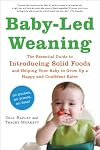
I had read about baby-led weaning (BLW for short) at moms4mom.com when researching the whole “eating food” thing. The description by a parent made it sound like you feed them solid solid food (not purees) from the get-go. At first I was confused by the name, since weaning was not what I was looking to do. It’s kind of badly named — I’d call it baby-led feeding.
I read a little bit more online, about the idea. Right now in the US, the conventional first foods for a baby are soupy show more grain cereals and vegetable purees. Outside of the US, and historically, this has not been the case.
I was excited about the idea of it because it’s apparent that 80 is into eating, and we haven’t had any trouble with her wanting to try new food, gagging on the purees we’d been giving her, or anything else that would be a sign that this wouldn’t be a good idea.
In fact, one big reason why I was so excited is that the babies feed themselves. 80 is acting so independent, and wasn’t very happy being fed. She’d tolerate it at the beginning, but by the middle of the feeding she’d grab at the spoon. It’s amazing how fast her reflexes are, which meant she would have her hand (or hands) around the spoon, and I’d be saying “let go, please” in my nice voice while prying her little fingers off it. This did not make her happy. So then we’d have a crying, frustrated girl, and I’m trying to give her more food ON THE VERY SPOON I’D JUST TAKEN AWAY. It reminded me of that meme crying while eating.
I didn’t find a comprehensive explanation online, so resolved to see if the library had a book on it. I asked at the weekly mom meet-up we have on Friday afternoons, and one of the moms offered to lend me the book she had. Perfect! It’s Baby-led Weaning by Gill Rapley and Tracey Murkett.
Basically, the idea is that babies are capable of eating on their own, because their tongue-thrust reflex keeps them from eating before they’re ready, and the gag reflex helps to teach them how far they can put food into their mouths. It takes some courage to just hand your baby a “stick” of food, since we’re told not to let them near anything they could take a bite out of. The only other unpleasant part of starting BLW was freaking out about 80 gagging on food.
The gag reflex is awesome — it lets 80 know when she’s crammed that banana too far into her mouth. It’s just that she then make the “gork gork” noise, and Jason and I jump from our chairs and stare at her with our arms out to the side like we’re ready to tackle her. Just like the book said, she’d gag a bit, spit out the food, then calmly continue eating. All babies are going to do this, even if they’re eating purees. The book goes over in great detail how to handle gagging and choking (which is less likely to happen). 80 hasn’t choked once, but she’s gagged maybe three times — not recently though.
BLW is said to be messy, since your kidlet has access to all the food, but I found purees to be just as messy, since they’re basically food paint.
The big thing on what to feed your baby is that you should be offering them food from your plate, and eating together. Outside of the big no-nos (honey, salt, nuts, peanuts, dairy), you can feed your kid anything. It’s a little hard to wrap my brain around, since we’ve been in a pureed vegetables culture for so long, but once I finished the book, and started offering 80 some different things, it got a lot easier to imagine what I could feed her from my plate.
A side benefit is that you end up eating healthier! It’s hard for me not to eat salt, so this is an excellent exercise in moderation.
I’m going to give you a list of what 80’s eaten so far, but bear in mind that the point is not that she’s ingest much (if any) of all of the foods. The point is that she’s practicing eating for when she’ll need the calories.
Since we’ve started, 80’s eaten sticks of avocado, apple, carrot (baked and peeled first, so it’s solid but not crunchy), potato, rice cake (I found regular old plain rice cakes broken into sticks work better and are cheaper than the baby versions), kale (from a soup), lettuce (she mostly gummed it and didn’t eat any), chicken breast, grapefruit, lemon, and she’s moved on to eating the standard “O”. I looked at Cascadian Farms version of Cheerios, but they had way more sugar. Turns out Cheerios (or their generic equivalent) have the lowest sugar — 1g per serving. Os are great, since they are the perfect shape for little chubby hands. It’s an excellent exercise in the pincer grasp, and it keeps 80 amused for a long time. We brought Os on the plane to NC last week, and she’d pick one from our hand and work on getting it to her mouth — and then we’d put another in our hand for her to take. Not messy on her face or clothes, tiny snack, not hard to clean up even if she got it all soggy and it ended up on the floor, and it was a good way to pass time.
I’d suggest the book I read — it’s well written, it has a nice balance of historical information, reasons to BLW with reasonable encouragement (not making you feel like you’re signing up for a cult), and lots of suggestions for foods.
The only downside for me was that it’s British, and I had to look up what a rusk was, as well as try to remember the American words for aubergine and courgette.
If you’re not a fan of personal stories (they are in all the baby books I read), you can just skip them. In fact, if you don’t care about the history of feeding babies, you can just skip to chapter 4 where it gets down to the nitty gritty. show less
I read a little bit more online, about the idea. Right now in the US, the conventional first foods for a baby are soupy show more grain cereals and vegetable purees. Outside of the US, and historically, this has not been the case.
I was excited about the idea of it because it’s apparent that 80 is into eating, and we haven’t had any trouble with her wanting to try new food, gagging on the purees we’d been giving her, or anything else that would be a sign that this wouldn’t be a good idea.
In fact, one big reason why I was so excited is that the babies feed themselves. 80 is acting so independent, and wasn’t very happy being fed. She’d tolerate it at the beginning, but by the middle of the feeding she’d grab at the spoon. It’s amazing how fast her reflexes are, which meant she would have her hand (or hands) around the spoon, and I’d be saying “let go, please” in my nice voice while prying her little fingers off it. This did not make her happy. So then we’d have a crying, frustrated girl, and I’m trying to give her more food ON THE VERY SPOON I’D JUST TAKEN AWAY. It reminded me of that meme crying while eating.
I didn’t find a comprehensive explanation online, so resolved to see if the library had a book on it. I asked at the weekly mom meet-up we have on Friday afternoons, and one of the moms offered to lend me the book she had. Perfect! It’s Baby-led Weaning by Gill Rapley and Tracey Murkett.
Basically, the idea is that babies are capable of eating on their own, because their tongue-thrust reflex keeps them from eating before they’re ready, and the gag reflex helps to teach them how far they can put food into their mouths. It takes some courage to just hand your baby a “stick” of food, since we’re told not to let them near anything they could take a bite out of. The only other unpleasant part of starting BLW was freaking out about 80 gagging on food.
The gag reflex is awesome — it lets 80 know when she’s crammed that banana too far into her mouth. It’s just that she then make the “gork gork” noise, and Jason and I jump from our chairs and stare at her with our arms out to the side like we’re ready to tackle her. Just like the book said, she’d gag a bit, spit out the food, then calmly continue eating. All babies are going to do this, even if they’re eating purees. The book goes over in great detail how to handle gagging and choking (which is less likely to happen). 80 hasn’t choked once, but she’s gagged maybe three times — not recently though.
BLW is said to be messy, since your kidlet has access to all the food, but I found purees to be just as messy, since they’re basically food paint.
The big thing on what to feed your baby is that you should be offering them food from your plate, and eating together. Outside of the big no-nos (honey, salt, nuts, peanuts, dairy), you can feed your kid anything. It’s a little hard to wrap my brain around, since we’ve been in a pureed vegetables culture for so long, but once I finished the book, and started offering 80 some different things, it got a lot easier to imagine what I could feed her from my plate.
A side benefit is that you end up eating healthier! It’s hard for me not to eat salt, so this is an excellent exercise in moderation.
I’m going to give you a list of what 80’s eaten so far, but bear in mind that the point is not that she’s ingest much (if any) of all of the foods. The point is that she’s practicing eating for when she’ll need the calories.
Since we’ve started, 80’s eaten sticks of avocado, apple, carrot (baked and peeled first, so it’s solid but not crunchy), potato, rice cake (I found regular old plain rice cakes broken into sticks work better and are cheaper than the baby versions), kale (from a soup), lettuce (she mostly gummed it and didn’t eat any), chicken breast, grapefruit, lemon, and she’s moved on to eating the standard “O”. I looked at Cascadian Farms version of Cheerios, but they had way more sugar. Turns out Cheerios (or their generic equivalent) have the lowest sugar — 1g per serving. Os are great, since they are the perfect shape for little chubby hands. It’s an excellent exercise in the pincer grasp, and it keeps 80 amused for a long time. We brought Os on the plane to NC last week, and she’d pick one from our hand and work on getting it to her mouth — and then we’d put another in our hand for her to take. Not messy on her face or clothes, tiny snack, not hard to clean up even if she got it all soggy and it ended up on the floor, and it was a good way to pass time.
I’d suggest the book I read — it’s well written, it has a nice balance of historical information, reasons to BLW with reasonable encouragement (not making you feel like you’re signing up for a cult), and lots of suggestions for foods.
The only downside for me was that it’s British, and I had to look up what a rusk was, as well as try to remember the American words for aubergine and courgette.
If you’re not a fan of personal stories (they are in all the baby books I read), you can just skip them. In fact, if you don’t care about the history of feeding babies, you can just skip to chapter 4 where it gets down to the nitty gritty. show less
This book argues for a very different philosophy towards weaning compared with the conventional approach of giving spoonfuls of boring puree to a reluctant baby. The concept is simple, and natural: just give the baby what you eat (with slight modifications), and let him/her decide what she wants when. This makes considerable sense in some ways, and I'm all for a more laid back approach to feeding infants.
However, the book is incredibly repetitious and could easily be a quarter of its length show more (although that wouldn't be book length), so there is a lot that you've heard before to wade through at times. Some of the advice also seems a little conflicting - at times the suggestion is to give the baby whatever you're eating, but at other times the idea is to make special shapes of vegetables cooked in specific ways. Another example is that all variety is to be welcomed, as it stimulates a baby to learn faster, but not when that variety includes conventional weaning techniques - then that will just confuse the baby - why the double standard?
And with all this repetition, some of the details are rather vague - for instance, our 6 month old baby is just not ready to put most foods in her mouth, or eat many foods, because of coordination issues, and the fact that she has no teeth yet! So I would have welcomed a more specific breakdown of how you build up weaning from the occasional moments at 6 months to almost replacing breastmilk/formula by a year old. I would also have liked to see more detail about pseudo-recipes, especially early on when more foods need excluding.
In the end, I would imagine we will try a mixture of baby led weaning, which this book was reasonably good at educating us about, and pureed foods or organic healthy packets. But we'll definitely take the book's main message to heart: don't worry about what the baby eats and let her lead feeding with what she wants, how much she wants, and when she wants it. show less
However, the book is incredibly repetitious and could easily be a quarter of its length show more (although that wouldn't be book length), so there is a lot that you've heard before to wade through at times. Some of the advice also seems a little conflicting - at times the suggestion is to give the baby whatever you're eating, but at other times the idea is to make special shapes of vegetables cooked in specific ways. Another example is that all variety is to be welcomed, as it stimulates a baby to learn faster, but not when that variety includes conventional weaning techniques - then that will just confuse the baby - why the double standard?
And with all this repetition, some of the details are rather vague - for instance, our 6 month old baby is just not ready to put most foods in her mouth, or eat many foods, because of coordination issues, and the fact that she has no teeth yet! So I would have welcomed a more specific breakdown of how you build up weaning from the occasional moments at 6 months to almost replacing breastmilk/formula by a year old. I would also have liked to see more detail about pseudo-recipes, especially early on when more foods need excluding.
In the end, I would imagine we will try a mixture of baby led weaning, which this book was reasonably good at educating us about, and pureed foods or organic healthy packets. But we'll definitely take the book's main message to heart: don't worry about what the baby eats and let her lead feeding with what she wants, how much she wants, and when she wants it. show less
The puree ship had already sailed by the time I got this book , but it still has a lot of useful information to it about starting solids, how babies take to them, etc. (There's even a little Q&A section devoted to "whoops, the puree ship already sailed; can I still get on this boat?"--the answer is yes, but it may take a little more time, so that's the direction we'll be moving.)
The most useful information (to me) I found in here was the suggestion to use a shot glass when helping Baby show more learn to drink from a regular, non-sippy cup, on the grounds of its thick rim, small capacity, and narrow diameter, all of which make it a better baby-sized drinking vessel. The book compares a baby drinking from a regular, full-size cup to an adult drinking from a bucket.
Their website (www.baby-led.com) looks to have the whole, somewhat repetitive book distilled into bullet points, so don't despair if your library system doesn't have this UK import! show less
The most useful information (to me) I found in here was the suggestion to use a shot glass when helping Baby show more learn to drink from a regular, non-sippy cup, on the grounds of its thick rim, small capacity, and narrow diameter, all of which make it a better baby-sized drinking vessel. The book compares a baby drinking from a regular, full-size cup to an adult drinking from a bucket.
Their website (www.baby-led.com) looks to have the whole, somewhat repetitive book distilled into bullet points, so don't despair if your library system doesn't have this UK import! show less
You May Also Like


Statistics
- Works
- 12
- Members
- 476
- Popularity
- #51,803
- Rating
- 3.6
- Reviews
- 8
- ISBNs
- 35
- Languages
- 5